

India needs its private rewilders. But they need government support
As one landowner’s story shows, private rewilders can greatly benefit India’s ecology – but only if the law is on their side.

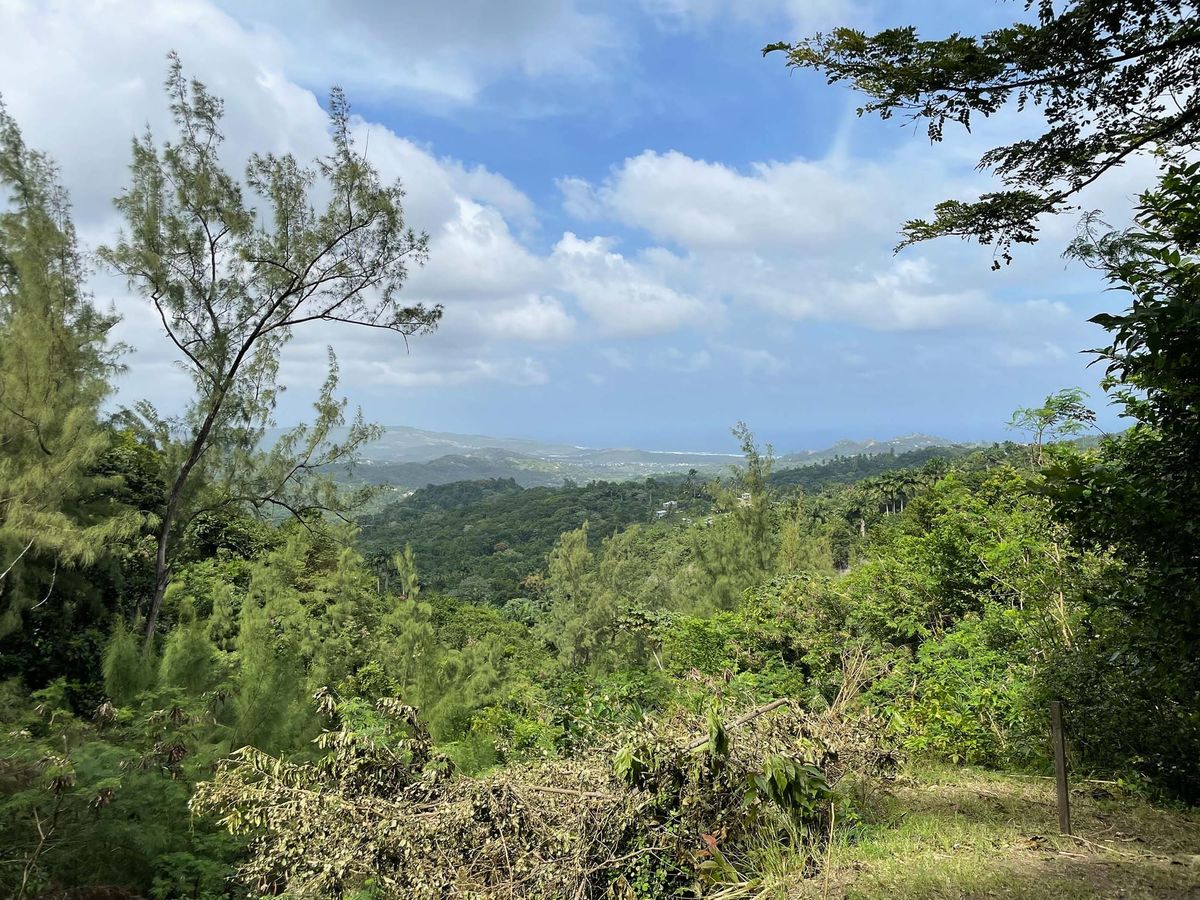
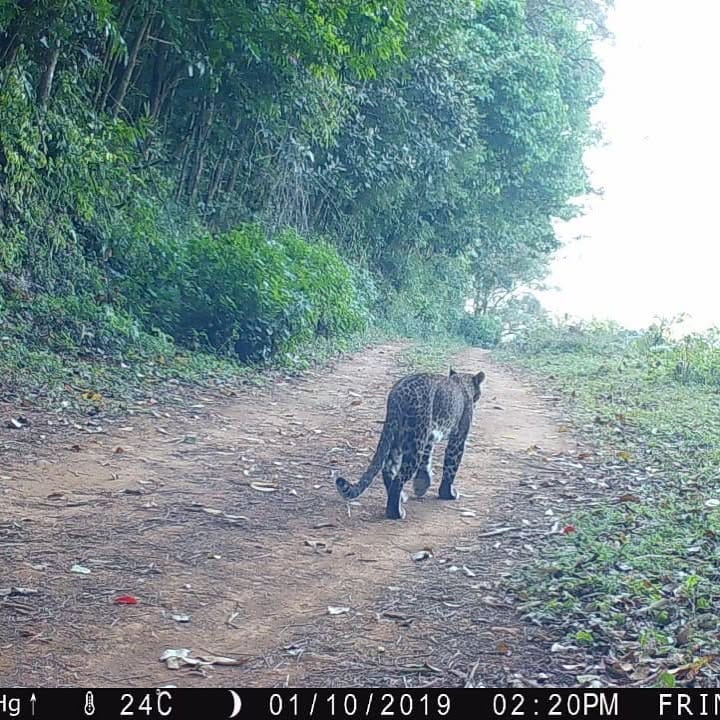
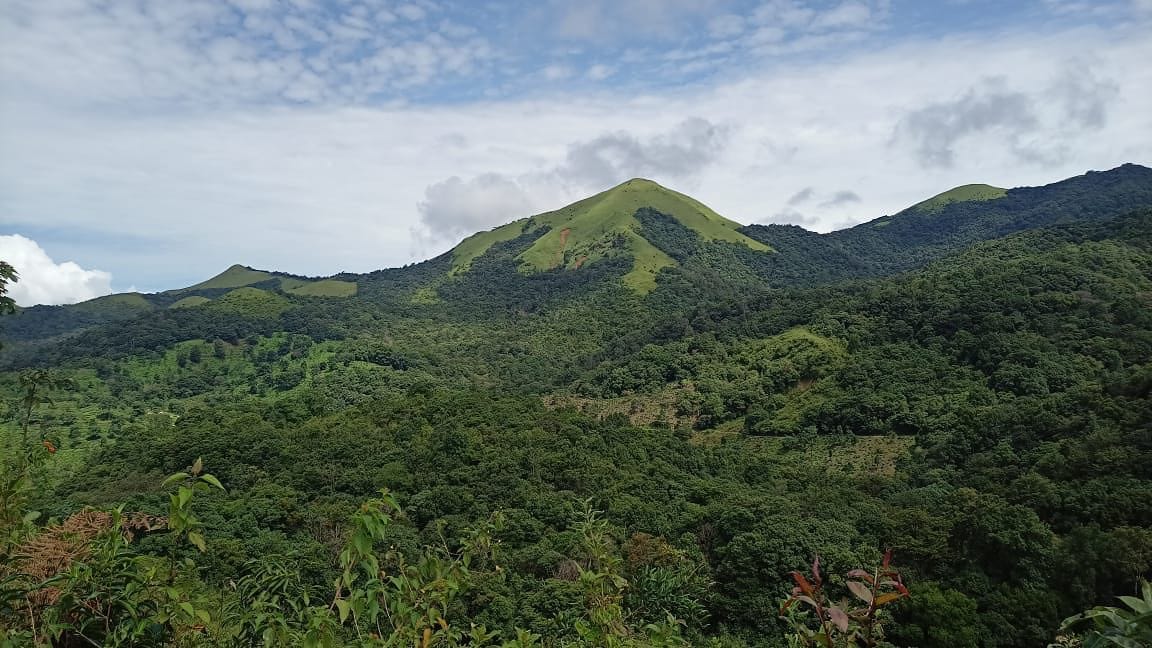
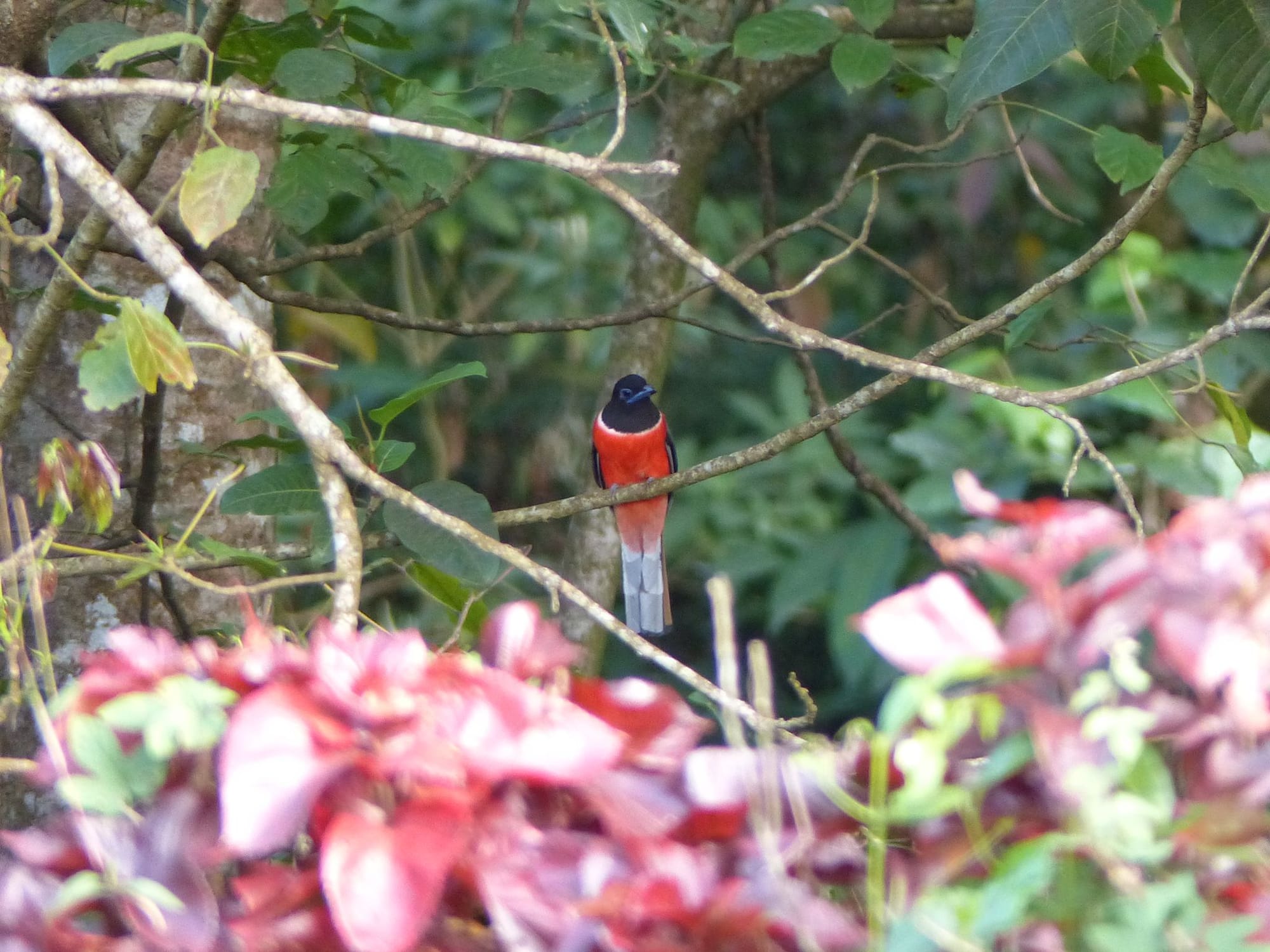
In a remote horseshoe-shaped valley in the heavily forested district of Wayanad in the southern Indian state of Kerala sits Fringe Ford, a private conservation estate. Owned and run by conservationist Ahmed Chamanwala, this 570-acre property is wedged between the Aralam and Wayanad wildlife sanctuaries on its western and northern boundaries. A more bird’s-eye view situates it within a larger contiguous wildlife landscape dotted with many protected areas and reserve forests that together hold one of the highest tiger populations and one of the densest Asian elephant populations on earth. Surrounded by this wealth of biodiversity, Fringe Ford sees tigers, herds of elephants and barking deer passing by; leopard pugmarks dot its paths; golden orioles and Malabar trogons fill its canopy.
But it hasn’t always been that way.
In 1995, Chamanwala’s father bought the land as a working plantation – mostly cardamom and some coffee. Six years later, the Kerala forest department notified 405 of its then 500-odd acres as private forest, invoking a 1971 law under which private forests vested in the government without compensation, after which the government started restricting the family’s ability to continue plantation work across the entire estate, including in parts of it that were not under dispute.
As plantation activity subsided, parts of the estate and the forest beyond started getting taken over by poachers, illicit liquor manufacturers and marijuana growers. It took Chamanwala years of on-the-ground vigilance to put these threats at bay. Then, in 2007, he started an experiment – a wildlife conservation–oriented ecotourism venture and five-room homestay – to establish some semblance of control over this disputed land. But along the way, something else happened. “We realized that by keeping human footprint out of the plantation landscape, we’re doing some sort of rewilding here,” Chamanwala says. Today, 90 percent of Fringe Ford is dedicated to rewilding, supported entirely by profits from the homestay.
 Tara Nolan
Chamanwala’s fight is a crucial one. In 2021, India committed to restoring 26 million hectares of degraded land by 2030 under the UN Decade on Ecosystem Restoration, a global push to halt and reverse the loss of the world’s ecosystems. Ecologists say private landholders – plantation owners, institutions and individuals – could meaningfully contribute to that goal simply by letting sections of already degraded land recover on their own.
The problem is that Indian law does not recognize privately conserved or rewilded land as a separate category distinct from forest and plantation land. Property law does not offer a fallback either: land ownership in India is a legal right rather than a fundamental one, so the state retains broad power to decide how any parcel of land, private or otherwise, could be used – and assert ownership over it, as it did with Chamanwala’s land in 2001. For private conservationists like Chamanwala, that leaves rewilding a precarious and permanently uncertain act, their ownership of the land they painstakingly revive and conserve forever contentious.
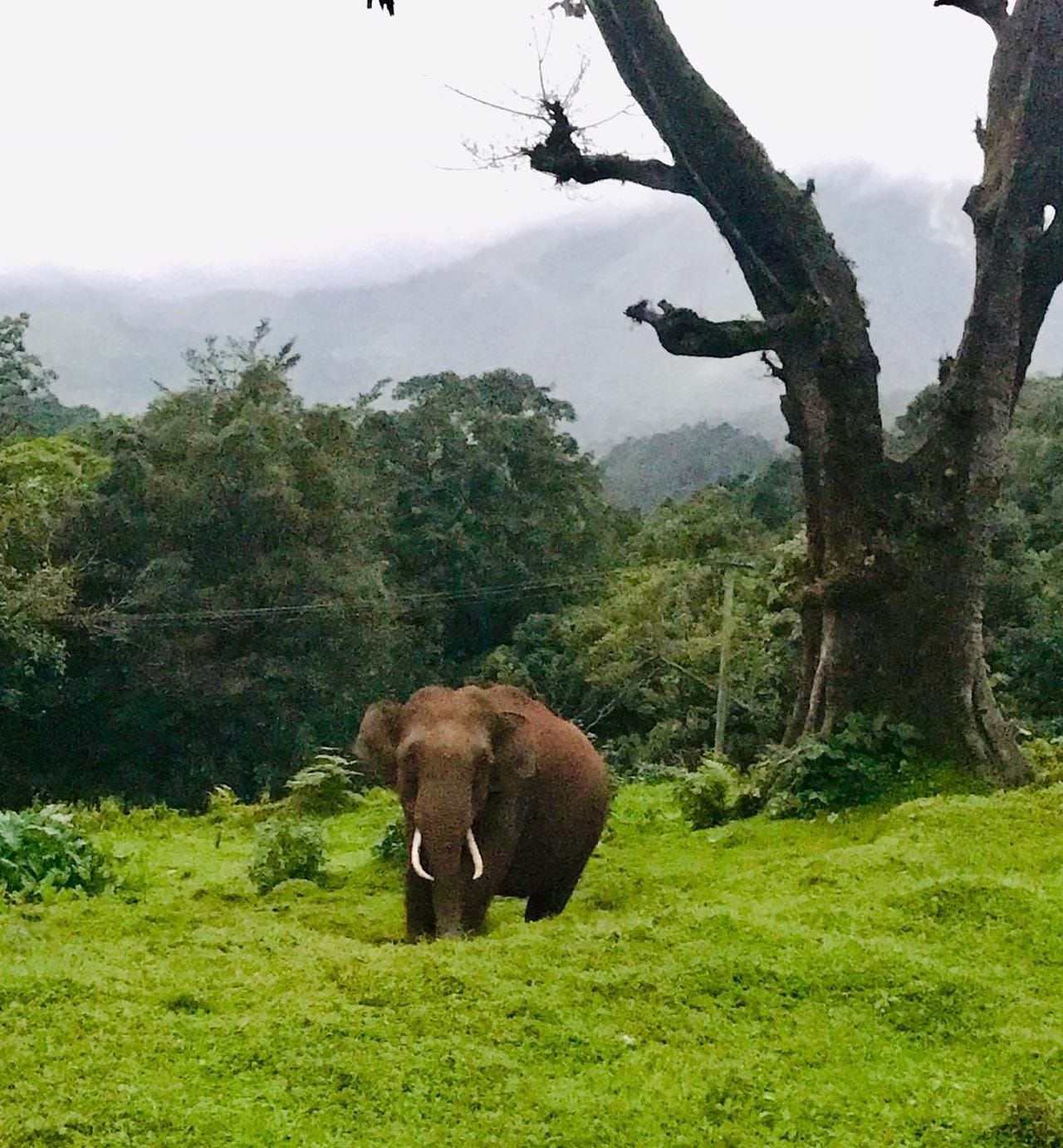
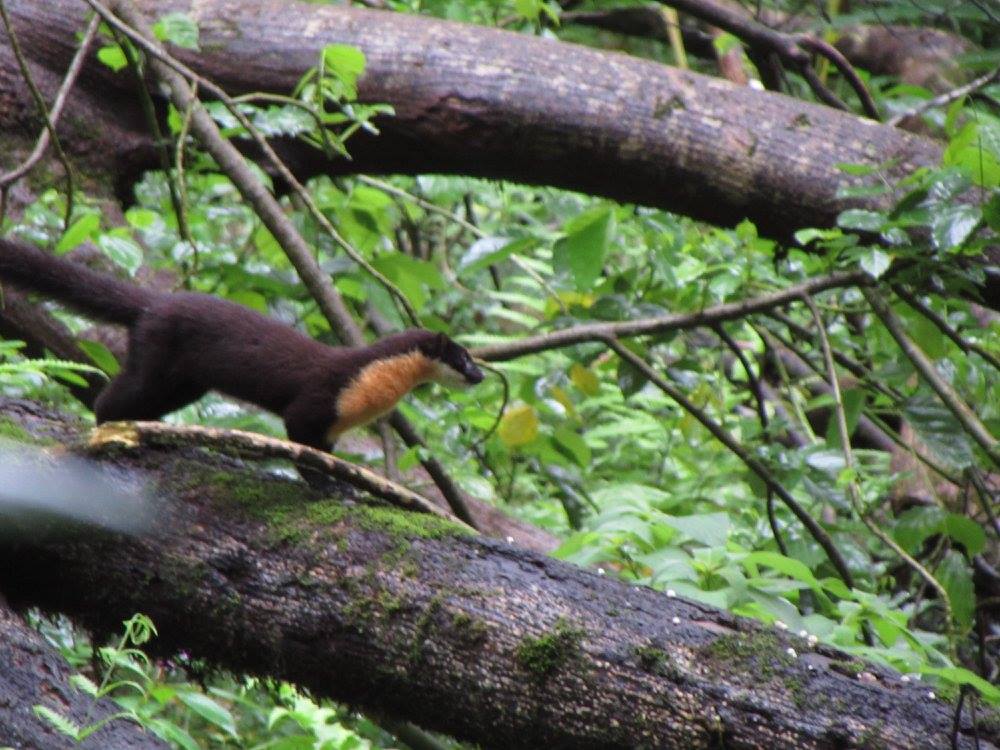
Left: A young tusker grazing in front of the bungalow grounds at Fringe Ford. Right: The elusive brown mongoose. Photos: Fringe Ford.
A partial history of Fringe Ford
Chamanwala’s family trace their title to a land grant issued in 1913, when the land was pristine rainforest and grassland. In the following decades, planters converted much of this valley into tea, coffee, cardamom and arecanut plantations. The stretch that includes present-day Fringe Ford was used mainly for logging before becoming a coffee and cardamom estate after independence in 1947.
This estate ran into the 1971 Kerala Private Forest (Vesting and Assignment) Act, which automatically transferred all privately held forest land in Kerala at the time to the government, while exempting land already under active cultivation – including plantation land.
Under the new law, the family that owned the estate at the time had lost roughly half their holding, about 500 acres, to the government as vested forest. The other half, also about 500 acres, was confirmed by the courts as plantation land and explicitly exempted from the purview of the law. It was this exempted land that Chamanwala’s father bought in 1995. And six years later, in 2001, it was 405 acres of this already exempted land that the forest department notified as private forest. In effect, the forest department was claiming that 405 acres of the estate, classified in 1971 as plantation land, were actually private forest that should be handed over to the government under the law. The Chamanwala family has since disputed the claim in various courts while staying in possession of the land.
 Shoma Abhyankar
The protracted legal battle that ensued then continues even today. But the effect on the estate was immediate. “Even though we continued to own the land, hold the land, the forest department started restricting our plantation activities quite a bit,” Chamanwala says. Routine work such as shade cropping and the felling of old trees for bridge repair became difficult without running into forest department officials. Access to irrigation equipment and the plantation areas became impossible. As the estate fell into near abandonment, other people moved in. “There were people who started setting up small clay-based distilleries to produce arrack,” an alcoholic drink made from the fermented sap of the coconut flower. “And they were growing marijuana at a really large scale in the forest beyond our plantations,” Chamanwala says. He spent the next several years in open confrontation with these groups. “I’ve been shot at, our cars have been pelted, the road has been dug up, our septic tanks have been blocked. Every night there used to be gunshots all around the estate.”
With Fringe Ford, the solution Chamanwala was looking for was simple. “The idea was to create a space where people could go on walks on the land that we still hold but were fighting with the forest department about,” he says. “We realized that we’d have more control because we designed all our walks in that wildlife homestay to cover every corner of the estate on a daily basis.”
Within a few years, the illegal activities had subsided, and the estate was inadvertently left to rewild itself, he says. “Areas that needed to rejuvenate, rejuvenated. The water tables became better. Animals found sanctuary there.”
Private rewilding in India
Chamanwala may have come to this work through a distinct set of circumstances, but private rewilding efforts like his are not isolated ones. India is witnessing an uptick in rewilding by private landowners who see biodiversity gains in allowing patches of wilderness to flourish within their landholdings. The country has lost approximately 2.4 million hectares of tree cover since 2001, including 370,000 hectares of primary forest, according to Global Forest Watch. The ecologically sensitive Western Ghats – the mountain range where Fringe Ford is located and which is one of the world’s 36 biodiversity hotspots – has lost 5 percent of its evergreen forest cover in that period. That amounts to a significant loss of habitats. “If landowners, be it plantation owners, institutions or private citizens, were to let even small sections of their land recover naturally, it could create hundreds of additional habitats across India, extending the ecological support provided by our wildlife sanctuaries and national parks,” says ecologist and wildlife scientist K. Sivakumar.
Over the years, Chamanwala has amassed a significant body of data on the behaviour and movements of rare and elusive species on his land. The US-based Field Projects International has been using the land as a field station, bringing researchers to study the local flora and fauna and sharing their findings with him. He has also deployed camera traps across the estate, capturing hundreds of hours of footage on the elusive Nilgiri marten – the only marten species in southern India, classified as vulnerable on the IUCN Red List – the Indian brown mongoose, and many other arboreal species. But Chamanwala says he is unwilling to share this data with the forest department or with other organizations. “The moment you share that data, you make yourself vulnerable,” he says.
 Ananya Singh
The problem is not one law but several: national and state-level legislations that have accumulated in India over decades without ever clearly addressing private conservation. Plantation land has a recognized legal status; land that begins to look like forest attracts a different set of rules, including the possibility of state takeover. Nothing in between exists for someone who wants to do what Chamanwala is doing. “You’re never allowed to have clarity. There’s always ambiguity,” he says. “If it’s not the Kerala Private Forests (Vesting and Assignment) Act, the forest department is ready with a notification for Kerala Forests (Vesting and Management of Ecologically Fragile Lands) Act, which complements the Vesting and Assignment Act.” The latter allows the state to notify privately held land as ecologically fragile and take it over, sometimes without compensation. “So there’s always that double-edged sword on a planter’s head.”
This legal uncertainty shapes even the most granular decisions at Fringe Ford: what to plant, where to clear, how visible to make the restoration. This year, Chamanwala cleared much of the undergrowth on his land not because the ecology demanded it, but because Kerala’s Taluk Land Board, a quasi-judicial body responsible for implementing land reforms that periodically reviews whether plantation lands are still being actively farmed, was due to visit. An inspector needed to see whether the coffee plantation was indeed there.
“Visually when he’s seeing it, he has to see the established coffee that’s been there for the last 70 to 80 years,” Chamanwala explains. “So I needed to clear all that up, make sure the line of sight is clear, so he can see the last bush at the border of my property to the roadside.” The pockets of undisturbed undergrowth he had carefully cultivated over years had to go – or enough of them to satisfy the inspector. Chamanwala continues to plant cullenia, jackfruit and other native trees as part of his rewilding effort, but the scale is constrained. “Any effort that we think of is shot down by the fear of ‘What will the local ranger come and tell me if I’m doing this? What will my forest officer come and tell me if I’m doing that?’ You are constantly looking over your shoulder.”
Environmental lawyer Sairam Bhat believes the more realistic threat to private conservationists like Chamanwala is not outright acquisition of title, but rather an ever-tightening control over how the land can be used and what can be done with what grows on it. “The forest law is quite complicated. It is the duty of the government to simplify this law to ensure that there is better compliance and to strengthen private conservation efforts,” he says.
For now, private landholders, conservationists and rewilders have to make some hard choices. “If I open a 50-room resort here, I’ll be allowed to exist in peace. But if I’m running a five-room wildlife homestay, the notifications keep coming.” Over the past two decades, Chamanwala says, he has turned down opportunities to make Fringe Ford a fully commercial venture. “I've had offers from Taj to convert it into Taj Safari properties, which I’ve refused.”
But not everyone can hold out, and land fragmentation is the biggest fear and an inevitable outcome. Fringe Ford’s neighbouring tea estate, also surrounded by the same wildlife sanctuaries, is being broken up and sold off in parcels. “The owner is breaking it up into 20-, 30-, 50-acre parcels, and selling it to people who in the future will sell it, who will break it up into 10-acre parcels. And right by this pristine conservation-oriented effort that we are putting in, we’re going to have a lot more population that’s going to be putting pressure on the forest right here,” Chamanwala says. Paradoxically, under India’s current laws, converting plantation land into a resort is easier than creating and sustaining private lands dedicated to conservation and rewilding.
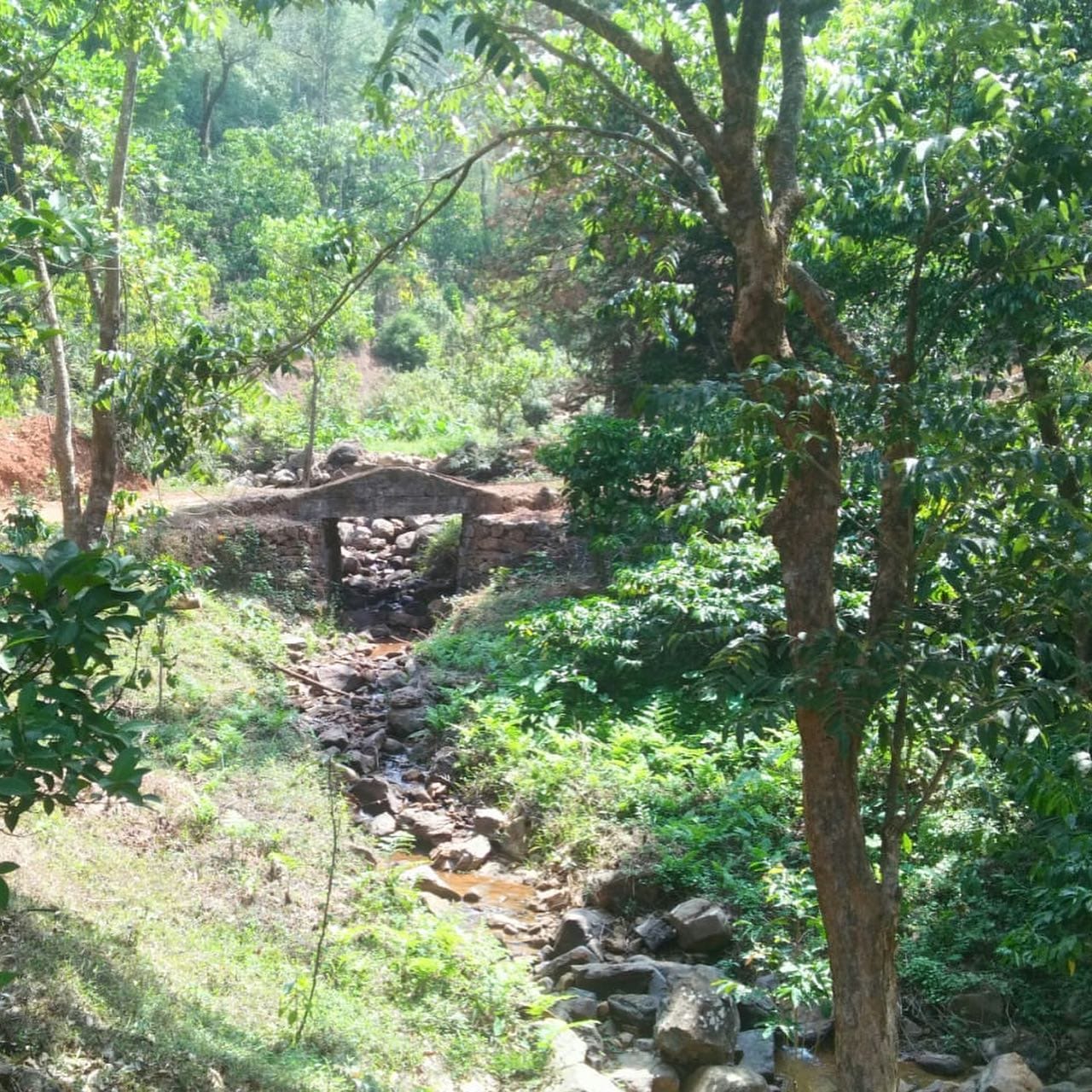
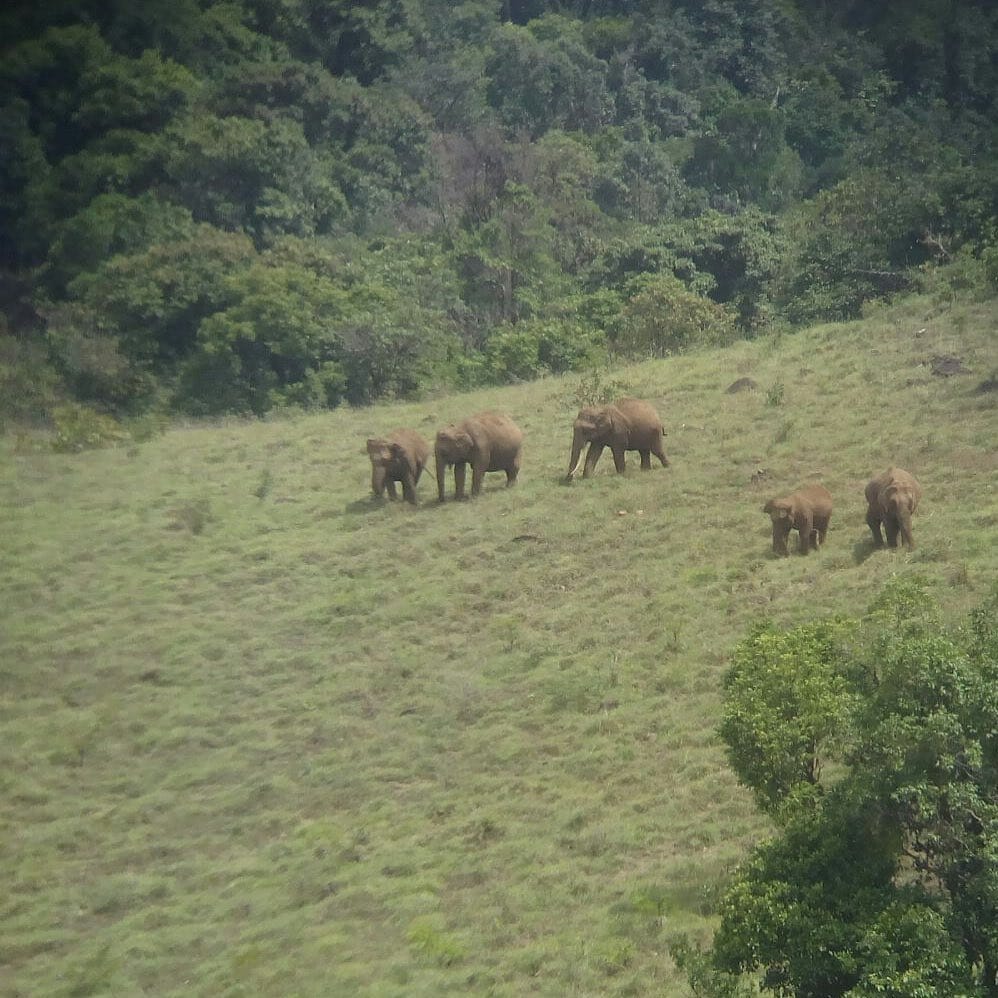
Left: A walking trail at Fringe Ford. Right: Elephants graze on Fringe Ford's patches of grasslands. Photos: Fringe Ford.
The search for solutions
Given the legal ambiguities, any rewilding at Fringe Ford has to proceed without announcing itself as such. In 2008, the forest department sent a second notification to Chamanwala, this time correcting what it said were errors in the first 2001 notification, and marginally reducing the disputed area from 405 to 395 acres. Since then, as the case has gone through multiple courts, the size of the actively contested land now stands reduced to 112 acres, and on this, Chamanwala maintains active plantation, establishing irrigation, planting coffee and building roads to protect his claim. “I’m doing stuff that I wouldn’t do if I was keeping it as a private conservation landscape,” he says. “There’s no provision in the law for me as an individual to conserve landscapes, either at the Centre or in the state. So you have to disguise it as a plantation.”
Even that has not bought him certainty. The forest department, Chamanwala notes with some irony, now relies on Fringe Ford to safeguard the valley. “They’re very happy that we’re there doing what we’re doing. But it doesn’t stop them from every few days coming and surveying, making it look like they might be issuing us another notification, keeping the ambiguity alive.”
 Bharath Thampi
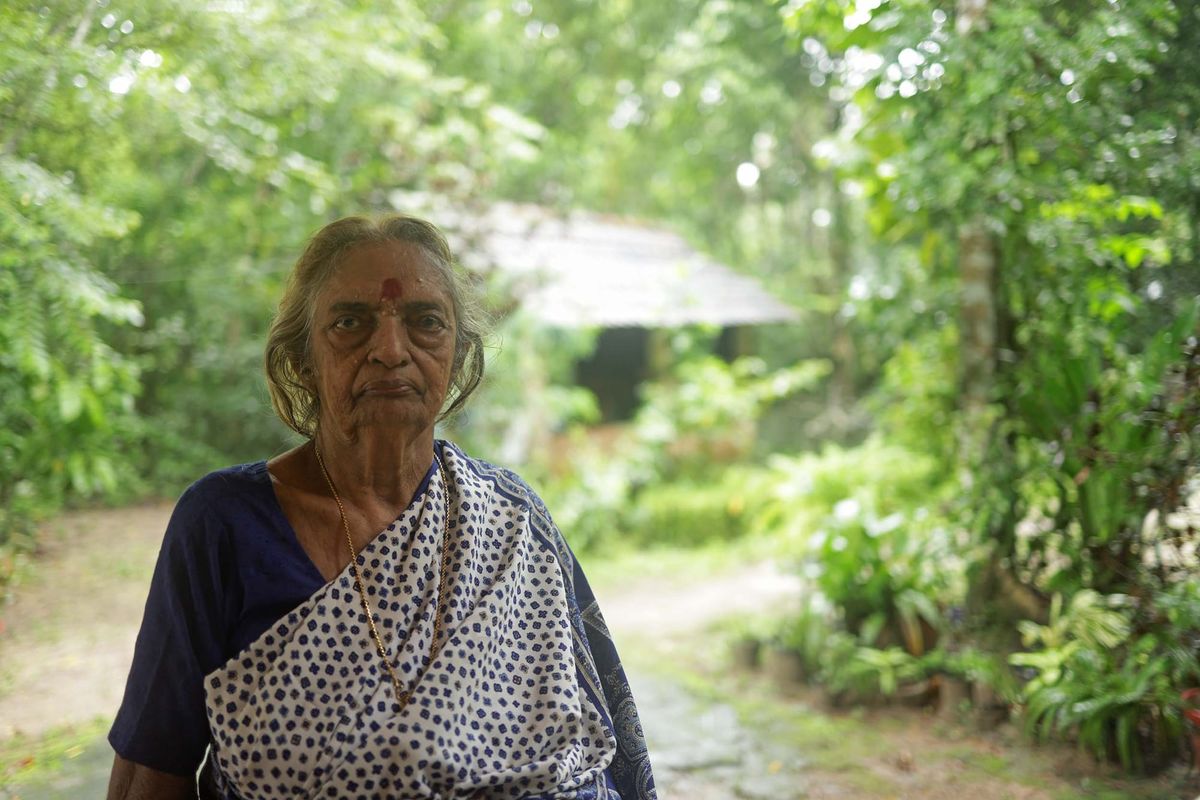
It’s this gap between what he’s built and what the law can actually protect that pushed Chamanwala to look past his own case. In 2017, he presented policymakers with a detailed proposal for what a law enabling private conservation in India could look like: land committed to forests in perpetuity, responsible tourism and research as permitted revenue streams and tax breaks for long-term owners, among other things. He volunteered Fringe Ford as the first land to be conserved under such a framework. Such a law has not come. But he has been buying parcels of land in surrounding areas anyway – including a piece of the neighbouring tea estate that was edging into his land, just to keep construction at bay – and hopes that if the legislation does arrive, these landscapes will be conservation ready.
Without a legal framework that recognises private conservation, he says, there is no possibility of a broader movement taking shape. “Courts will only look at individual cases. We need a legal framework first that recognizes private conservation – it is only based on such a framework that we can come together.”
Looking to the future
It is not surprising then that Chamanwala sounds hesitant when it comes to considering the question of legacy. The future of Fringe Ford, he says, will depend on what burden he is willing to pass on to his daughters. The legal battles that have followed him since the family acquired the land on which Fringe Ford now sits has cost him close to 10 million rupees (roughly $160,000 CAD) in legal fees over the past four to five years alone. His daughters visit often and are drawn to the work, but he has deliberately shielded them from the legal weight he carries. “I am not willing to pass on a burden where they have to keep fighting, which I’ve done all my life.” If policy clarity comes in his lifetime, he will pass the land on as a conservation project. If it doesn’t, his instructions to them will be simpler: “It’s a commercial enterprise. Milk it for what it’s worth. Do what you like with it.”
What perhaps makes this harder is how his relationship with the landscape where Fringe Ford now sits began. Chamanwala was 14 or 15 when he first encountered this land – young enough to be inspired to buy his first bird book and his first binoculars, to start learning what he was looking at. That early feeling, he says, was infatuation. “You’re not fully aware of what you’re looking at and what exists there and what coexists and how it complements the people there.”
 Rewilding Magazine
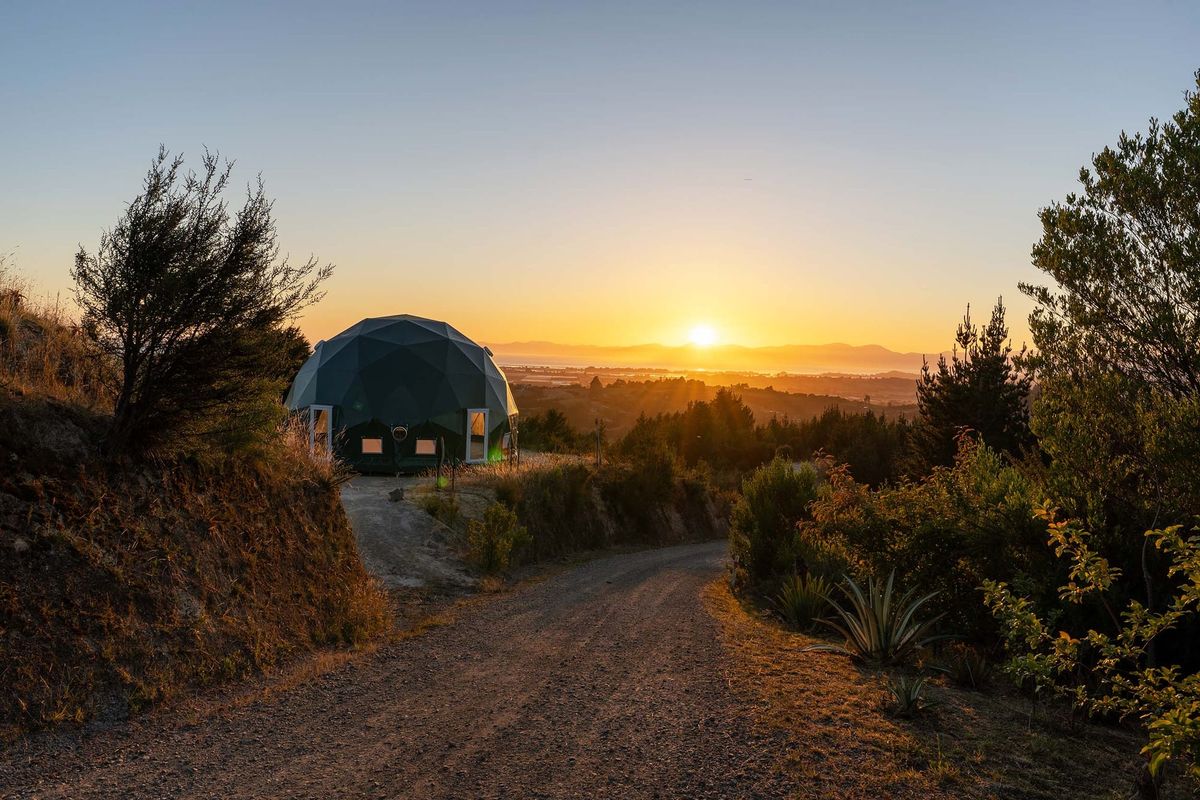
Over 30 years, that initial feeling has become something else. “It’s evolved into a true deep relationship with and love for that landscape. It is part of me.” The trees are taller now. Parts of the valley have disappeared behind the canopy. One evening, sitting on the front porch of the bungalow, he spotted a tiger 70 metres away. It stood there for 45 minutes. Later, they heard the commotion of a sambar killing in the distance. This is the land he has spent two decades in courtrooms fighting to protect. The protracted legal battles leave him frustrated, and yet it is also that original infatuation – now deepened into something far too complex to name – that keeps him going.
For anyone considering similar work in India today, his advice is simple: “Just come with a mindset that there will be ambiguity. But don’t stop doing it because there’s ambiguity.
“I’ve enjoyed Fringe Ford despite the ambiguity for 30 years of my life,” Chamanwala says. “That’s why I do it. I love the landscape. I love going there. I love taking my children there. I love taking my friends there because every time you go, there’s something exciting happening. There’s something new going on. There’s something growing. That gives you joy.”






Comments ()