

The artist mapping buffalo repatriation
Through her work, interdisciplinary artist Nevada Lynn connects with the buffalo and her Métis heritage.

The North American bison, also referred to as buffalo, looms large physically, ecologically, culturally and historically. The ungulate is a keystone species of the plains. It’s a sacred symbol and traditional source of food, clothing and more for many Indigenous nations. And its near extinction in the 1800s is closely tied to colonization, the growth of Canada (not to mention the U.S.) and the country’s fraught relationship with Indigenous peoples.
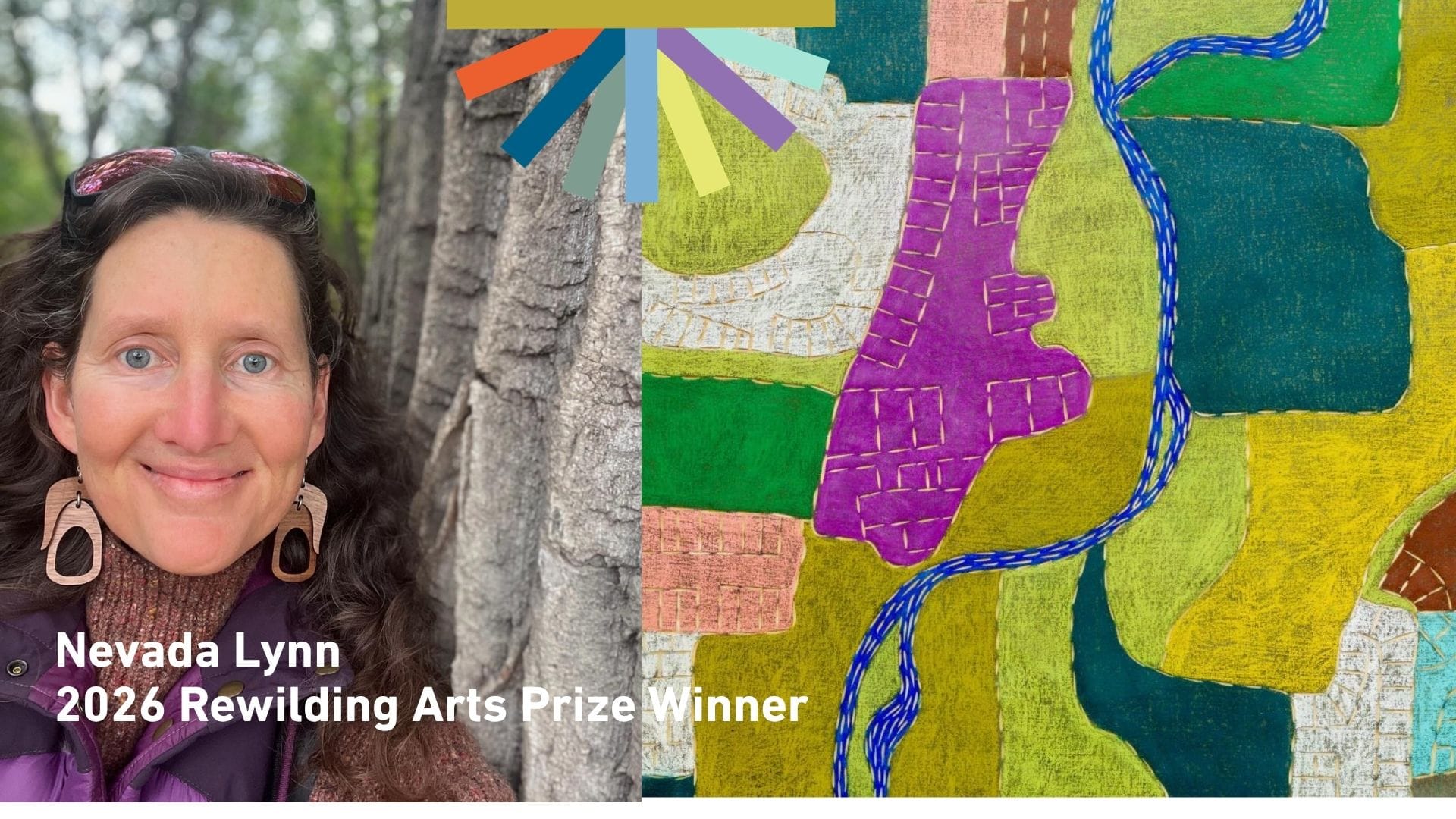
The bison is also the core theme of artist Nevada Lynn’s series we-buffalo, for which she became one of five artists awarded the David Suzuki Foundation and Rewilding Magazine’s 2026 Rewilding Arts Prize.
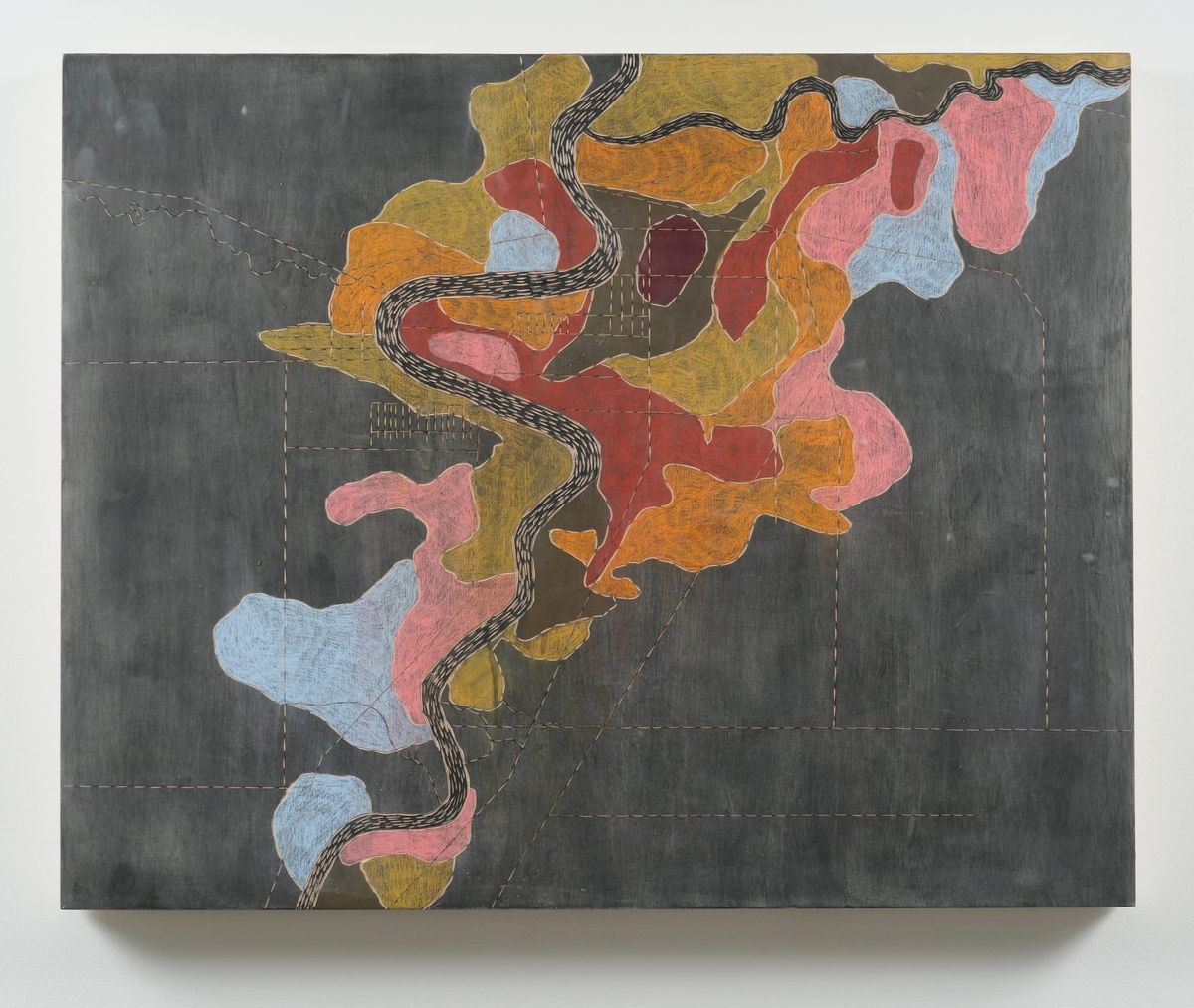
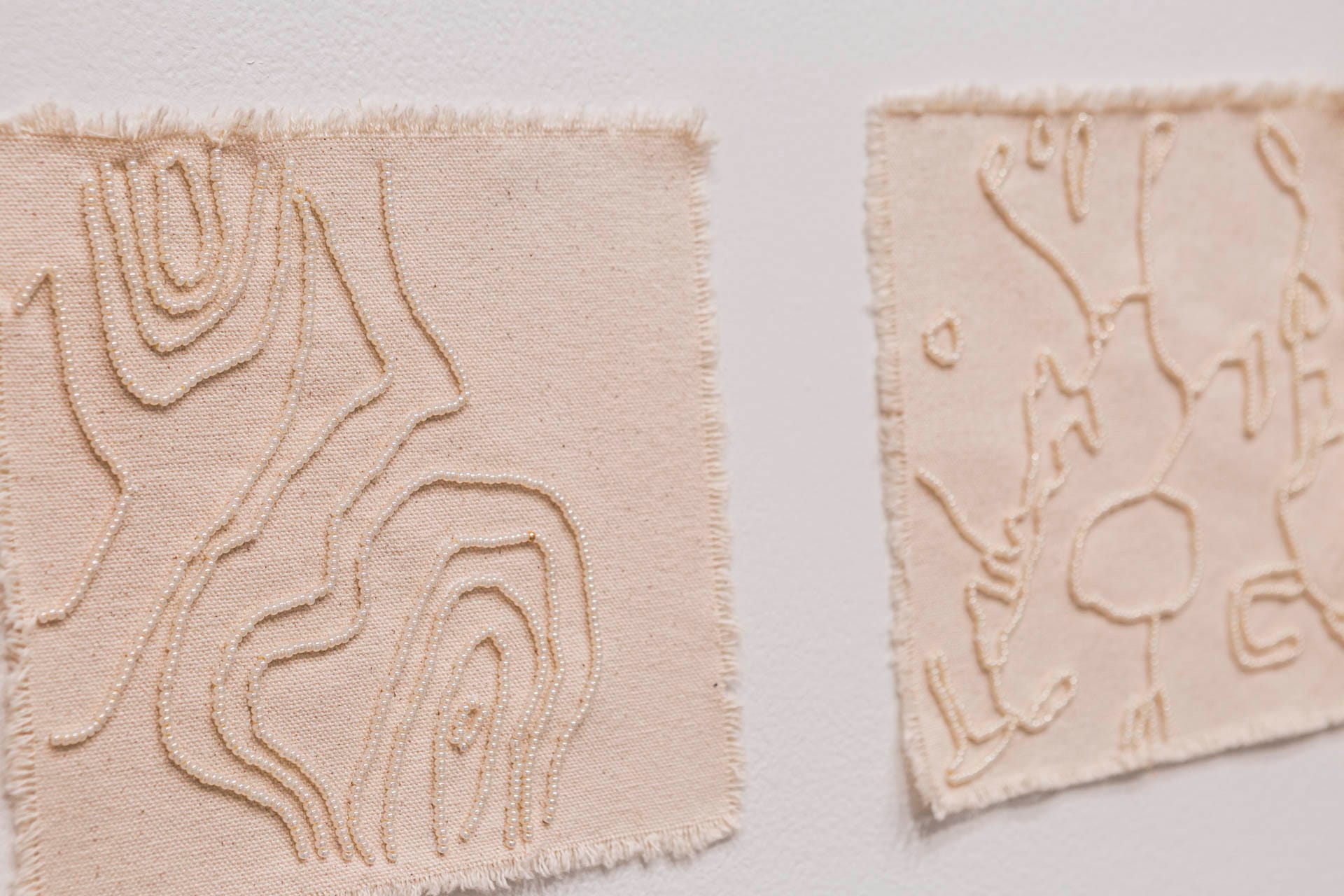
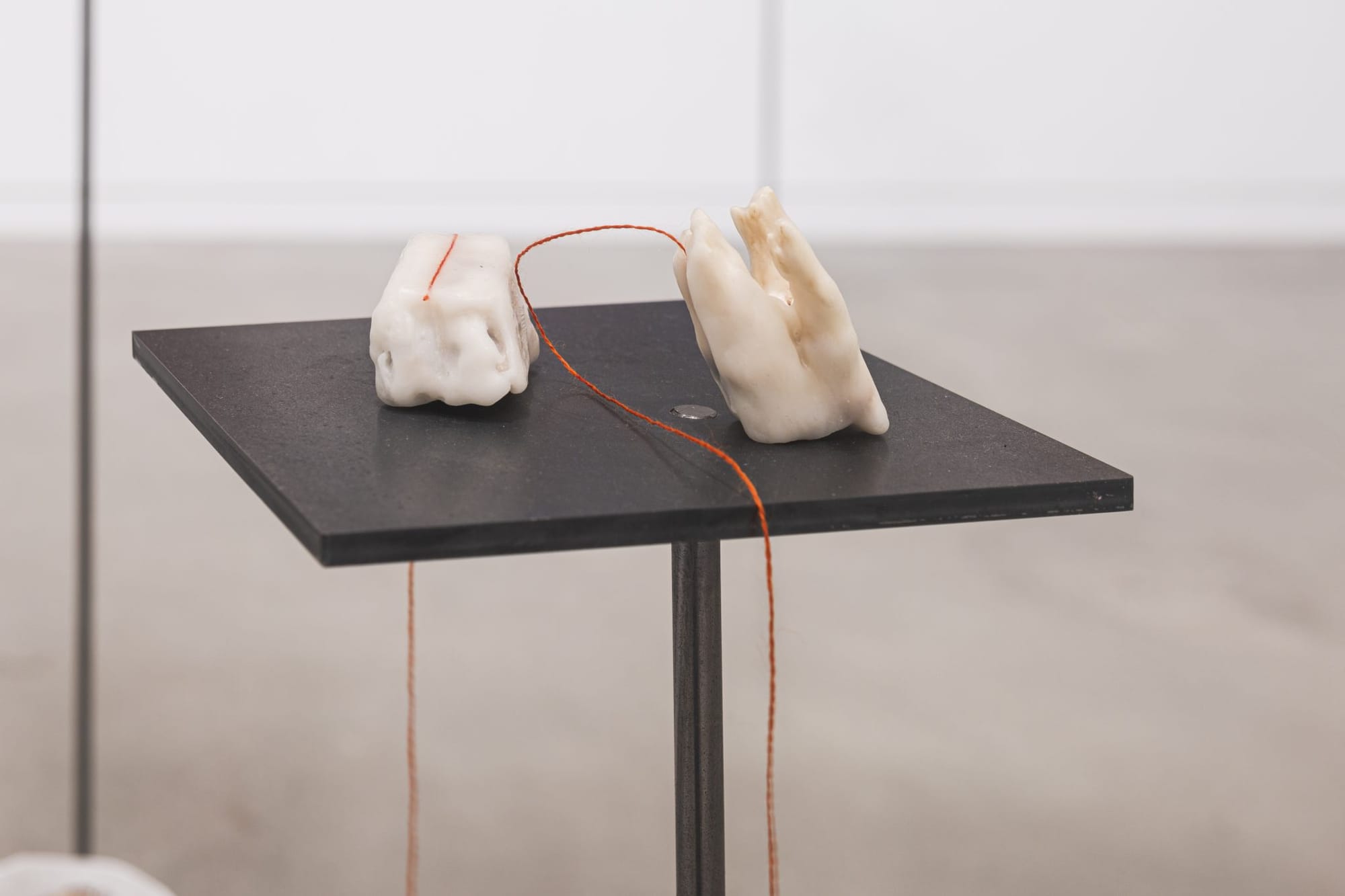
we-buffalo is a collection of eight mixed-media panels, found buffalo teeth and beaded canvas hangings. Lynn used charcoal, pencil crayon, ink, pigment, beeswax, resin and carving to create buffalo imagery and maps depicting various sites where buffalo have been repatriated, such as Banff and Elk Island National Parks in Alberta, as well as the birthplaces of her Métis relatives.
Through her work, Lynn explores the idea of “buffalo repatriation as an act of cultural resurgence and renewed kinship.”
We spoke with the B.C.-based interdisciplinary artist via video call and email about her work, winning the Rewilding Arts Prize and her favourite spot in nature.
 Zack Metcalfe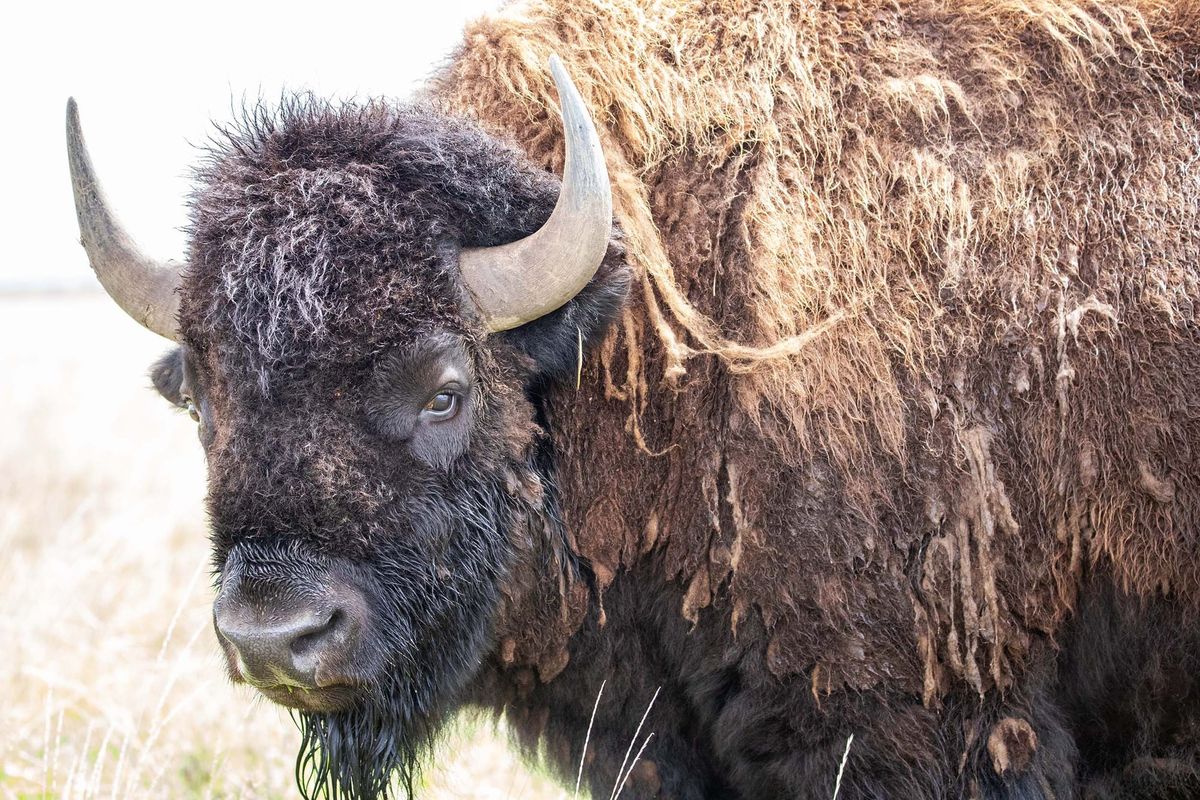
Rewilding: Tell us about “we-buffalo.”
Nevada Lynn: In [Dr. Tyson Yunkaporta’s book] Sand Talk, he writes about how some Aboriginal beliefs, ways of seeing the world and ways of understanding life cannot be translated into English because of the colonial nature of the English language. A lot of foundational understandings sit so far out of the colonial approach that language becomes a barrier.
Yunkaporta pairs words together like place-time – the idea that they’re not separate. The way we think about and organize time today is closely tied to capitalist ideas of productivity. It doesn’t take into account the seasons, the fact that we age, or that we have responsibilities to our families – all different, important ways of being that have nothing to do with being productive capitalists.
Another Indigenous scholar in Brazil named Ailton Krenak pairs words in a similar way in his book Ideas to Postpone the End of the World.
That inspired me to come up with this term, we-buffalo – the idea that we are not separate. As Métis people, we are kin with the buffalo. The term reflects our relationship as relatives and family.
The work itself started with a film called Singing Back the Buffalo [by Tasha Hubbard], which is about how [Indigenous] nations came together to repatriate buffalo herds into the wild. (One of the herds went to Banff National Park.) I saw that film a few times and was inspired by it.
Zack Metcalfe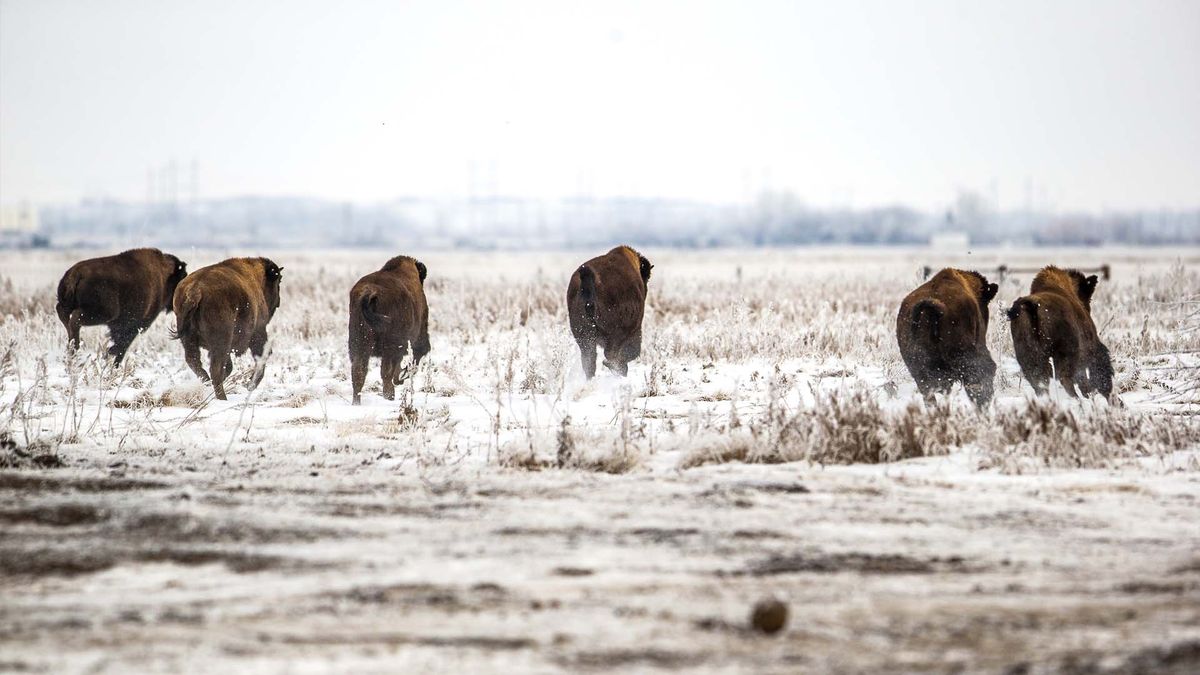
Fast-forward to my mom getting sick with stage four cancer. She lives in northern Alberta, on a farm just a few minutes from the homestead that my Métis grandfather initially settled. I went to help take care of her and while I was there, one of my uncles told me the story of a guy who had been farming buffalo near my mom’s farm. The price of feed went up and the price of meat went down, and he went onto his land and shot all of his buffalo right where they were standing.
It was a particularly poignant story for me because – my mom is in remission and she’s doing just fine now – but that was a very tender time for me. When I heard that story about the buffalo, it shook me.
I was able to retrieve some of the bones and skulls of the buffalo and clean them with the help of my sister and my mom.
“Rewilding is about restoring relationships that allow life to thrive.”
As we were cleaning the skulls, I was thinking about the buffalo and asking myself, what makes someone create such a horrific act? It made me think that the historic treatment of the buffalo is in our psyche. The devaluation of life doesn’t disappear overnight; it leaves traces in how we relate to one another.
It’s similar to how Indigenous women and girls are treated and the crisis of missing and murdered Indigenous women, girls, two-spirit and trans people. There’s so much apathy around it. People don’t seem to care to do something about it – the police, the health authorities, people in positions to help.
Buffalo repatriation and healing this relationship with buffalo is an act of rewilding. Rewilding is about restoring relationships that allow life to thrive.
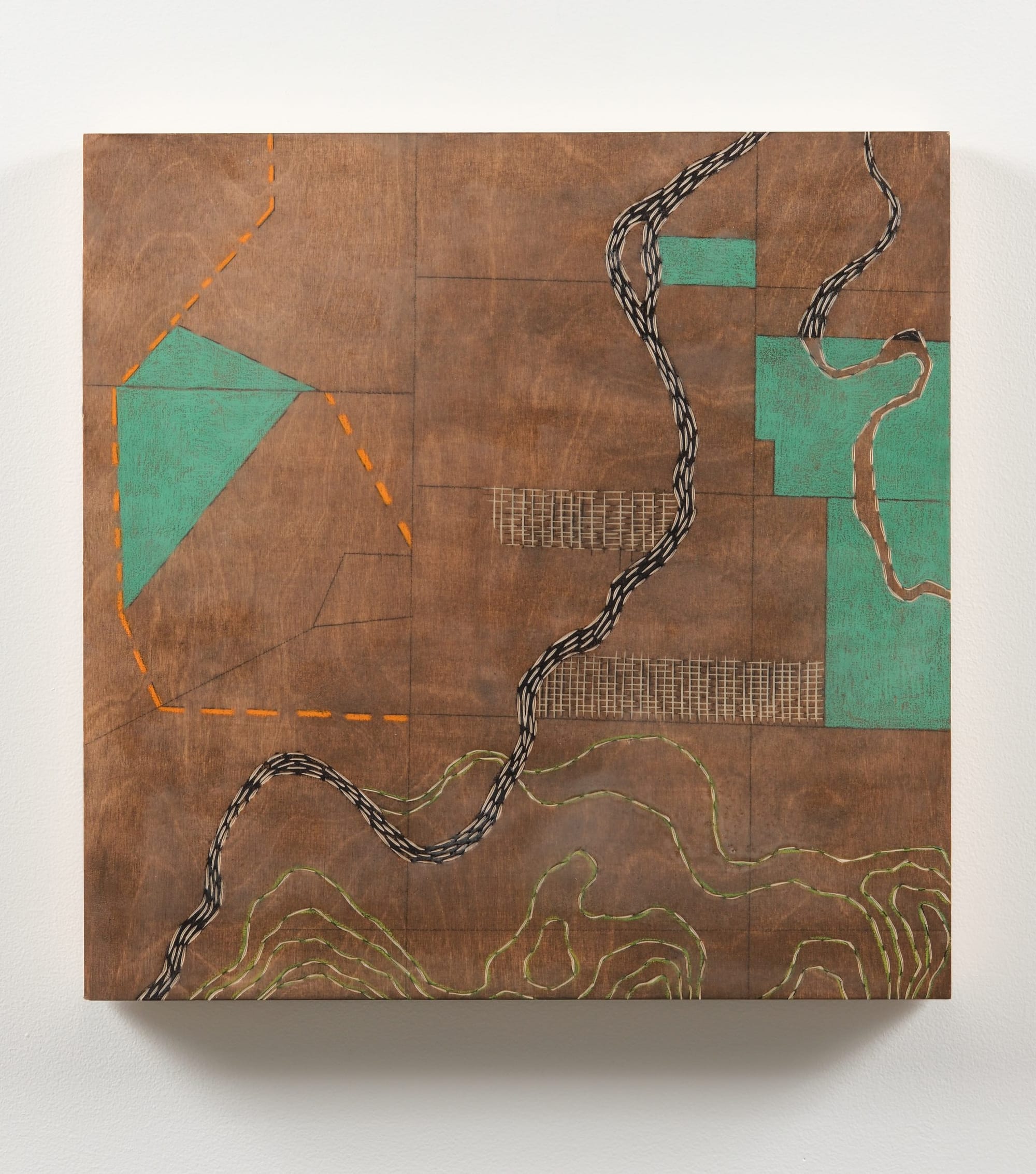
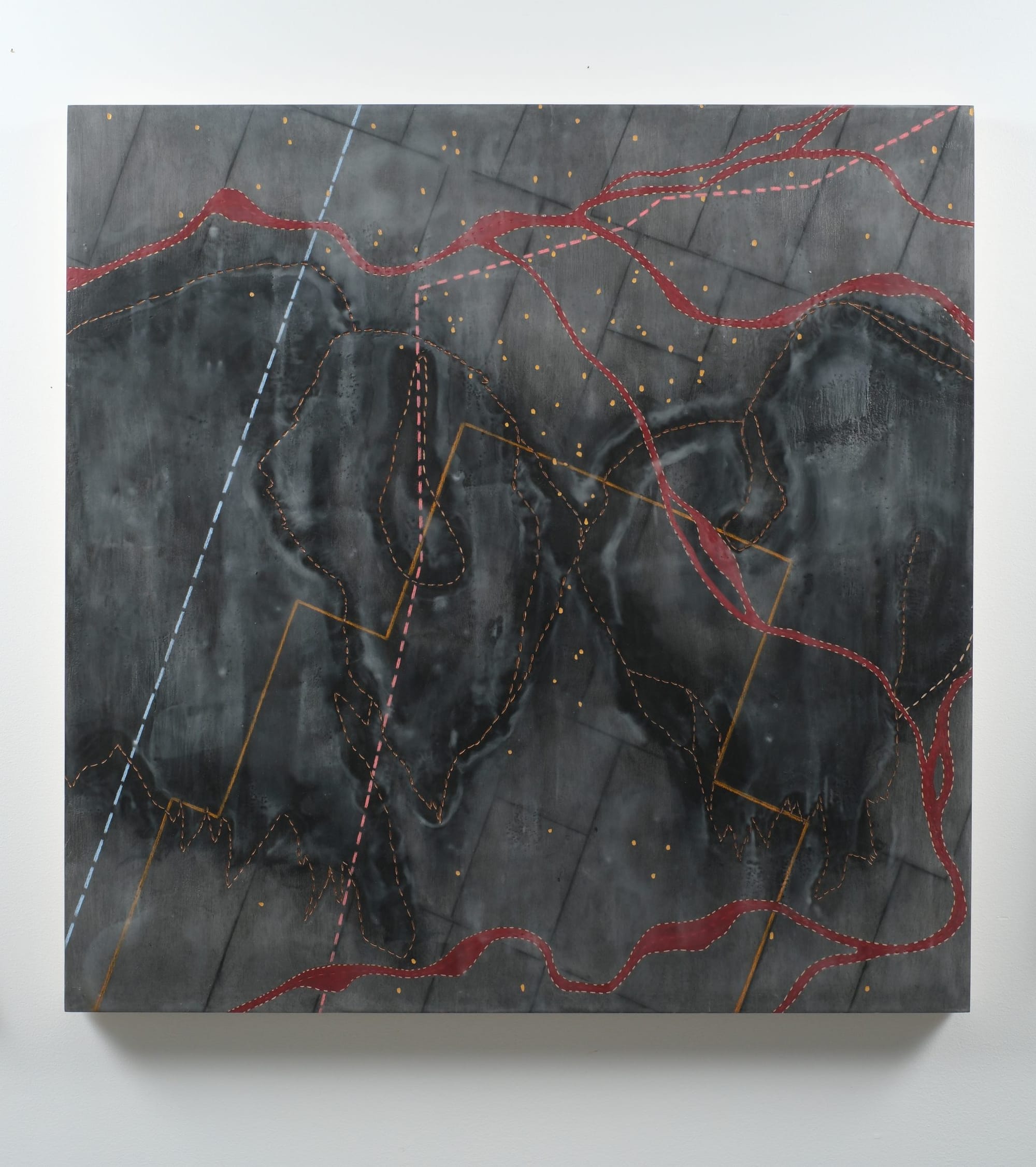
From we-buffalo by Nevada Lynn. Photos: Byron Dauncey.
R: What role do you see your art playing in changing things?
NL: Do I think that we-buffalo is going to create measurable change? I can’t say that I do. But I believe it can start a conversation that can lead to measurable change.
As a Métis artist, as a Métis person who wants to be in community with other Métis people, responsibility to community is the foundation that my belonging rests on. They say, “If you bring wood, you can sit at the fire.” And I very much want to be connected to community and culture, and I want to show up in good ways. So that’s the work that I want to do as an artist.
R: What do you think the Rewilding Arts Prize means within the art world and within the rewilding movement?
NL: Prioritizing responsibility over novelty within the context of the contemporary art world is a truly radical act. Art is so much bigger than the categories we create to define it.
The David Suzuki Foundation has created this prize as a way to make change, connecting artists with rewilding, with earth stewardship, and giving it real importance.
Story might be the most powerful thing there is. Think about media and social media, for example.
Corinna vanGerwen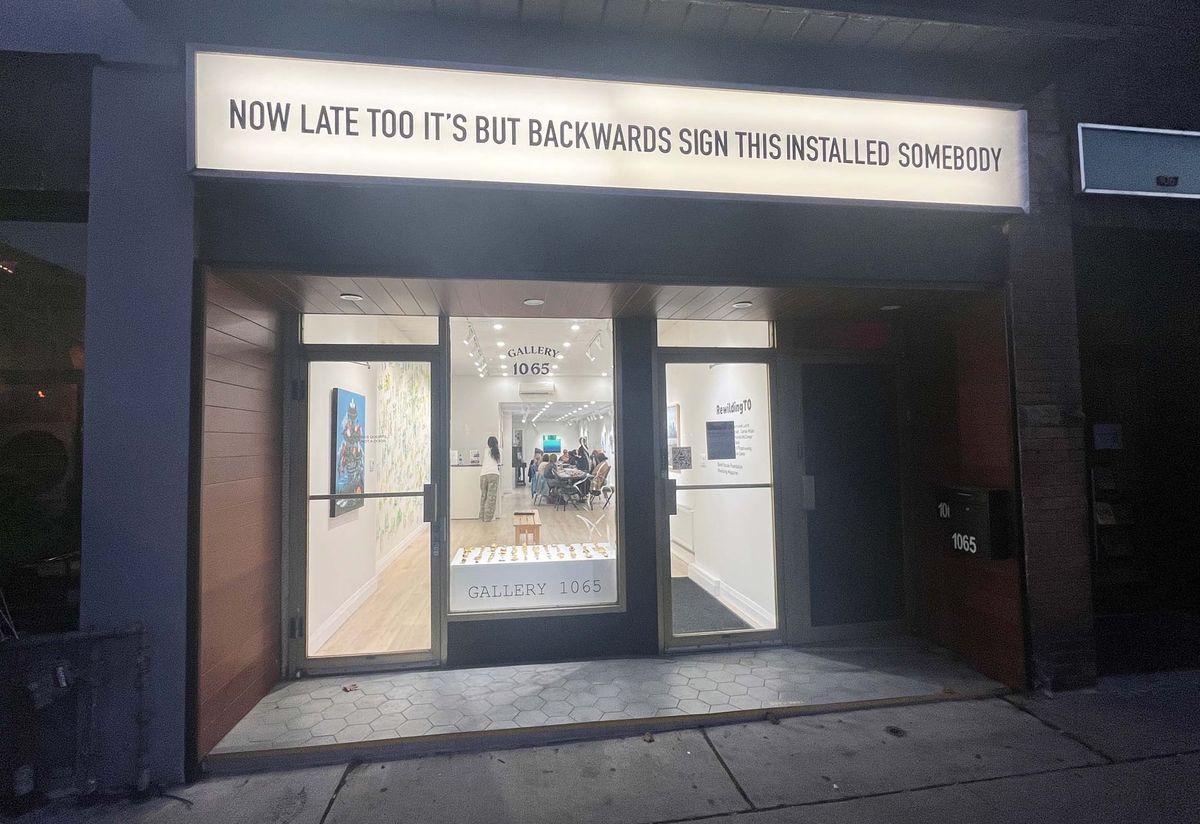
Artists play an important role because story is not only communicated through words. A painting, a song, a film, a beadwork pattern, or an installation can carry forms of knowledge that are felt before they are intellectually understood. Art can create emotional and sensory pathways, allowing people to encounter connection rather than simply being told about it.
This prize is going to help the contemporary artists who win it to get grants. It's going to help them to do more of this work. And that’s the whole point – to be able to do the work.
R: What has winning the Rewilding Arts Prize meant for you personally?
NL: It legitimizes the work that I’m trying to do within the realm of contemporary art and it connects me to a wider community of artists who are working in similar ways. It’s been inspiring to review the work of the finalists and to see what’s possible across so many mediums.
R: Is there another artist working along themes of rewilding, climate change or environmentalism that you think people should know about?
NL: Nicholas Galanin. He connects Indigenous world views with being on the land and with traditional knowledge. His pieces are beautifully made and conceptually strong. I love his work.
R: Where’s your favourite spot in nature?
NL: I love picking berries. I have a few good patches and when I get to them, I take off my socks and shoes and walk around in the moss and pick berries in my bare feet.
This interview has been edited for length and clarity.
This is the first in a series of stories featuring the winners of the David Suzuki Foundation's 2026 Rewilding Arts Prize. Find out more at davidsuzuki.org.
Comments ()