

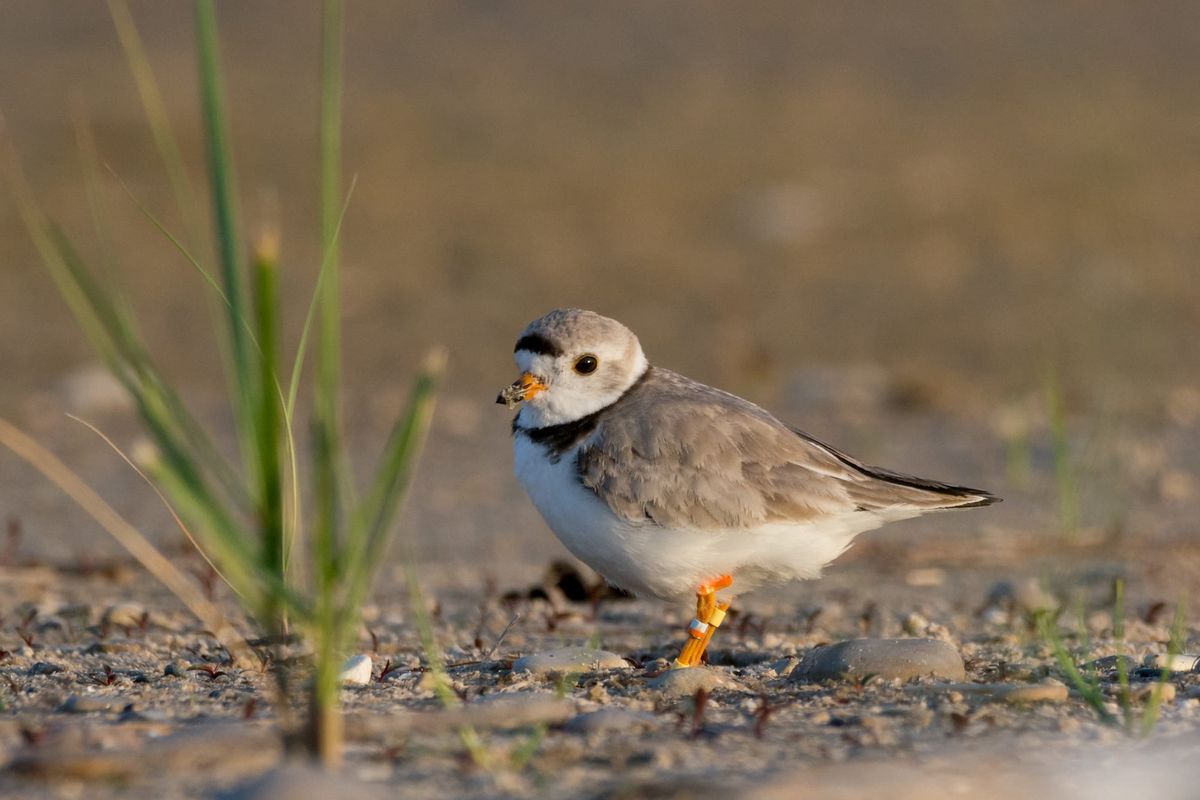
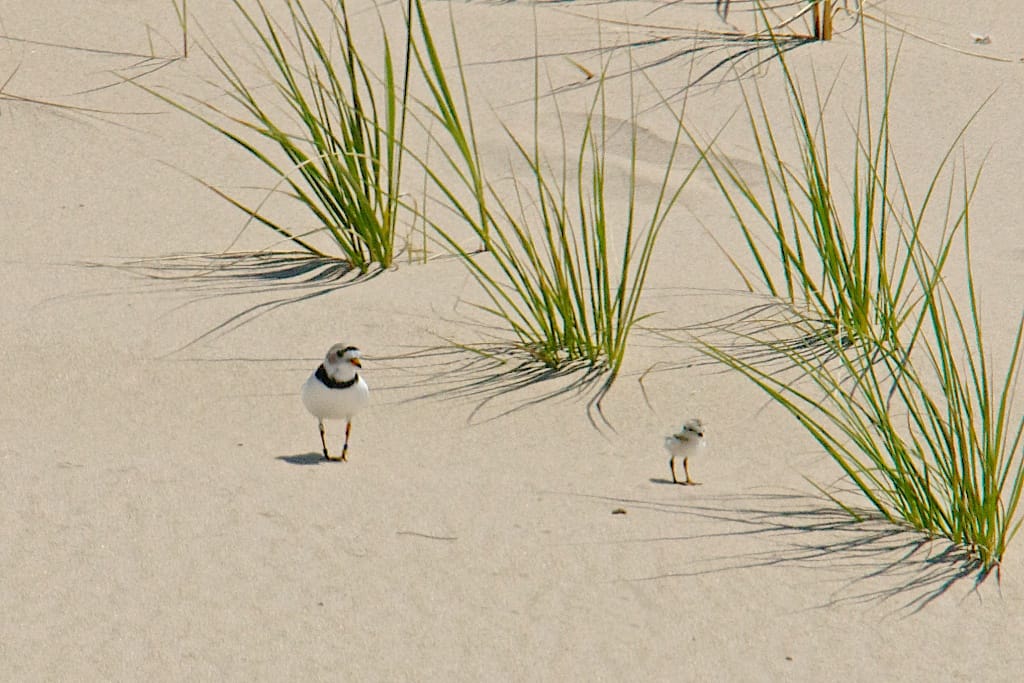
In the 1980s, this bird's population reached a low of just 17 pairs. But effort and care is bringing them back from the brink.
The Great Lakes piping plover (Charadrius melodus) likes to live along sandy beaches in, of course, the Great Lakes in North America. In the past, its population is estimated to have been 500 to 800 pairs. But habitat loss, nest destruction, high tides and predators took their toll and the population fell to between 10 and 20 pairs by the 1980s. The U.S. Fish & Wildlife Service placed the bird on its endangered species list in 1985.
But extinction has been prevented thanks to efforts by various conservation and bird-loving groups as well as governments and land-management agencies bent on bringing the plover population back to its traditional size and range. The Detroit Zoological Society, for instance, partners with volunteers and other agencies to protect these birds and, when necessary, raise them and release them in the wild when ready. The zoo has been working on its Piping Plover Recovery Initiative since 2003 and 88 pairs were counted in 2025. Before the bird can be considered recovered, the count will have to reach at least 150 families, at least half outside of Michigan, where they are now concentrated.
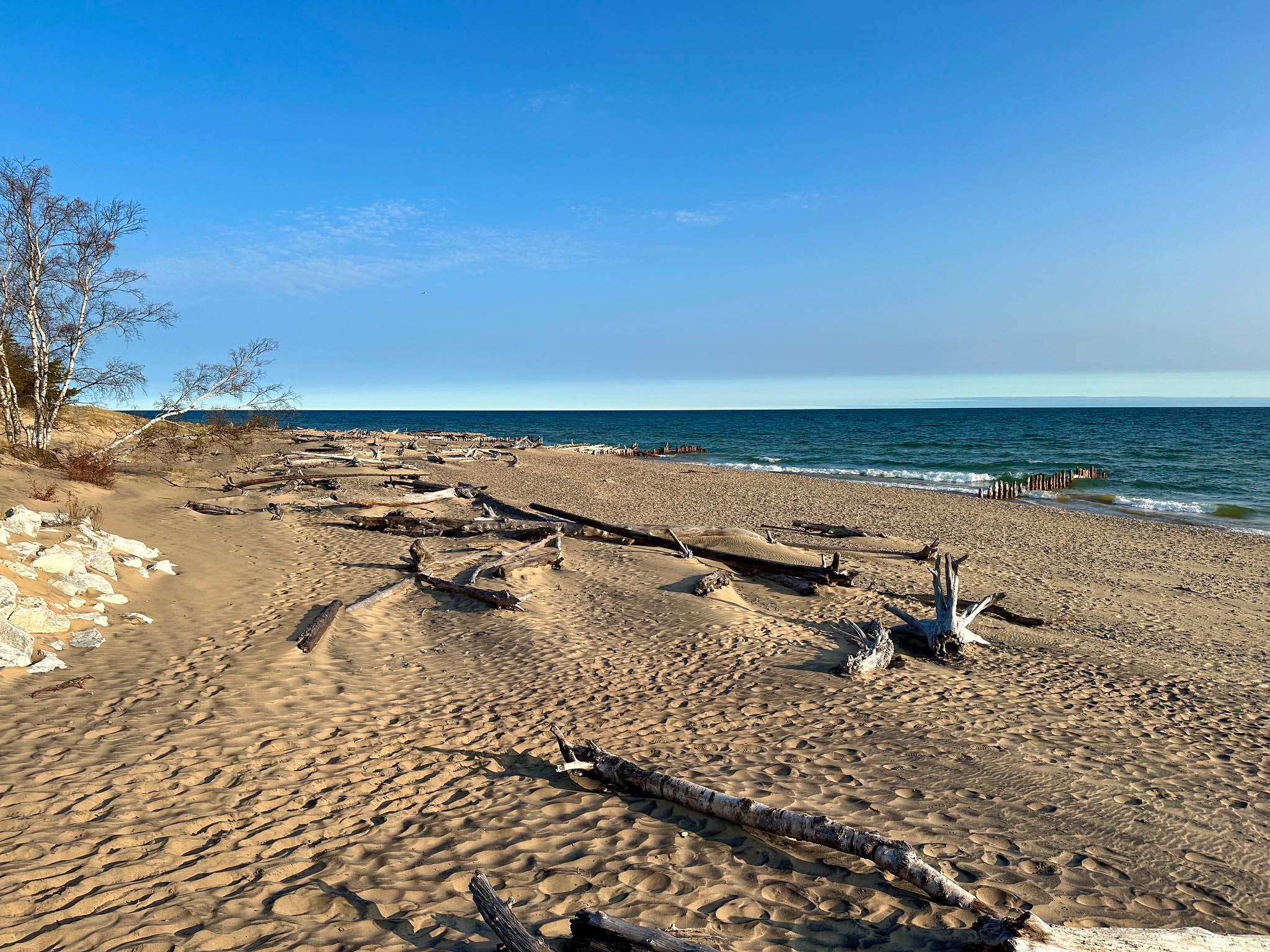
Charlie Ramsey, curator of birds at the Detroit Zoo, has been caring for the plovers since 2011, working with volunteers and chicks. Here, Ramsey describes his work and passion for his flighted feathered friends.
“Last year, we had the highest number of pairs nesting in the wild to date. There were 17 pairs in 1986. Ten percent of the wild nesting population are actually birds that we reared through the salvage rearing program.
We have multiple partners. Almost every wild nest will have a volunteer or somebody working for an NGO or another organization or an academic partner. We have volunteer nest monitors watching every piping plover nest on the Great Lakes, so if they see any predation on the adults, or if there’s a high water year and nests get washed out, we’ll coordinate picking up those eggs from those volunteer nest monitors. We’ll take them to the University of Michigan Biological Station in Pellston, Michigan, and we will artificially incubate those eggs, and then, once the eggs hatch, we’ll rear the chicks. Then when they’re old enough to start flying, they’ll get released back into the wild.
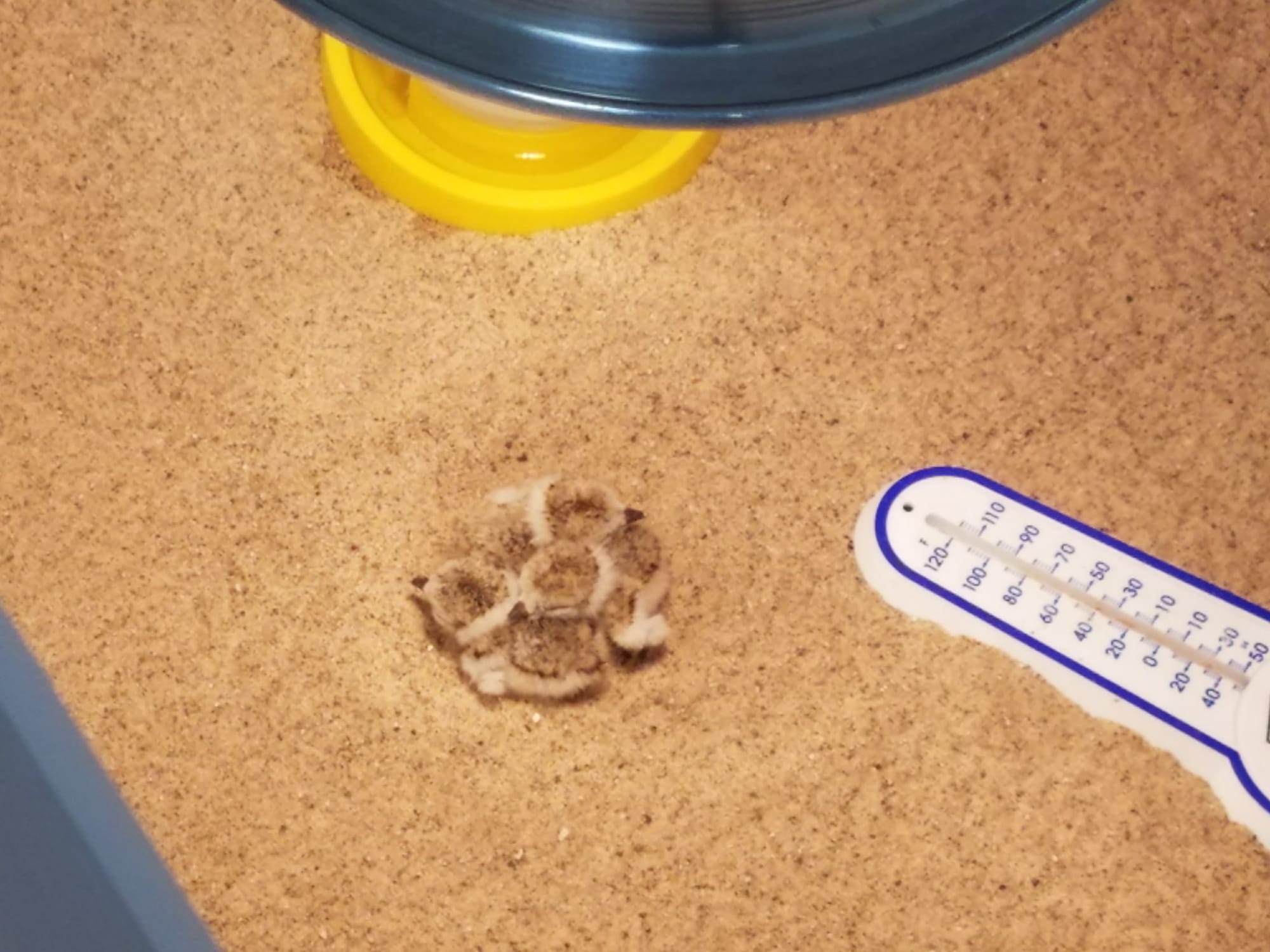
At the beginning of the season, it’s a lot of being inside the captive rearing centre, calibrating and tweaking our incubators to be sure all our equipment is up to the right temperature and humidity. We’ll be preparing some of the pens we’ll be rearing the birds in. Then we’ll get calls from the nest monitors saying we might have to go pick up an egg. Later in the season, when we have eggs in the incubators, we’re going to weigh those eggs every single morning to track their weight loss. A healthy egg is going to lose weight as it develops in a very predictable way. Egg shells are porous and chicks are going to be metabolizing through the yolk sac. We can move eggs back and forth between different incubators that have different humidity. If an egg isn’t losing weight fast enough, we might move it to a different incubator that has lower humidity.
They’re up and running as soon as they hatch. So we’re providing them with food. They’re largely fending for themselves, and usually around day 30, they’ll start doing some practice flights. That’s when we know they’re ready to go back out into the wild. So they’ll be released onto a beach that has wild piping plovers. And then they learn from them the ways of foraging in the wild and migrating and all that good stuff.
 Katharine Reid
We feed them multiple things. They get a lot of crickets. They get meal worms, wax worms, an aquatic black worm. We will go out into the field and catch wild insects that they might encounter when they’re in the wild, and then we’ll offer those to them so they can practice foraging. One of the pens that we raise them in is right on the shoreline, so they can practice foraging on aquatic worms and invertebrates that they would be eating in the wild.
In mid or late May I get a call on our plover phone from a volunteer nest monitor saying, ‘Hey, we have this egg that came from a nest where the adult was predated, and we need to get these eggs to you,’ and then we just kind of coordinate, depending on the location of that nest. We might get abandonments as far as Pennsylvania or New York or even Ontario. We might pick up the eggs and keep them at the Detroit Zoo and our incubators for a couple of days before we can arrange transporting them up to the captive rearing centre. So it’s pretty involved. There’s a lot of coordination amongst our partners. When we’ve gotten eggs from Toronto, there’s some additional paperwork to get them over the border. But at this point, we’ve been doing it so long that it’s a finely oiled machine.
As soon as we get the eggs, we go through a process where we hold them up to very bright light so we can see inside the egg to determine the stage of their development and anticipate what their hatching timeline is going to look like. So we’re tracking these eggs from as soon as we get them, which could be a couple days old, or it could even be almost hatching. When we have an egg that that we get very early on, we track it through its development of around 25 days, and then start to see it hatching. You’ve put a lot of work into this egg, and there’s a lot of in stake for this individual bird. So it can be a little bit nerve-racking, but it’s also very exciting.
It’s even more exciting when we get to be a part of the release. We draw a crowd if we’re on a public beach. Everyone wants to see the wild endangered birds run away. It’s a little bit anticlimactic, though, honestly, because the camouflage on the chicks is so good that you let them go, and they run off into the sand in the distance, and then you just don’t see them again.
 Alexandra De Vylder
We want to keep them to be wild birds. So whenever we’re working in the centre and we have chicks in there, we’ll keep any talking to a minimum. We have shower curtains that we’ll draw around their enclosures so they don’t see us. We have barriers around our pens that we rear them in just to keep people back a bit, give them some space and privacy.
Definitely there are some disappointments. We’ll get some extremely compromised eggs that might have been abandoned by their parents for days, and they’re cold, and we have little hope that they’re going to be viable. Sometimes we’ll put the eggs in the incubator, we’ll see them get revitalized and start developing again, but then they may not hatch, and that’s always disappointing to see.
We have had a couple individuals that are non-releasable. One had a congenital abnormality when she hatched, and we knew that she wasn’t going to make it in the wild. We housed her at the zoo and she lived in our aviary. She lived a pretty decent life.
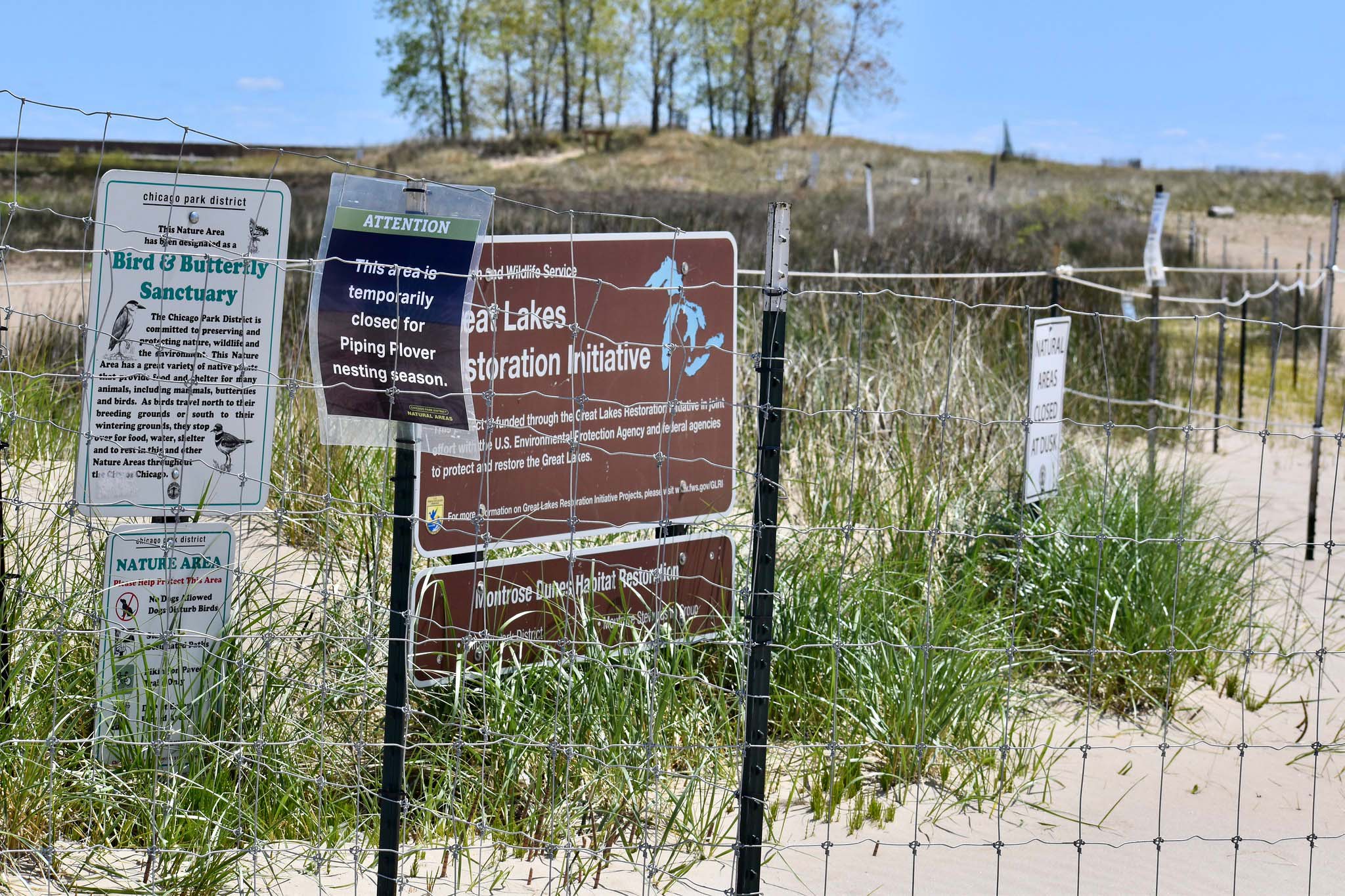
When you see them popping up in areas they have not been in at least in recent years, there is a lot of excitement. The nesting pair that was in Chicago was extremely popular with the public. They were tracking their activity.
I am optimistic that the future of the Great Lakes piping plover is going to be a bright one. Collaboration is key for any conservation program.”
This interview has been edited for length and clarity.
Main image: A banded piping plover on the shore of Lake Michigan at Platte River Point in Sleeping Bear Dunes National Lake shore. Photo: Bill VanderMolen/Flickr.




Comments ()