

The artist who co-performs with plants
Nicole McDonald-Fournier brings together vegetation, dirt and reclaimed textiles in her ever-evolving creative works.
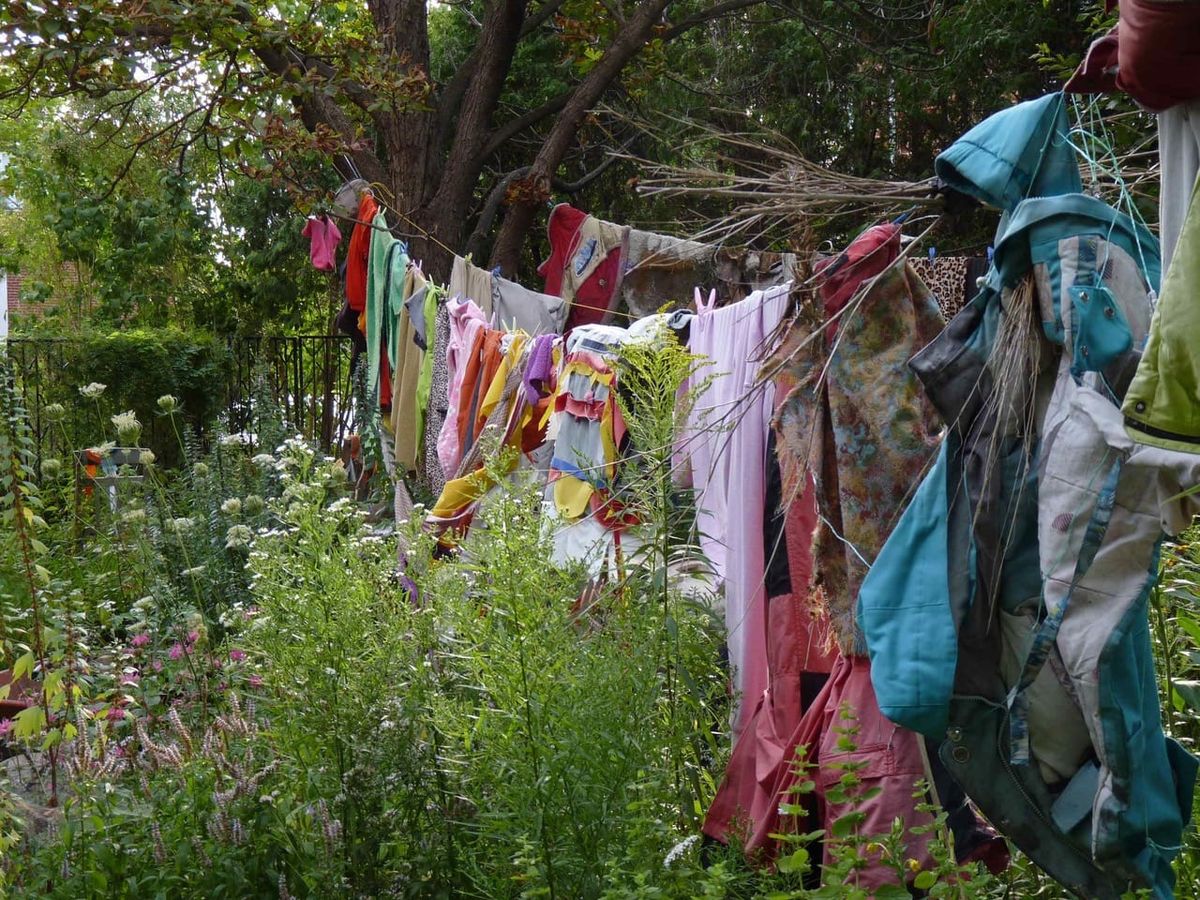

Nicole McDonald-Fournier doesn’t work alone. The Montréal-based artist counts hundreds, maybe thousands of others as co-performers of her EmballeToi! series. Yet we couldn’t interview any of her collaborators for this story.
That’s because McDonald-Fournier’s artistic partners are not people. They’re plants.
Since 2012, McDonald-Fournier and her plants have been creating artwork that defies definition. Some have called it land art. Others see it as installation work. McDonald-Fournier calls it a performance.
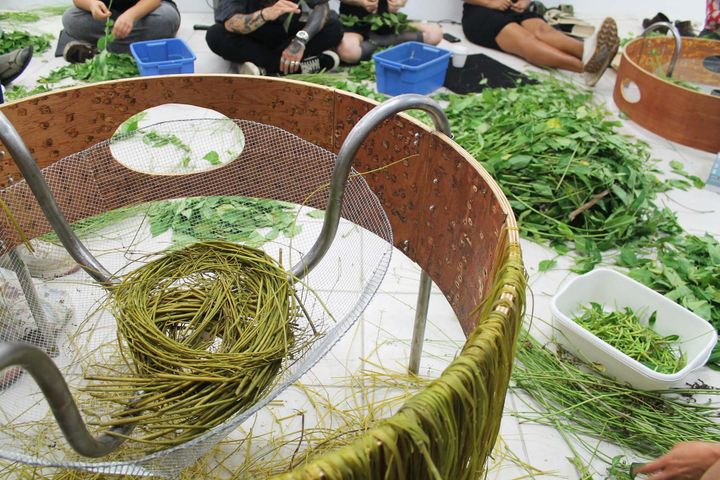
EmballeToi! has evolved over the years into various forms at different locations. The key elements are always reclaimed clothing, dirt and Indigenous plants. McDonald-Fournier creates the initial configuration and then the plants do their “performance,” growing and changing the work’s form as they get bigger.
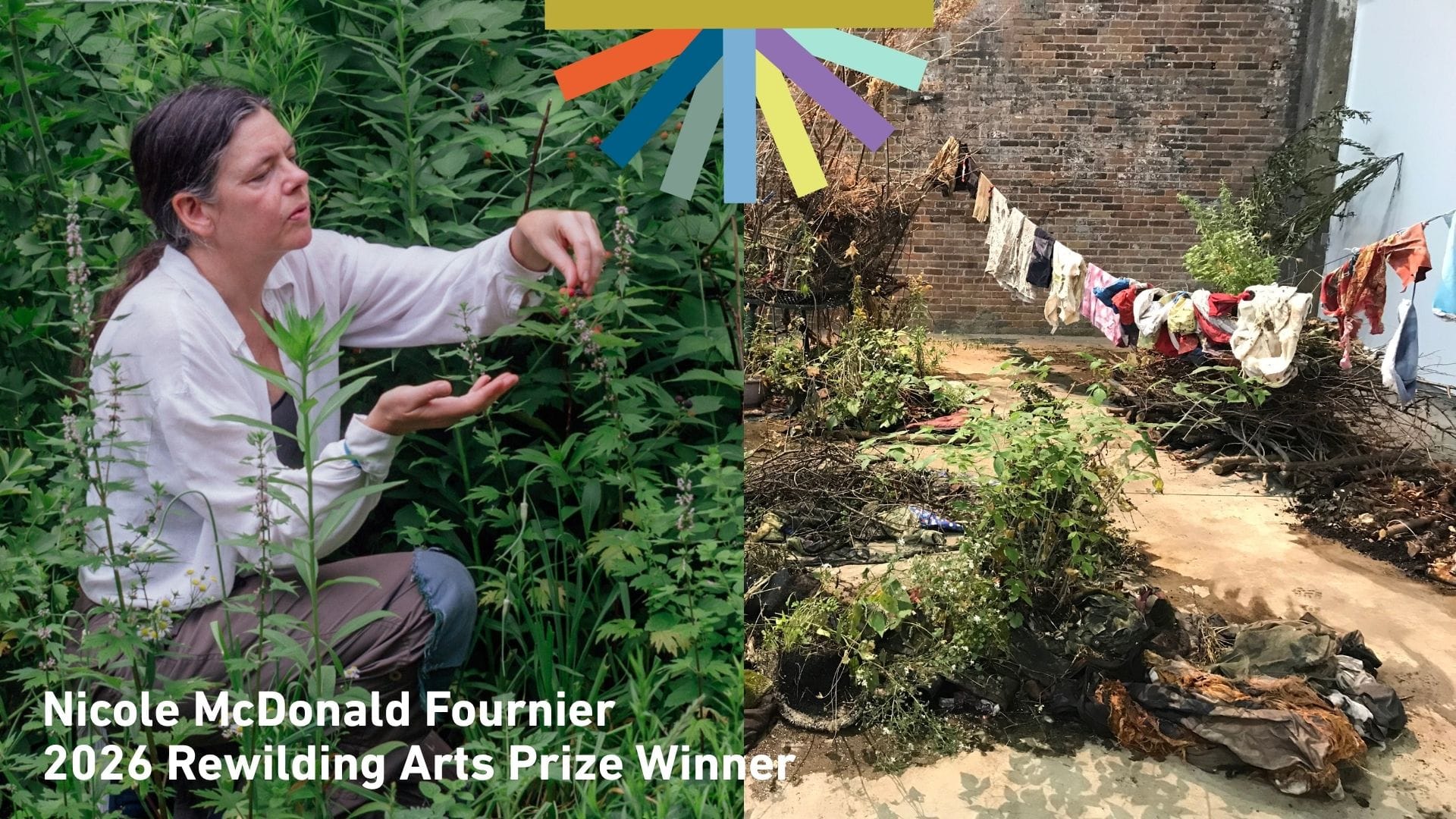
We spoke with the agro-ecological artist via video call about her work, co-performing with plants, winning the Rewilding Arts Prize and her favourite spot in nature.
Rewilding: Tell us about EmballeToi!
Nicole McDonald-Fournier: In 2012 I found a textile recycling place in Saint-Hubert, near Montreal. They showed me the bins of what they couldn’t recycle. It was winter coats, some of them brand new.
They said it’s too time-consuming to take the whole thing apart to recycle, because of the zippers, insulation, and so on.
For a few years, I got material from there.
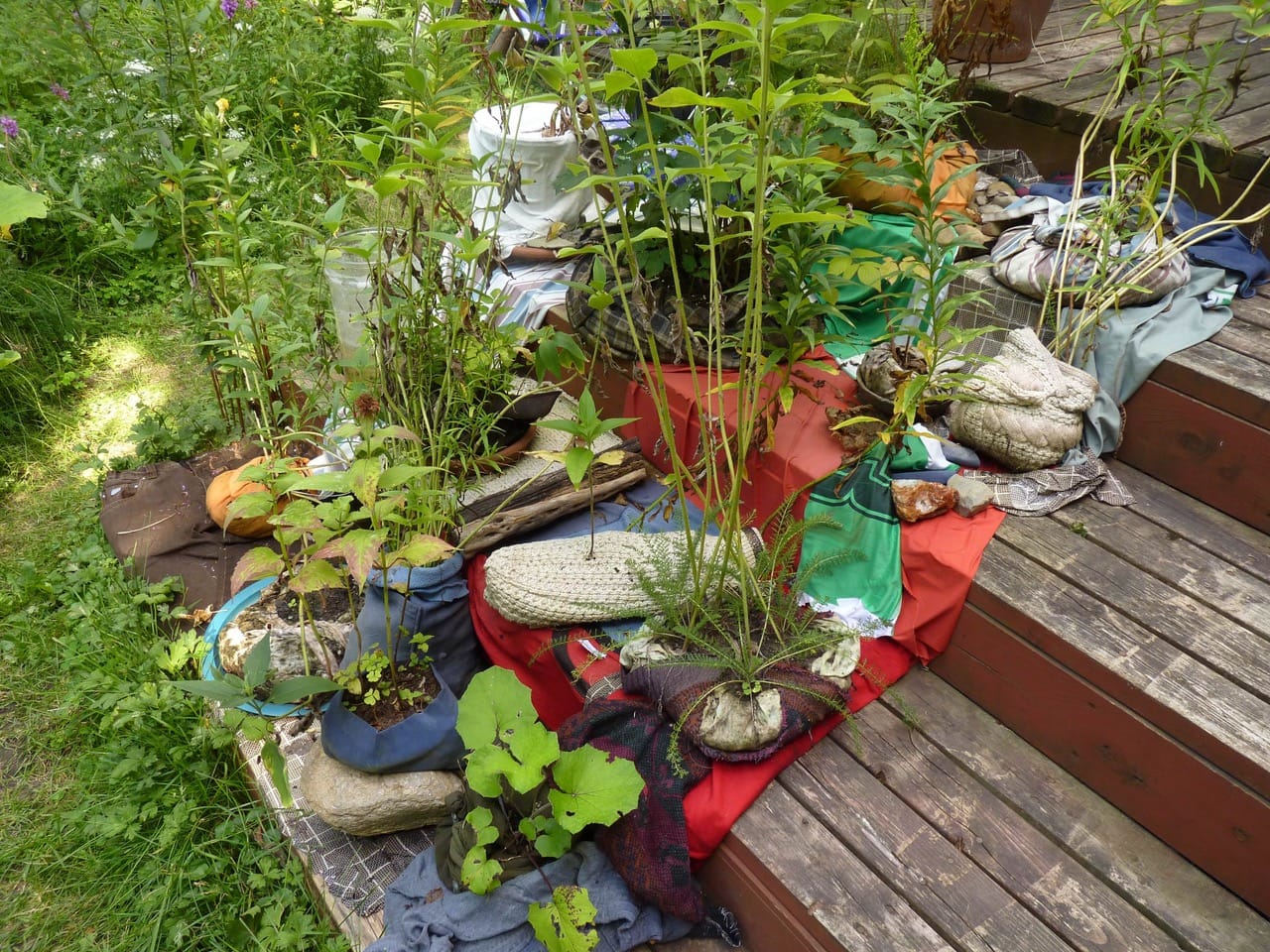
My initial aim [with EmballeToi!] was to create artworks that were pots made out of these winter coats. They were used in the city for urban agriculture and rewilding with Indigenous plants. I have examples of the pots 14 years later. Some parts are intact, some parts have faded, degraded – it’s very interesting.
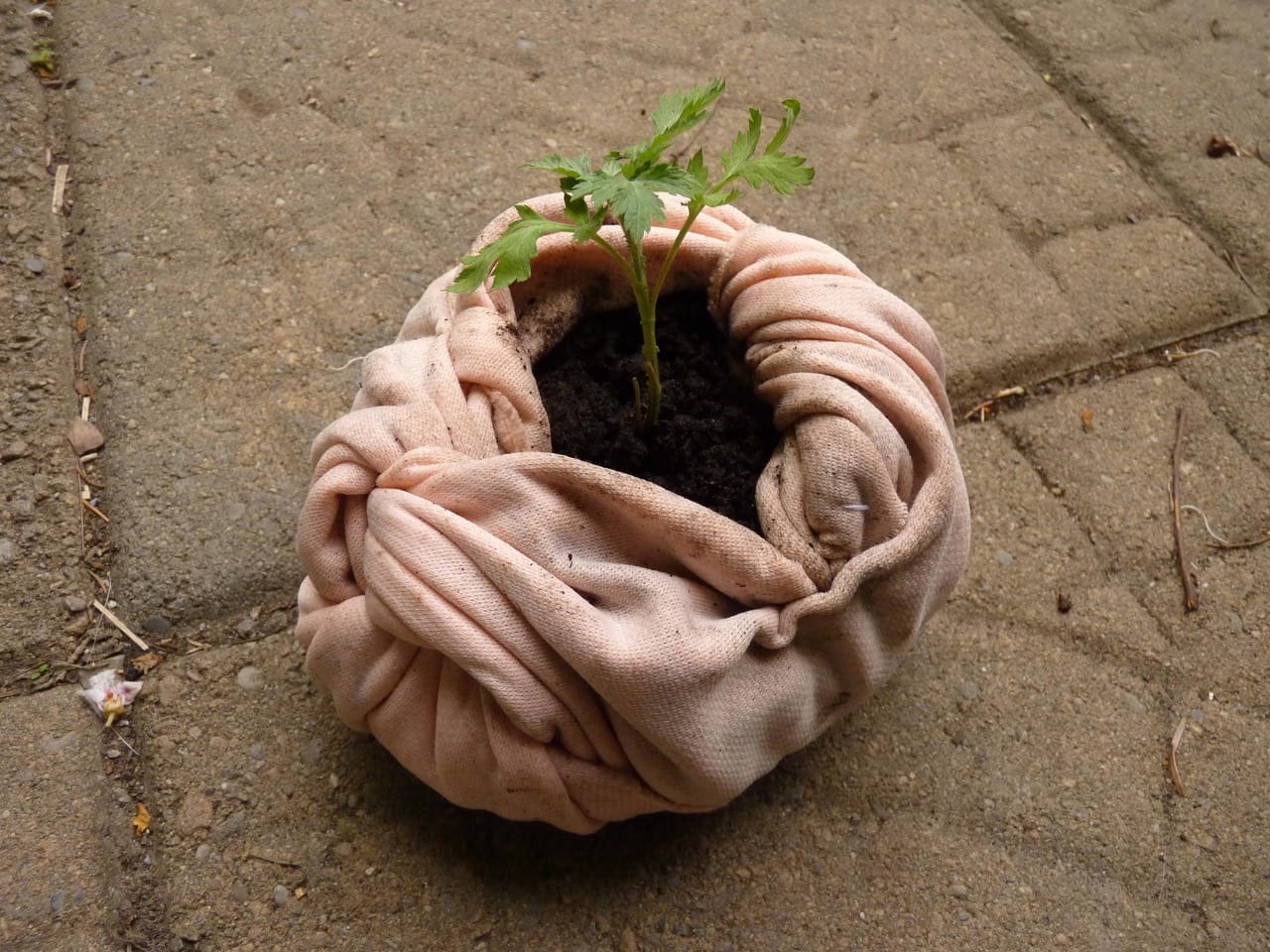
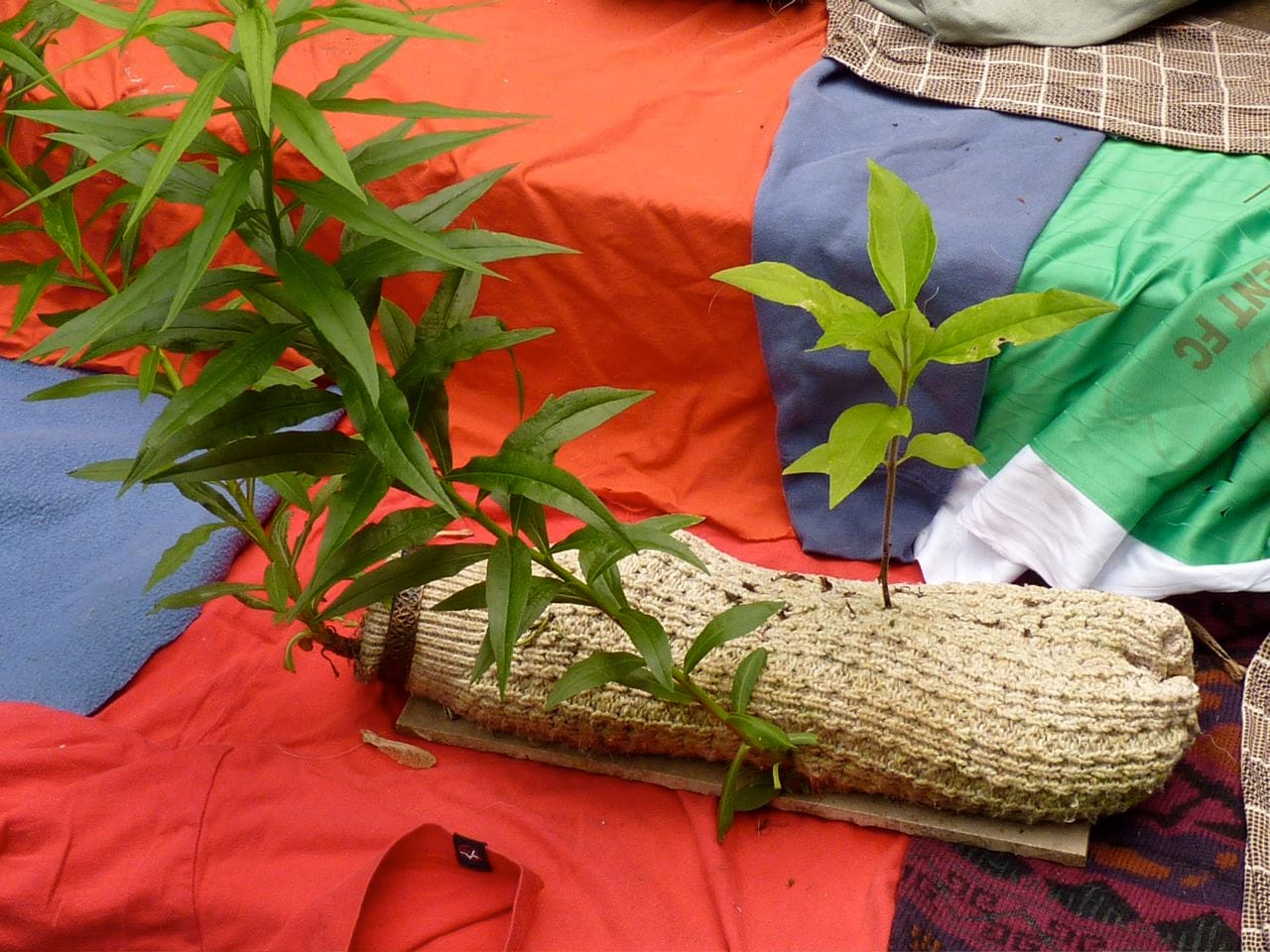
Left: Light pink EmballeToi! pot, 2012 – Recuperated synthetic textile from Certex with Artemisia vulgaris plant seedling, Artist land, Saint-Laurent (Montreal), Quebec, Canada. Photo: Nicole McDonald-Fournier. Right: EmballeToi! sculpture 2012–2013 – recuperated synthetic textile from Certex with goldenrod and topinambour, Artist land, Saint-Laurent (Montreal), Quebec, Canada. Photo: Nicole McDonald-Fournier.
Then I did workshops in community with children and adults. From there it took off to become all sorts of creations that use textiles in relation with plants.
In 2014, I created another adaptation of EmballeToi! called Cord à linge EmballeToi! – a clothesline of three or four lines of the winter coats and decorative and colourful used clothing. There were some winter coats I had left on the ground that plants had grown on, and I took those and put them on the clothesline. And underneath was a field of all sorts of wildflowers, goldenrod, and Jerusalem artichoke – maybe 100 species growing. They grew up into the clothesline.
Then in 2017, I got invited to do a performance at [Montreal’s contemporary art complex] Fonderie Darling.
The idea was that for a thousand years, the plants were going to perform this bioremediation of the synthetic winter coats.
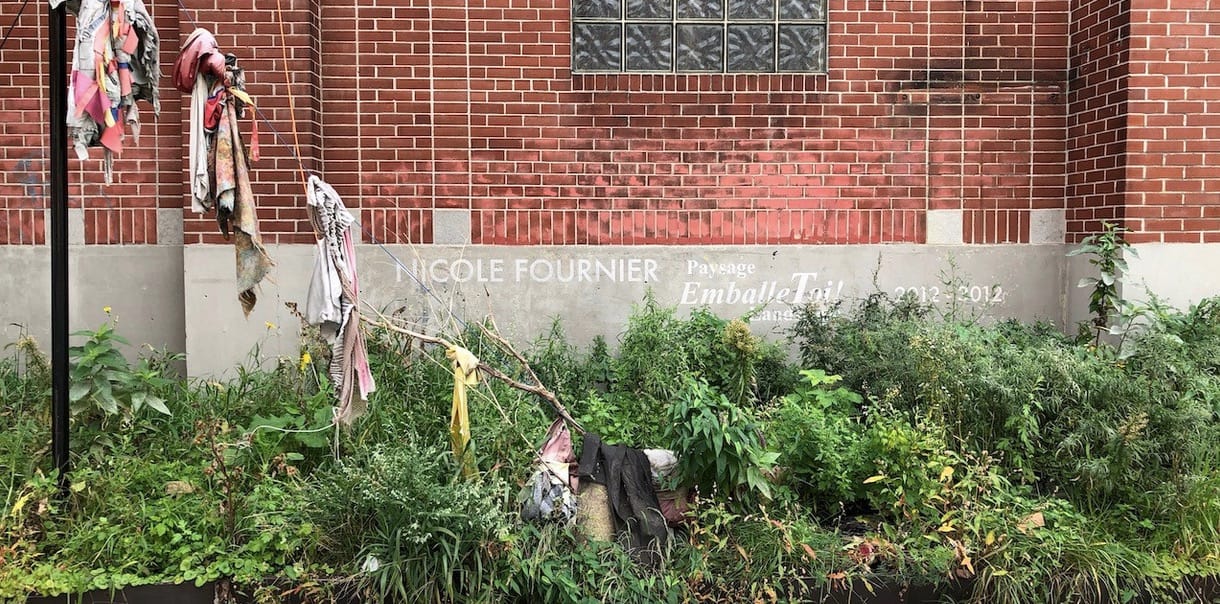
There was this long piece of land that belonged to Hydro-Québec, in front of the Fonderie, and I came and planted Indigenous plants there. I brought some of the pots, I brought pieces that had been rewilding, and some that were buried. Then the clothesline came out of the ground. That piece was called Paysage EmballeToi!
[In 2024] the city was redoing the street, so they had to destroy the work. I was then invited to present the work indoors [at the Fonderie].
I think the art community sees the work more as an installation and sculptural. But for me, it’s a performance. The plants are co-performers.
I see plants – all life – as equals. And that’s been my art practice forever.
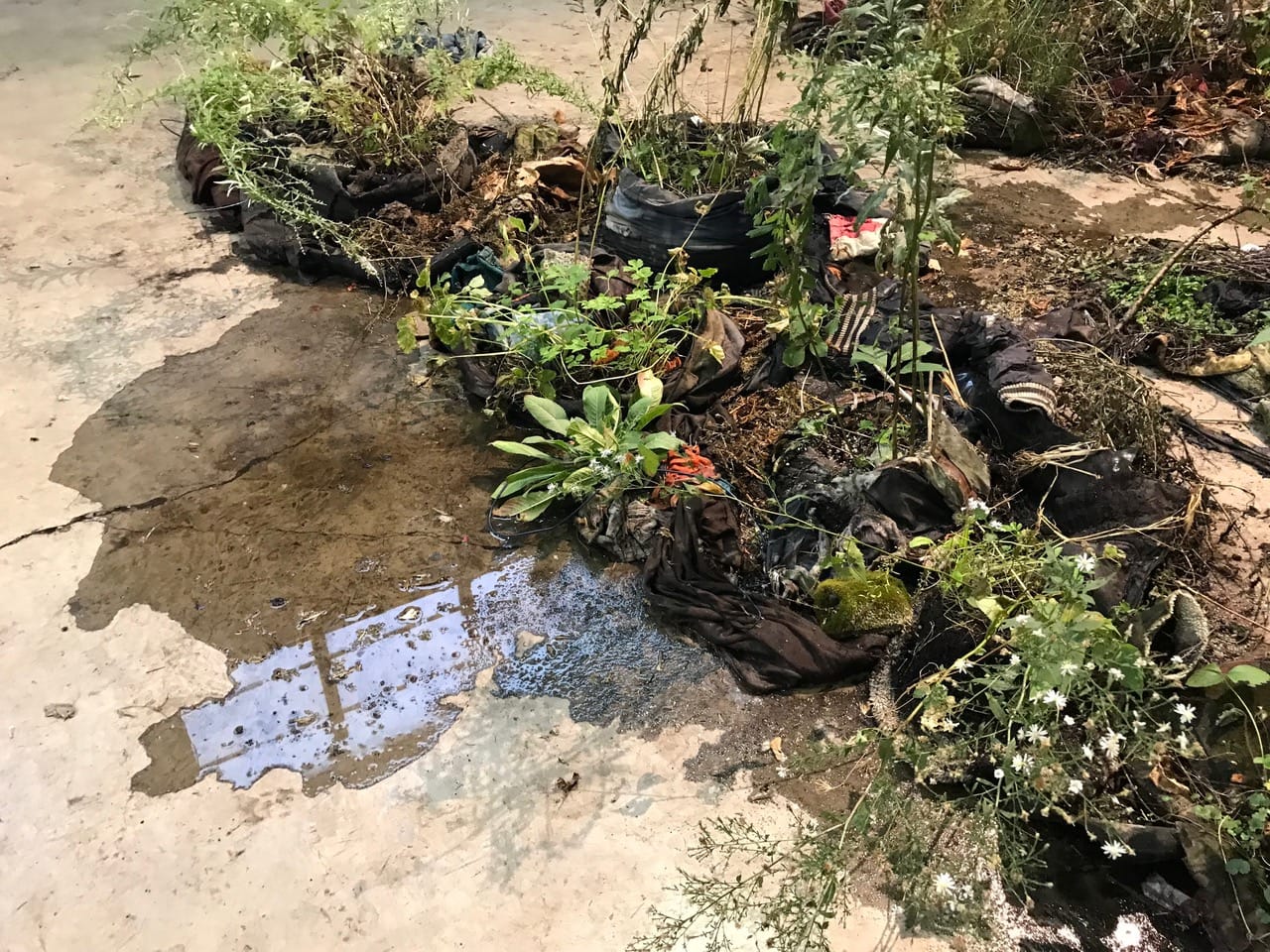
In particular for this work, I’m interacting with them and I’m performing the setup. But then, they’re performing. It’s alive. Plants, art, life – they’ve always just been part of the picture. Urban agriculture, the forest, the planet – it’s our life. What will we do without plants?
I’m looking at two beautiful silver maples out [the window]. They give us life, right? And sadly, there’s a lot of us who take it for granted, and don’t think about it.
But I think everybody loves being under a tree.
 Corinna vanGerwen
R: What role can art play in environmental movements?
NMF: An artist can inspire an interest and a curiosity to reconnect in a meaningful way to nature. They can inspire awe and give meaning to how we’re interconnected.
One of the biggest challenges of sensitizing people to art is apathy – a disinterest in art. It’s the same disinterest that separates them from nature. There’s a connection between an interest in culture and art, as well as an interest in the importance of nature and plants and forests and oceans and so on. So that’s something to wake people up to.
R: What does the Rewilding Arts Prize mean to you?
The work I’ve been doing the past 20 years or more is not really gallery-friendly. Nobody wants a bunch of wild plants that have worms and bugs and possibly ant nests and snails and all that in a white-walled gallery, right? So my work is shown more outdoors.
Like me, many interdisciplinary artists are taking on things that aren’t always well understood by traditional, even contemporary art juries that are used to painting and sculpture and so on.
The Rewilding Arts Prize allows for a focus on environment in a way that you don’t find elsewhere.
 Corinna vanGerwen
If you’re working in an in-between space, sometimes you can address a more general public.
There’s education in schools, yes. But then at the community level, education can be done in alternative ways, through artists, sociologists, social workers, or just people who care. That’s education, too. We need all those types of education to [get people to] look at different perspectives, to break apathy and ignorance.
R: Is there another artist working around themes of rewilding and the environment that you think people should know about?
One of the finalists [of the 2023 Rewilding Arts Prize], Angela E. Marsh. She contacted me in 2019 and was so supportive and excited about EmballeToi!
R: What’s your favourite spot in nature?
NMF: Oh my, there’s so many!
My favourite time of year is now, the month of May. The young plants are coming out. It’s seeing how they’re rapidly evolving. It’s the fruit trees. It’s the wild berries. It’s… it’s everything! There’s all these fragile daily moments that are so wonderful.
And I love the water – by the ocean, by a lake, by a stream, by a river. It’s just heaven. My dream would be to live by the ocean or the water somewhere. And have all sorts of biodiversity around me, of course.
This is the second in a series of stories featuring the winners of the David Suzuki Foundation’s 2026 Rewilding Arts Prize. Find out more at davidsuzuki.org.
Comments ()