

The artist building sculptures out of living fungi
Xiaojing Yan harnesses the power of lingzhi mushrooms to create arresting works of art.
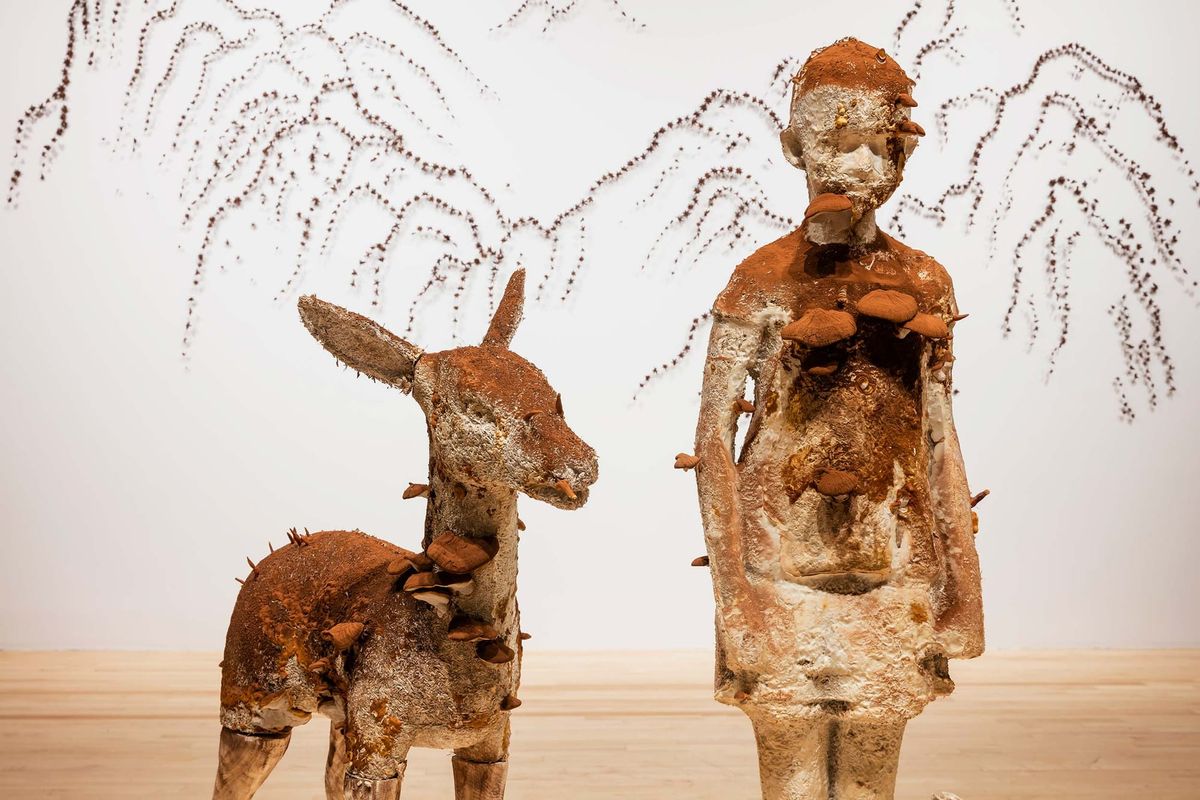

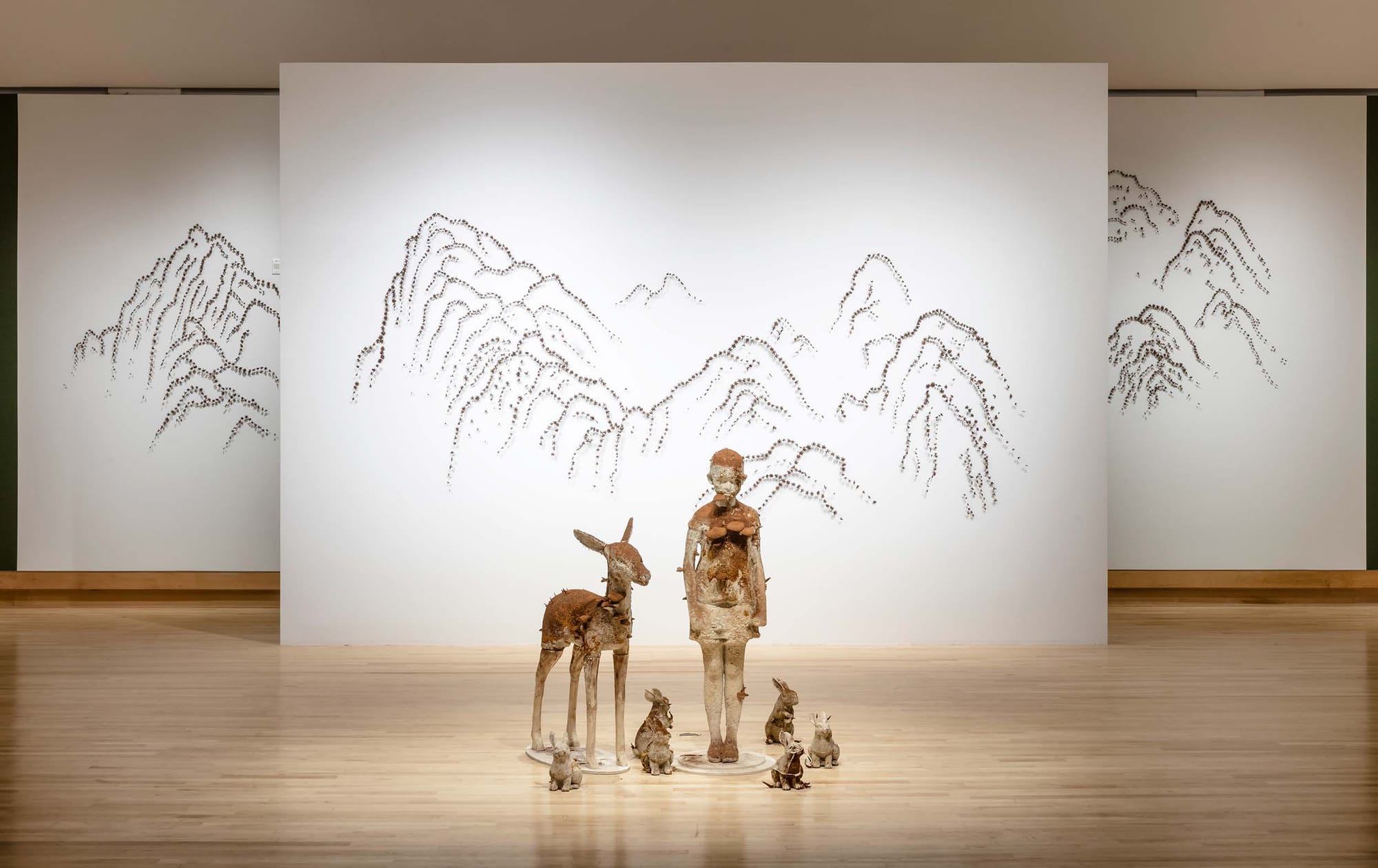
At first, Xiaojing Yan’s Lingzhi artworks look like abandoned papier mâché sculptures. Their off-white forms are covered with a dusty layer of brown powder and odd growths sprout from all sides.
A cat, a baby, the bust of a young girl, a boy surrounded by rabbits and a fawn – they all appear to be decomposing, left to rot.
But in fact, Yan took great care and many months to bring these unsettling figures to their current state. To make them, the Chinese-Canadian artist carefully cultivated mycelium, the root-like part of a fungus. The outgrowths are lingzhi, a type of bracket mushroom that has a long history of cultural significance in China.
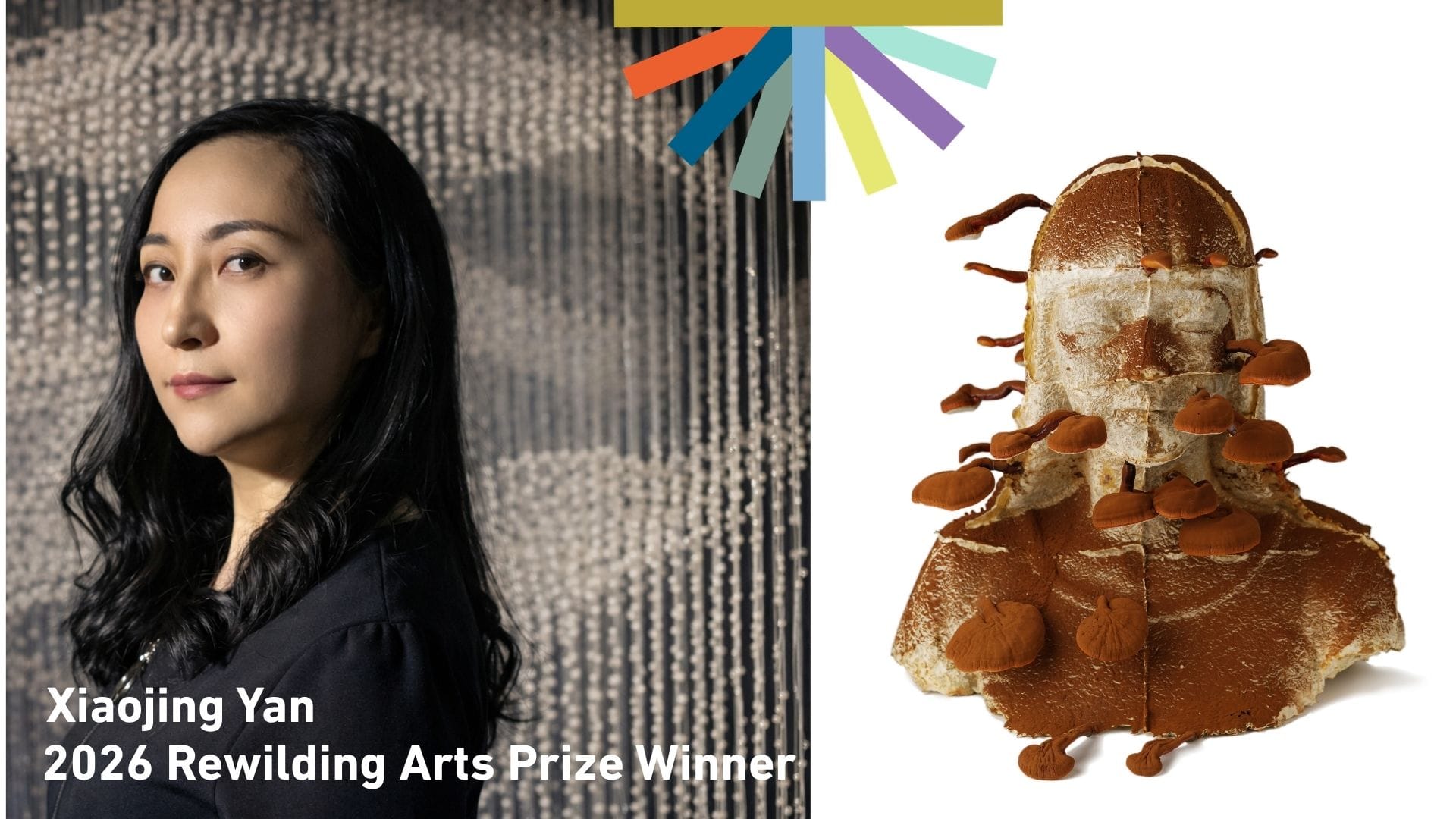
Yan collaborates with nature to create her bio-art, yet even when going to great lengths to control the outcome of her sculptures, she’s acutely aware that she has only “the illusion of technological mastery over nature.” What ultimately determines the final look of her pieces is how the lingzhi grows.
Yan, who currently lives and works in Markham, Ontario, is one of five artists awarded the David Suzuki Foundation and Rewilding Magazine’s 2026 Rewilding Arts Prize. We spoke with the sculptor via video call about her work, winning the prize and her favourite spot in nature.
Rewilding: Tell us about the sculptures you make using mushrooms.
Xiaojing Yan: It goes back to 2014. That was the first time I worked with the mushroom as a symbol. Called lingzhi in Chinese, reishi in Japanese, this mushroom has a long history in China and East Asia. We call it the mushroom of immortality. It has some benefit for the immune system and has been used as a medicinal herb in Chinese medicine for over 2,000 years.
The ancient Chinese believed that when you eat lingzhi, you become immortal, and that it can bring people back to life. It’s heavily depicted in literature, myths and legends.
 Timo Mendez
I grew up listening to stories about this mushroom, so when I was older and started losing friends and family members, it made me think about it again – about the magical power of such a thing when you feel powerless in front of death. So I bought lingzhi from the herbal store and cast them in bronze.
The idea was to use bronze – this monumental material – to emphasize the immortality of the mushroom.
After doing that first work with lingzhi, I was back in China and happened to walk into a farm that was growing rooms full of pick-your-own mushrooms, including lingzhi. Those rare mushrooms that are hard to find in nature are now mass-produced. And they’re quite unified in shape, size and colour.
I was so fascinated by how humans control nature.
I thought, I could try to use lingzhi itself and turn this living mushroom into sculptural material.
I didn’t know how to grow mushrooms at all, so I learned from ground zero. I struggled for two years until I finally captured my first work – a bust [Lingzhi Girl].
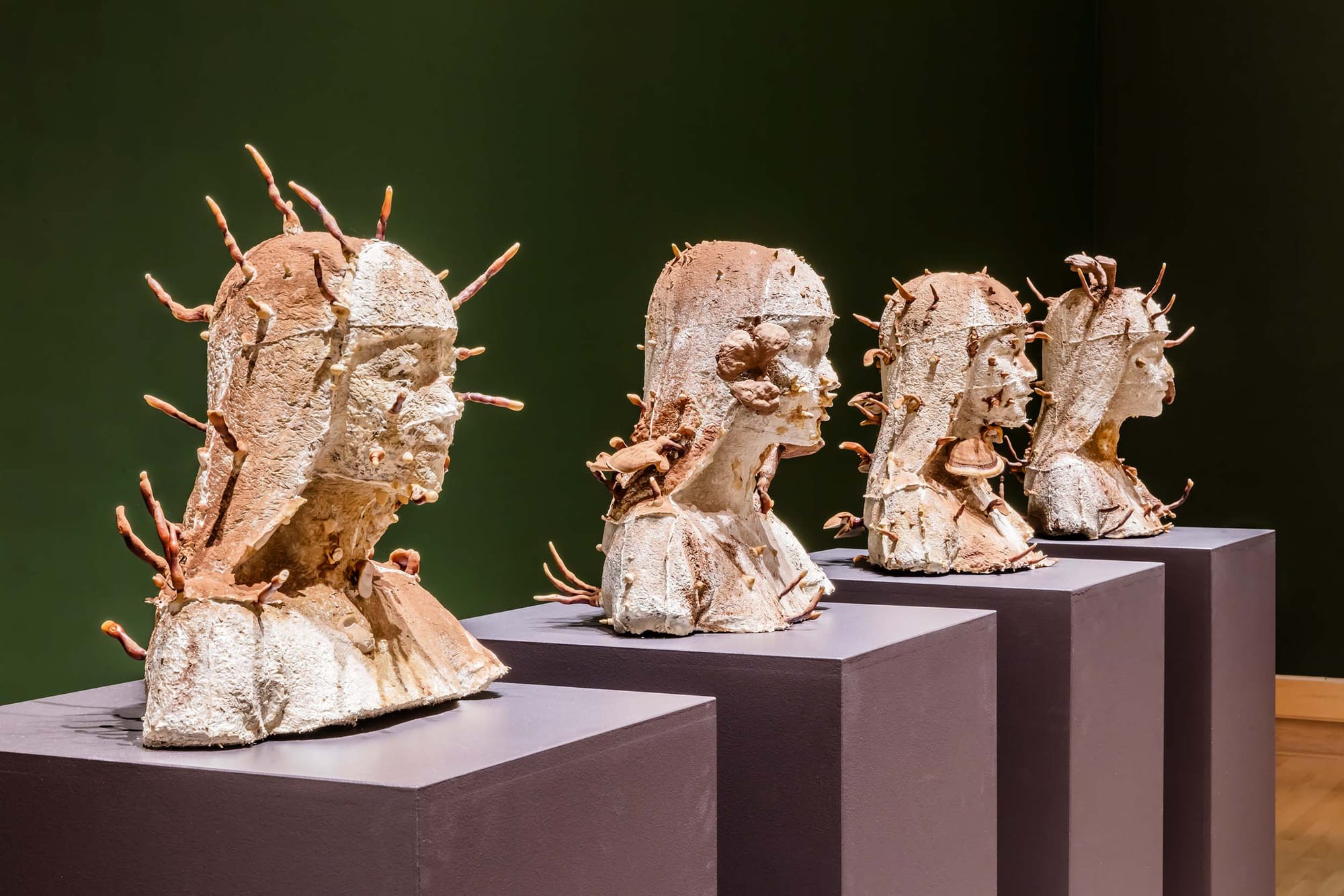
It took me a long time to figure out what material was most suitable for the mould [used to shape the bust], that the mycelium wouldn’t stick to. And preparing the substrate – the soil for growing the mushroom – is a very labour-intensive process. You have to make sure that the room, the surface, everything you touch and use is totally clean. I had to sanitize the mould and wear gloves and a mask, and tie back my hair.
Then I mixed the lingzhi spores with the substrate and put the mixture into the mould.
I had to control the humidity level, the temperature and the amount of light. At [the beginning] stage, the mycelium doesn’t like light. The environment should be like it’s growing underground: total darkness.
 Jennifer Cole
Once the mycelium starts growing, you’ll see white, feathery webs. It grows into the wood chips and binds them together. After the substrate totally turns white, I gently remove the mould. This stage is very delicate. It’s like a white paper sculpture. I have to be careful with it.
If you put less mycelium, it may take longer to grow. Put a lot of mycelium, it grows faster. Slight temperature changes and humidity levels will also affect it. And because I’m not a professional lab, I can’t control things precisely, so there’s a lot of variation in it.
I embrace that part because I don’t want the lingzhi to grow all the same. I want them to have their personalities, to pronounce the difference in the growth stages. It’s like individuals – we all grow differently and so do my sculptures. I see them as individual lives.
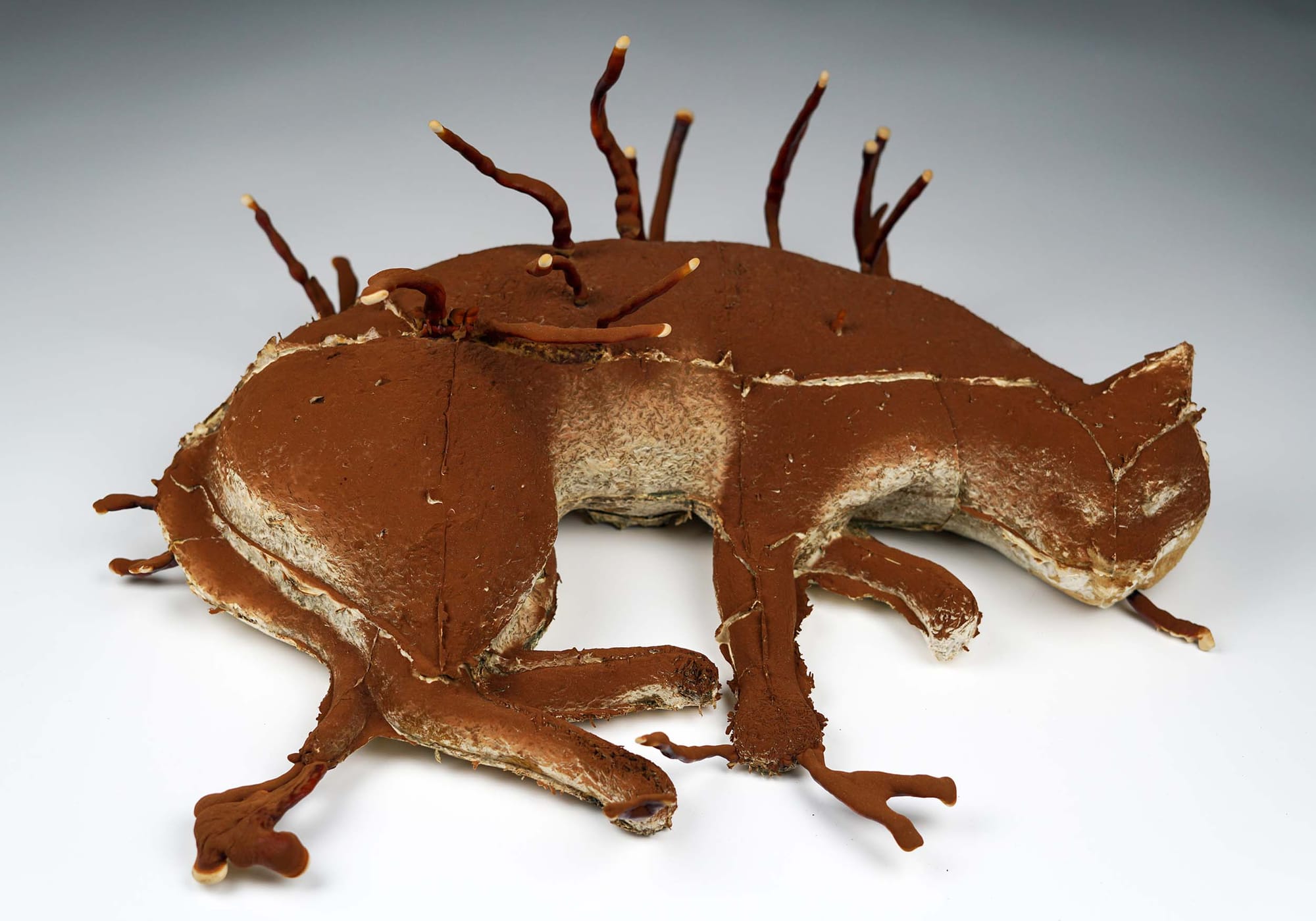
After I remove the mould, I put the sculpture in a little greenhouse. I can control the humidity level, the amount of light, the temperature and airflow. Over time, I learned that the amount of oxygen and carbon dioxide in the air affected the shapes those mushrooms grew into. When I put the humidifier at a higher speed, it becomes more fan-shaped.
After a few weeks, you see the little pinheads of the mushroom pop up on the surface. Another three to four months and it will grow to mature lingzhi mushrooms. And then they’ll eject their spores – a brown powder.
When I’m satisfied with it, I stop its growth. I’ll take it out from the greenhouse, let it air dry, then put it in the oven at a very low temperature and bake it for many hours. Totally dry out the mushroom so it hardens and can be preserved.
There’s a lot of unseen work that went into this art. For me, the process is even more important than the final product.
 Corinna vanGerwen
R: What else should readers know about your work?
XY: Ecology and environment are central to my art, but I’m also thinking about immigration, identity, culture, memory and material transformation. Those are important parts in my work and they’re all deeply connected for me – connected like mycelium.
R: What does it mean to you to win the Rewilding Arts Prize?
It’s meaningful because it connects my work to a wider conversation about how we live in the natural world.
It’s also recognition of what I’ve been trying to do for a long time – to think about how we live in the natural world and not apart from it.
R: What role do you see the arts playing in conversations about rewilding and environmental movements?
XY: The environmental movement is very important and art plays a certain, limited role in it. Politicians, policymakers and the general public – all those people, we need them. Artists use visual, artistic language to explain heavy, complex topics, or to make ideas more visible to present to the general population. We draw their attention or make the topic more accessible.
In a society, we need people like that. We need that part of work to be done.
R: Is there another artist working along the themes of rewilding, environmentalism or conservation that you think other people should know about?
XY: I was really inspired by Agnes Denes, [a Hungarian-American conceptual artist and land art pioneer]. I admire how she brought ecological thinking, land use and the public space together in a way that’s also poetic and sharply critical.
R: Where’s your favourite spot in nature?
XY: Killarney Provincial Park. Our family used to go canoe camping there. When I first came to Canada, we used to go to Algonquin Provincial Park every year, but then it became so crowded. Killarney Park is further away, so it’s less crowded.
We used to rent a canoe and paddle to different islands. I love paddling on the water – the water’s so clean.
In the morning, when we woke up, the water was so still, there was no wind. It would reflect the sky with the clouds perfectly. It’s like a mirror, making you feel like down there is another world.
It’s one of those places where I feel like I can totally immerse in nature.
This interview has been edited for length and clarity.
This is the third in a series of stories featuring the winners of the David Suzuki Foundation’s 2026 Rewilding Arts Prize. Find out more at davidsuzuki.org.
Comments ()