

The foxes that spawned an urban rewilding movement
Montreal’s Darlington Ecological Corridor began as a tool to help urban foxes survive. Now, it's become so much more.
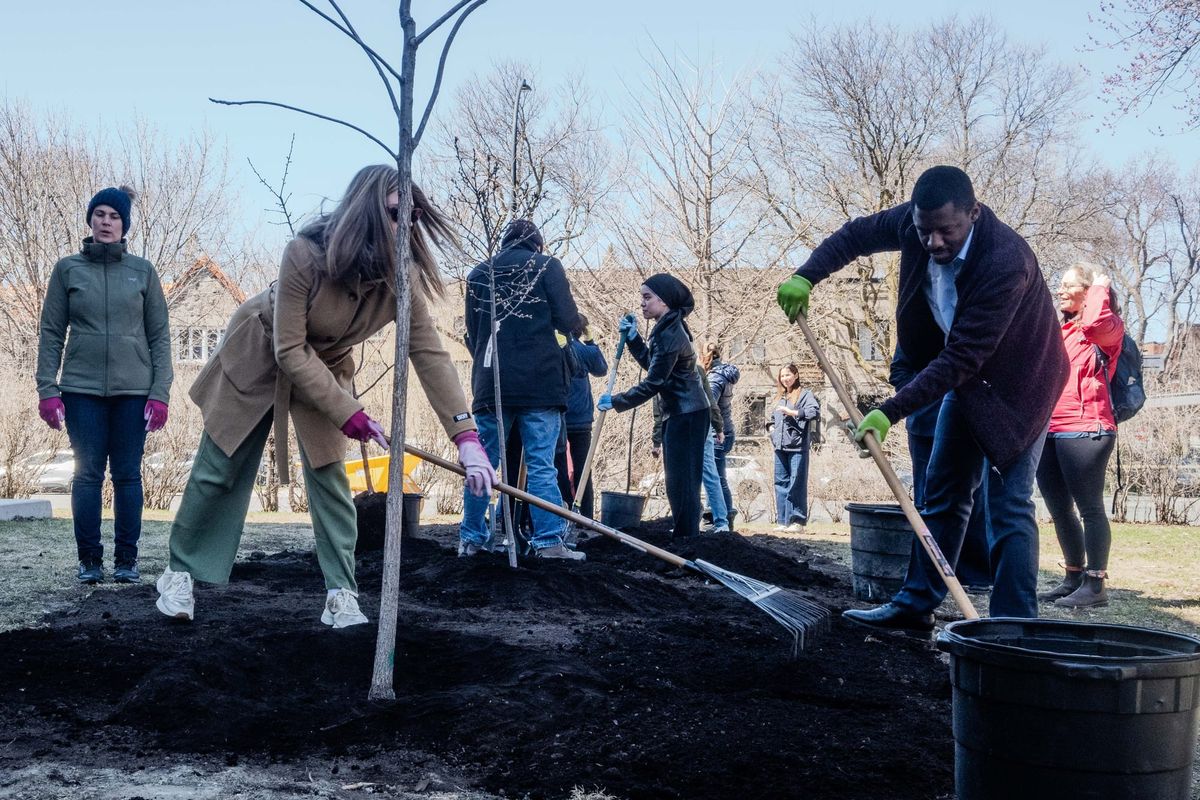
Montreal’s Mount Royal is a biodiverse super-hub in the middle of Canada’s second-largest city. Its landscape of forests, wetlands and meadows rises above the metropolis, providing vital habitat for wildlife, including red foxes. When the foxes began disappearing from the area in 2010, it was alarming, to say the least. So, when they were spotted two years later back on Mount Royal, a plan was devised to get them to stay.
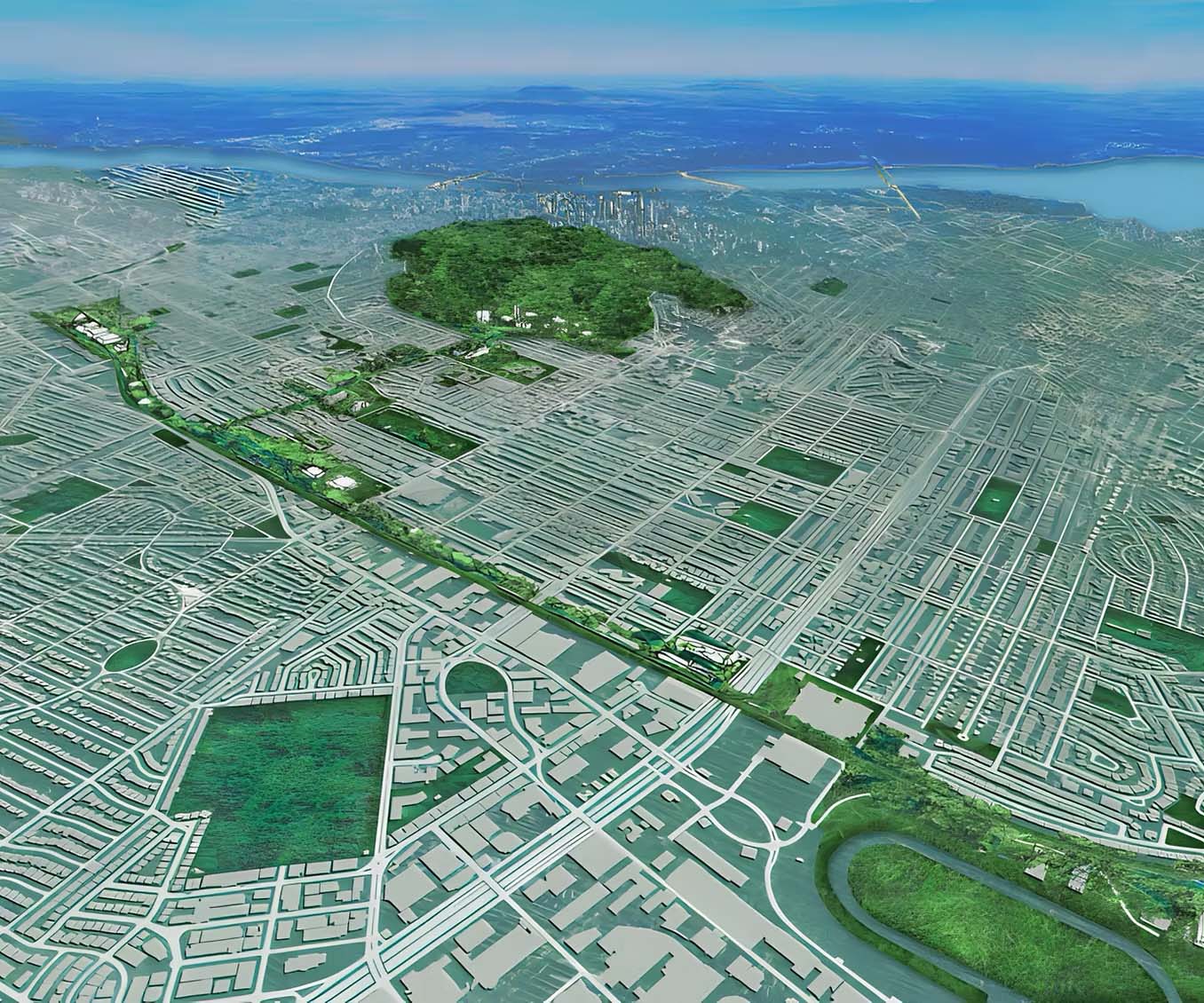
Alexandre Beaudoin, a biodiversity advisor at the University of Montreal, knew foxes had been spotted on the railway track that ran parallel to Darlington Avenue below Mount Royal. They used the narrow ribbon of vegetation along the edges of the tracks to move through the city while avoiding many of its busiest roads and barriers. He came up with an idea for an ecological corridor that would connect the tracks (and the foxes) to Mount Royal – a challenge in a city the size and density of Montreal.
“Doing a green corridor in a city is not easy,” says Joseph Chamoun, coordinator of the Darlington Ecological Corridor. “You can’t come in and take down buildings and roads and just build the forest.”
A series of stepping stones
Typically, an ecological corridor is a continuous landscape that allows wildlife the freedom to move between habitats, find food and shelter and adapt to environmental change. But in this case, there was no realistic way to create one continuous strip of habitat.
The Montreal corridor would have to take a different approach. Instead of trying to erase the existing urban landscape, since its founding in 2014, the Darlington Ecological Corridor has created a series of biodiverse pockets – stepping stones – around existing infrastructure to form the connectivity characteristic of an ecological corridor. “Whenever an opportunity comes,” Chamoun says, “and everything aligns, we use those grounds to implement our green infrastructure and, like a puzzle, piece by piece, to create that overall green corridor.”
Sometimes this means a small patch of boulevard grass transformed into a micro-meadow or rain garden, which provides enough shade and moisture for wildlife to cool down during hot summer days.
 Helen Cushing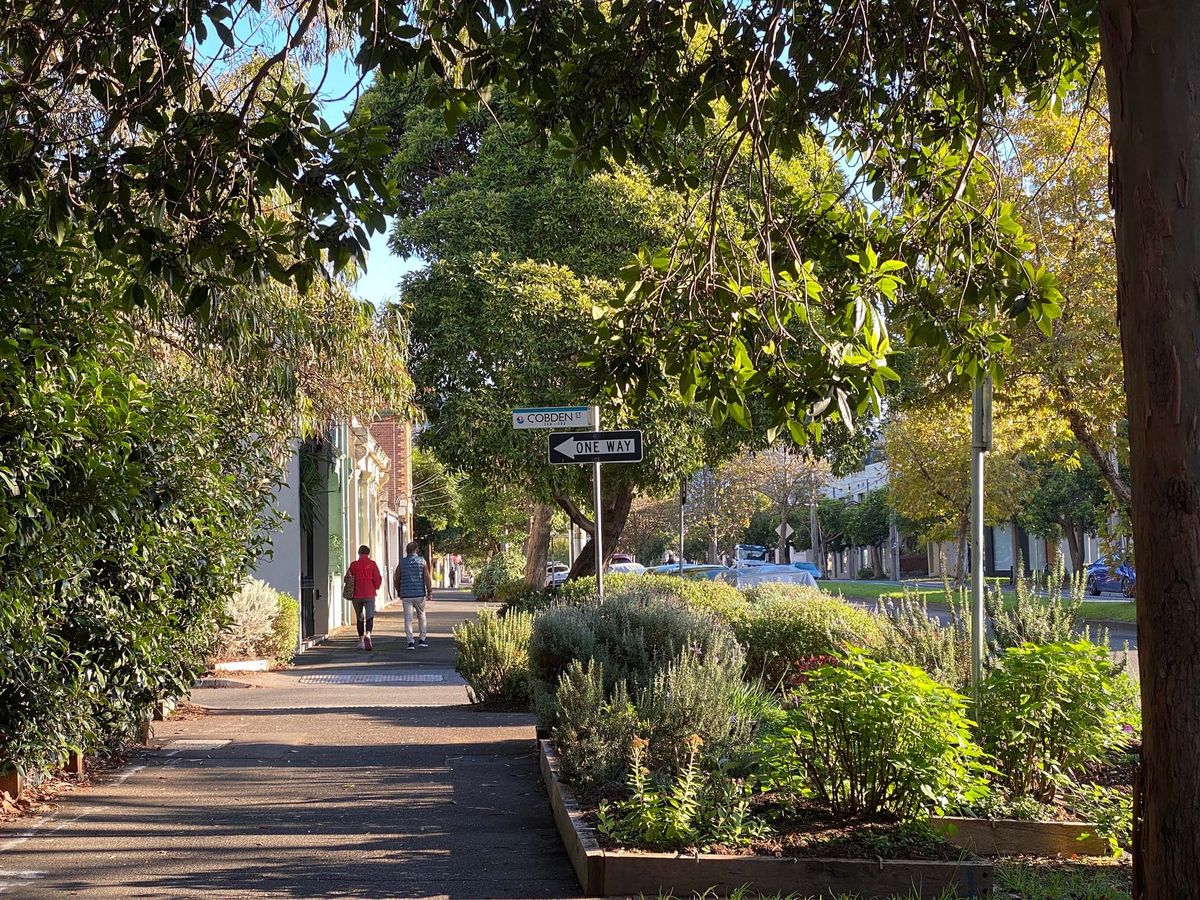
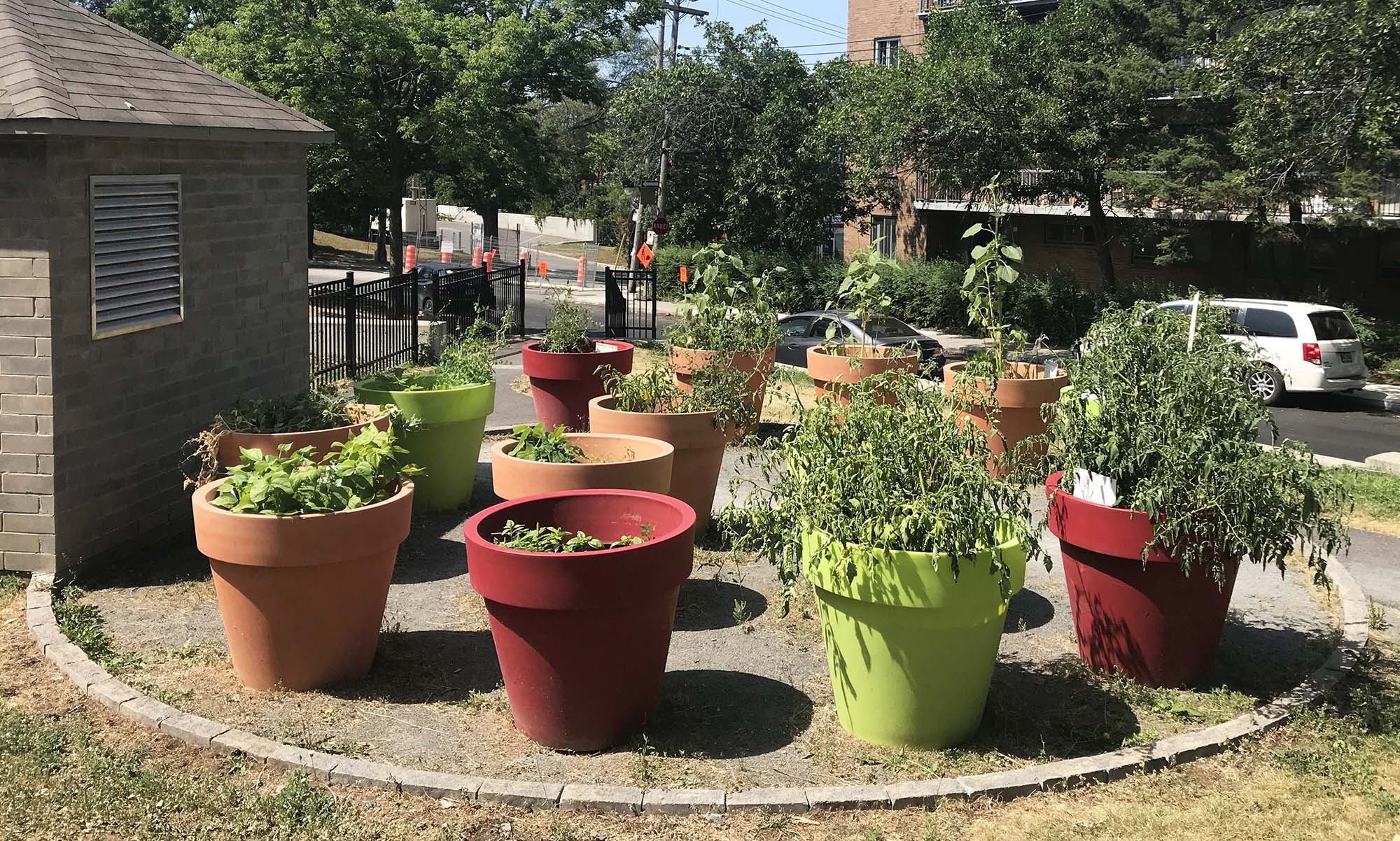
One of the group’s earliest projects remains among its largest. In 2013, approximately 300 trees and shrubs were planted to strengthen the green corridor along the Édouard-Montpetit woodland on the University of Montreal’s Mount Royal campus. Species such as viburnums were chosen for their berries, which provide birds with food when other resources are scarce. Even the corridor’s enormous gardening pots serve a purpose beyond aesthetics.
Each spring, residents can sign up on a first-come, first-served basis to garden in the giant pots that are dispersed along the line of the corridor. Those who tend the pots grow everything from lettuce and tomatoes to pollinator-attracting perennials such as bee balm and echinacea. “Green spaces like the corridor are really important for health and well-being,” says Kim Lefort – meaning of people, wildlife and plants. She tends one of the giant pots and was excited to discover them in the neighbourhood. “I’ve lived in a few neighbourhoods across Montreal and one of the first things I do when moving is to check out the local éco-quartier [neighbourhood ecology],” she says. “Côte-des-Neiges doesn’t have any ‘ruelles vertes’ [green alleys], but these giant pots are a nice alternative.”
Each addition to the corridor, large or small, strengthens the connections between green spaces and gives the foxes that all-important safe passage through urban sprawl and into the natural habitats they need and depend upon.
Connecting food and nature
Since its conception, the Darlington group has made a point of including the borough of Côte-des-Neiges–Notre-Dame-de-Grâce as a partner. According to Yolande Moreau, an ecology advisor with the borough, the Darlington corridor contributes to the goals set out in its 2023–2030 Strategic Plan as well as the City of Montreal’s 2030 Strategic Plan, both of which prioritize a greener, more resilient and sustainable city created with full participation by residents.
“We have a social-ecological approach,” Chamoun says. “We want the local community to be part of the function, to be part of the process.”
 Corinna vanGerwen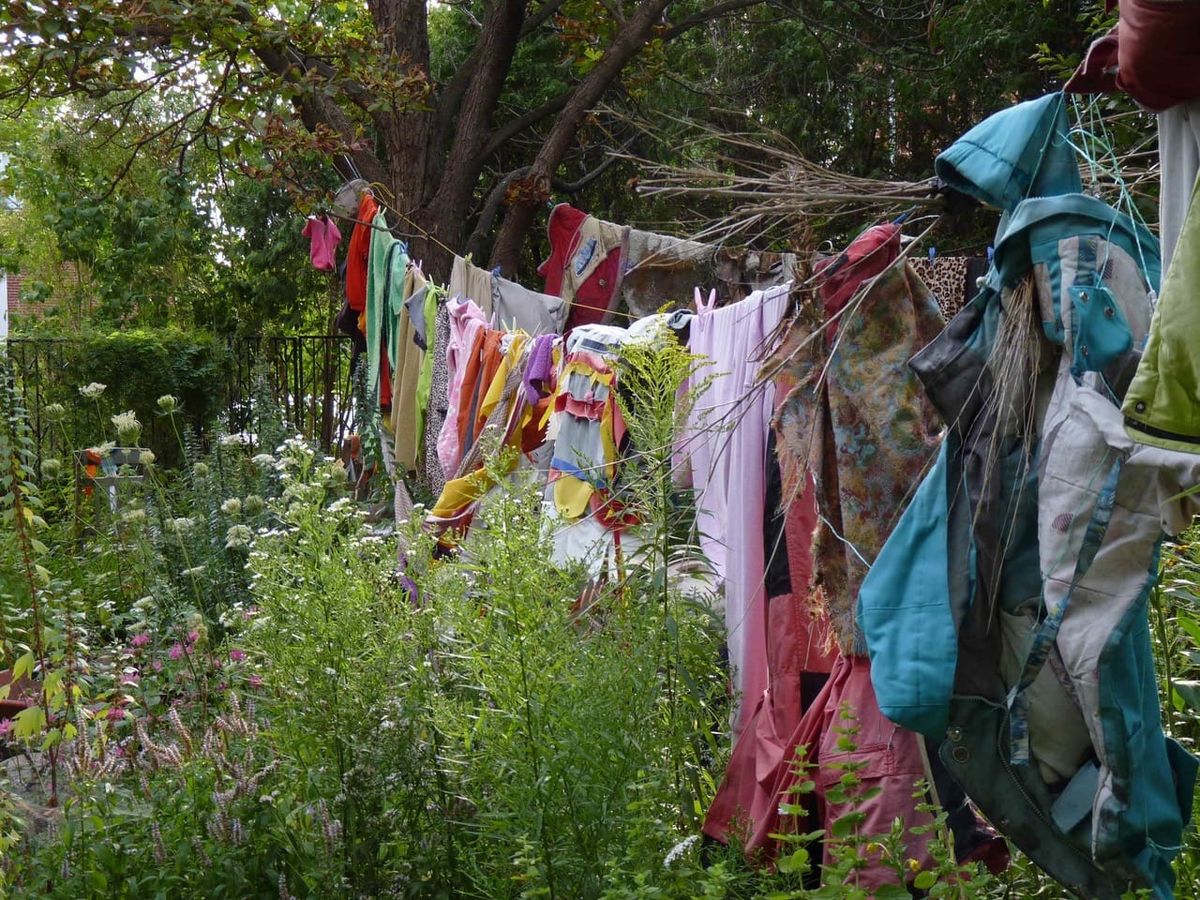
That means growing food as well as habitat – actions that overlap and reinforce one another. In 2022, the Darlington corridor group and MultiCaf, a local organization working to address food insecurity, established the INARI network. The goal is to green land on public, institutional and private spaces and to provide places for food to be grown and for the community to gather and engage in discussions about ecological and food-related developments. MultiCaf harvests the produce and sells it at reduced costs to area residents.
Studies show that food gardens add vegetation and habitat to fragmented urban landscapes, providing opportunities for pollinators and urban wildlife to forage and find shelter.
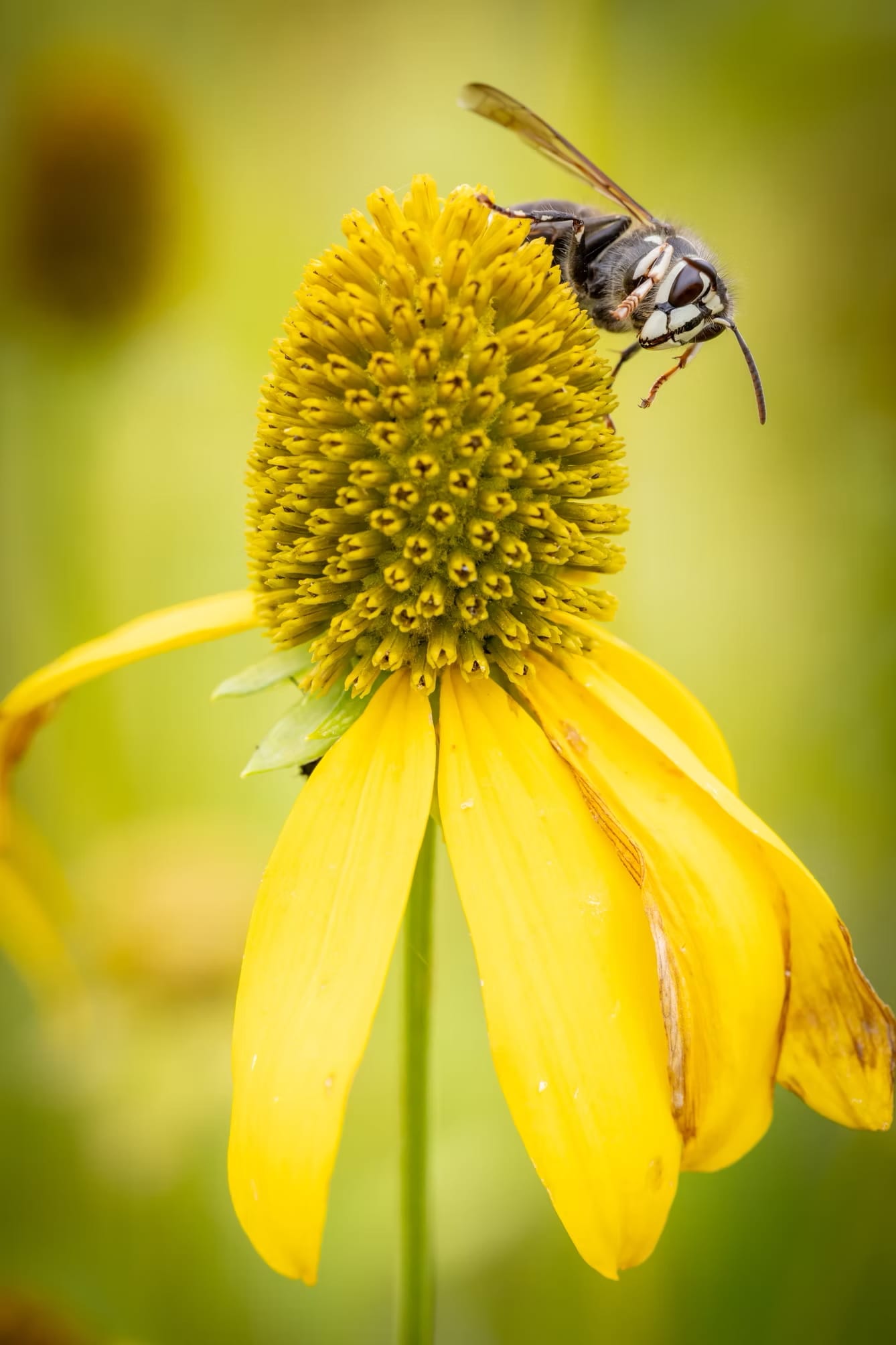
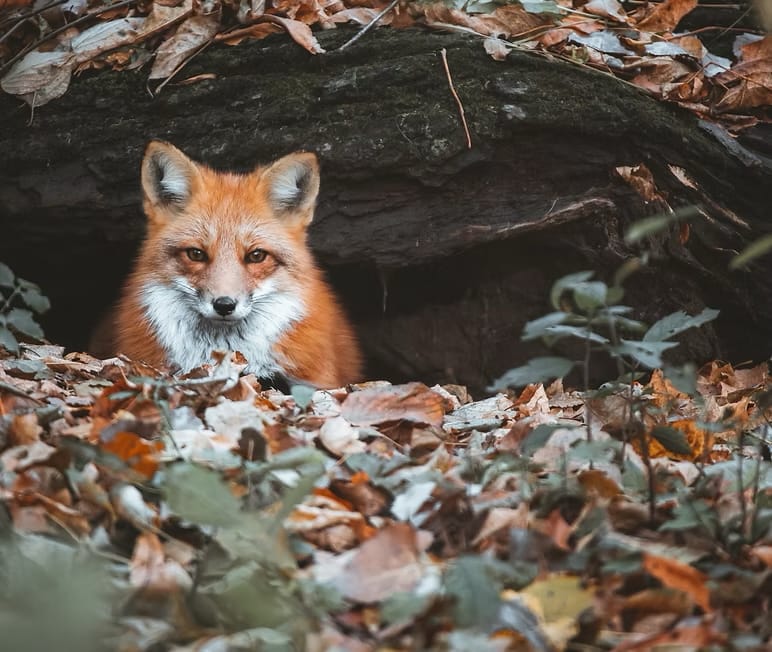
Left: A bee on a flower. Photo: Éco-pivot/Darlington Ecological Corridor. Right: A red fox. Photo: Eric Gagnon/Darlington Ecological Corridor.
Connecting people and nature
In 2023, Park People, the only national, bilingual organization championing city parks in Canada, surveyed 300 stewards of Montreal’s green corridor. A whopping 98 percent said their participation in the corridor contributed to their feeling connected to living things and the environment, while 33 per cent identified food forests as their favourite places to connect with nature.
Emily Parsons also stewards a giant flowerpot. She discovered the opportunity through an online group chat. She does not live in the area, but became enthralled with the project. She commutes over 30 minutes on public transit to tend her flowerpot. “I’d never heard of this type of project before,” she says. But now that she has become part of corridor movement, she can’t imagine an urban area being anything different.
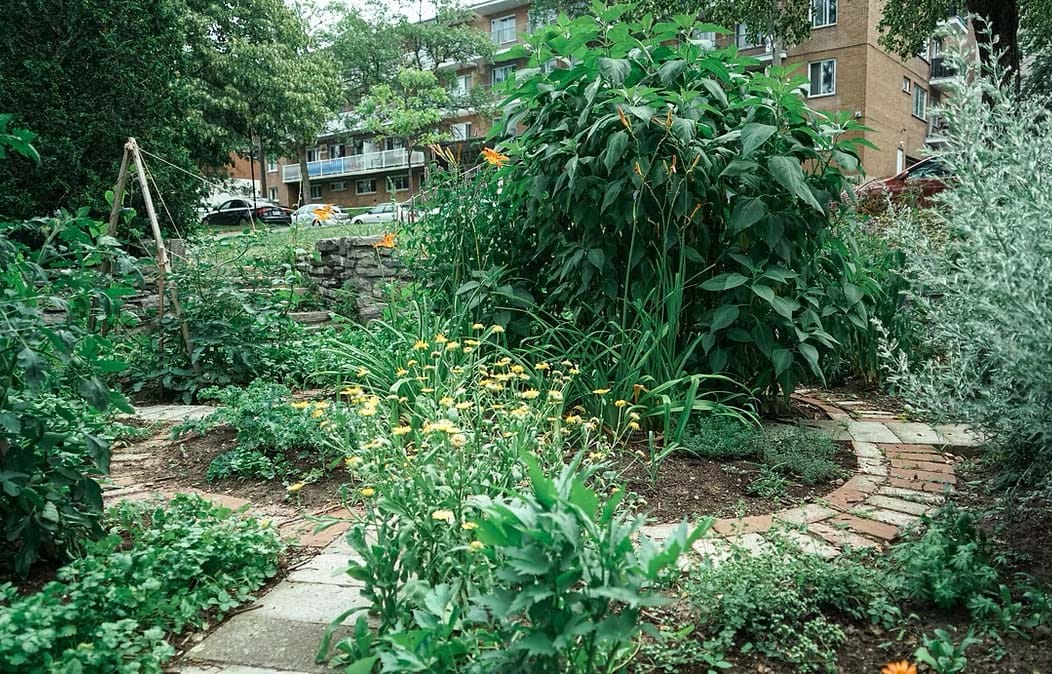
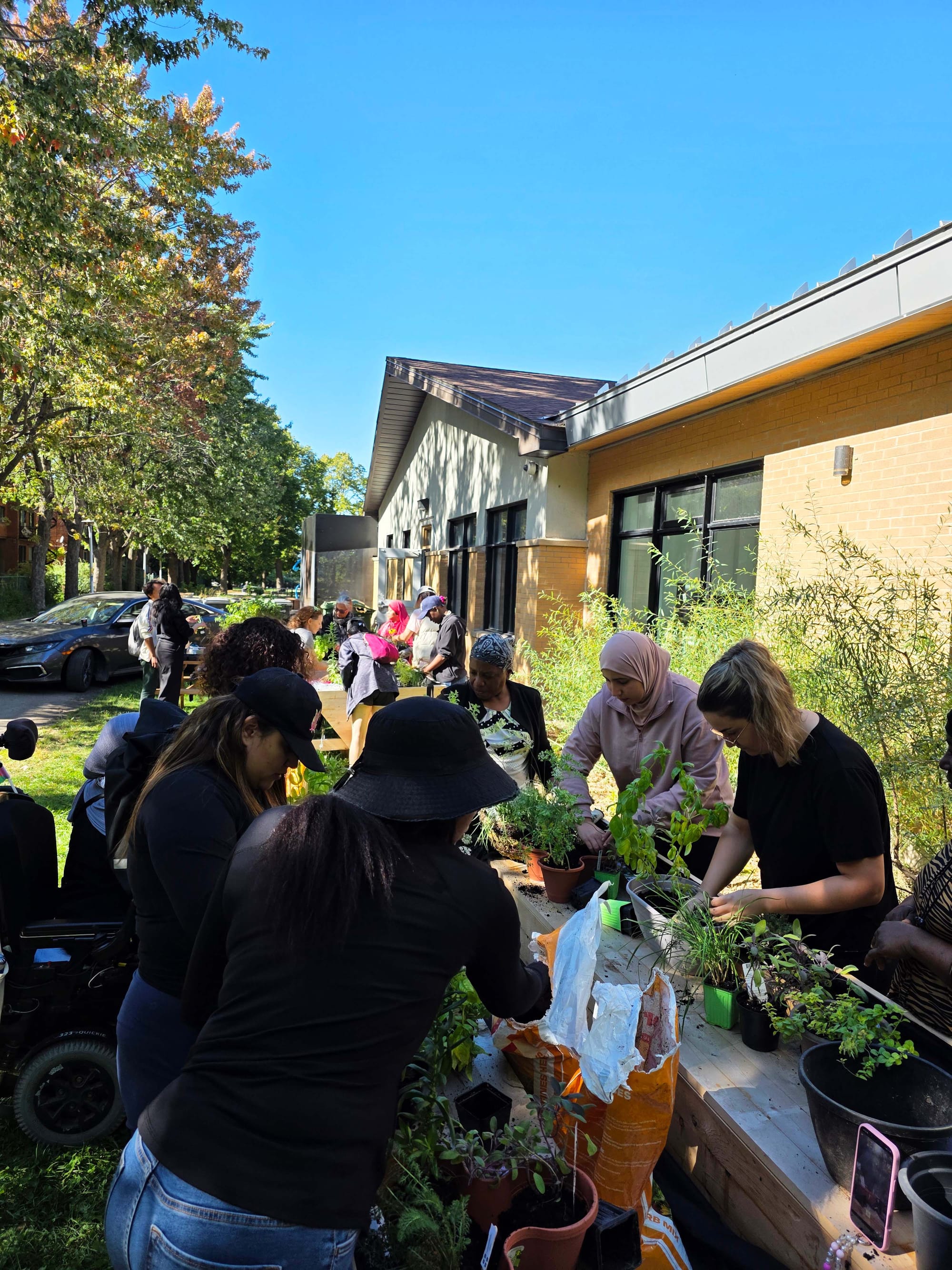
Photos: Darlington Ecological Corridor
This is one of the corridor’s contradictions. Despite its having garnered international recognition, people living alongside it can pass through the landscape without realizing they are moving through an ecological rewilding project. There is no defined entrance, signpost, fence or boundary announcing the corridor. It emerges in fragments: a food forest here, a micro-forest there, a rain garden, a community garden or a cluster of enormous flowerpots.
“It’s magic in the sense that it takes a great deal of skill and effort for Darlington and the community to pull off,” says Sarah Munro of Park People. “But in the end it feels like nature simply appeared. As if it’s reclaiming these parts of the city where it once belonged.”
 Sohel Sarkar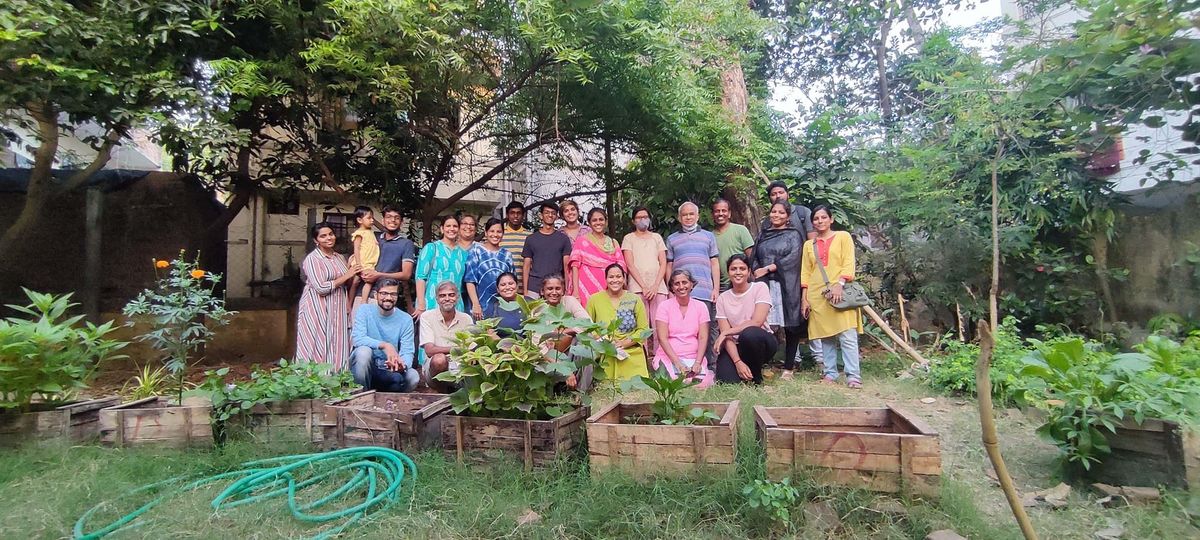
The corridor is far from finished, and it may never be – there will always be a need for more green space. When Beaudoin first imagined the corridor, he drew a map of what he envisioned it to be: a T-shaped area of green beginning at Mount Royal, running northwest along Darlington Avenue until it met the railway. From there, it would follow the train tracks in two directions: northeast to the University of Montreal’s MIL campus and southwest to a former horse-racing track on the border of Côte-des-Neiges and the neighbouring borough of Saint-Laurent. Over a decade later, that vision has become a reality. The corridor follows the exact template Beaudoin first created on paper. Dreams, it turns out, can come true.
And what about the foxes that inspired it all? “Right next to a community garden where we added a bunch of wildflowers, trees and bushes three years ago,” Chamoun says, “a fox gave birth to two baby foxes. And that is far along from Mount Royal; it is farther along Darlington, closer to the end. I was like, oh, okay, it’s working. They’re moving along.”
Comments ()