

The duo teaching about land stewardship through participatory art
Elena Kirby and Masumi Rodriguez gather both people and “invasive”-plant fibres to co-create their artworks.

Invasive species management typically falls under the purview of ecologists, conservation biologists and other scientists. Yet Canadian artists Elena Kirby and Masumi Rodriguez – collaboratively working under the name Touch Me, Don’t Forget Me – have made it central to their creative practice.
The duo harvests dog-strangling vine (DSV), which is invasive throughout central and southern Ontario, and turns it into paper. In their 2025 work Tunnel Mound Comeback, hosted at the Plumb gallery in Toronto, they invited the public to be part of the process and learn about invasive species and land stewardship along the way.
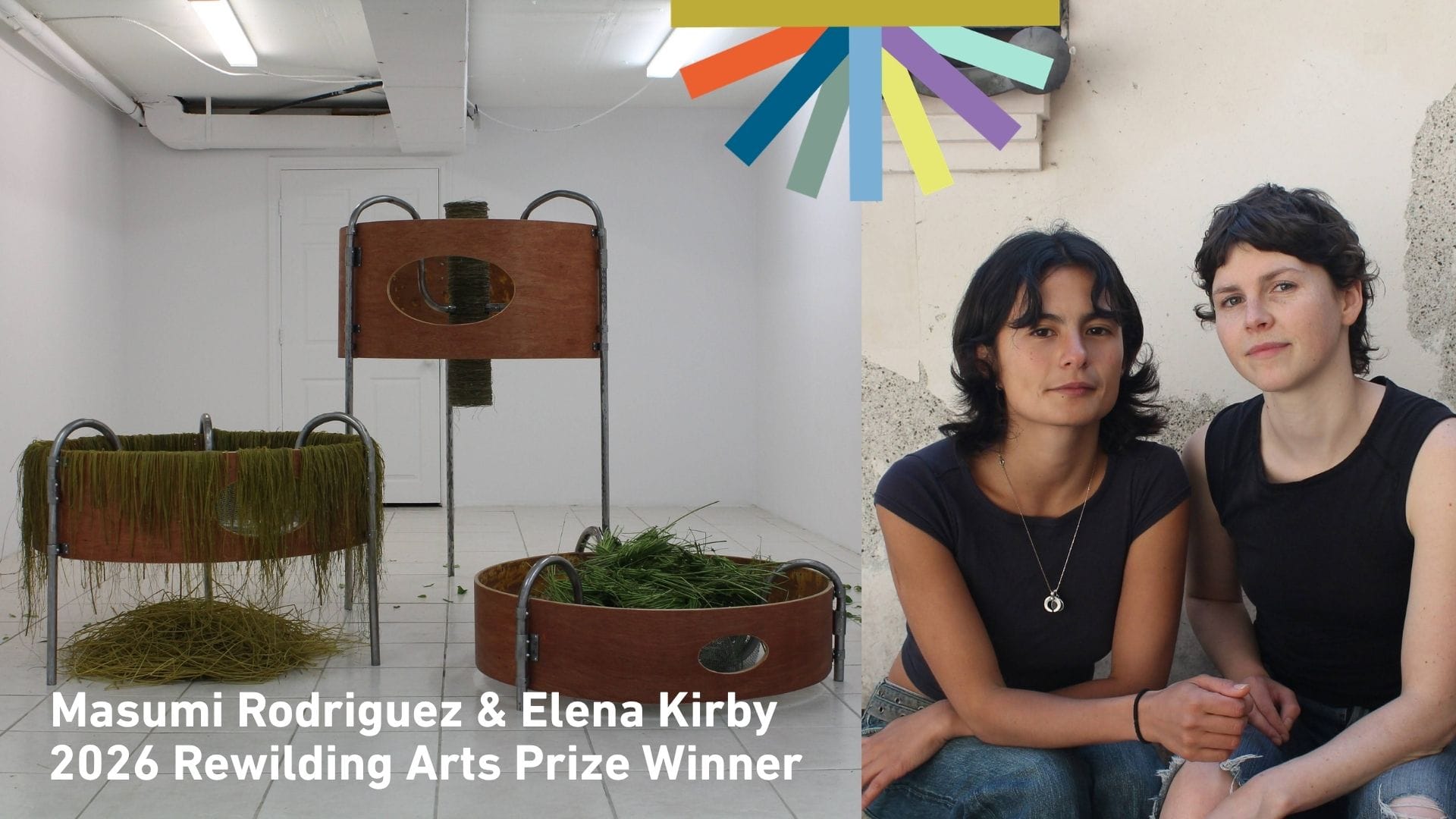
Kirby and Rodriguez are one of the winners of the David Suzuki Foundation and Rewilding Magazine’s 2026 Rewilding Arts Prize. We talked to them via video call about their work, winning the prize and art’s role within stewardship.
Rewilding: Tell us about your work Tunnel Mound Comeback.
Elena Kirby: There are two realms that our practice exists in: research and relationships. We got interested in the idea of making tools as a way to represent [our practice] and involve other people.
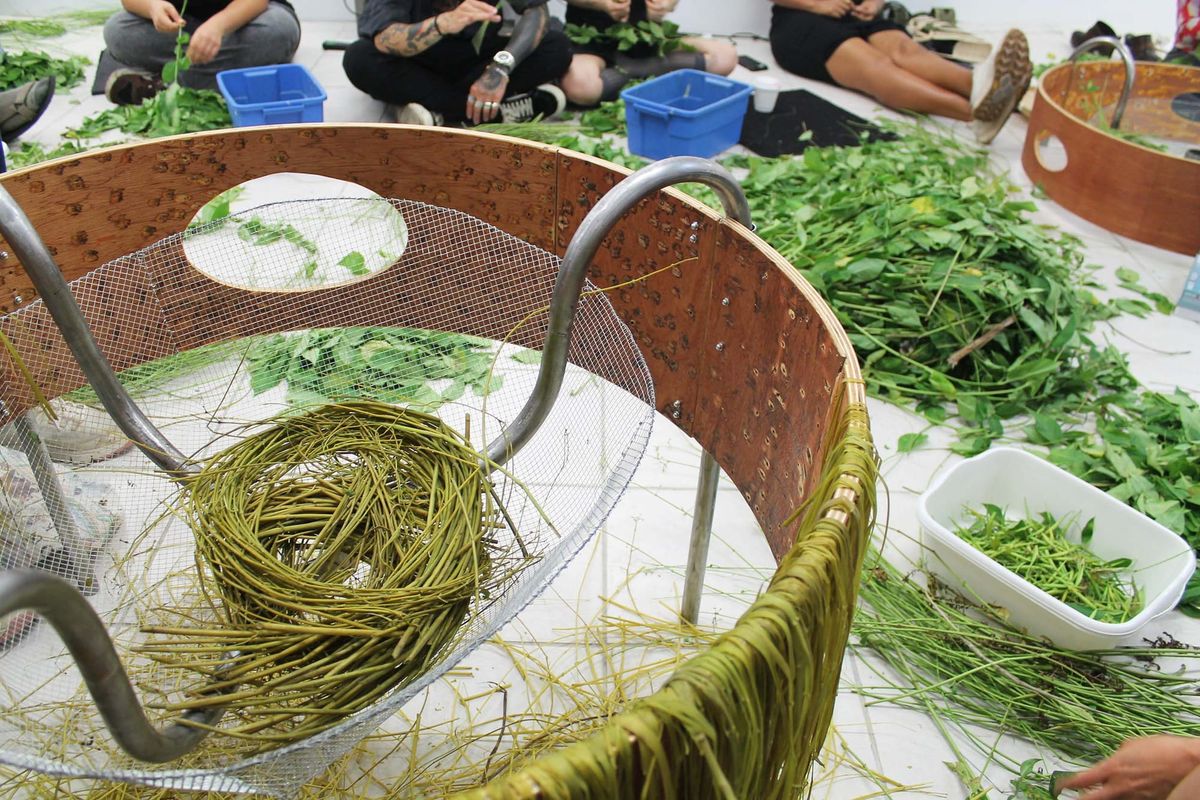
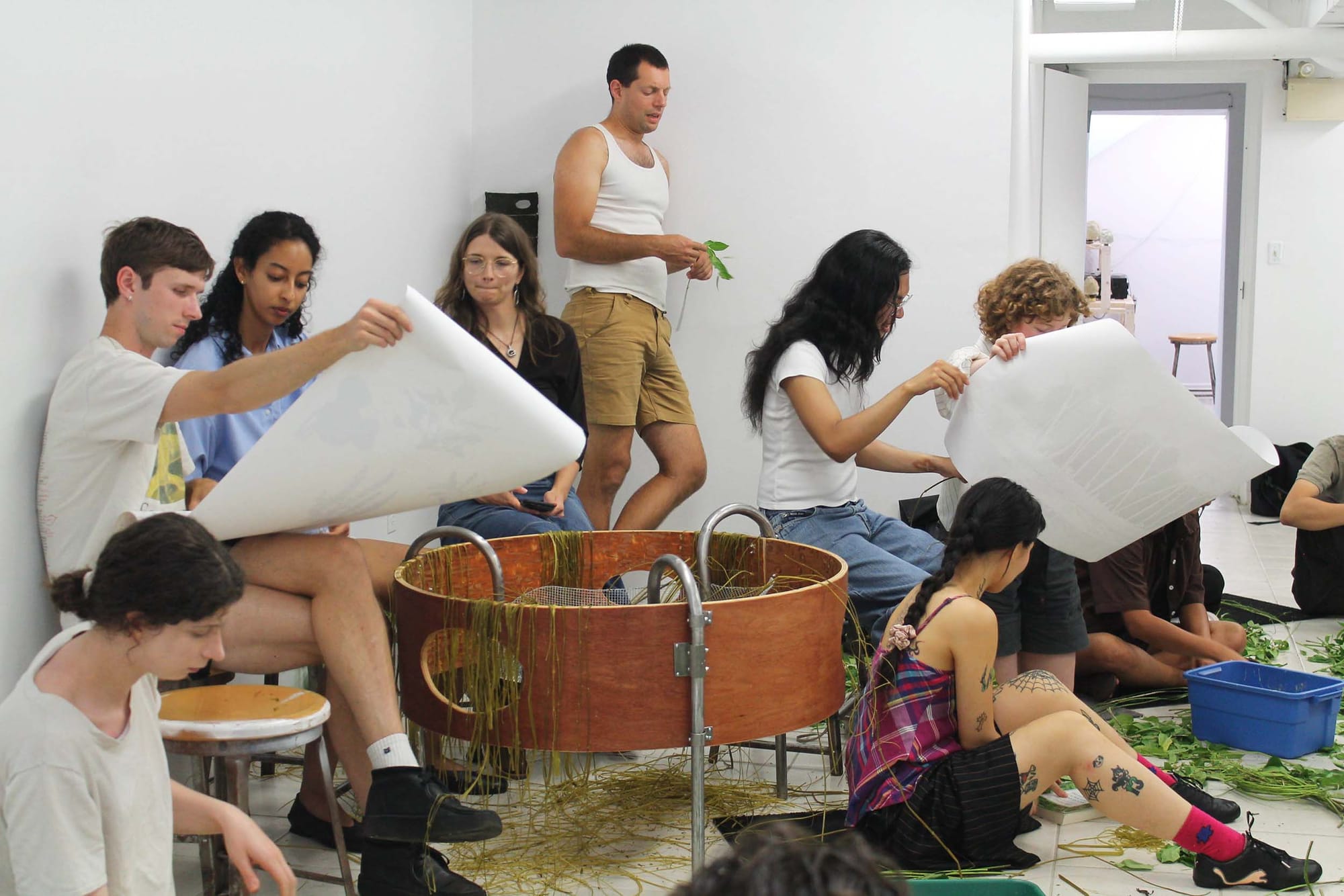
The Tunnel Mounds are big, round wooden tools that we use to process dog-strangling vine, which we do during our Paper Lab workshops. The tools are drying mechanisms – when we remove the fibre from the plants, we dry it on these objects.
Masumi Rodriguez: As artists, it’s hard to avoid buying your materials from extractive industries. We felt we had to make our own.
We learned how to [make paper] in Japan. When we came back [to Canada] we homed in on making paper out of an alternative fibre – invasive plants like DSV. We volunteered with stewardship groups in Toronto, Montreal and Vancouver to learn when and how to remove it properly.
We emphasize the processing aspect of papermaking in our work, so we wanted to make an artwork that involves our workshop programming – something that involves people. Not just a standing object.
 Corinna vanGerwen
EK: We came up with this circular shape [for our tools] so that people can sit or stand around them and work together.
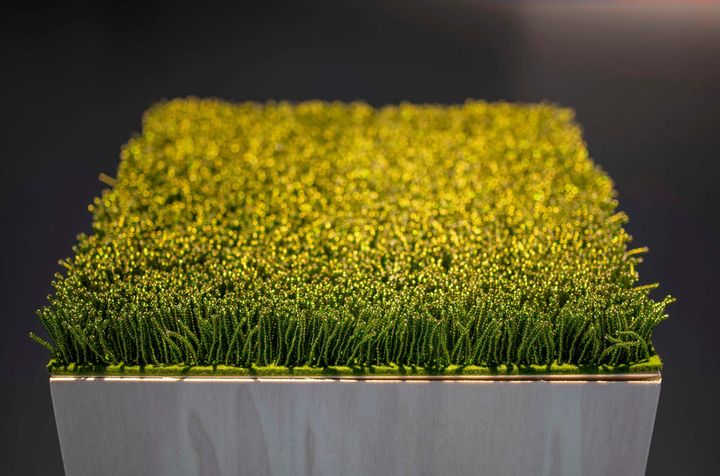
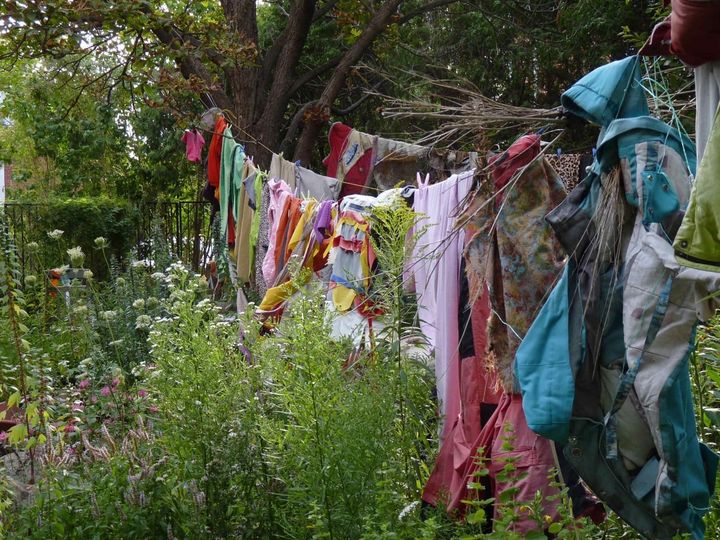
Two [of the Tunnel Mounds] have nets inside, sewn into the shape of a basket, so that we can collect material inside them. The tallest one has netting in a cylinder to weave fibre around it, like hair. Once the fibres are dried, we collect them on the tall one.
[At the Plumb gallery,] we used the two shorter ones every time we did workshops. People would sit and talk around them. We hosted a bunch of speakers to give talks about their research and we used the tools to process DSV while the speakers presented their work.
We spend so much time processing material as part of our practice, just to get to the place where we can make paper. Part of building these tools was to bring attention to this time and labour. People want to make paper with us, but we want them to come and do the fibre processing as part of it.
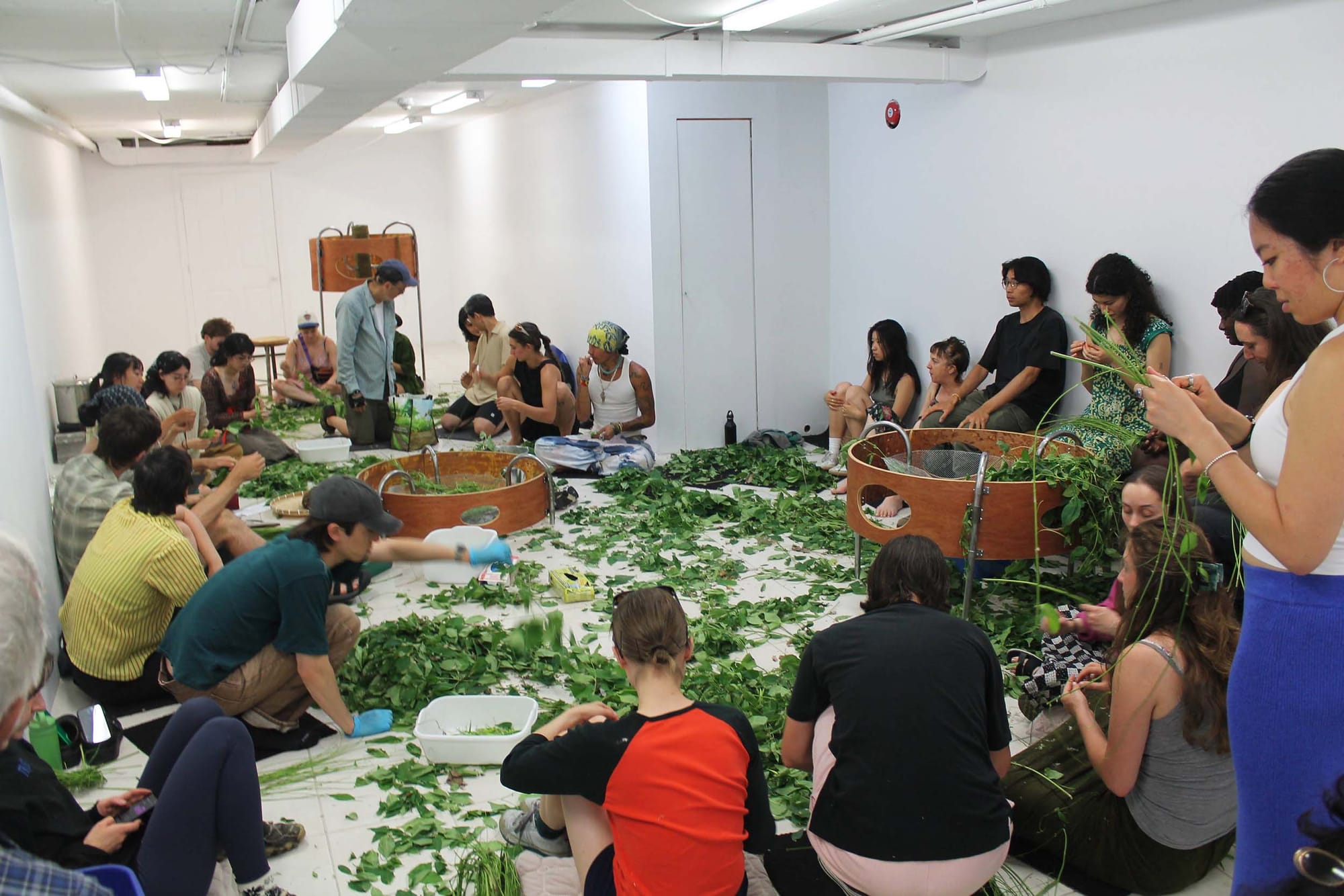
At Plumb, we ran programming through July and August. Twice a week, every Wednesday and Saturday, we’d do a processing session. At the very end of the show, we did a papermaking day. But the whole summer leading up to it, we were just processing the fibre.
MR: The six processing sessions had speakers from different fields: an ecologist, a human geography designer, these siblings who have a magazine, and people who work in land stewardship. They talked about what they do and what they’re curious about in relation to invasive plants. They’re all people we met through our project and our practice, whom we’ve learned so much from.
We wanted to give a peek into our research and the people who share these things with us. That was really special. We gathered and we created this mound together.
It takes so much time to process all these plants, and ultimately anybody who touches this plant and helps us is involved in our art. This material we processed together in the summer sustained our work all winter.
 Karissa Chandrakate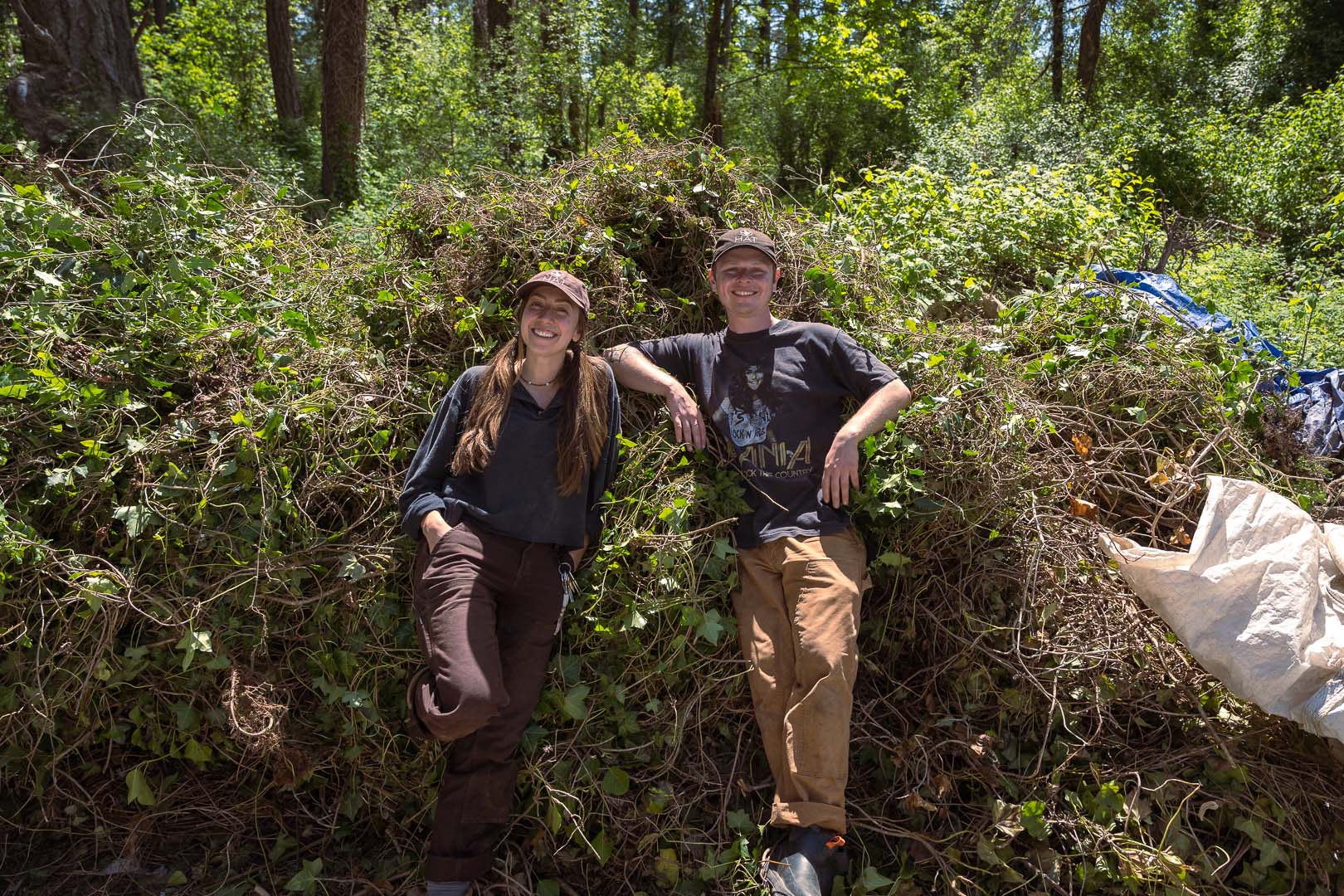
Rewilding: It has similarities to the agricultural harvest season, when farmers bring in extra labourers and the whole family gets involved. Who came to help you process DSV?
EK: When we started doing the speaker series, the room would fill up. People would be standing in the hallway.
We had a lot of people who were in stewardship, ecology or working in environmental studies. They were interested in what artists had to say about invasive species. We were trying to get artists, stewards and environmental activists to come together.
Rewilding: What are your thoughts on art’s role within environmental stewardship, the rewilding movement and sustainability efforts?
MR: Art has the freedom to ask questions other disciplines might not. We collaborate a lot with ecologists and people who work in land stewardship. Within their fields, within their research, they may not be able to ask the same questions because of funding or possible professional repercussions.
EK: Science and art have always had a relationship. Science has a reputation of being analytical. Even though it’s based on this idea of study and not having biases, it’s been built on politics and a certain group of people who have these politics. As artists, we’re not in these structures, so we can see these structures clearly and challenge them.
Rewilding: What has winning the Rewilding Arts Prize meant for you?
MR: This is the first prize we’ve ever won!
I’m happy to get the prize money to go toward our next project, but I’m even more stoked about who we’re in relationship with now. It’s been really special to meet Jode [Roberts, manager of the rewilding communities program at the David Suzuki Foundation], as well as the other five finalists – people we have common practice and curiosities with. I’m feeling really excited.
EK: It’s been this really pleasant surprise to meet all these people.
A lot of times in doing shows as artists, we don’t meet the other artists in the show. You’ll be presented with other works and there’s barely conversation.
In our show at the Plumb gallery, it was important for us to have conversation and collaboration with the other people who were part of it.
It feels like that’s what the Rewilding Arts Prize does, too, with these other artists.
 Jadine Ngan
Rewilding: Is there another artist also working with themes of rewilding or invasive species that you think people should know about?
MR: Bhavika Sharma. She was part of our show at the Plumb gallery. Her Fibregraft work connects invasive plants with her relationship to where her family’s from, which is Jammu and Kashmir. She works a lot with phragmites and asks why these plants are talked about as “invasive,” and the language we use – the idea of the foreign.
Rewilding: What’s your favourite spot in nature?
EK: I’ve grown really attached to spots in Toronto like Cherry Beach. It’s one of the places where we collected a lot of material [for our work]. We also go swimming and biking there. We return constantly.
MR: Bodies of water. The different smells of water are comforting, because I grew up in Vancouver, near the ocean. And I’ve grown to like the smell of Cherry Beach.
This is the fifth in a series of stories featuring the winners of the David Suzuki Foundation’s 2026 Rewilding Arts Prize. Find out more at davidsuzuki.org.
Comments ()