

The filmmaker growing food and rewilding a forest in Barbados
How Mahmood Patel has restored Coco Hill Forest into an example of agroforestry and ecosystem preservation.
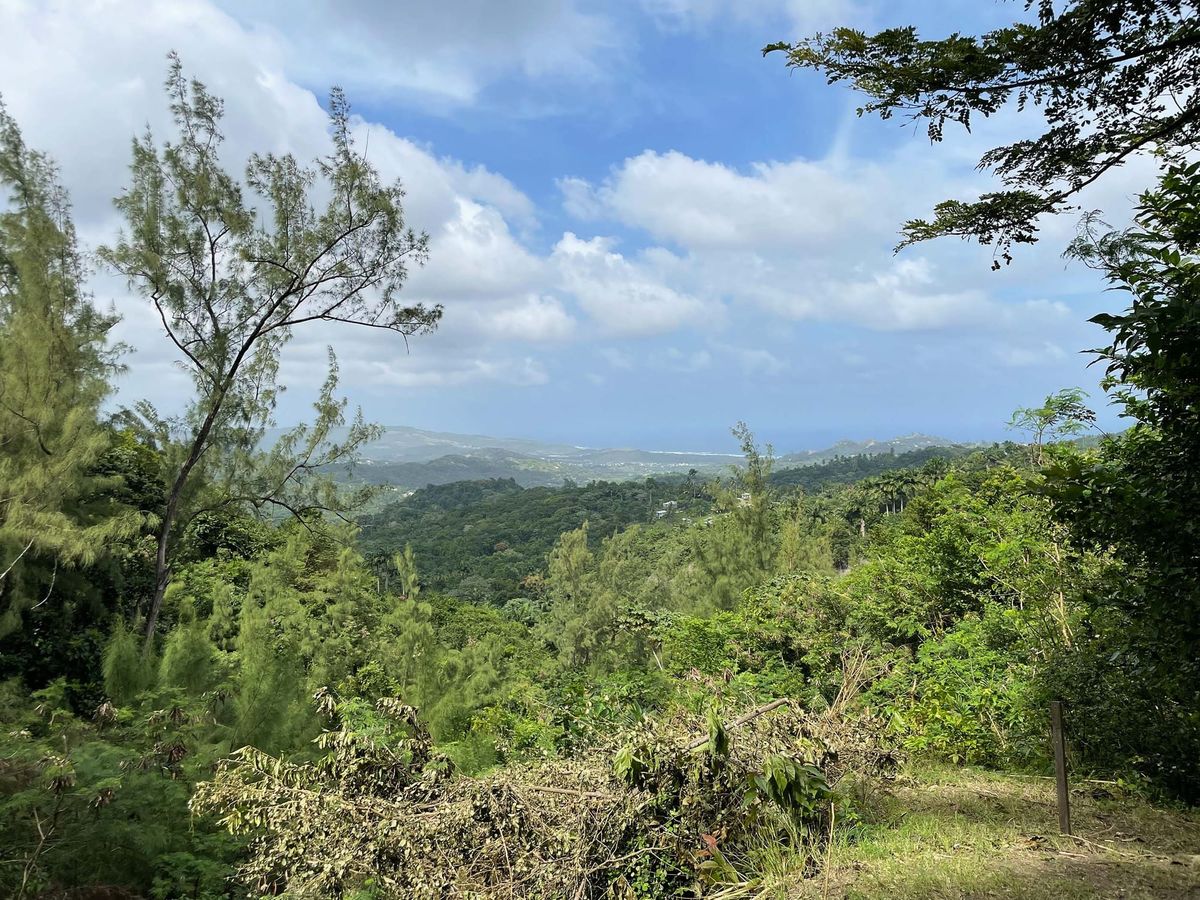
I hear the monkey before I briefly spot it. In reality, it’s more flashes of fur as the fast-moving mammal leaps through the trees and disappears into the canopy. My eyes had been trained on the ground, keeping an eye out for tripping hazards and reading plant signs, but my ears had been acutely listening for signs of animal and bird life in this lush and biodiverse pocket of Barbados.
Coco Hill Forest is a regenerative agroforestry project that covers 53 acres near the middle of the island, and it offers the adventurous type of hike that my husband and I often seek out on trips. For the residents of Barbados, Coco Hill represents an example of how to rewild land still devastated by centuries of widespread sugarcane production, as well as inspiration and optimism that the island might be able to achieve even a small measure of food security.
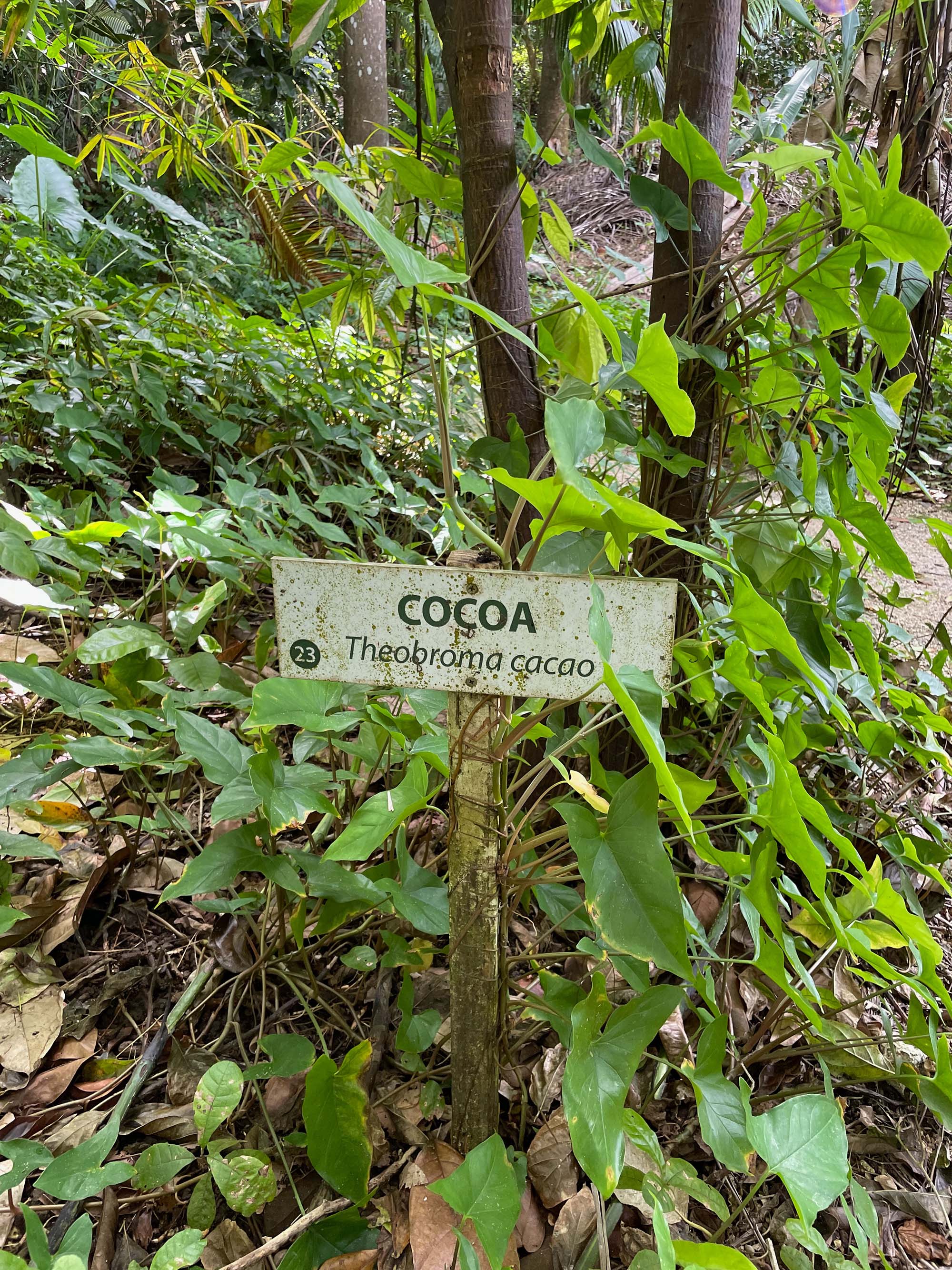
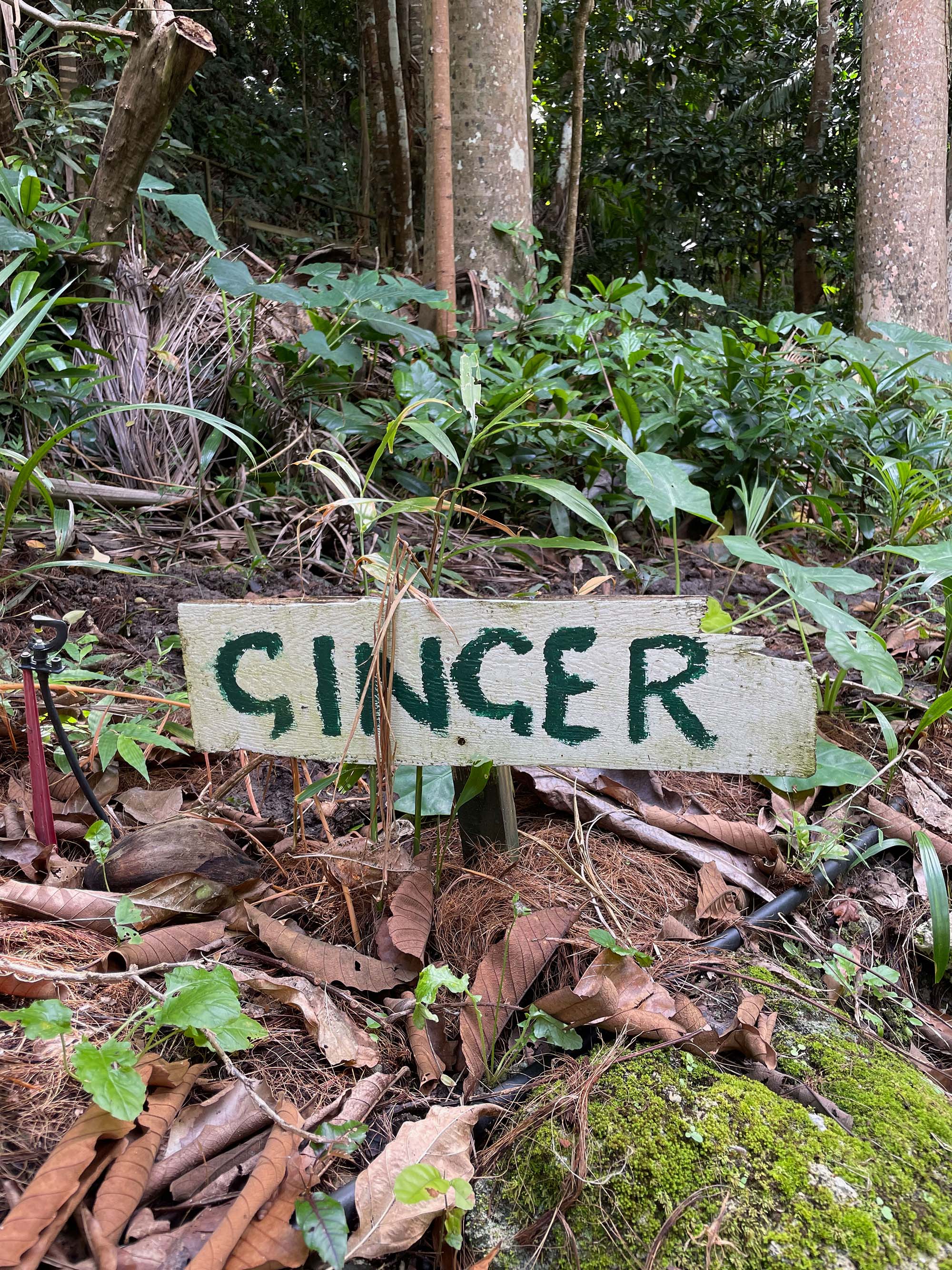
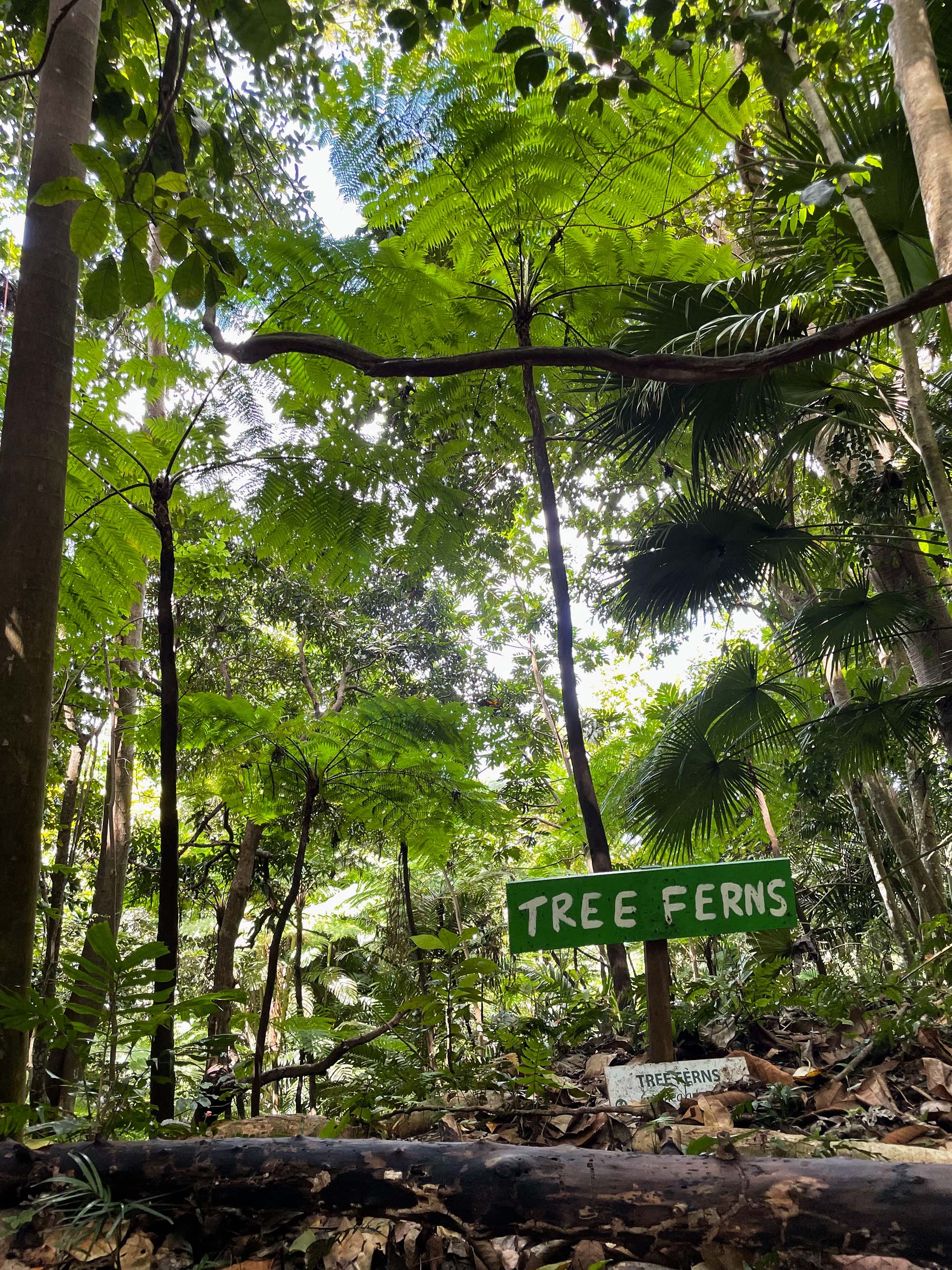
Signposts at Coco Hill Forest help visitors identify specific plants. Photos: Tara Nolan.
Inspiration to rewild
Mahmood Patel grew up in Barbados – his paternal grandparents immigrated there from India in 1937. His career initially led him to study theatre. But the global financial crisis that started in 2008 eventually impacted the funding of creative industries throughout the Caribbean, including the Bridgetown Film Festival, which Patel founded. Realizing he needed to reinvent himself, there were two catalysts that started to steer his attention toward the land.
One was a discussion while on a film set in Dakar, Senegal. “I had the director telling me the people in the Caribbean can’t talk about the creative industries when everything you put in your mouth is imported from somewhere else and that food is your first culture,” recalls Patel, whose maternal grandparents were farmers.
Patel is also a hotelier who owns Ocean Spray Apartments on the south shore. Another moment that resonated was looking at the shelf at the on-site café one day and realizing everything was imported: ginger, tamarind, pineapple, mango.
These two moments led to a fulfilling career one-eighty. In 2014, Patel found and purchased his 53-acre parcel of land. And while he started with dreams of agriculture, he quickly realized there was a pretty severe deforestation issue and a lack of biodiversity in the landscape that he could help to address as well. “Barbados is one of the few places in the world where the entire landscape was plantationized,” he explains.
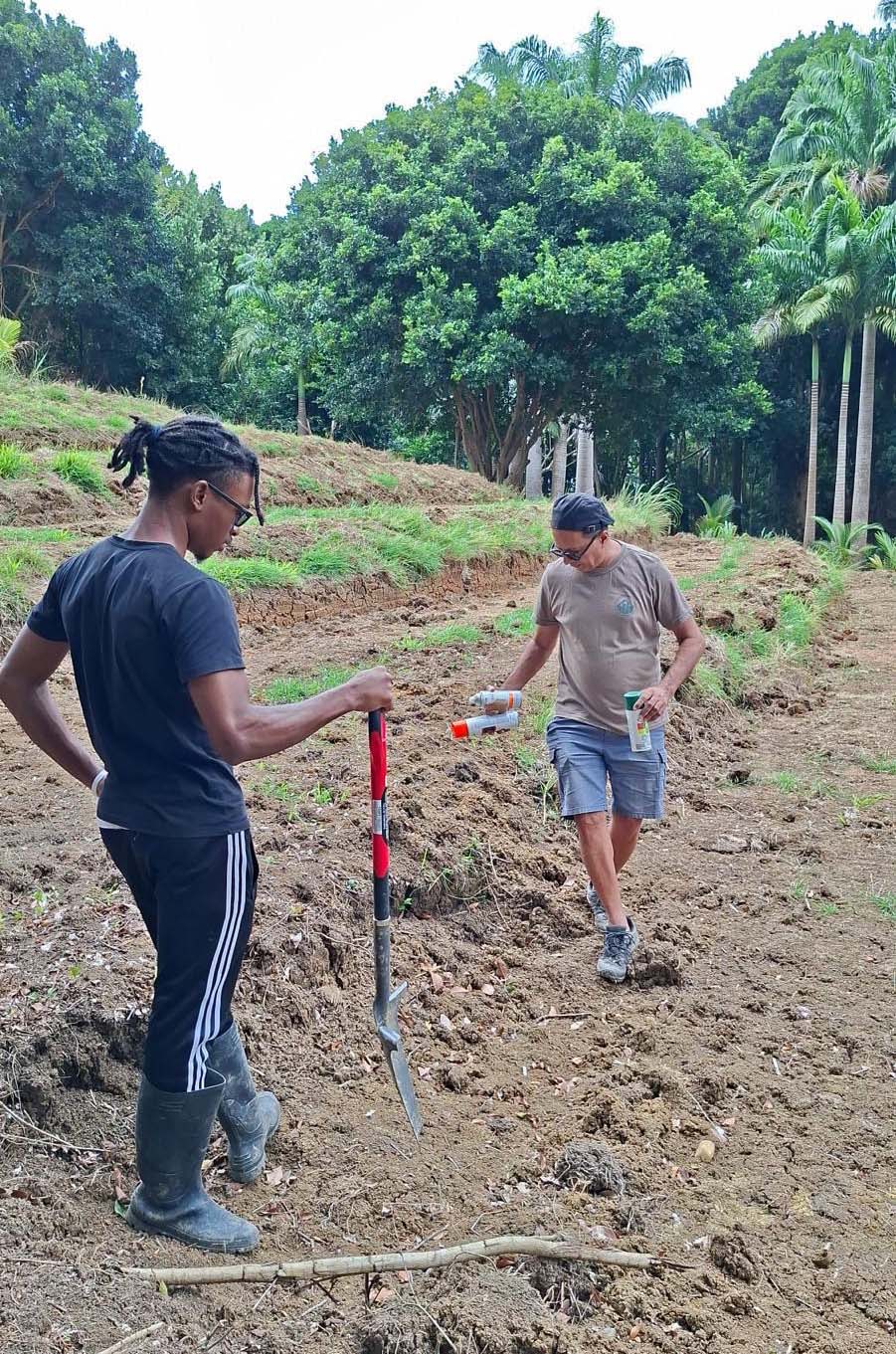
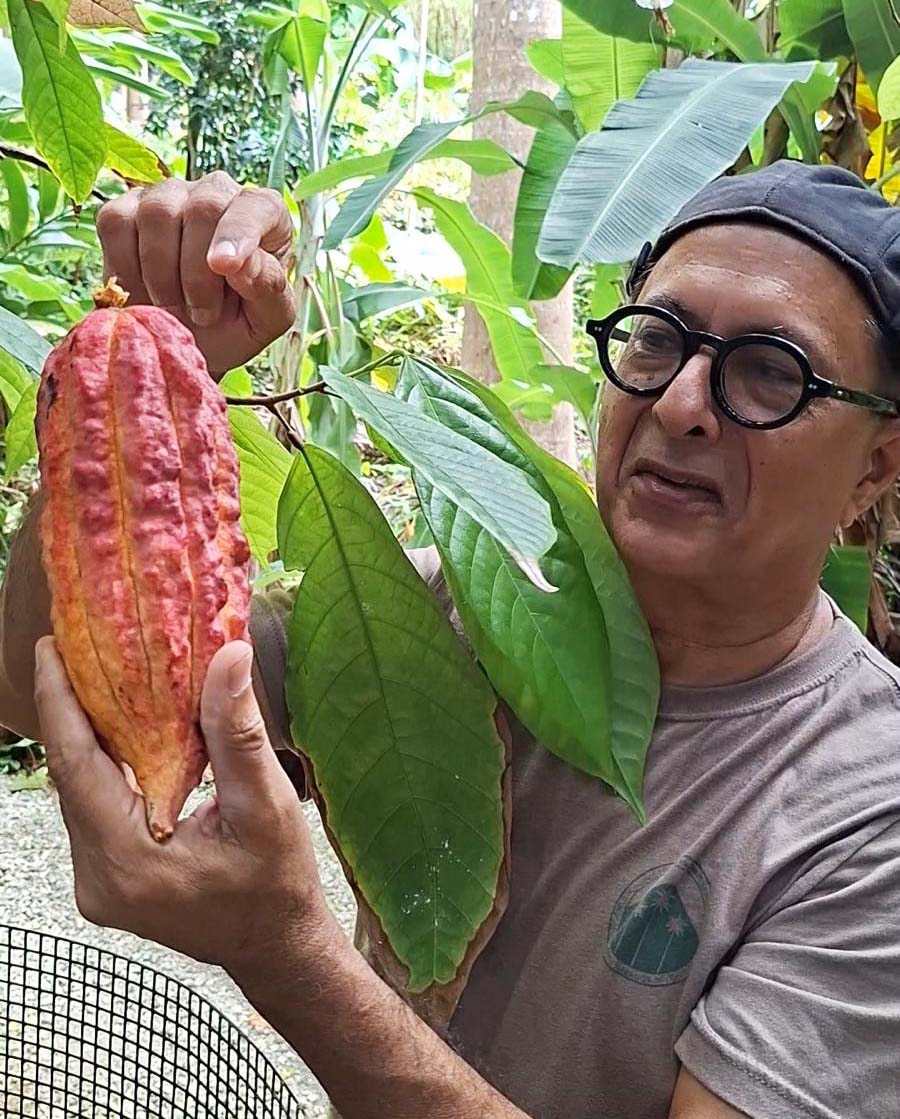
Left: Volunteers working at Coco Hill. Right: Mahmood Patel. Photos courtesy Mahmood Patel.
Clear-cutting and monoculture
The sugarcane industry in Barbados dates back to about 1643, and it had a profound impact on the land. Colonialists clear-cut about 90 percent of the island’s forests to plant this valuable commodity crop. It was a monoculture that lasted into the 20th century and left the land severely depleted.
Coco Hill lies in the Scotland district of Barbados, a fragile ecosystem that Patel says should never have been used to grow sugarcane in the first place. His land backs up his opinion – it has massive erosion challenges as well as severely depleted soil.
It’s quite devastating to look at an aerial image of Barbados in the context of forested areas. Coco Hill is in the midst of a small green area representing the only significant tree canopy, while the rest of the coasts and interior resemble a desert from above.
 Sohel Sarkar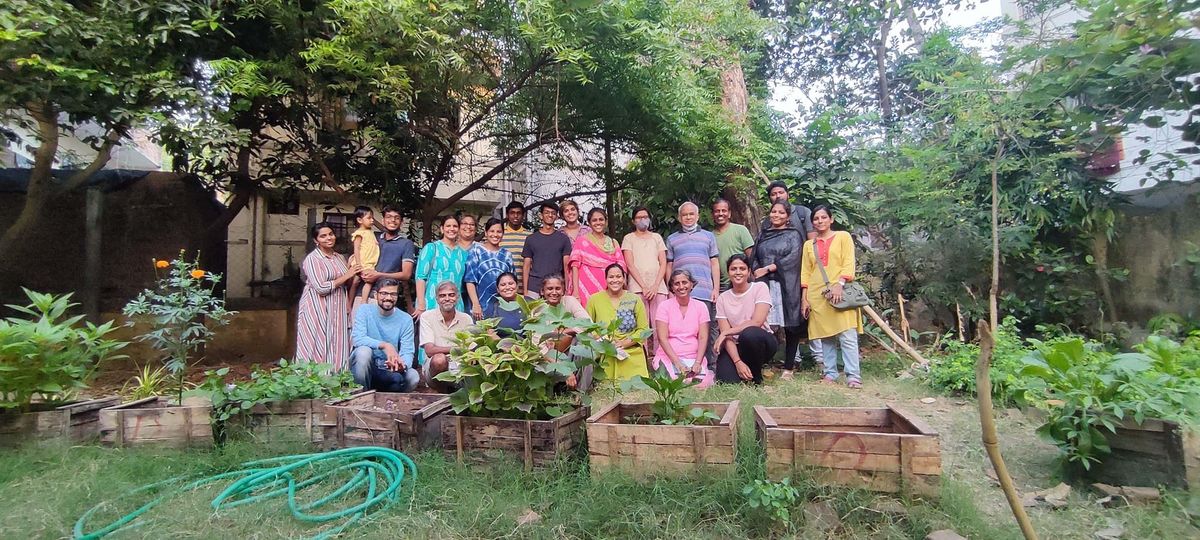
Food sovereignty and more
Alongside his dreams of achieving a small level of food sovereignty, at least for his hotel, Patel expanded his masterplan to include a large-scale rewilding project. All of this may sound out of character for a filmmaker, but Patel actually got his start in horticulture and has always wanted to grow food, especially fruit and coconuts. “I’ve always been an avid gardener,” he says. “The initial vision was to at least try to create a cuisine at the café around what we can grow – not to replace everything, but at least to try to supplement or reduce the amount of imported food, such as bananas, plantain, eggs, coconuts, and more.”
His budget did not allow for a full topographic plan to be laid out, and so Patel used his plant and landscaping background to take a more organic approach to remediation. Simply being in the space helped inform the shape of the pathways and what could be done throughout the forest, keeping in mind guidelines and principles from sub-tropical farming, permaculture and regenerative and agro forestry. To that end, the land is separated into two parts: one managed more actively and one more passively.
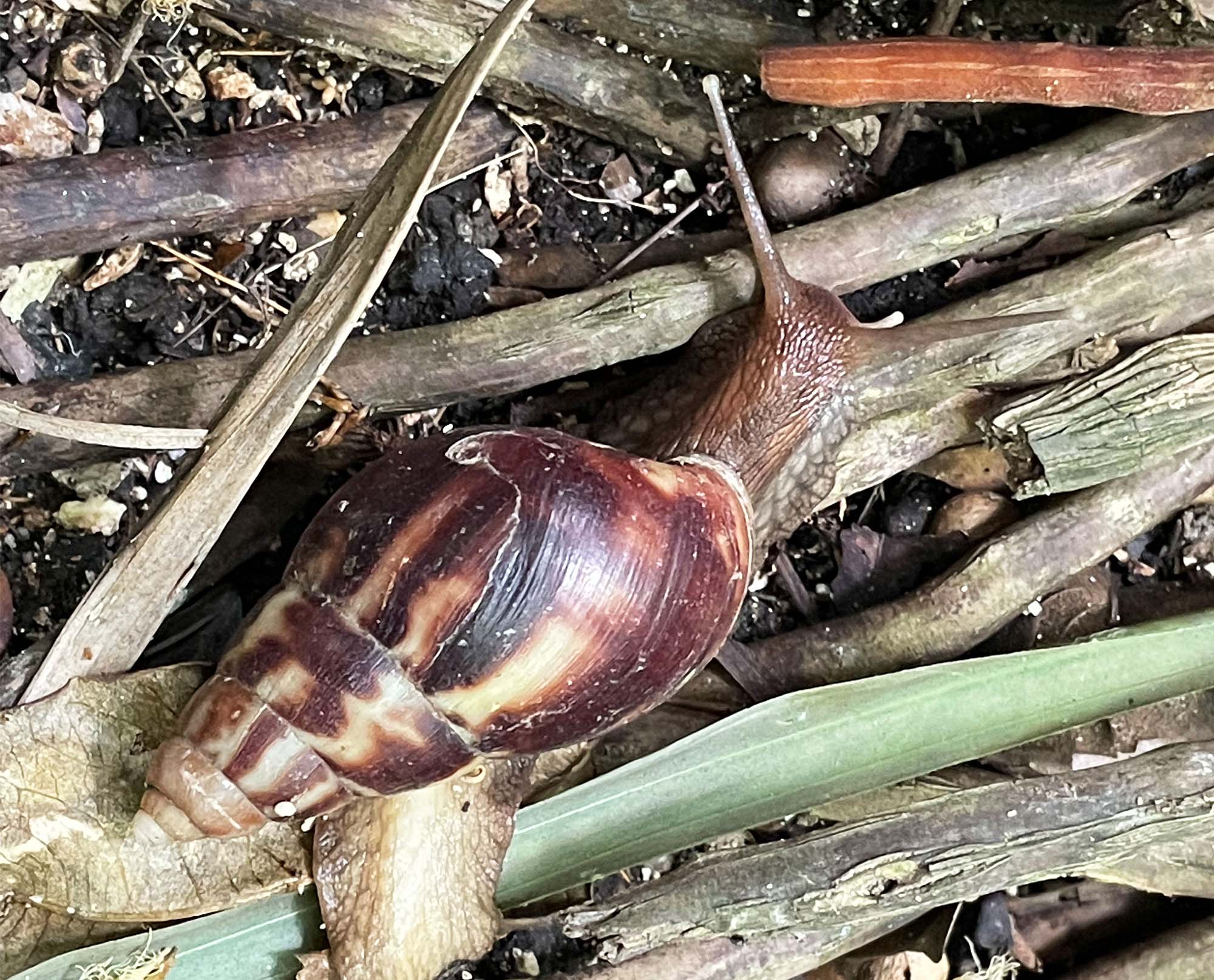
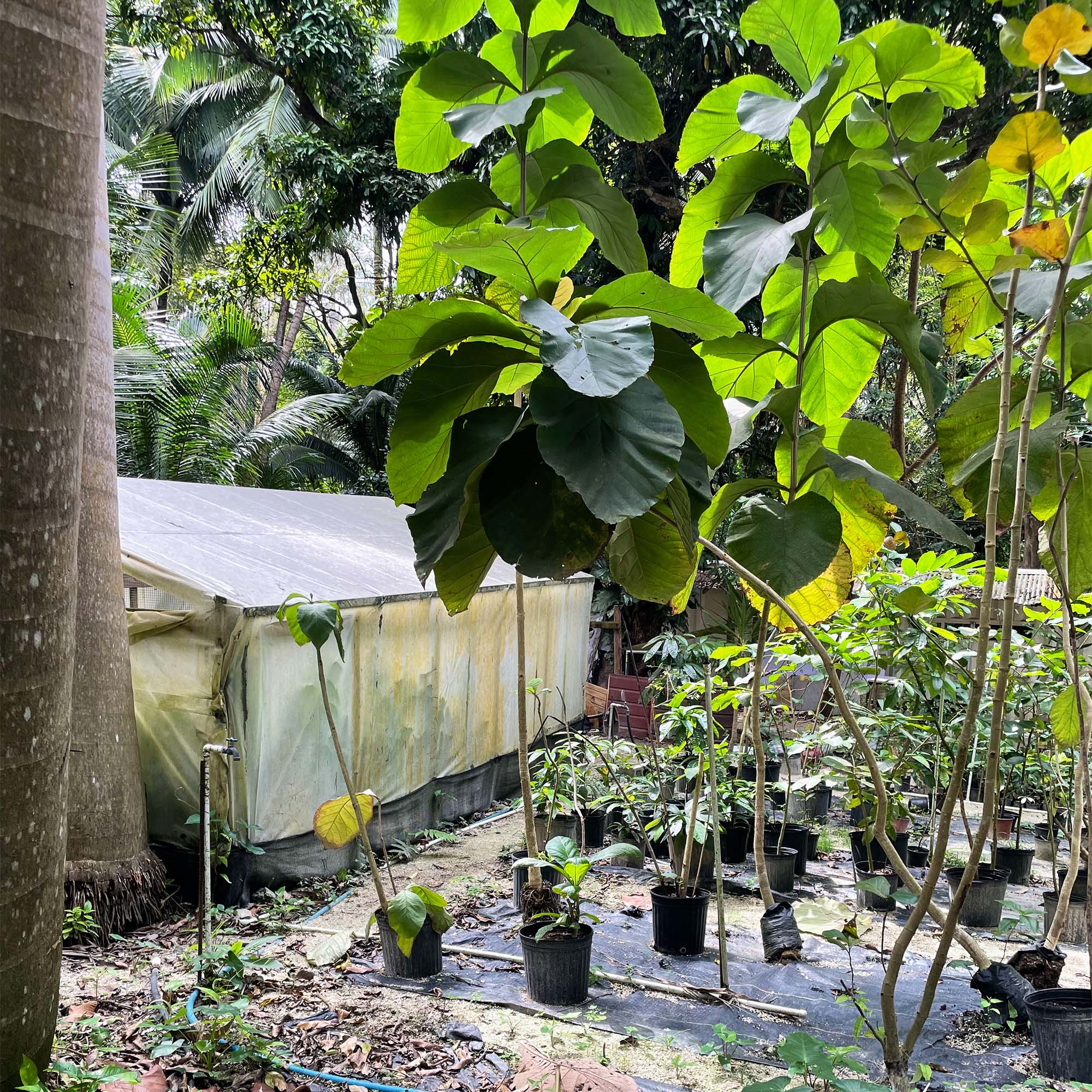
Photos: Tara Nolan
Terrace farming works on the delicate geology of the west hill, where work is being done to remediate the soil and prevent it from being washed into the ocean every time there is a heavy rain. “We do terrace farming, a lot of composting, cut and drop, and edge farming,” explains Patel. Rather than planting in rows, intercropping is used to slow down erosion. The rain is channeled to a pond at the bottom.
On the east hill, the goal is to preserve what’s there. Patel explains that this area comes fairly close to original forest. “That [area] is conservation and preservation, so we’re not going to touch that because there are endemic and indigenous flora in there.” Patel has been doing research in conjunction with the University of the West Indies to try and document what is already in the forest and what can be replanted there, such as the hardwood fustic tree (Maclura tinctoria) and the endangered Barbados mastic (Sideroxylon foetidissimum). He uses a couple of books as references to help inform what was there before. “The idea is to do some replanting, rewilding, reforestation, based on whatever little knowledge we have from the past.”
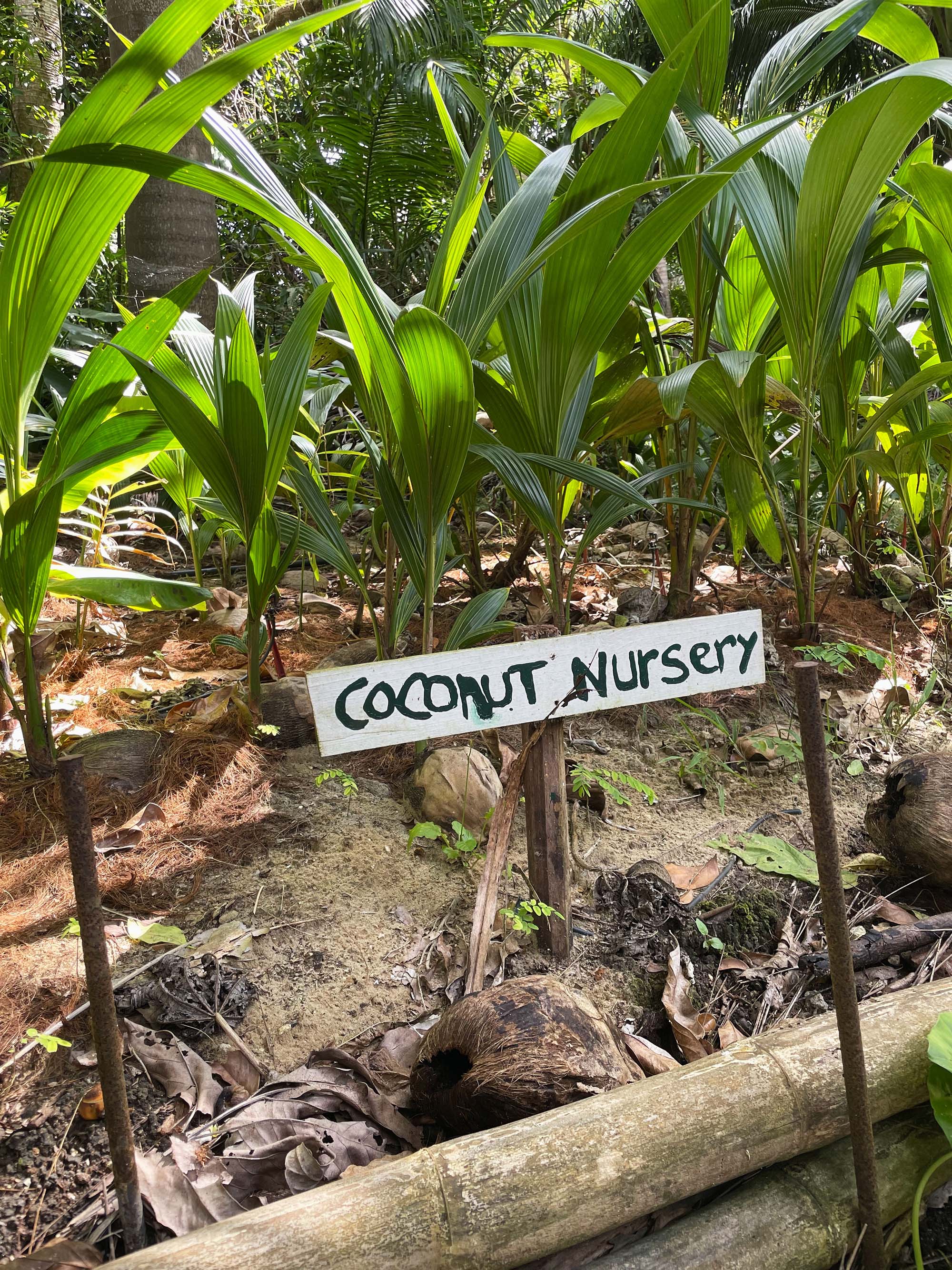
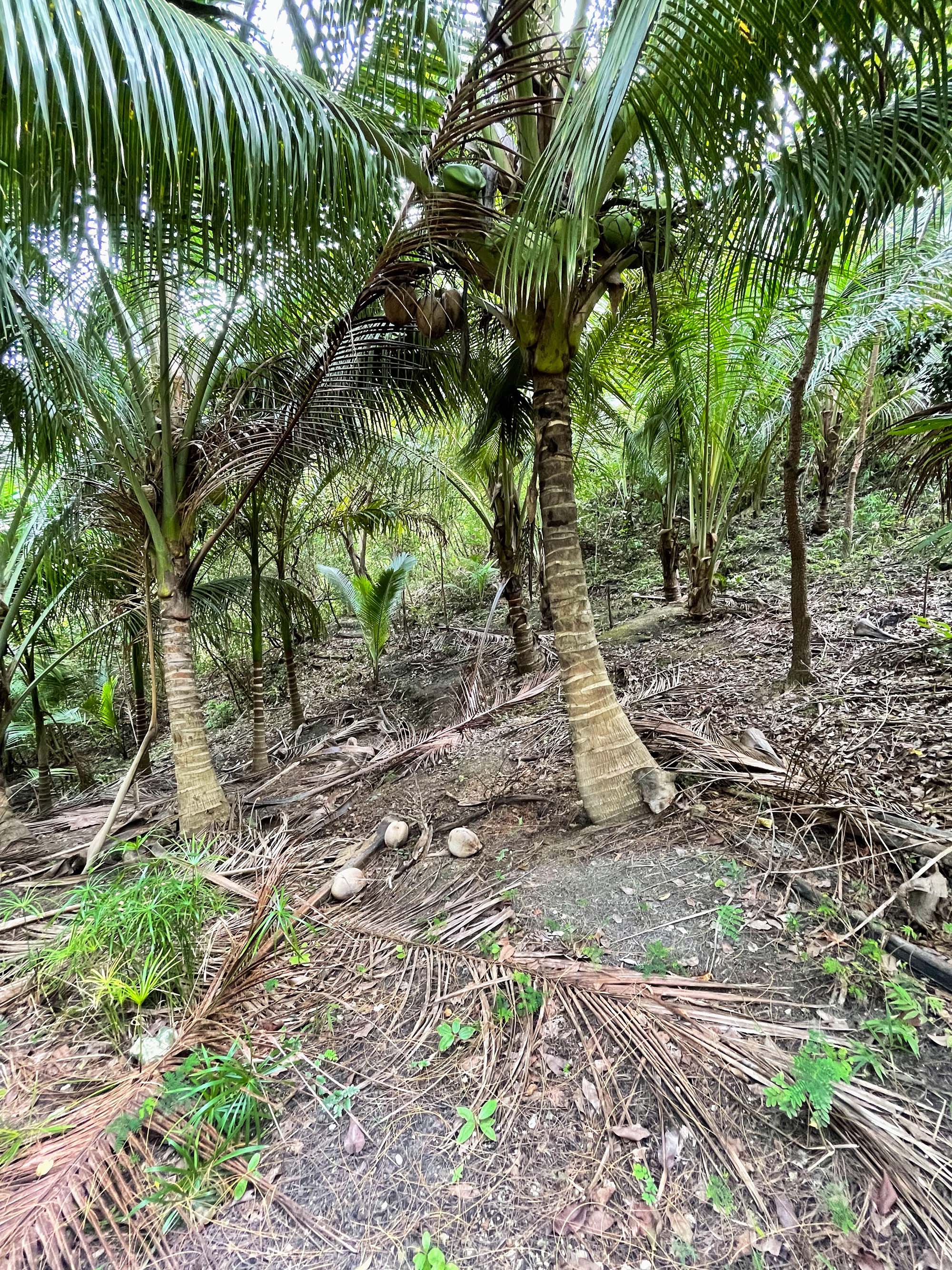
Photos: Tara Nolan
Through this research, Patel hopes to embark on what he refers to as a “tip of the spear” project that would involve creating an interactive space and workshops for the public to document what’s happened in Barbados and the people who worked the land. These could also be turned into education modules for students.
Another part of the project is a coconut farm that includes an on-site nursery and greenhouse. Patel refers to the climate-resilient coconut as a more democratic crop than sugarcane (or wheat or cotton) because you don’t need plantations to grow it. “It can grow in the sand on the beach or the clays up in the hills,” he says. Coconut also lends itself well to the intercropping that happens in the terraces that have been created. Once it and other canopy crops such as breadfruit reach a certain height, you can plant various things underneath: roots like ginger or turmeric, groundcovers such as pineapple and intermediate plants like banana or maybe cocoa. “We always try to mix two or three crops in one space,” he says.
 Sophie Knaus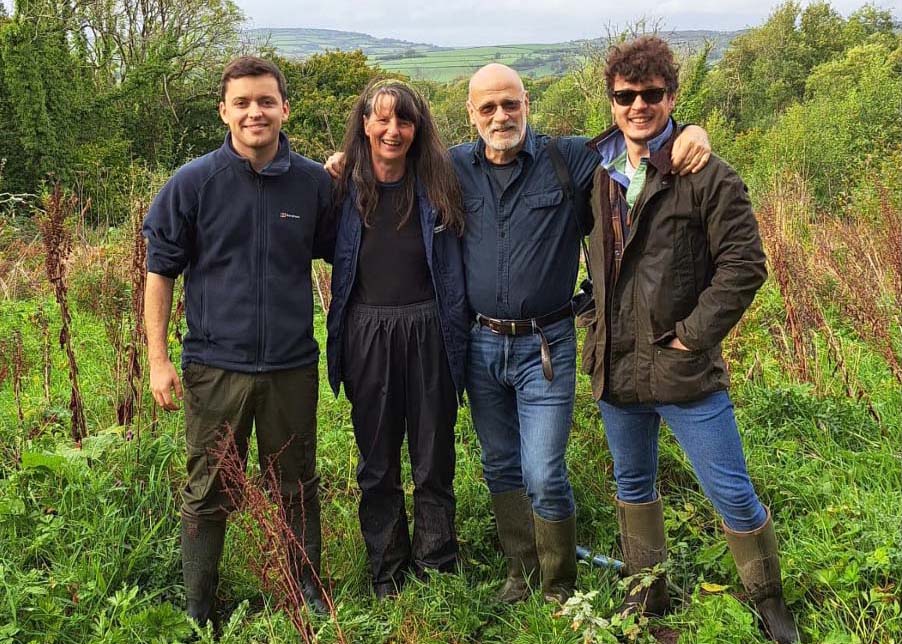
Coco Hill’s present – and future
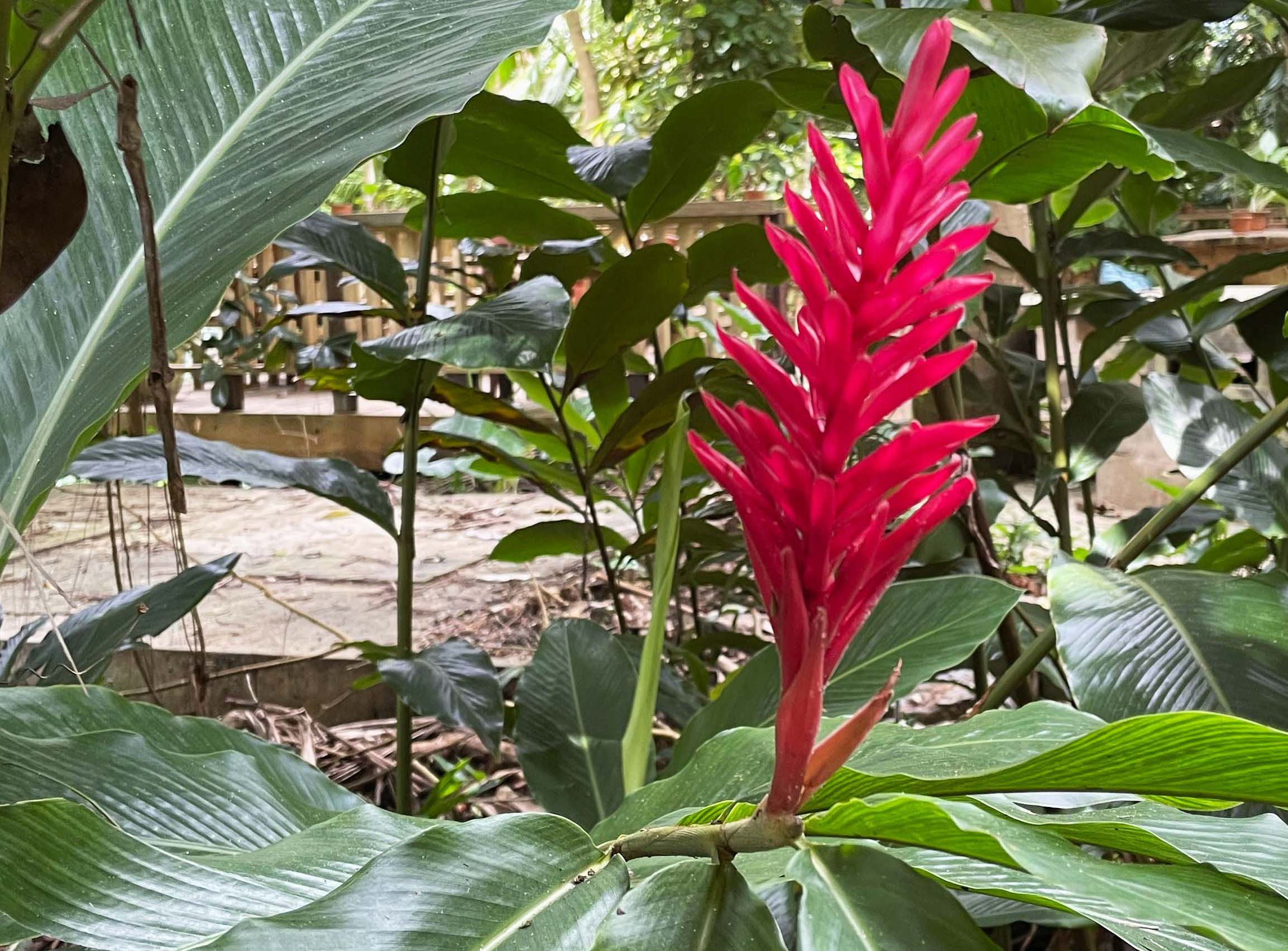
Our self-guided hike takes us past all of these plants, many helpfully labelled for visitors with signs. They are an opportunity to learn about the messy imperfection of a regenerative forest. I constantly marvel at all the shades of green with occasional bursts of colour from flora like the red flowers of ginger. Any visitor would be remiss not to look up occasionally to take in the incredible height and scale of the old-growth forest, which includes the rare tree fern (Cyathea arborea). A couple of spots lead to stunning views of the rugged east coast, which includes a surfing hot spot off Bathsheba Beach.
We don’t spot any more monkeys, but that’s probably a good thing, as they have proven to be quite destructive to the property. One social media post alludes to the fact that certain harvests may have been bigger if not for the monkeys, while another reveals the damage they can wreak.
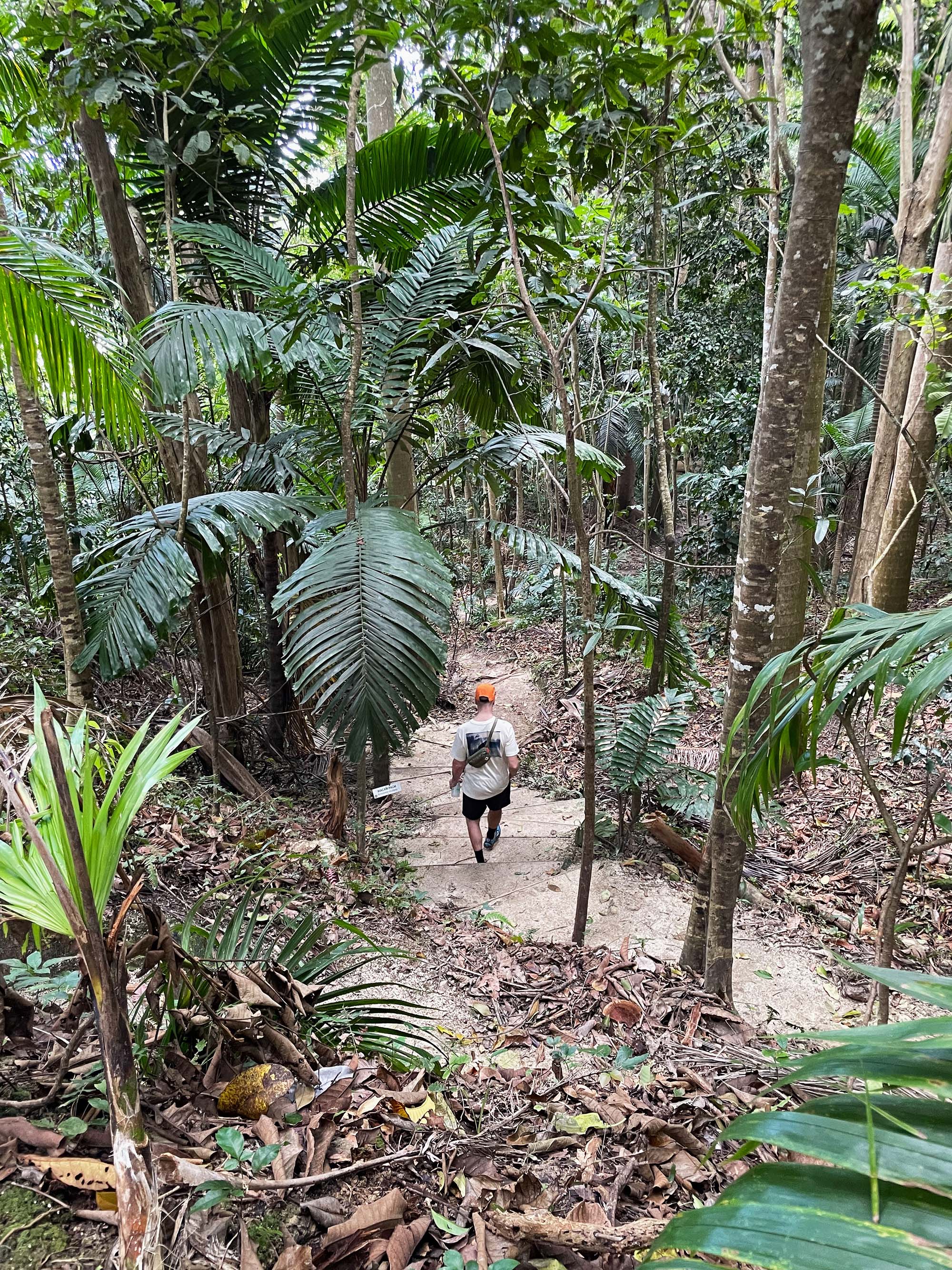
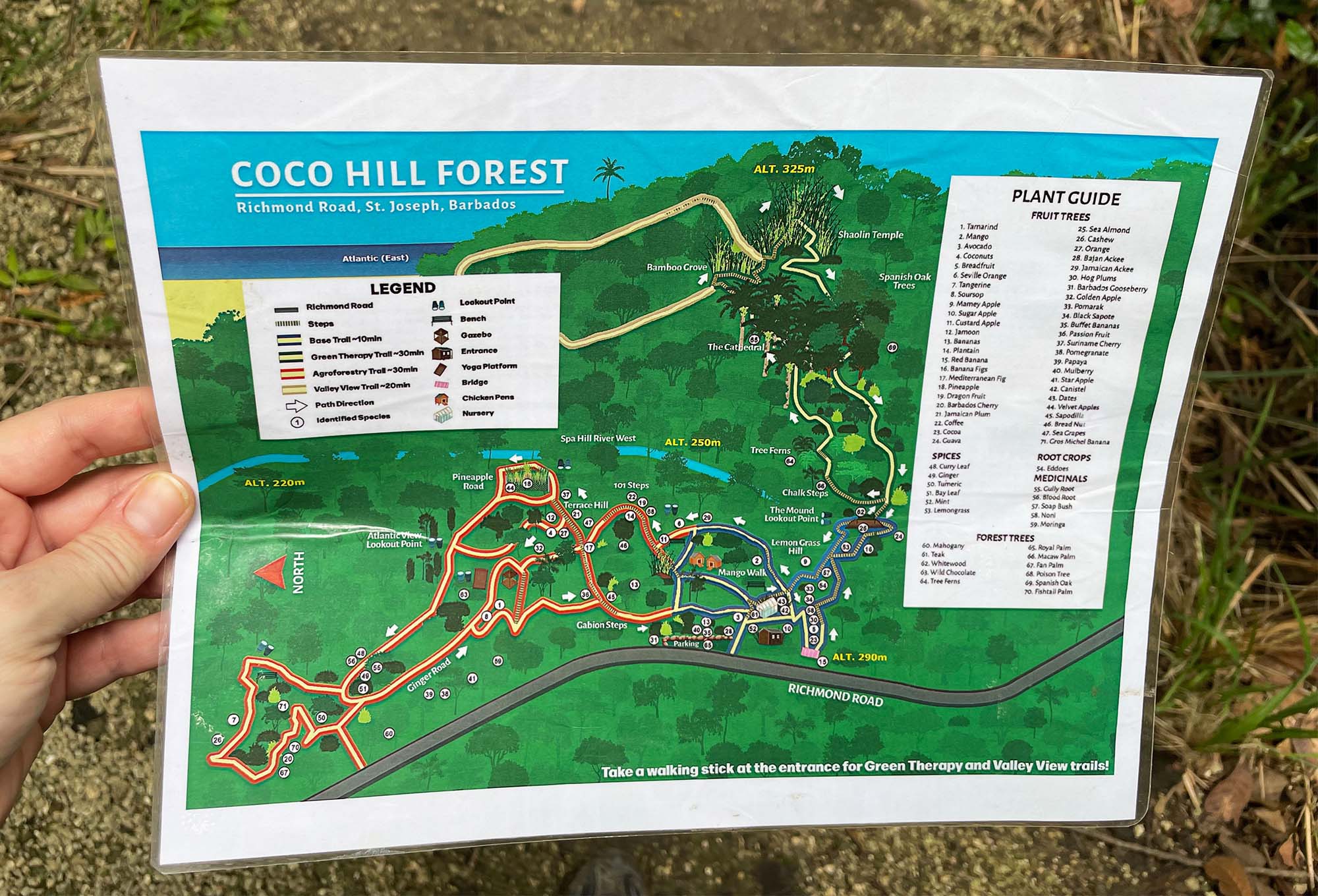
Photos: Tara Nolan
Events such as hurricanes and the Covid-19 pandemic have created challenges for Patel’s agricultural business, and his hotel is helping to fund it right now. That’s one reason agritourism is part of the project: besides the actual regenerative agroforestry that’s happening, Coco Hill offers “living in the forest” experiences such as shinrin-yoku (forest bathing), curated guided walks and moonlight and firefly hikes. Patel would also like to eventually have treehouses or interesting huts in the forest to create revenue to keep the project going. And he is also focused on value-added tertiary production, offering products like ginger rum.
When asked what has surprised him about his project, Patel answers that it’s the lack of research being done in Barbados when it comes to what can be grown there. “I’m not saying that we can achieve food security,” he says. “I am surprised that we haven’t pushed the boundaries of what we can do.”
And he is modest about what he’s achieved thus far. Some have referred to him as a guardian of Coco Hill Forest, which is apt but perhaps doesn’t encompass the full breadth of his plans and achievements. “I think what we have been able to do is move the needle to where it’s more awareness of how critical reforestation is or needs to be,” he says. What’s remarkable is how Patel has channelled his artistry into a living, breathing legacy that is both hopeful and ambitious in its goals. Great strides have already been taken both in rewilding and in educating visitors – which will hopefully inspire others, both on and off the island.
Comments ()