

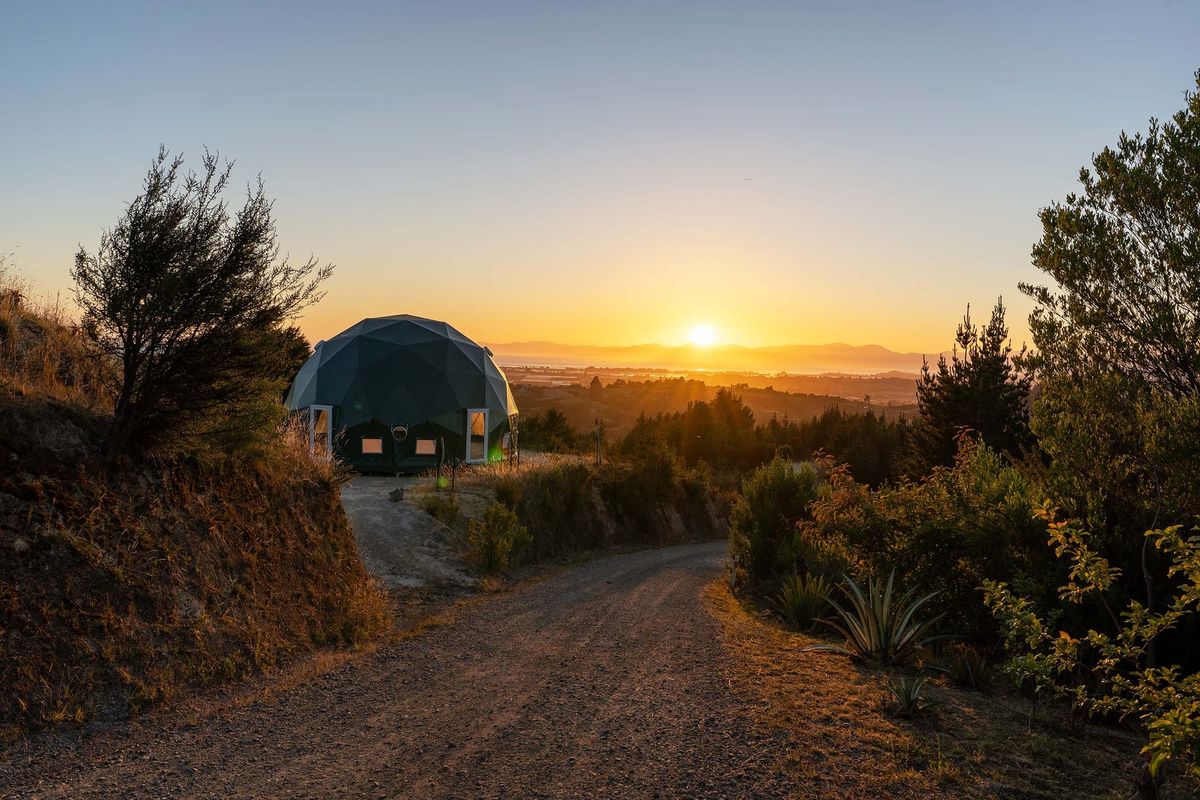
In the beginning, this New Zealand project focused on ecological restoration. Now, it's about reconnecting humans with the world they live in.
The first thing people notice is the silence.
Not the absence of sound, but the opposite. The rustle of wind moving through young native trees. The layered chorus of birdsong drifting through regenerating forest. The sounds of tūī, kararea and komako. The subtle noises that return when nature is given permission to heal.
Ten years ago, none of this existed. The land was largely pasture or forestry monoculture and biodiversity was sparse. Much of what had once been a rich native ecosystem had long since been cleared, grazed, drained or simplified in the name of commercial productivity. Like countless landscapes around the world, it had become efficient, useful, managed and ecologically diminished.
Today, these same hillsides in New Zealand’s Motueka Valley are home to native trees, extensive predator control, regenerating native forest, volunteer restoration projects and a growing community of people drawn by a simple idea: perhaps rewilding is not only something that happens to landscapes…
Perhaps people need it too.
 Aimee Milne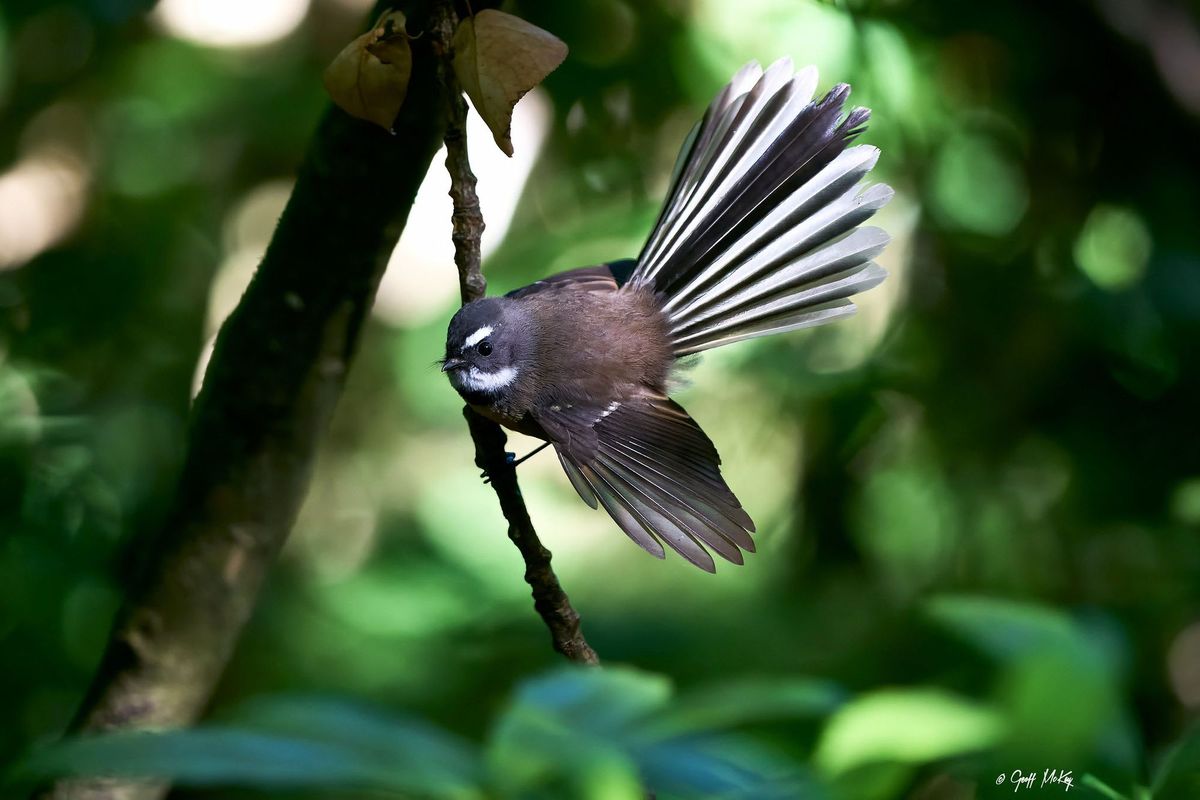
The accidental rewilder
I didn’t set out to become a conservationist. For much of my working life I was founder and CEO of a global creative agency in the film industry. Over the past 15 years we worked in 40 countries, supported thousands of productions and operated around the clock across multiple time zones. While the business was successful, it also represented an intensely digital existence.
Like many people working in modern knowledge industries, I spent my days focused on screens, deadlines, meetings and information flows. Creativity became increasingly detached from the physical world and nature became something experienced between tasks rather than as part of daily life.
When I purchased a neglected 44-acre property overlooking Tasman Bay in New Zealand’s South Island six years ago, I imagined a lifestyle change. I didn’t realize I was beginning a lifetime experiment.
An annotated history of the situation in Aotearoa/NZ
For context, let’s have a rapid recap on the situation here. Aotearoa (land of the long white cloud)/New Zealand was the last major land mass to be discovered by humans. For 80 million years prior to that, these islands were isolated and unique. Without any mammalian predators, an ecosystem of remarkable flora and fauna evolved, unlike anywhere else in the world. There are 80,000 unique endemic species in NZ, a global biodiversity hotspot.
Over the last few hundred years this paradise has been massively impacted by humans and the invasive mammals we brought with us. Introduced predators like rats, mice, cats, stoats, ferrets, weasels, possums (and trout) have decimated native and endemic species, who evolved without needing any defences from mammals for millions of years.
Because of the lack of predators, many native bird species have their nests on the ground, which makes them highly vulnerable. Since human arrival, at least 51 bird species (one third of all original species) have become extinct, as have many bats, lizards and fish. Overall, 4,000 native species of flora and fauna here are classified as threatened with extinction or at risk.
We need to fight hard to protect what we still have. This is why we do what we do here.
 Silvia Pinca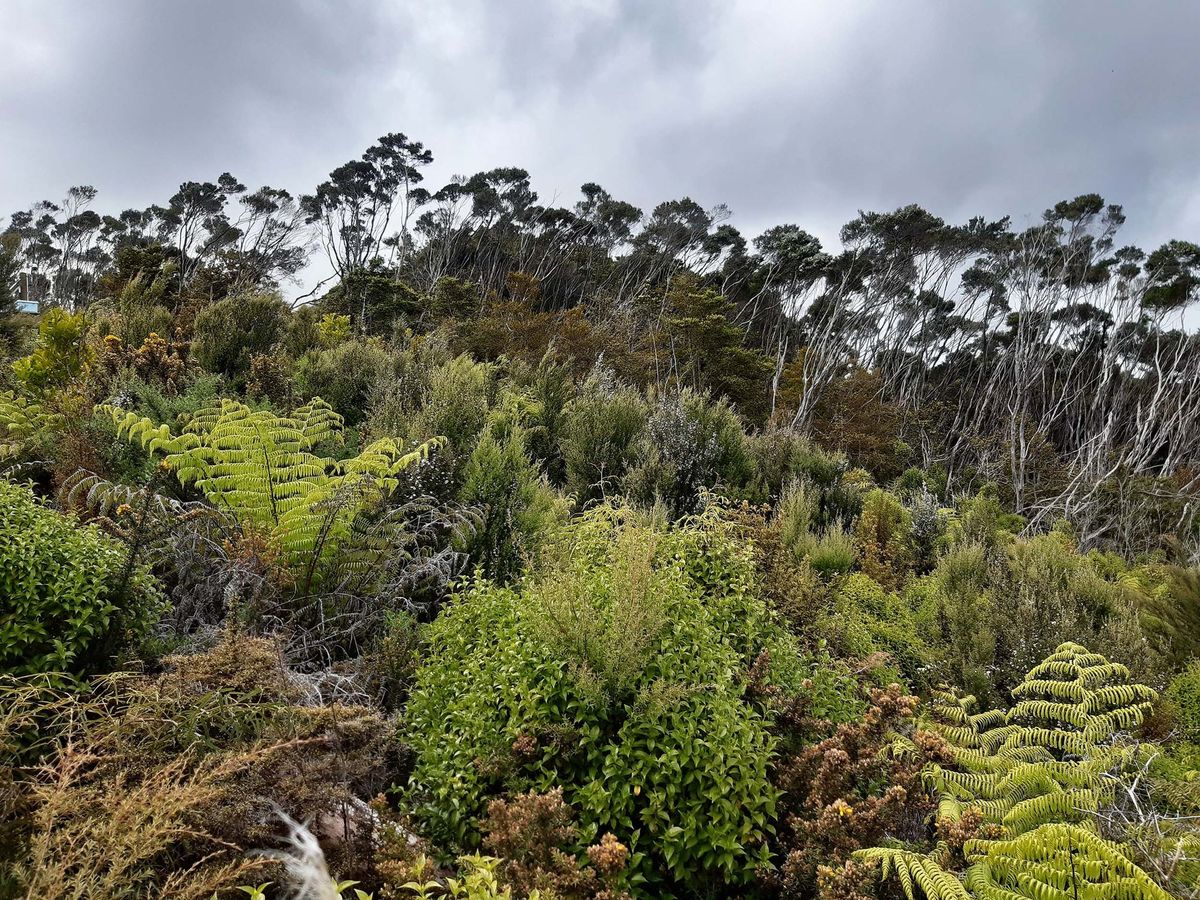
Letting nature back in
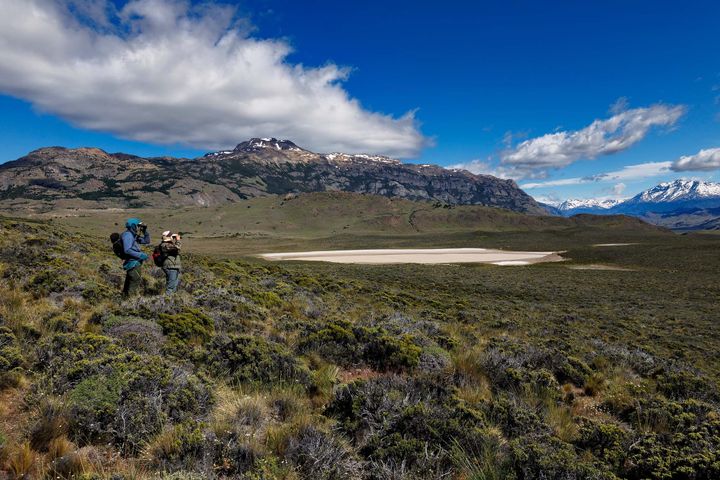
This property sits between farmland and the vast wilderness of Kahurangi National Park, one of New Zealand’s largest protected areas.
The original plan was modest: plant some trees, improve habitat and create a better place to live. Nature had other ideas.
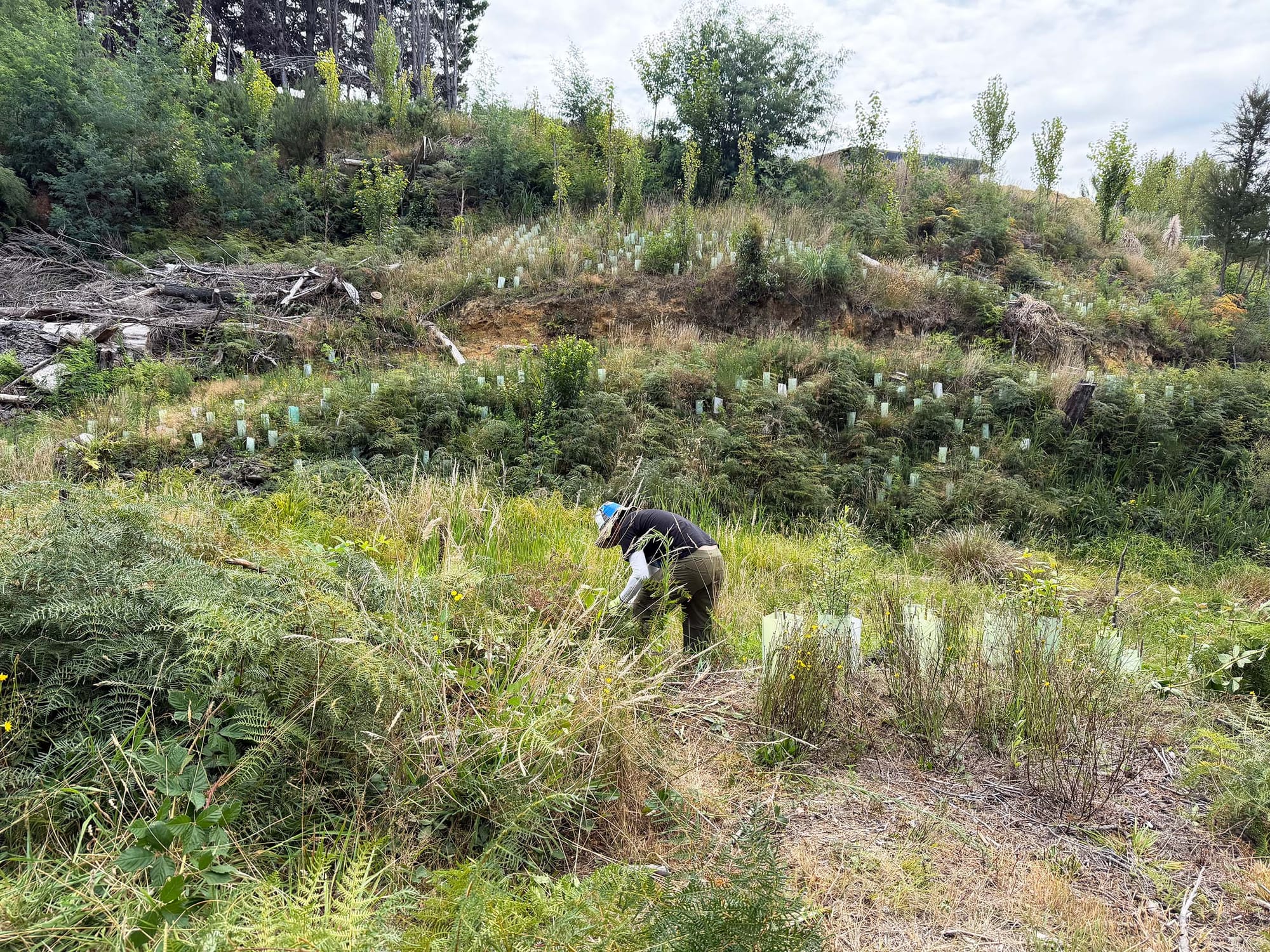
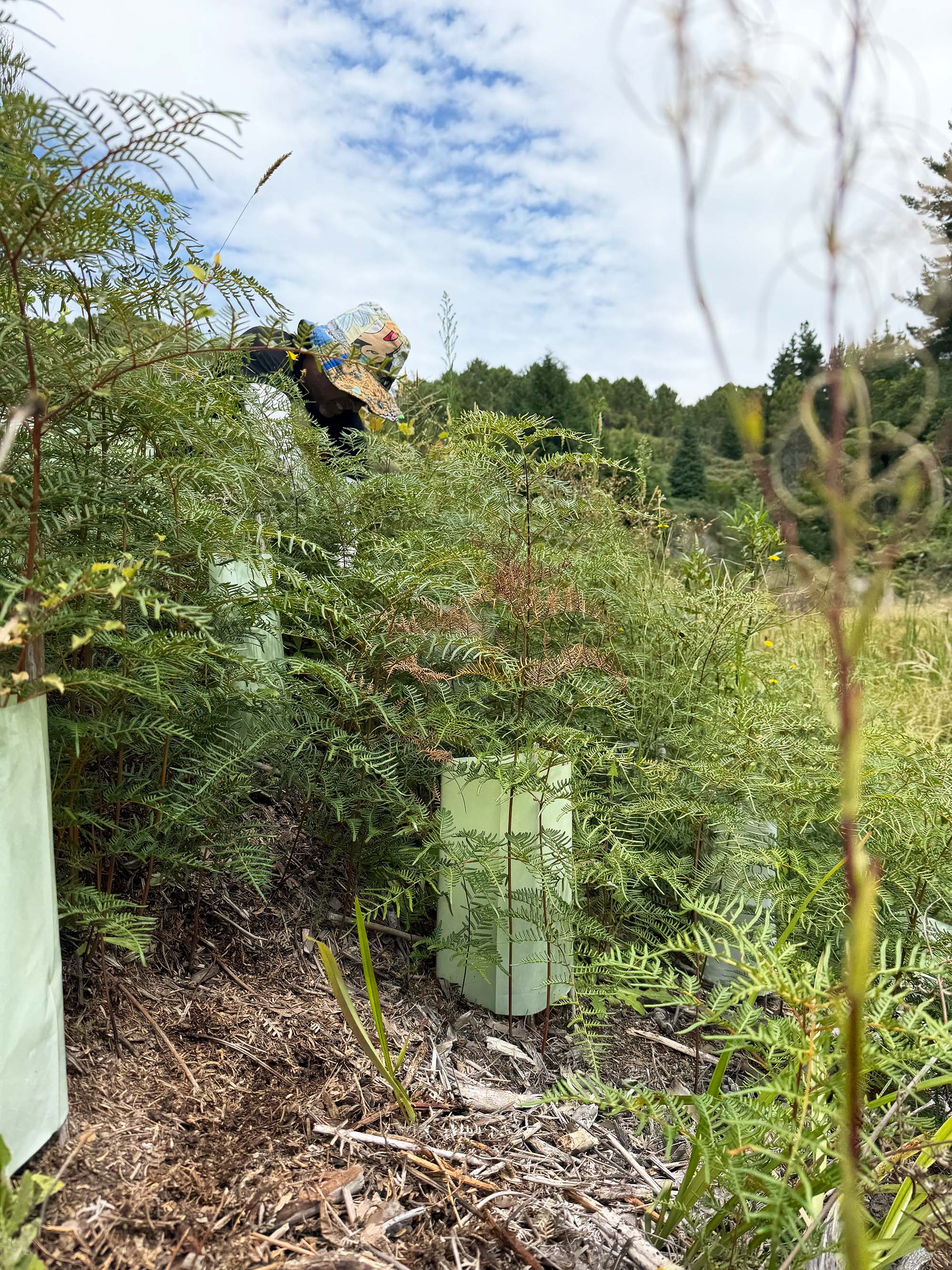
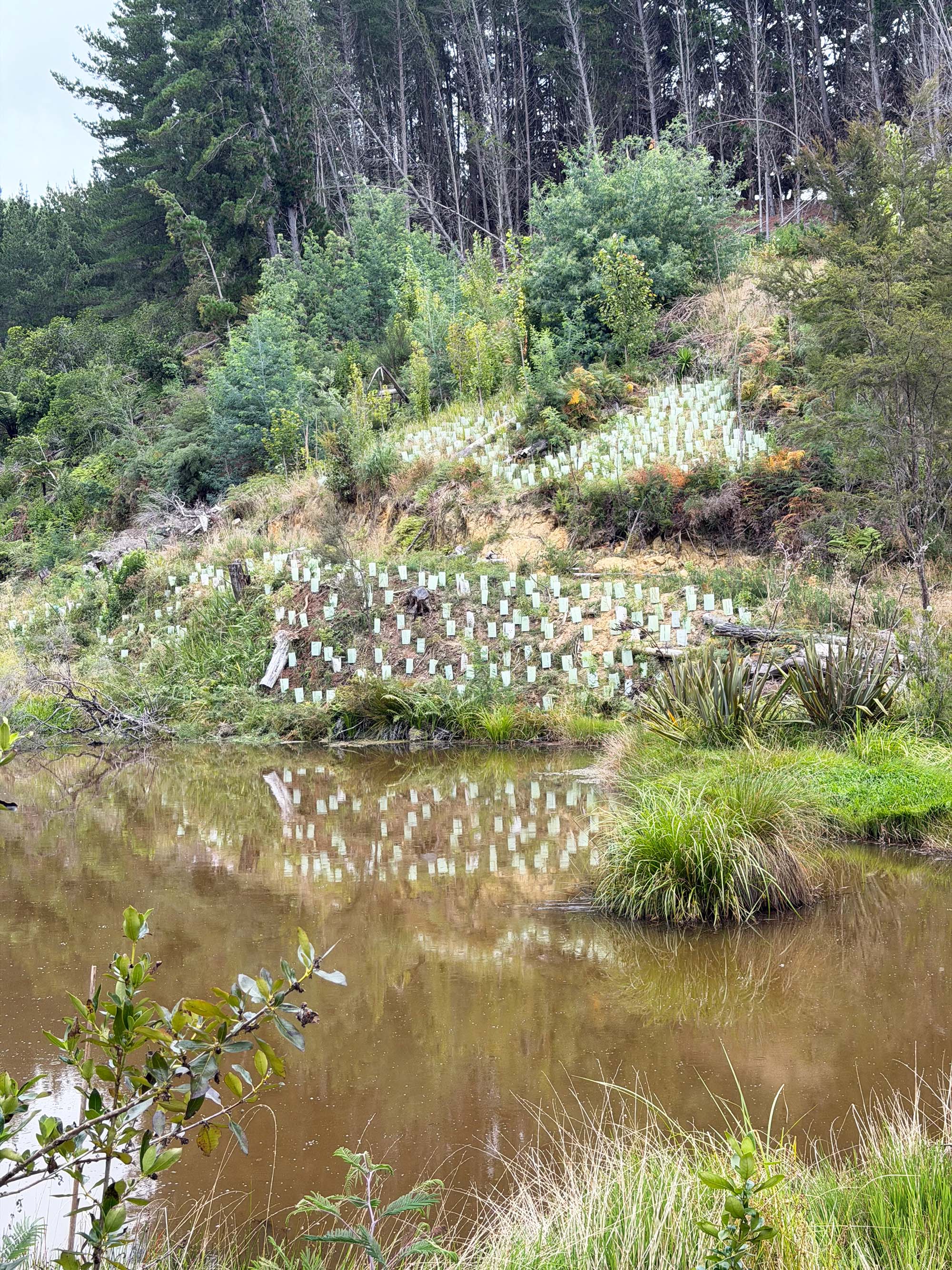
As native species began to return, the project started to evolve. One planting season led to another. Then another. Tracks were created through regenerating forest. Pest control programs expanded. Volunteers arrived wanting to help. Conversations emerged about ecology, restoration and long-term stewardship. A plant nursery started up, growing tree species for this land and other people in the local catchment.
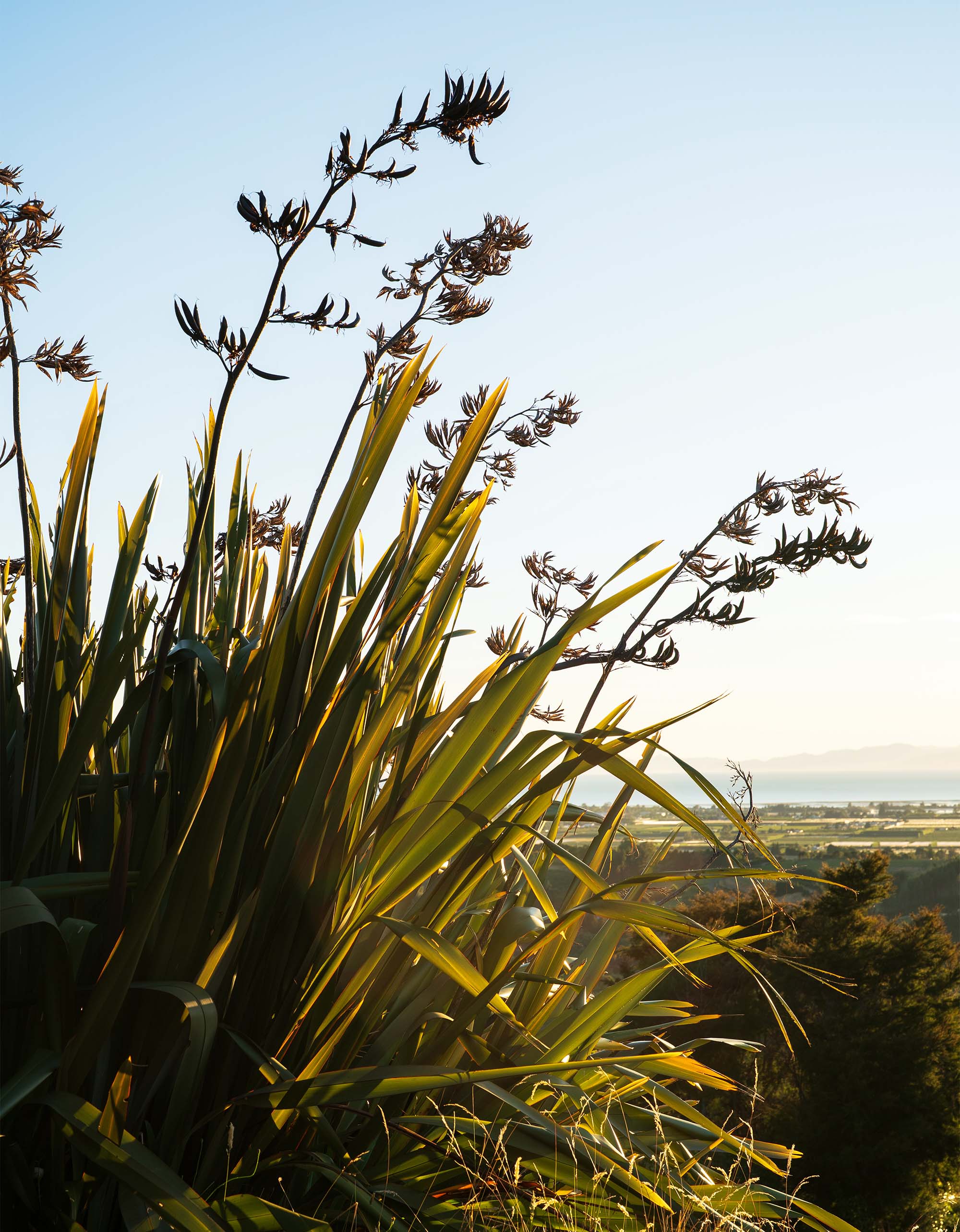
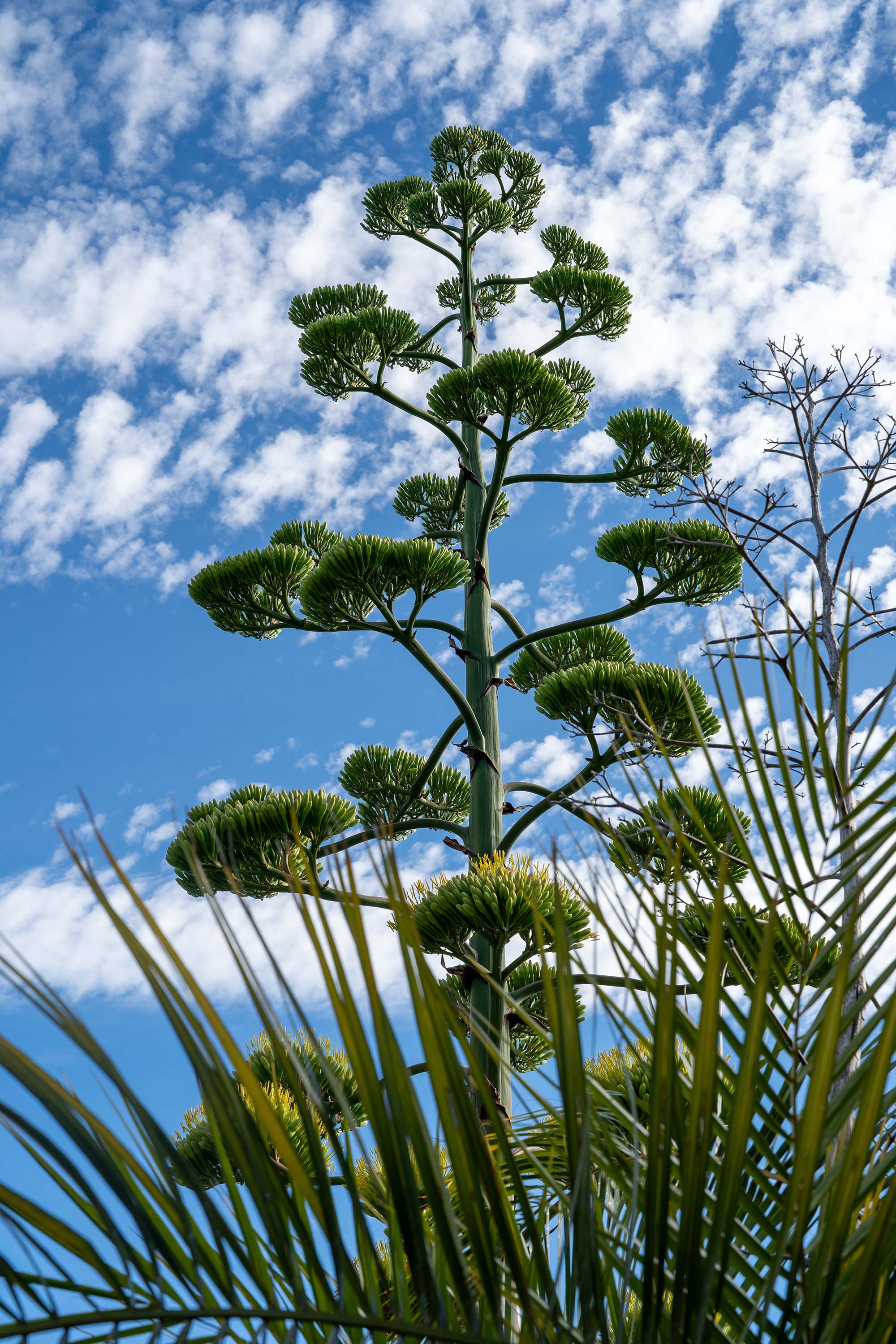
Photos: Kimberly Webb
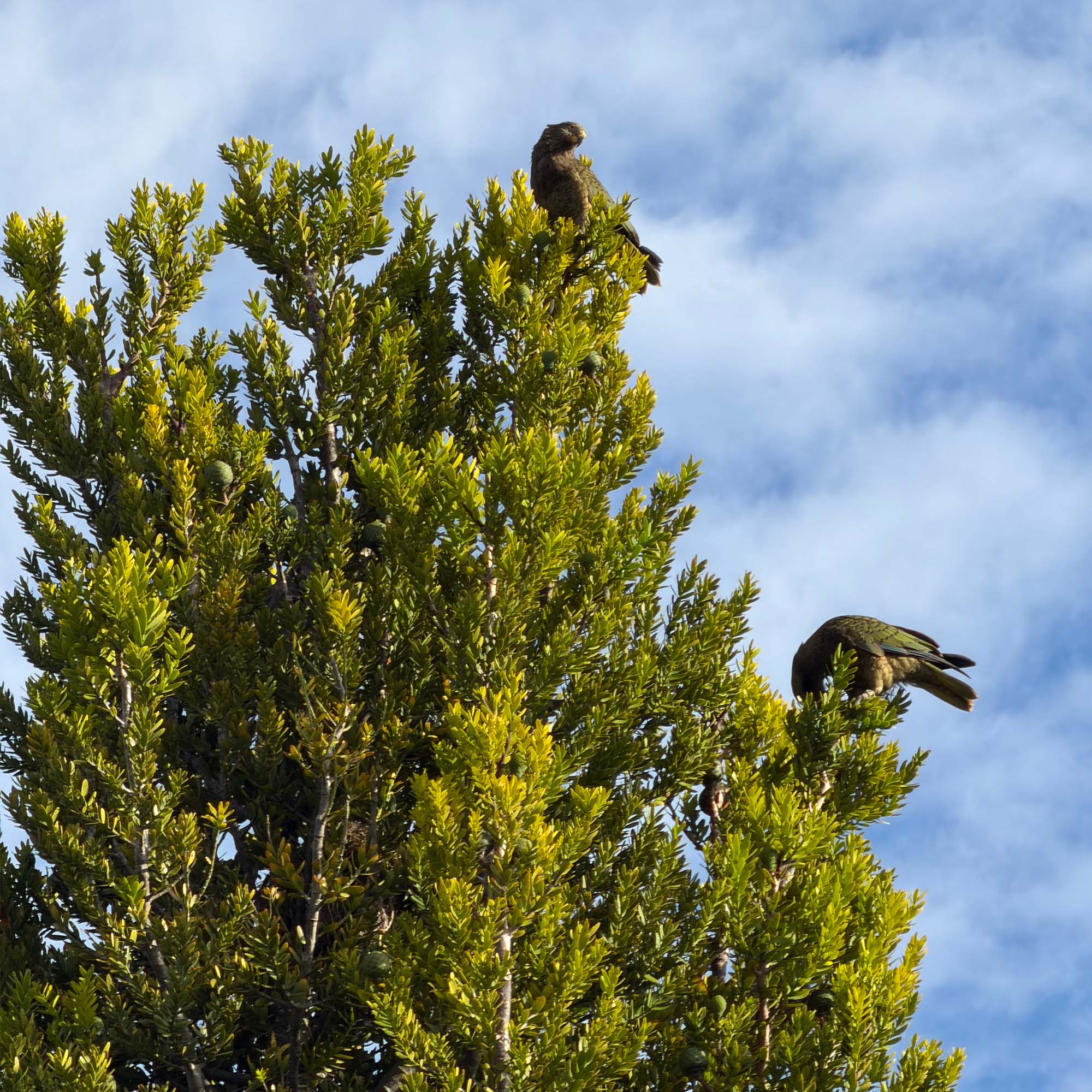
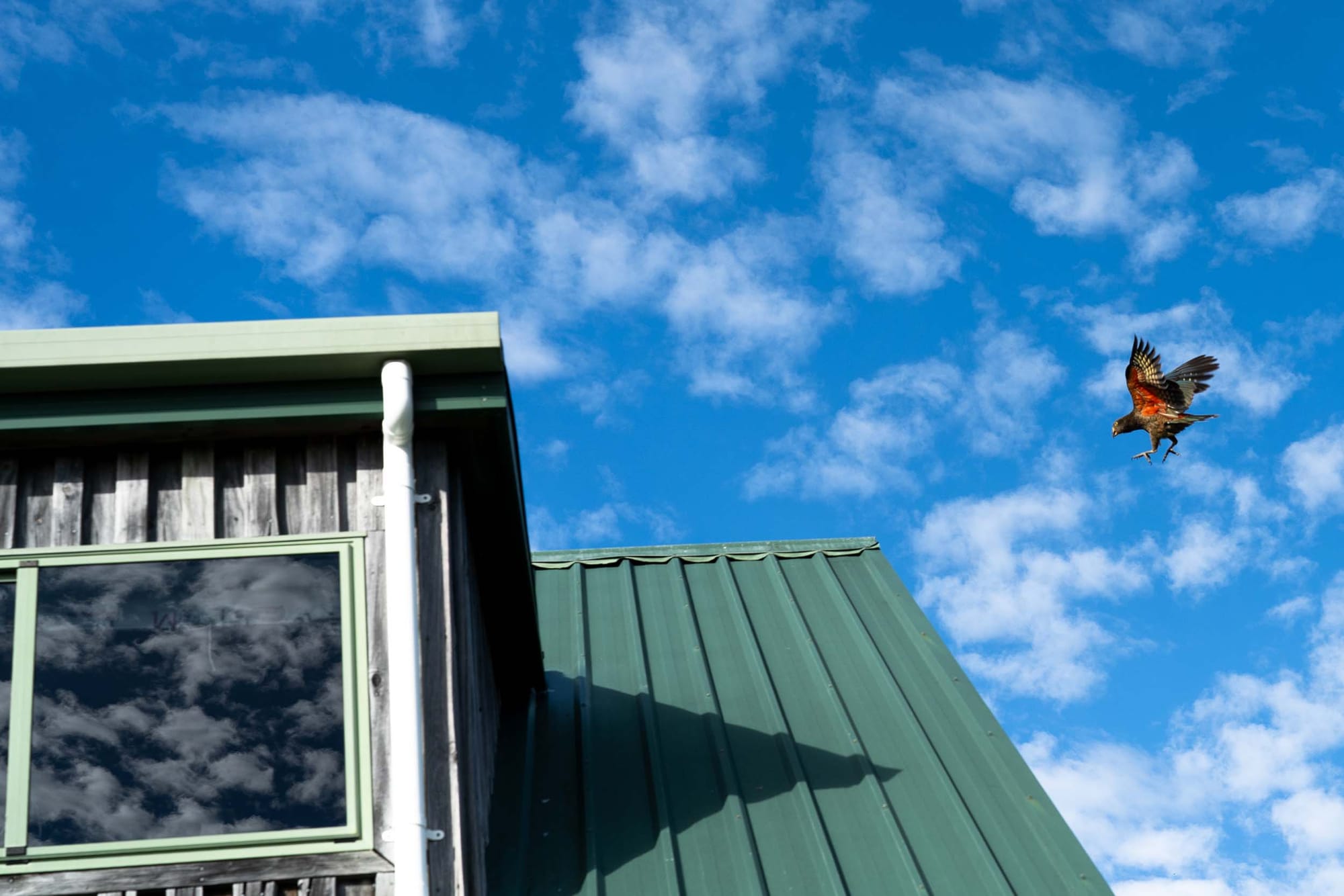
Over time, what began as large-scale landscaping became ecosystem recovery. Today, approximately half the property (22 acres) is protected under a permanent covenant. Over 17,000 native trees have been planted so far. Regenerating forest now provides habitat for increasing numbers of native birds and insects, with all species of flora and fauna meticulously logged – we’ve seen an increase in birds such as komako (bellbird), tūī, kararea (NZ native falcon), pūkeko, kererū (NZ native pigeon), piwakawaka (fantail) and kea. Rare and endangered native endemic tree species are propagated and planted. Areas once managed intensively are being allowed to follow natural ecological processes again.
The transformation has been remarkable, but it has also challenged a common misconception about restoration. Many people imagine restoration as dramatic intervention: species reintroductions, large-scale engineering projects or sweeping conservation programs.
Sometimes restoration is much quieter – it’s simply the decision to stop controlling everything, allowing succession to occur and letting native species reclaim space. It’s also accepting uncertainty (especially in the face of worsening weather events), becoming less of a manager and more of a participant. Nature often knows what to do if we can resist the temptation to constantly interfere.
 Kat Tancock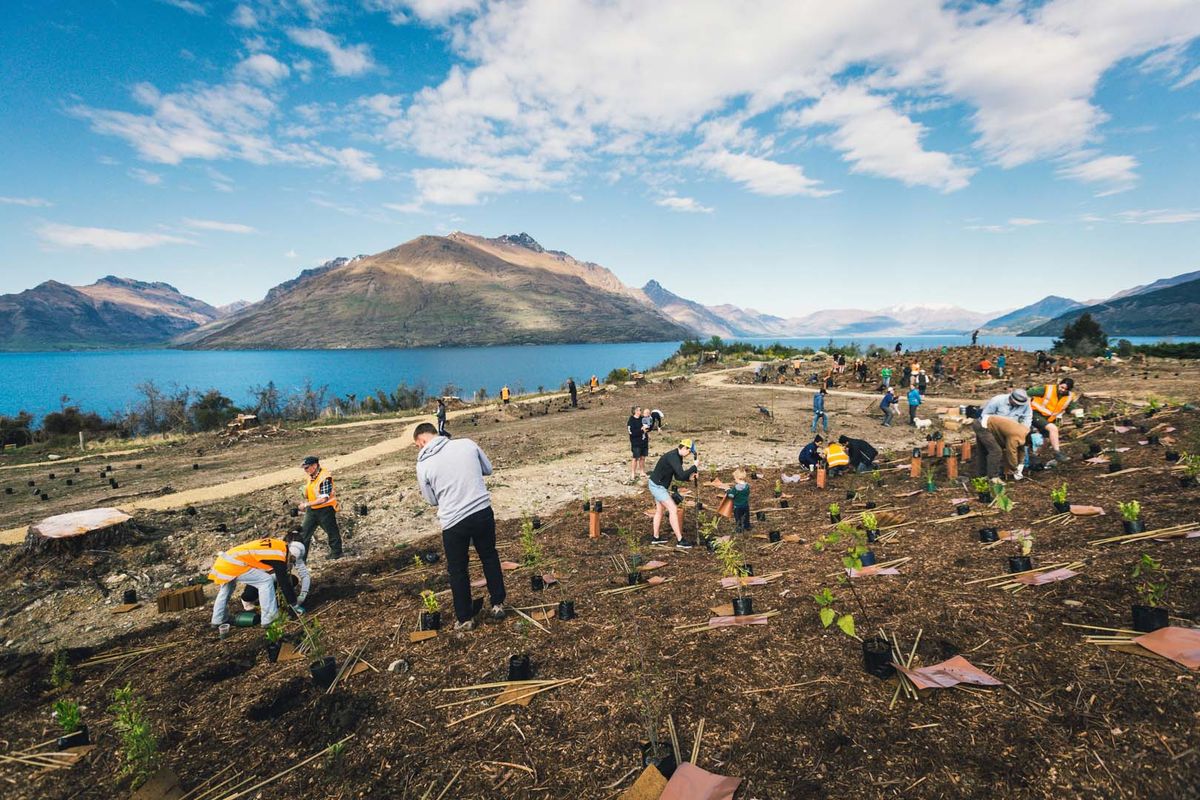
The missing half of restoration
As the forest recovered, something unexpected happened. People changed too.
Visitors would arrive stressed, distracted and exhausted. Within a couple of days, many seemed different. Their pace slowed. Conversations deepened. Phones disappeared into pockets. Attention shifted outward.
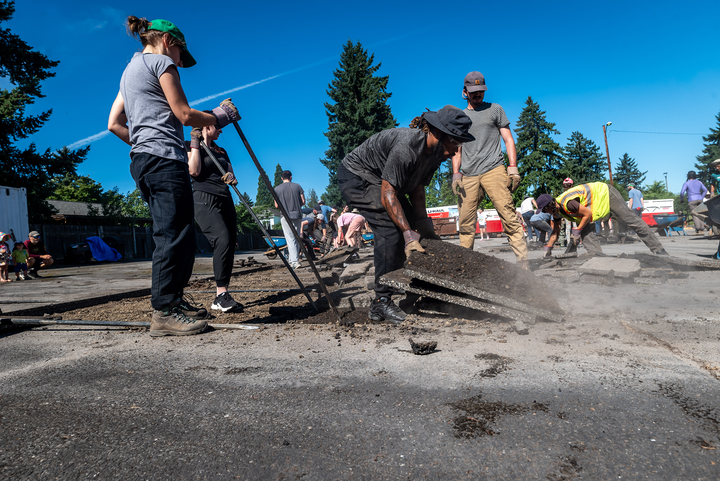
Over 500 volunteers have visited this project to date (you can too) and the effect has been so consistent it became impossible to ignore. Modern society has become extraordinarily effective at separating humans from the conditions that shaped us.
We spend unprecedented amounts of time indoors. We move less, we experience nature increasingly as a backdrop rather than a relationship. We optimize efficiency while often sacrificing connection.
Yet biologically, we remain a species shaped by wild landscapes. The more time I’ve spent working on ecological restoration, the more obvious it has become that environmental degradation and human disconnection may be symptoms of the same problem. We have domesticated our landscapes.
And, of course, we have domesticated ourselves as well. That realization eventually led to a new idea. What if restoration was not just about restoring ecosystems, but also about restoring human beings?
Photos: Kimberly Webb
Beyond conservation
This project aims to restore relationships. Relationships between people and place, between communities and ecosystems, between modern life and the natural world.
The vision has expanded beyond conservation into something broader: a living laboratory for exploring how ecological restoration and human well-being intersect.
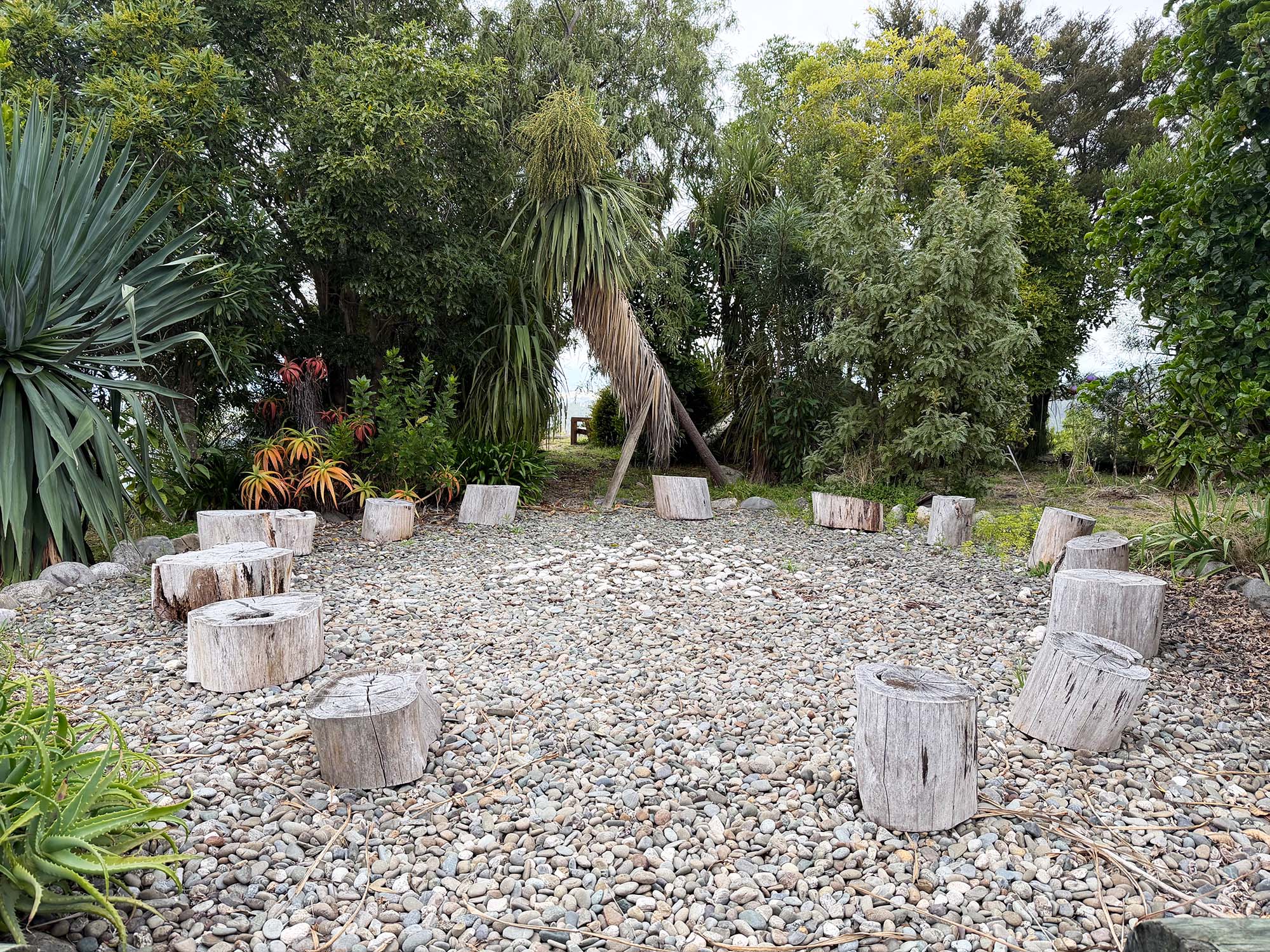
A large geodesic dome now sits among the trees, designed as a gathering space for workshops, education and community events. Forest tracks wind through regenerating bush. A large meditation platform overlooks valleys of recovering native forest. Volunteers contribute to restoration efforts while reconnecting with landscapes in a direct and tangible way.
The objective has now become reconnection.
In recent years there has been growing scientific interest in the benefits of nature exposure, forest immersion and biodiversity-rich environments but let’s face it, most people don’t need another study to tell them what they already feel instinctively.
Something happens when we spend meaningful time in healthy ecosystems. Our attention changes, our priorities shift. We remember things that modern life encourages us to forget.
 Jacob S. Suissa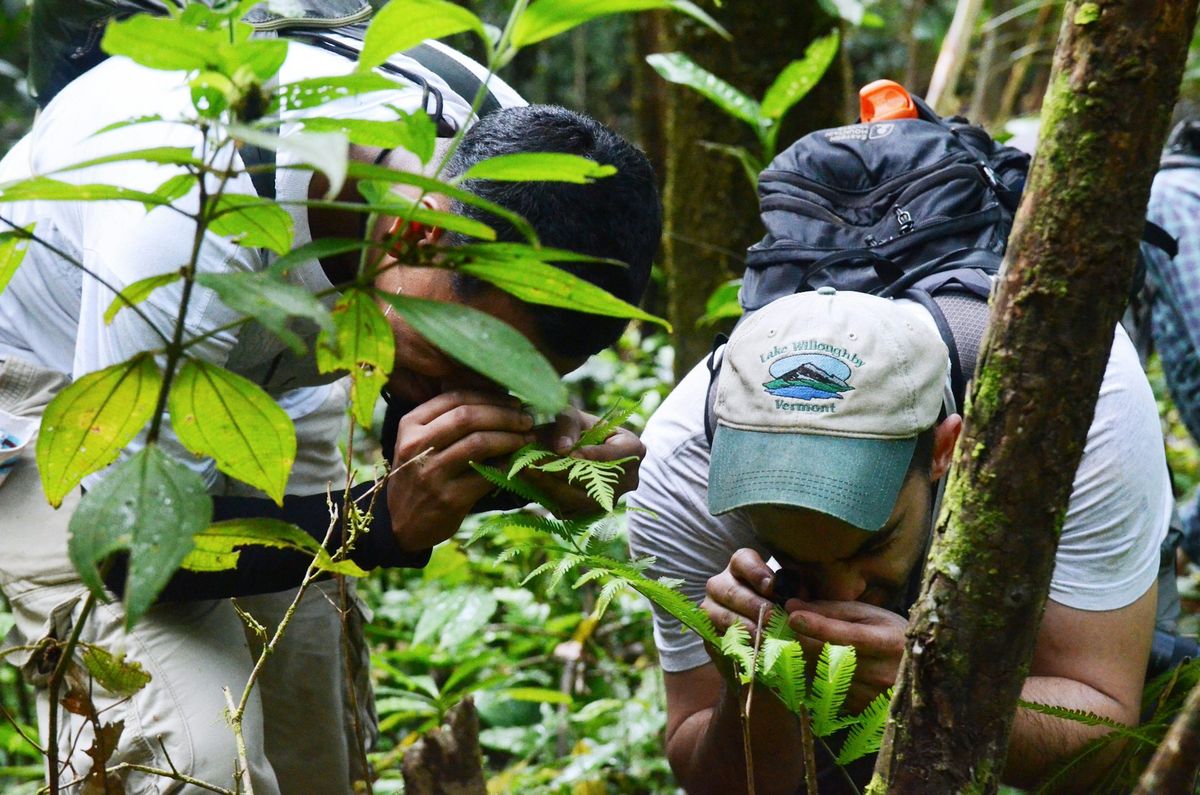
A different definition of success
Traditional conservation often measures success through ecological indicators: species counts, habitat quality, water health and biodiversity metrics. While these matter enormously, another question is worth asking. What happens when ecological restoration becomes a social movement rather than simply a scientific one?
Of the hundreds of volunteers coming through over the years, some were here for conservation experience, others for community. Some arrived during periods of transition in their lives. Many left with a deeper understanding that environmental restoration is not merely about protecting nature somewhere else, it’s about active participation.
The most important outcome here may not ultimately be the number of trees planted, the quantity of predators trapped or the amount of bird life restored. It may actually be the number of people who begin to see themselves as part of ecological systems rather than separate from them.
Conservation succeeds when communities care. Communities care when they feel connected, and that begins with experience.
Rewilding the future
The global rewilding movement is often framed in ecological terms: restoring predators, reconnecting habitats, regenerating forests and allowing natural processes to return. These goals are essential. But the movement’s greatest opportunity might lie elsewhere.
Modern society faces twin crises. One is ecological, the other is cultural.
Biodiversity loss, climate instability and habitat destruction are occurring alongside rising loneliness, anxiety, social fragmentation and disconnection from the natural world.
These challenges are usually treated separately. But I do not believe these are separate issues. Perhaps the restoration of landscapes and the restoration of people are deeply linked. This project in New Zealand is still evolving. Like all living systems, it remains unfinished.
Forests continue to grow. Bird populations continue to change. New ideas emerge. Old assumptions are tested. But one lesson has become increasingly clear. Restoration is about creating conditions where life can flourish again. For ecosystems, for communities and perhaps for ourselves.
All photos: Kimberly Webb. Find out more about Ollie's project here.
Comments ()