

5 things every wildlife garden needs
Native plants are just the start. Here’s how to make your habitat even more inviting to birds, insects, reptiles and more.
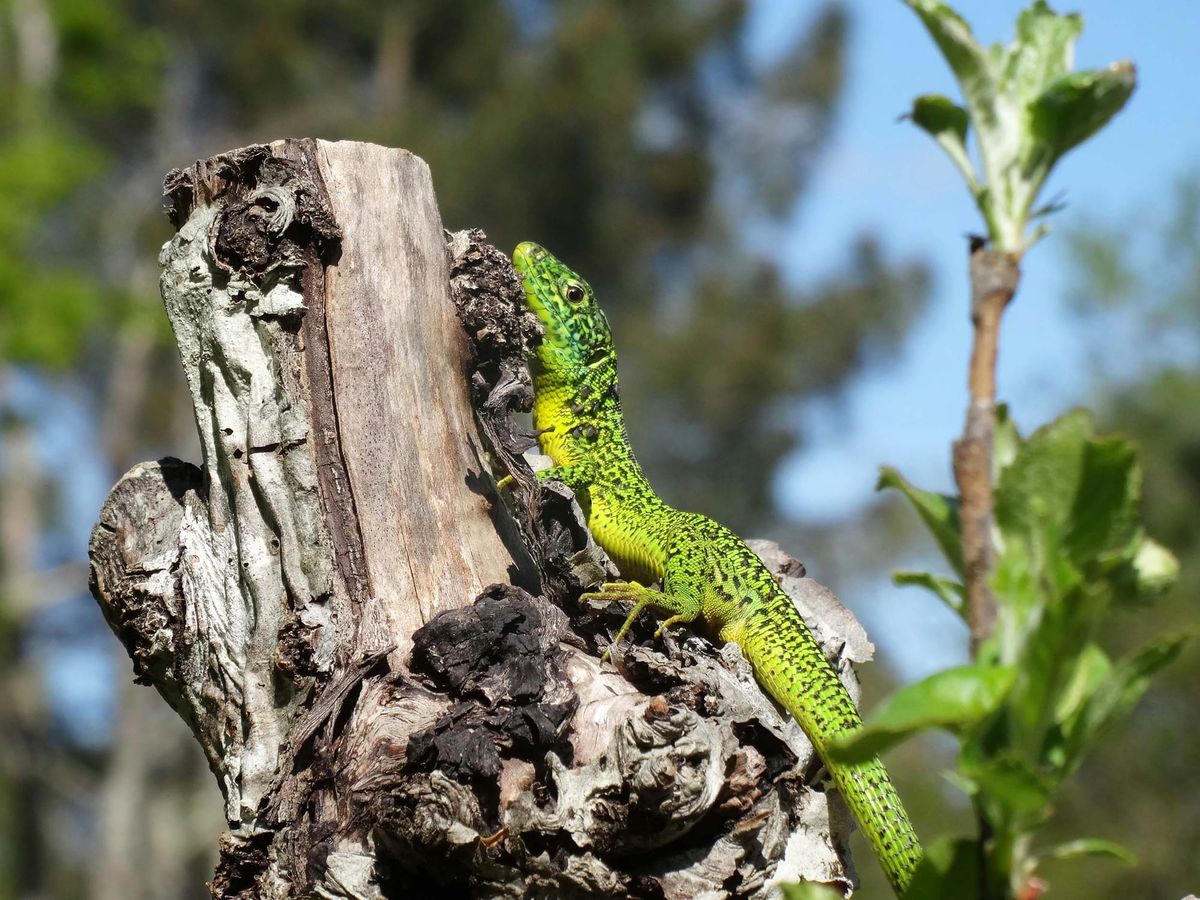
The most common advice for creating wildlife habitat for birds, insects, and amphibians has been to plant native plants, which is extremely important. However, there are also a few simple resources you can add to gardens to better cater to animals’ needs, allowing them to thrive in your yard.
1. Woody materials
Many gardeners already install bird boxes and bee hotels without realizing what they are imitating. In natural environments, large dead trees would have hollow sections for birds to nest in and numerous small holes caused by wood-boring insects that bees would use for their nests.
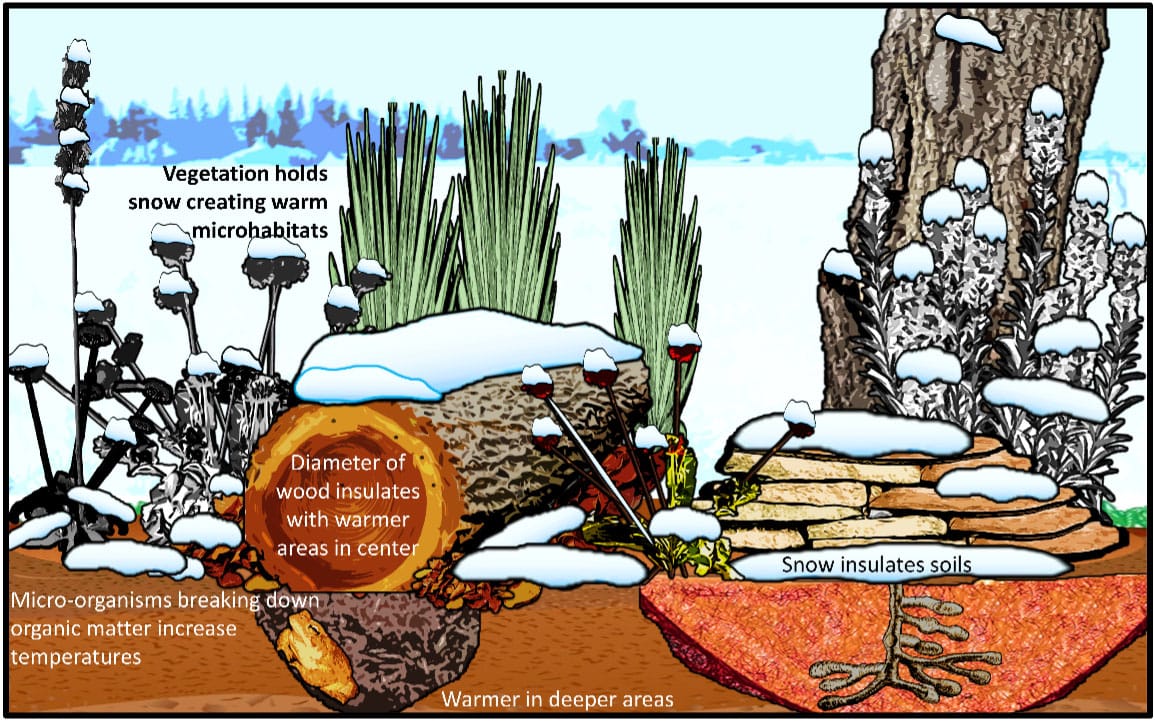
Adding natural wood structures to gardens can be as simple as placing a log that is at least 15 cm (6 inches) in diameter and 30 cm (12 inches) long, either standing up or lying down. Logs are easily tucked into garden beds for plants to grow over, or they can be used as borders and pedestals, as seen in the image above. More complex installations can include intricate log borders or focal features using large, branched trunks to plant around. These will also create microshelters for smaller creatures. Tree companies will sometimes deliver fresh-cut branches and stumps if you contact them.
Pieces of wood with thick bark will be used by pupating moths and butterflies as the bark peels away. Wood-boring insects will create tunnels in the main wood and cavity-nesting bees will eventually use those tunnels. Similarly, drilling a few holes into the log with a 5/16″ (about 8 mm) drill bit will create nesting sites for bees.
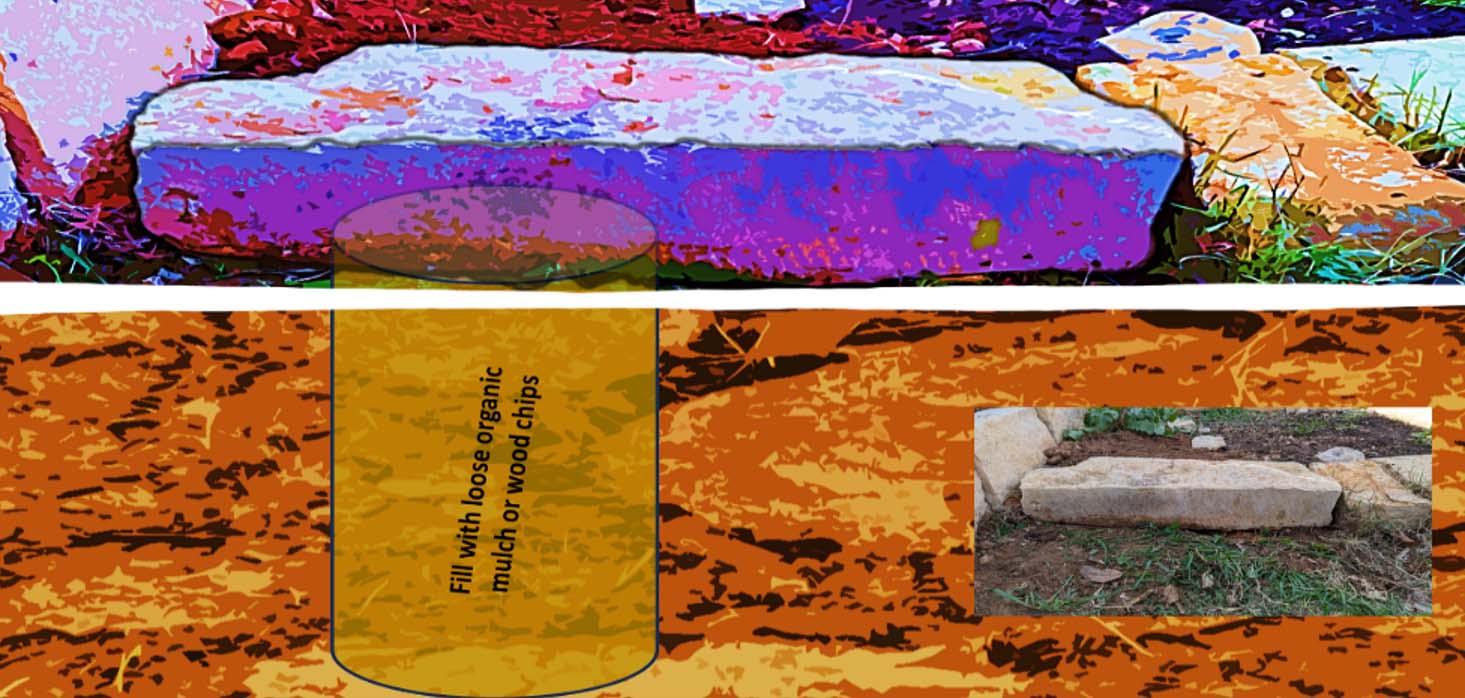
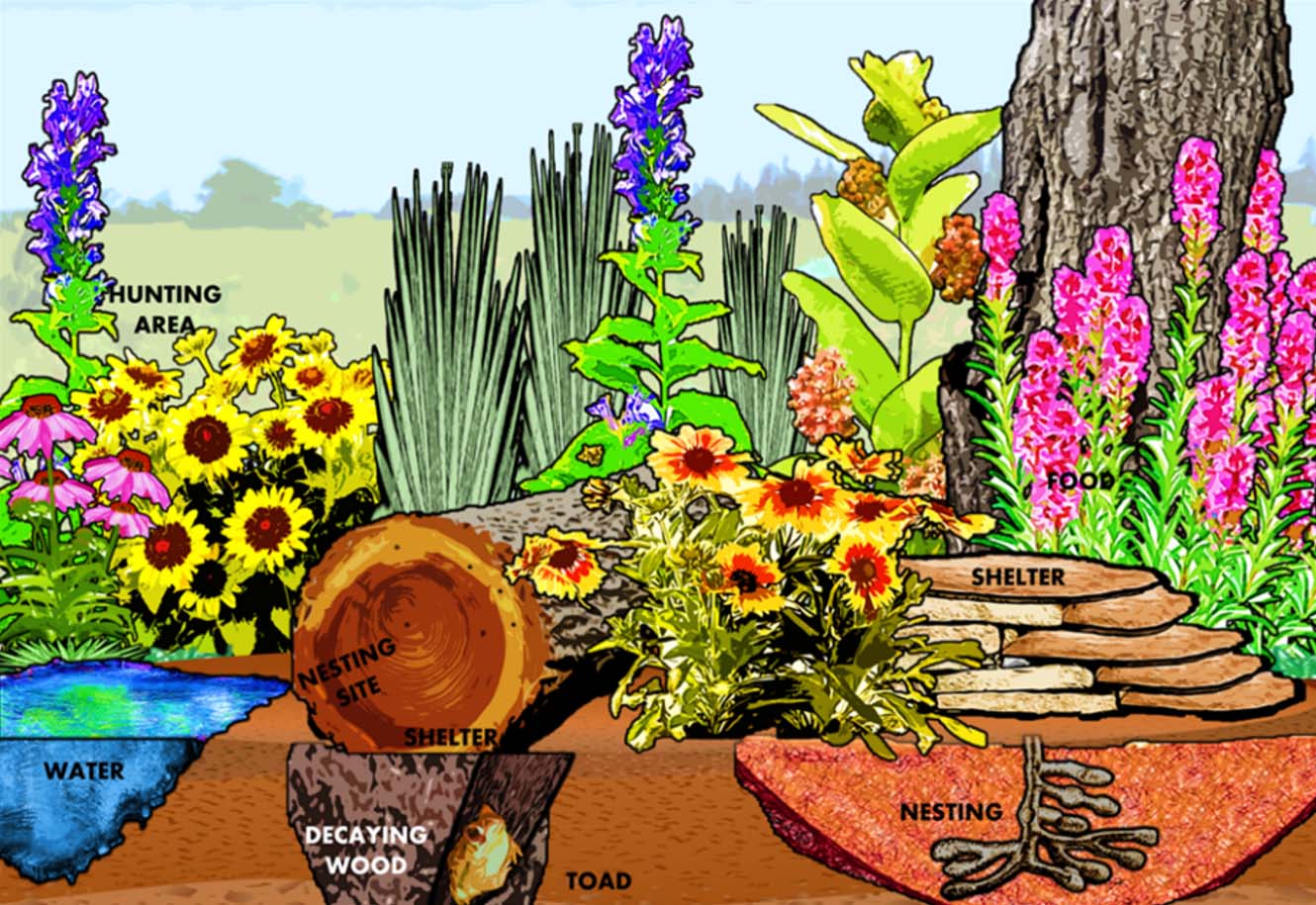
To recreate underground woody resources, dig a hole at least 30 cm (12 inches) wide and deep, then fill with untreated mulch (leaves and twigs work too) and pack it down. This can be done under logs, or a stone shelter to save space. The underground, decomposing mulch mimics old root systems that break down and will be used by overwintering amphibians, bees, pupating insects, crickets and other invertebrates.
For bird house designs, check out Audubon’s Birdhouse Book, which has instructions for specific species. There are many “bee hotels” available for purchase but, frankly, most are bad for bees. A good bee hotel should have tunnels or tubes that are 15 to 30 cm (six to twelve inches) deep and be easily cleaned or replaced every two years, and should not contain “butterfly houses” or slits, which usually attract predators and not butterflies.
2. Diverse soils
Just like plants, many animals need soils with specific characteristics. Diversifying soil types in and around plantings is an incredibly important step, especially in developed areas where soil was brought in.
 Jennifer Cole
Within the landscape it is easy to excavate areas in spaces that do not flood, then fill with amended soils targeted at specific wildlife. Installing a variety of soils in the landscape will support an impressive variety of animals. These areas can be hidden under logs, stones, shrubs and trees, or even placed in less visible or used spaces like fence lines or side yards. Loose, sandy soils are important for many egg-laying reptiles like green anoles, skinks and western fence lizards. Organic rich soils, like those found naturally around dead trees, fallen logs and plants with large root systems are important for hibernating amphibians, crickets, pupating insects and some egg-laying reptiles like geckos and turtles. Specific species and their needs will depend on where you live.
Many birds need dry, silty areas to take dust baths; butterflies need nutrient-rich, wet soils to “puddle” or consume nutrients; and ground nesting bees will only nest in specific soils.
Create organic soil pockets
Toads, frogs, lizards, beetles, butterflies, moths and many other animals need loose, organic-rich soil to burrow in. Some of these animals use this area in winter to escape the cold, others in summer to shelter from the heat. Installing a few of these under rocks, logs or pots will further insulate the space from weather. These areas mimic the deteriorating stumps and roots that are common in all landscapes – including grasslands, where large herbaceous perennials produce dense root systems and even woody underground growths that create soft soils when they deteriorate.
Install sandy-clay soils
There are more than 2,500 ground-nesting native bees in North America alone and less than 500 species have their nests described. But most of those use sandy to clay soils and rarely heavy loam soils.
 Chantal Lyons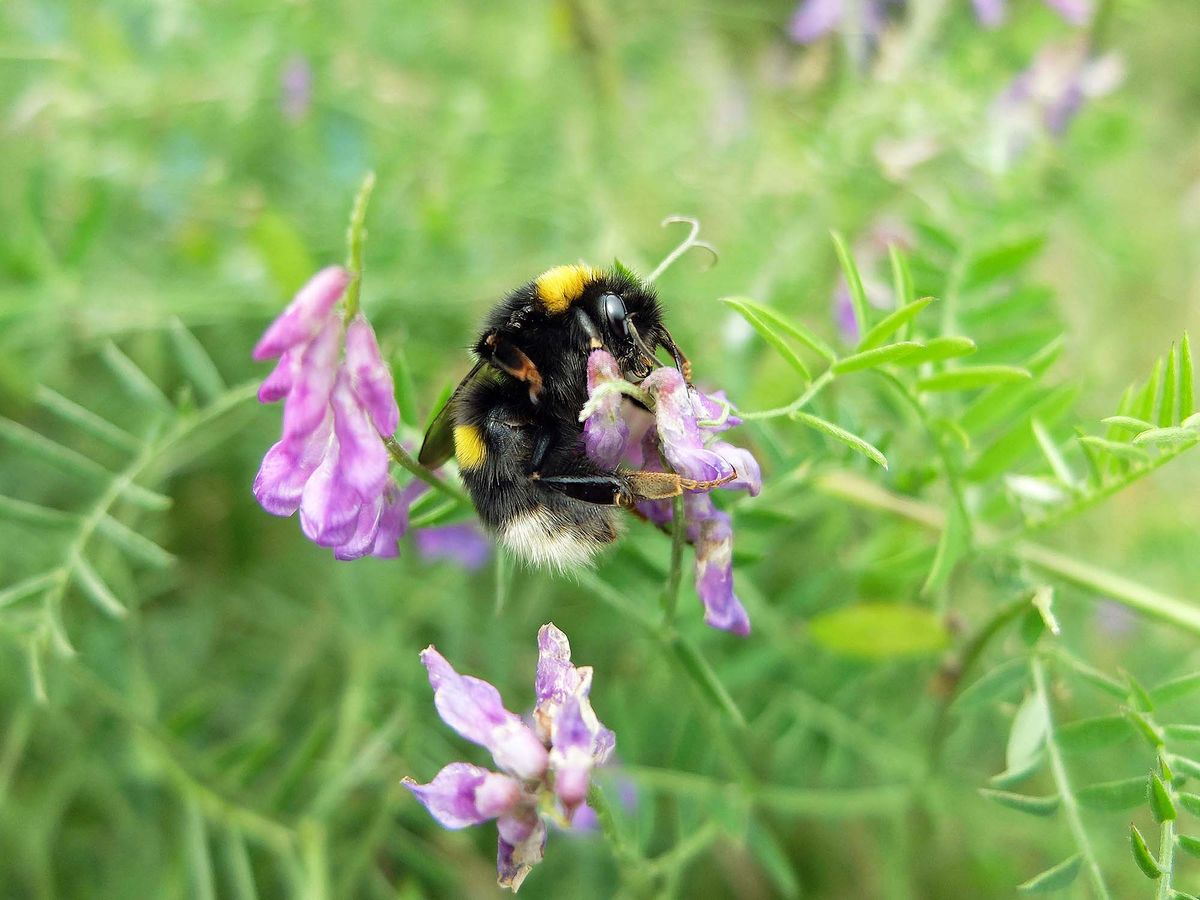
To encourage native bee nesting, excavate an area at least 30 cm (12 inches) wide and deep in a dry, sunny location and replace the soil with a clay-sand mixture that is between 30 and 95 percent sand. (Different bees have different soil preferences, so ideally, do more than one area, each with a different mixture.) Then, add different features such as a spattering of pebbles, large stones either flat on top or semicovered, sprawling plants or nearby bunch grasses.
These areas can be integrated in multiple locations across the landscape, including rarely used areas like by HVAC units, back corners or fence lines. The more soil diversity a yard can have, including slope and sun exposure, the more nesting opportunities for native bees.
Add dry clay/mud blocks
Some soil-nesting bees require vertical soil interfaces – like a streambank, eroded hillside or soil lifted by the roots of a toppled tree. Vertical soils are difficult to fully recreate at home, but homemade mud blocks can function as suitable nesting areas for some species.
To make a mud block, you will need a container that is 30 to 45 cm (12 to 18 inches) deep with flat walls, and a variety of rods/dowels/straws of different diameters between 4.5 and 12.5 mm (3/16 and 1/2 inch) that are 12 mm (1/2 inch) shorter than the container. You will also need a clay-dominated sandy soil.
 Dana Benner
Mix the soil with water until it is very pliable and easy to insert the rods/dowels/straws into. Fill the container with the pliable mud, leaving almost 12 mm (1/2 inch) of space from the top. Tap and compact the soil to remove air pockets, then insert the rods/dowels/straws, leaving 12 mm (1/2 inch) of space between rods and making sure not to touch the bottom. Let the block dry completely.
Once it is dry, carefully extract the block from its container and remove the rods/dowels/straws. Place the block on its side, so that the tunnels are horizontal, in a place where it won’t get too wet at any point throughout the year. Make sure to document which species show up and to replace blocks every few years.
3. Shelter
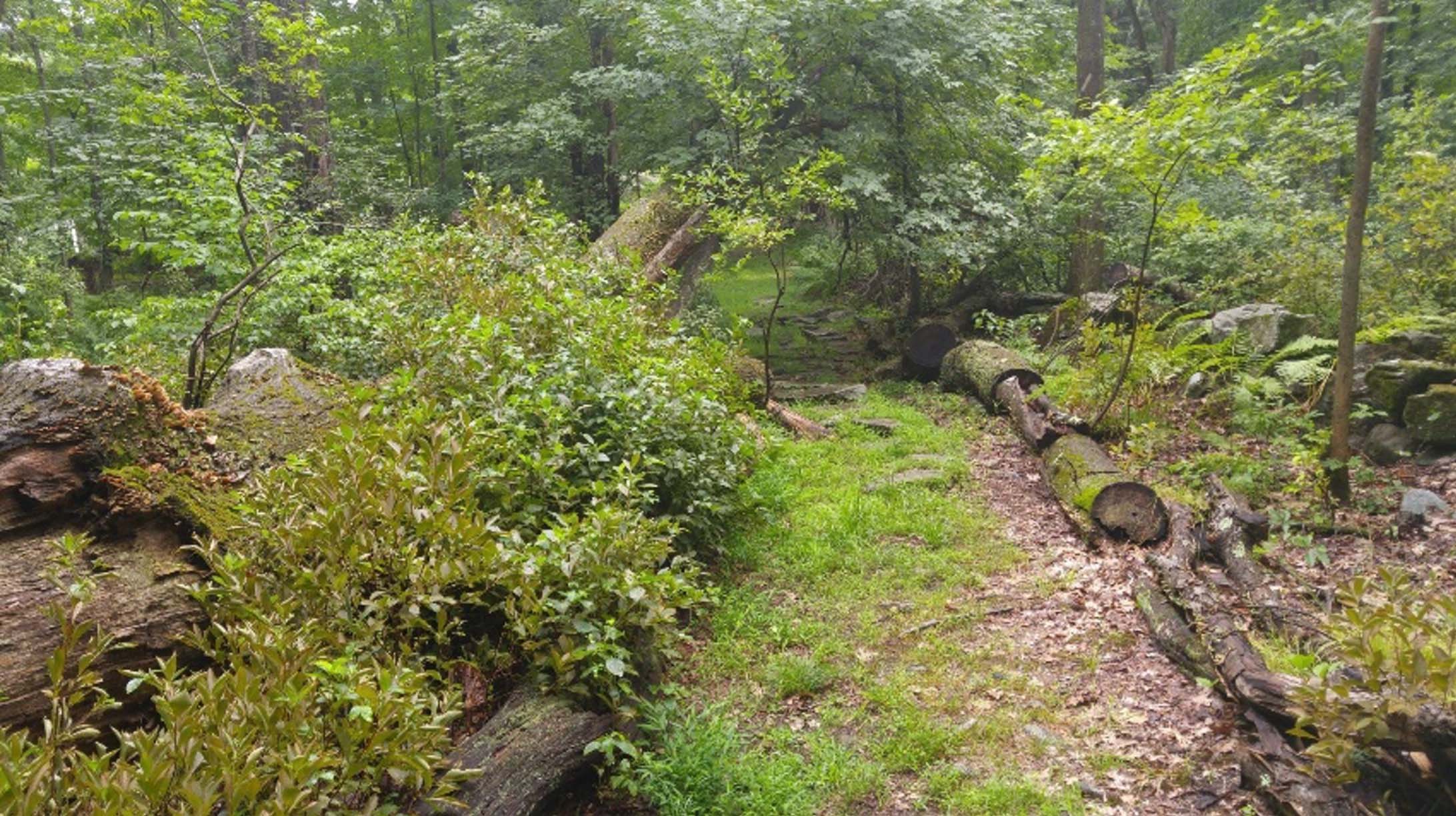
Natural shelters such as hollow logs, caves and burrows dug by animals (as well as the animals that dig them) tend to be absent from developed areas, so wildlife are forced to accept whatever they can find: crawl spaces, washouts under foundations, or the spaces under pots and landscaping materials.
However, if gardeners take the time to intentionally provide shelter for wildlife, animals will be happier and can be encouraged to live in specific spaces where they are safer. Shelters can be above-ground rock designs, log stacks or subterranean spaces like burrows, caves and the mulch pits mentioned in point 1.
 Abi Gazzard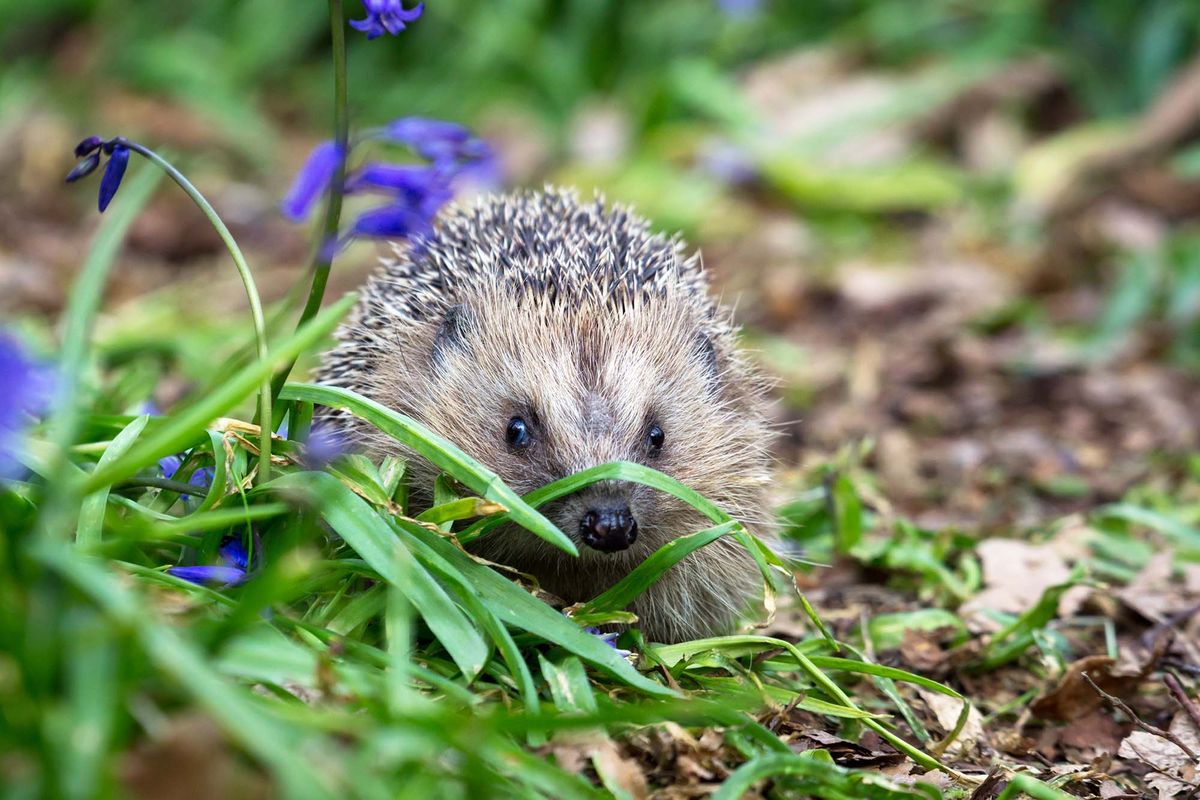
4. Rocks and crevices
Both soil-nesting and cavity-nesting bees can benefit from the addition of larger rocks to a garden, as can many other species of wildlife such as lizards, frogs and toads. If the area you live in has localized rock outcroppings, there are likely pollinators that use those resources.
In places with geologic formation made of thin layers or rocks that readily crack, stacking wide, flat rocks in a sturdy design will create crevices for cavity-nesting bees as well as shelter for lizards, pupating insects and other wildlife. Similarly, installing rocks over a loose, sandy soil can create nesting sites for soil-nesting bees that prefer to use the soil/rock interface.
For objects set on the ground, make sure to place pebbles, sticks, or mulch underneath so that there are open spaces for animals to scurry into. Similarly, you can excavate pockets under objects that will function the same way.
Build a crevice garden
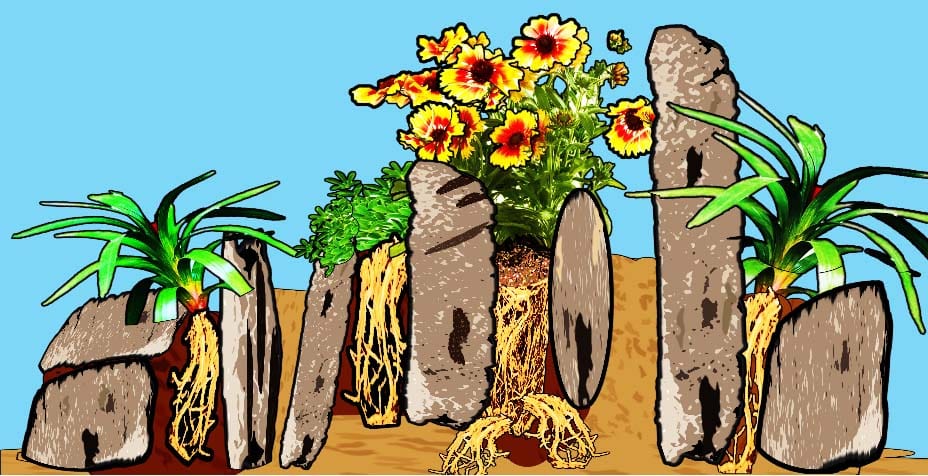
Crevice gardens are great for xeriscaping (landscaping with no need for irrigation) and overall stunning centrepieces. The main premise is that stones are buried to create vertical soil chambers that direct water and roots deeper into the ground. These gardens also allow for many types of soils to be placed in close proximity, which allows different animals to also have nesting resources.
Stones can be thin like slate or flagstone, or thick like limestone and boulders, but must be able to extend 20 to 40 cm (9 to 18 inches) into the soil. A good guideline is to leave a minimum of 2.5 cm (1 inch) between stones at the narrowest, and no more than 20 cm (9 inches) at the widest; however, this can be modified if necessary.
5. Water
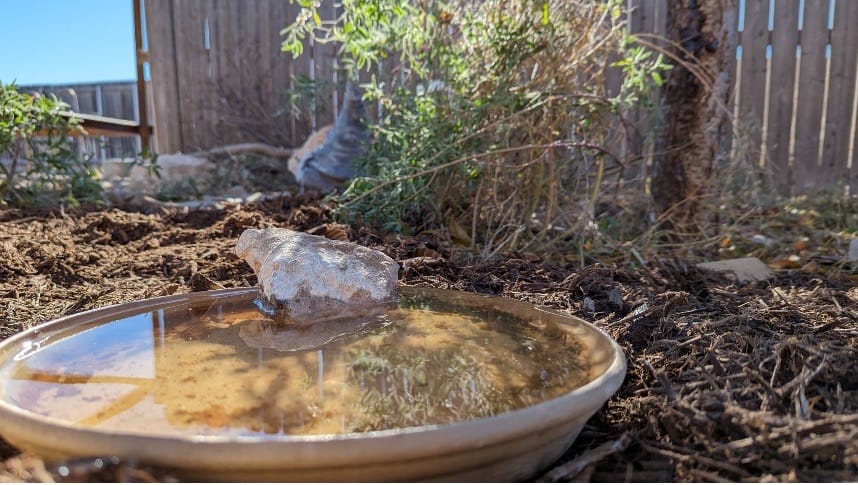
Hydration stations for animals are also key to good habitat. Although bird baths are a common garden addition, these provide water only to flying animals or very agile ones. Shallow dishes or ponds at ground level are more important for most species. Rough, low-gradient sloping surfaces should be present on the edges of the dish or pond to help animals crawl out if they fall in.
Boost biodiversity one step at a time
Landscaping with native plants is just the beginning. You can also boost biodiversity by adding just one of the resources above to your garden. Each additional resource added, including duplicates, will have compounding benefits that will greatly increase the activity, abundance and diversity of the creatures living in your garden. Don’t forget to add typical garden resources like bird houses, hummingbird feeders and fountains, which will also support wildlife.
Remember that local conditions can differ and the needs of your local wildlife might differ from that of your friend a few kilometres away, let alone halfway around the world. But the key here is diversity: creating as much different habitat as you can to welcome as much wildlife as possible.
Shaun McCoshum gardens from his home in Texas and is the author of Natural Habitats and Wildlife Gardening: Inviting wildlife into your backyard.
Comments ()