

Bringing Great Lakes sand dunes back to life
How restoring sand dunes along the shoreline of Lake Erie is changing perspectives of what a healthy beach looks like.
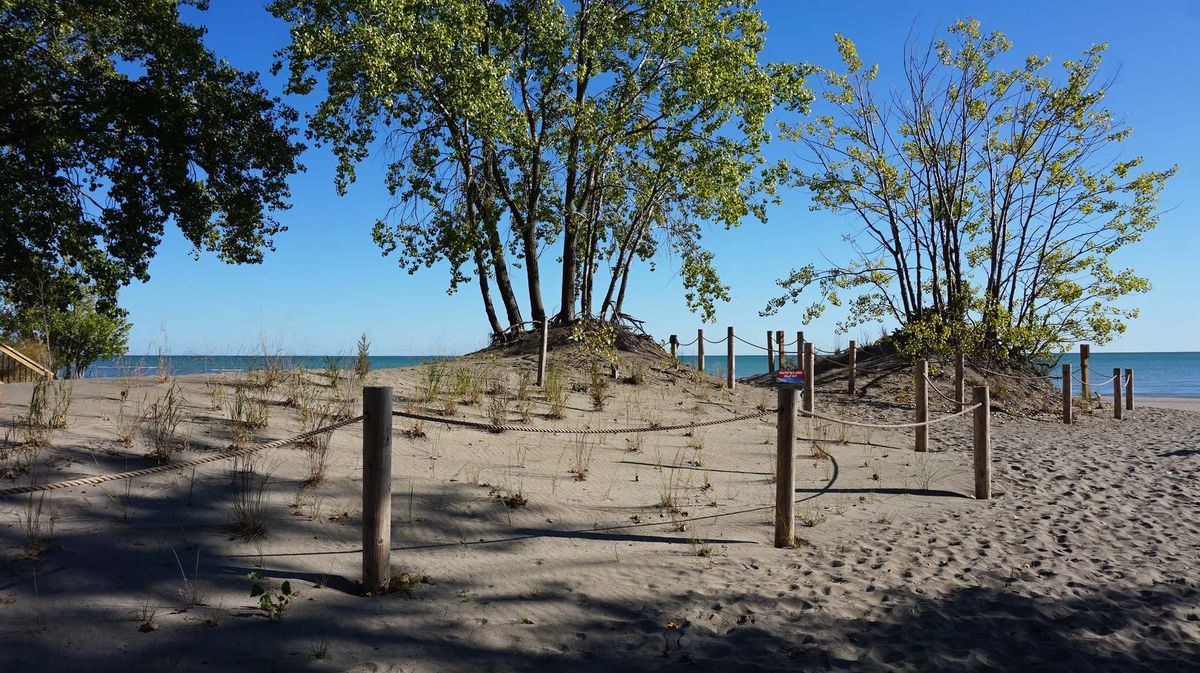
As Sarah Emons steps onto a stretch of beach with a restored sand dune, she immediately enters a different world from the groomed and sterile shoreline she’s just left. Swallows dart overhead, insects buzz, and the lake breeze keeps the beach grass in constant motion.
“It’s so much more alive,” she says.
Forming at the back of beaches, the sand dunes throughout North America’s Great Lakes region make up the largest freshwater dune system in the world. Forged by the sand and silt leftover from the last Ice Age, they historically have absorbed the shock of storm surges and high-water events to prevent inland flooding and are able to regenerate by capturing sand as it washes up on shore and is blown by the wind. Now, according to Chris Houser, dean of science at the University of Waterloo, that natural cycle is being hampered.
Although coastal geologists such as Houser don’t know all the reasons why dunes are not getting the sand they need to regenerate, they do know that an increasingly hardened shoreline of rock walls, jetties and breakwaters is disrupting the natural movement of sand along lakefronts. Without that sand, dunes will, over time, flatten.
“We haven’t paid a lot of attention in Canada to our coastal systems, in particular dunes,” says Houser. “If you think they’re modern and dynamic, then the person who’s best to manage them is as local as can be because they have the greatest stake in making sure that they are healthy.”
Dune builders
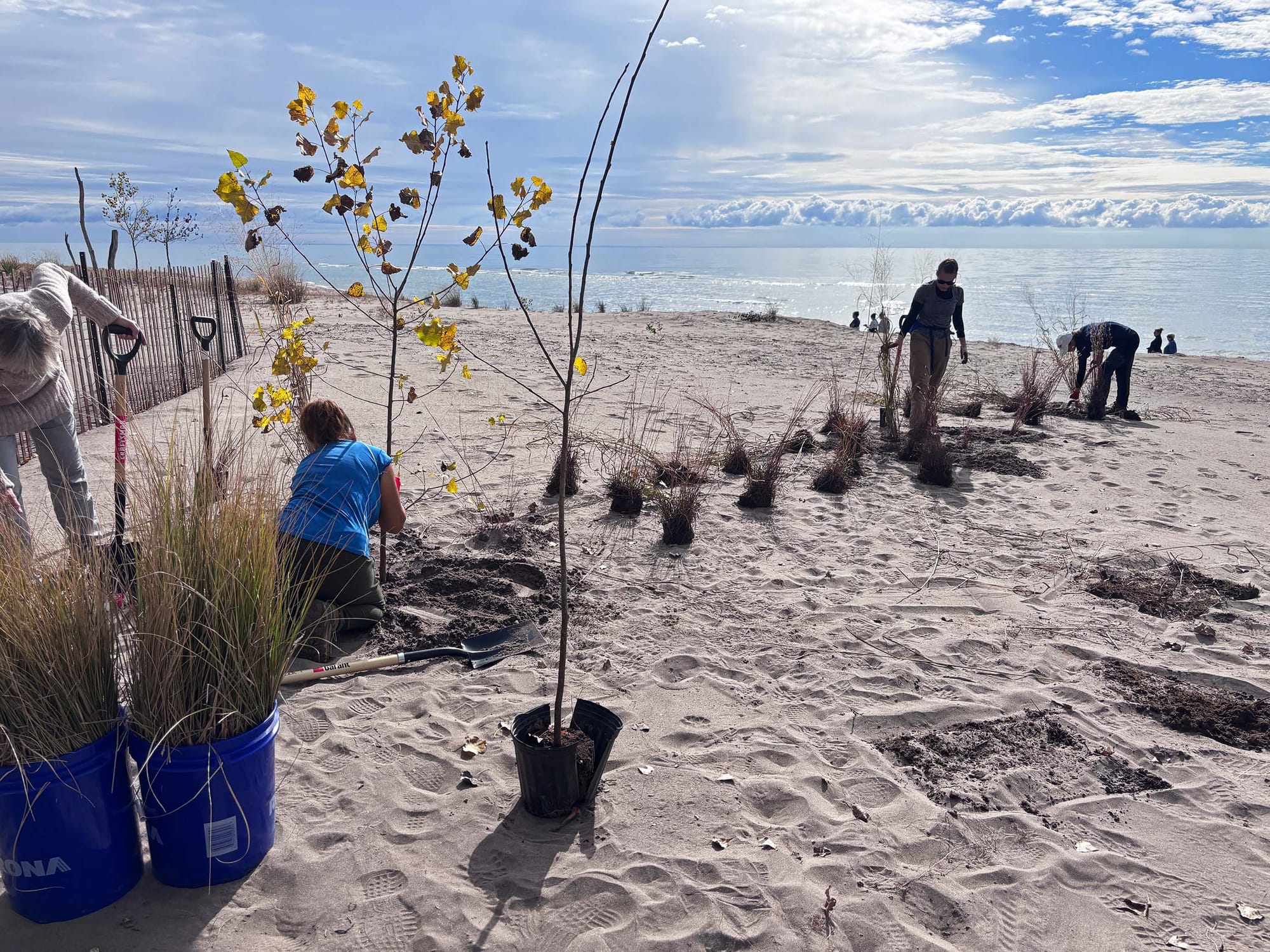
Emons is project manager for the North Shore Resilience Project, and her job for the past year and a half has been to work with local communities and landowners between Port Glasgow and Long Point, along the Ontario shore of Lake Erie, to restore dunes and to change attitudes about what a healthy shoreline is supposed to look like.
“I like to compare it to the Hamptons,” she says, “to Cape Cod. When we think of those beaches, we immediately picture these undulating dunes with waving grasses. Everyone thinks the Hamptons is beautiful, but for some reason, we don’t think it’s beautiful here.”
To paint a real-life picture of a healthy dune and shoreline, Emons and her team have planted more than 5,000 native plants.
“The grasses are really those pioneer species, and they are the dune builders,” she says. “By sticking up in the air, they really are able to catch and drop that sand, and that’s the physical action that builds the dune.”
Finding the right grasses, though, was a lot harder than Emons had imagined. “We really felt it was important to use Great Lakes beach grass,” she says. The only dune grass commercially available in Ontario, though, was Atlantic beach grass – a close relative, but not native to the Lake Erie shoreline.
This required a shift in focus. Thanks to a permit from the Canadian Wildlife Service, the team was able to hand-dig native Great Lakes beach grass from very well-established colonies on Long Point and replant it onto dunes.
With the goal of creating an ongoing supply, after the first season of growth, they harvested seeds and entrusted them to the Mississaugas of the Credit First Nation, who are now growing the grass in micro-nurseries ready for planting when needed.
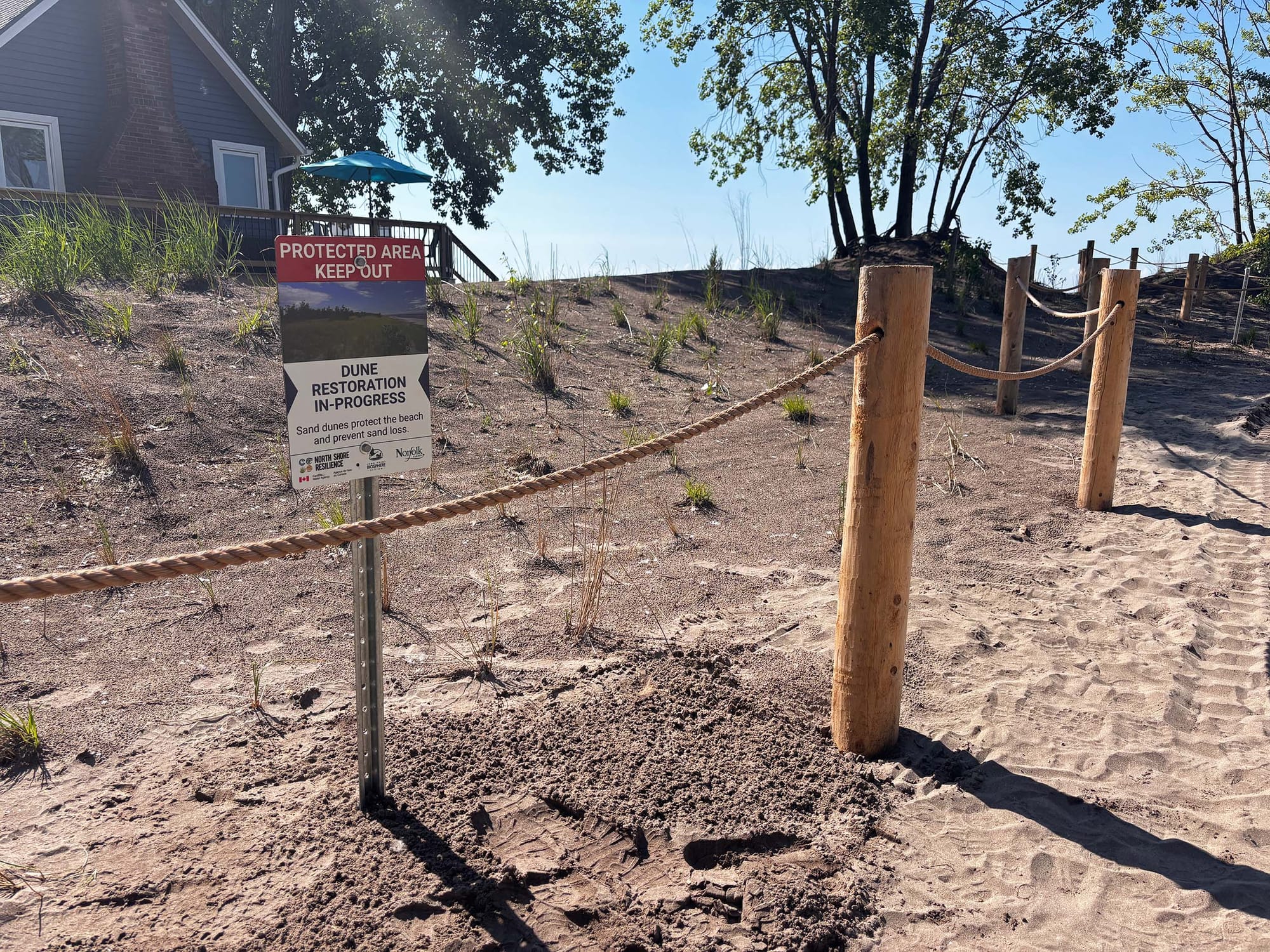
As the plants establish on the eroded dunes, signage tells beachgoers about the project and asks them to keep off the dunes to give the plants time to establish.
Dune dwellers
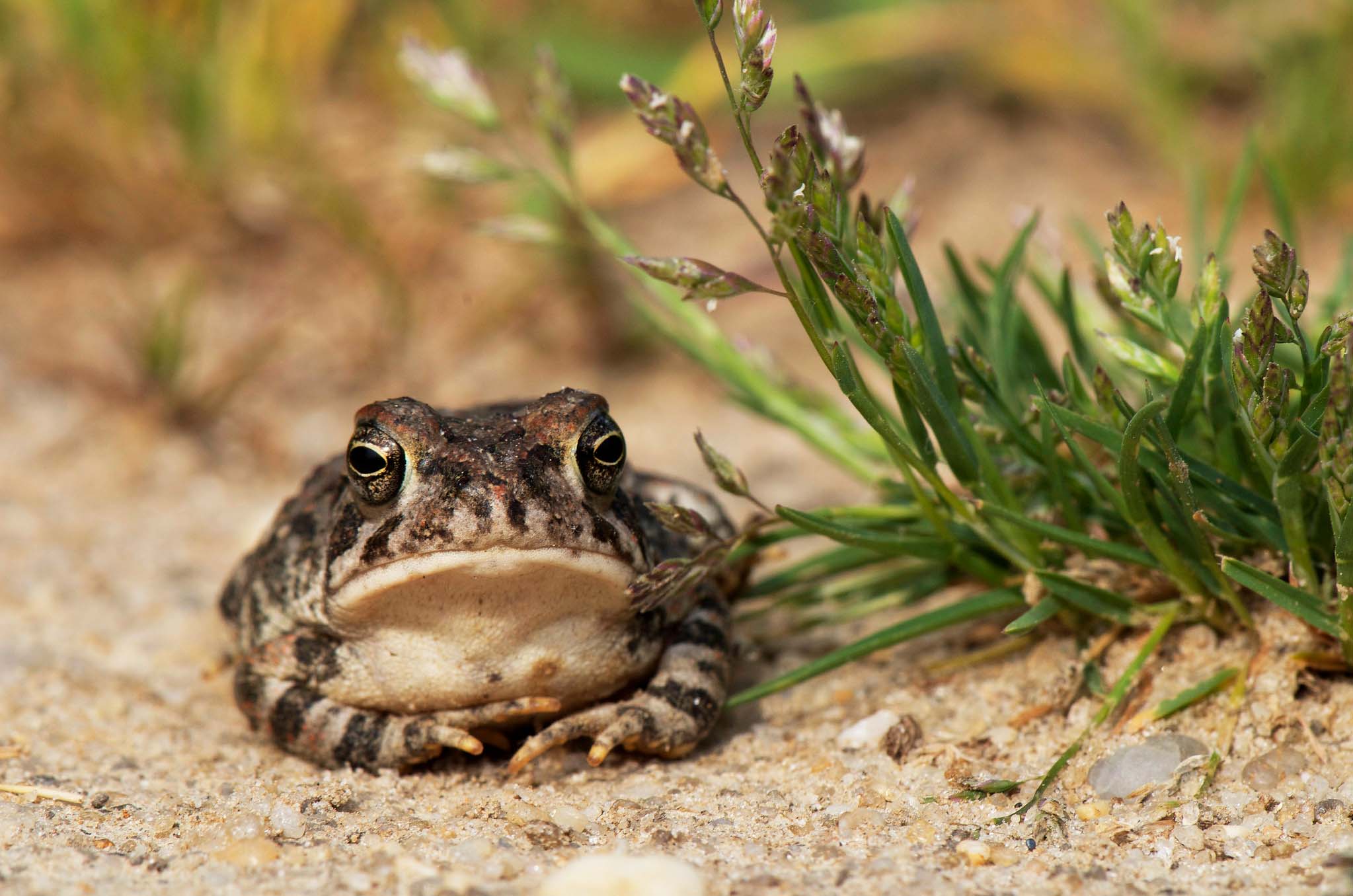
Farther along the shoreline, the city of Port Colborne, Ontario, has also been working to restore dunes. Increasingly stronger windstorms have not only eroded the dunes at Nickel Beach but also disrupted habitat for some of Ontario’s most endangered species. “The sand dunes provide habitat for the Fowler’s toad,” says Luke Rowe, the city’s recreational supervisor, “and protecting their habitat is a priority for the City of Port Colborne.” Listed as endangered, the toad hibernates in sand dunes, just above the water table.
In 2025, to help offset further erosion and to trap sand that is moved by wind, the city installed a 250-foot section of dune fencing. The fencing works in the same way as a snow fence that traps and collects blowing snow on a ski hill. It also acts as a deterrent to human disturbance, giving the toads the space they need to forage and rest. Here, too, signage educates beachgoers about the significance of dunes to wildlife.
On the opposite side of Lake Erie at Presque Isle State Park, Pennsylvania, the same winter storms that battered Nickel Beach have also levelled dunes on several beaches in the park, according to Jeanette Schnars, executive director of the Regional Science Consortium (RSC). This has increased the risk of inland flooding and devastated pollinator habitats and resting and nesting areas for shore and migratory birds.
“That living shoreline with lots of vegetation is one of the best strategies to protect land from coastal storm events,” says Schnars. “Leave it to Mother Nature to know what’s best.”
But sometimes Mother Nature needs a helping hand, and due to concern about the only road leading into the park flooding, the RSC, together with state partners, including the Pennsylvania Department of Conservation and Natural Resources, deposited 2,700 tons of sand onto the eroded beaches and reshaped the dunes. It was a drastic intervention, Schnars admits, but waiting for nature alone to repair that level of damage would have taken far longer.
Once the sand was reshaped, Schnars, as Emons had done on the Canadian side of the lake, foraged for cuttings and seeds from native plants and propagated them onto the dunes. In just a year, the dunes are showing signs of renewed life.
“We’re definitely seeing a diversity of pollinators,” Schnars says. “That gives us a good baseline of the habitat coming back.” Over time, as the grasses and other native species become established, she expects that shorebirds, small mammals and insects will all start to expand their ranges from existing dune habitats to the newly restored one.
Dune perspectives
Back on the north shore of Lake Erie, Emons has been speaking to community groups, municipalities and landowners about the value of dune restoration. She is enormously proud that her efforts are paying off. At Long Point, 580 metres of private land has been returned to dune habitat, as the ideal of a beach being a smooth, sterile entity with unfettered views of the lake and clear access to the water has eroded.
What is even more gratifying is that the information is spreading. Beachgoers have seen and experienced for themselves how nature is returning to the dunes, and now Emons has been getting questions from community groups and a growing cohort of private landowners along the beach about how they can restore dunes on their properties, too. She hopes to put together a step-by-step dune restoration guide to help those looking to start their own project. For those who do, she’d like to recognize their efforts with signage they can display proclaiming them as a beach champion.
Just like pollinator gardens in urban and suburban gardens, Emons sees dune restoration projects as a tool to help evolve public opinion on these shoreline environments. “I think the more that we talk about this and the more that people see the planting as normalized,” she says, “the more that we can kind of change our views on what a healthy beach looks like.”

Comments ()