

The reef menders of Padang Bai
In this bustling port of Bali, Indonesia, a group of dedicated divers is rebuilding reefs one metal frame and piece of coral at a time.
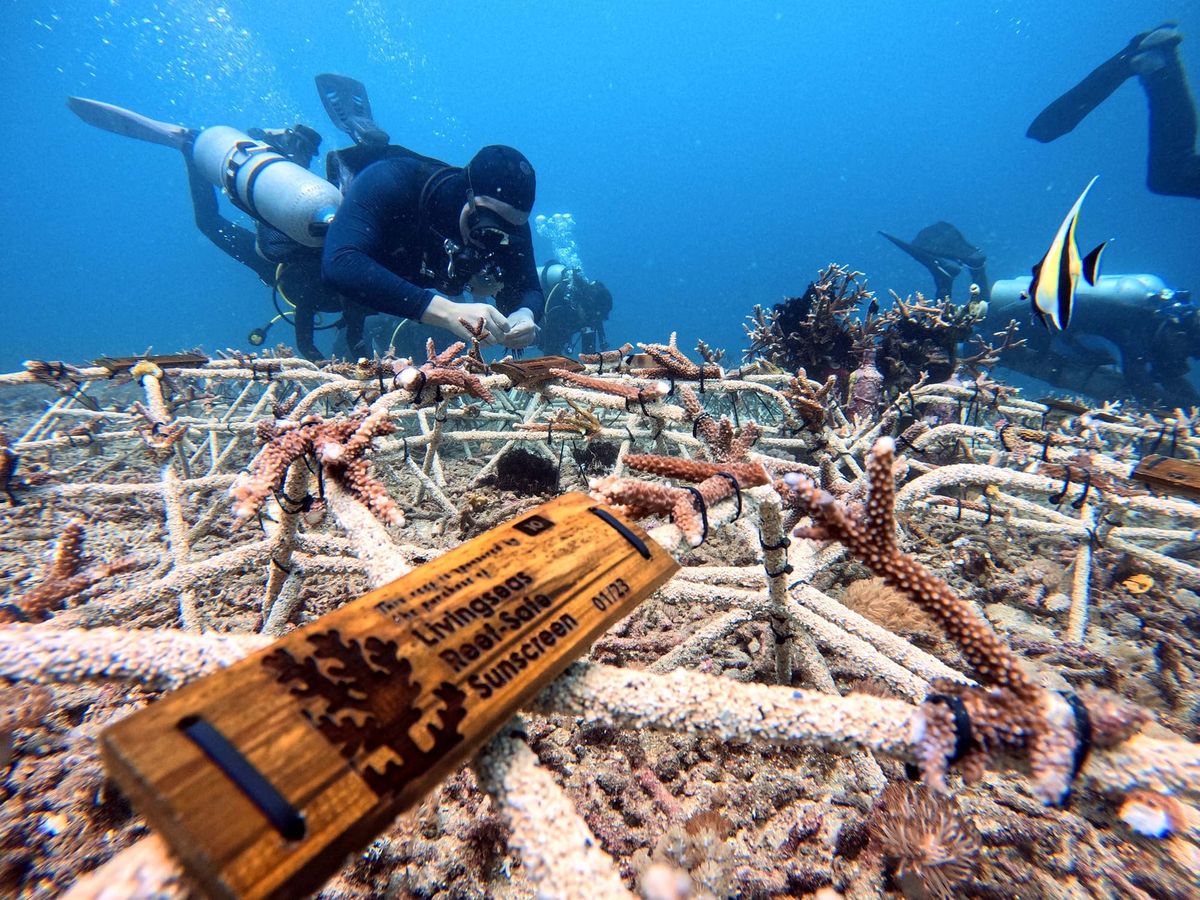
I’m swaying side to side, the ocean pushing and pulling me as I tie a piece of coral to an artificial structure beneath the sea. The ocean is a weird place: a living, breathing contradiction. Where else can I close my eyes and hear the sound of my own heartbeat while hundreds of tropical fish rush past me, less than an arm’s length away?
For the reef menders of Padang Bai, a docking point in Bali, Indonesia, spending hours underwater propagating and planting coral is part of their daily routine, one that requires extreme endurance.
“We try to improve efficiency as best as possible, including high-level foundation training, and our dive squad staff mostly dive with double tanks,” says Rob Jenkins, operations manager at LivingSeas Reef Restoration. “This means we can stay down for four hours at times. And still, it isn’t always enough! It takes so much time to properly maintain and restore the reef at scale.”
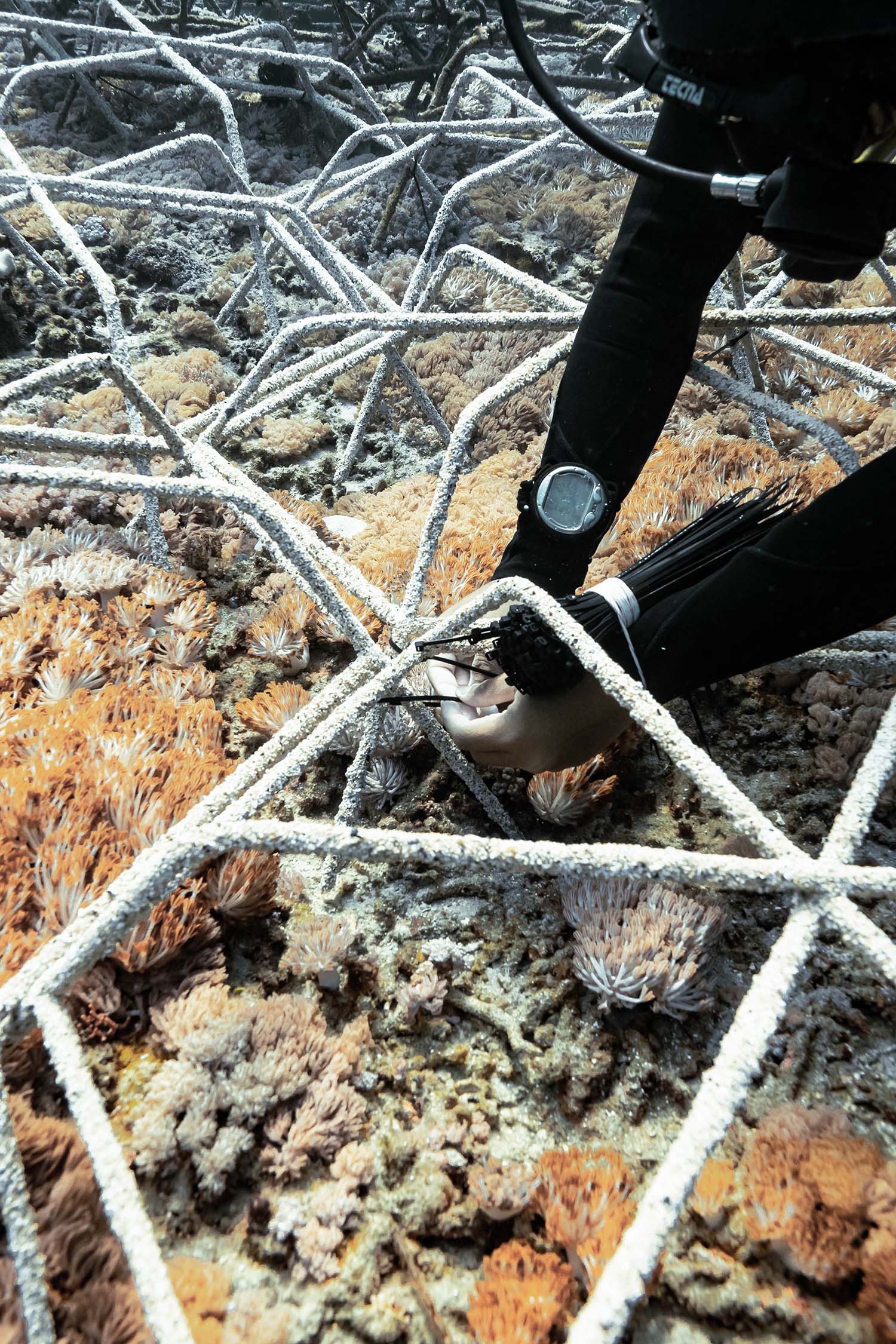
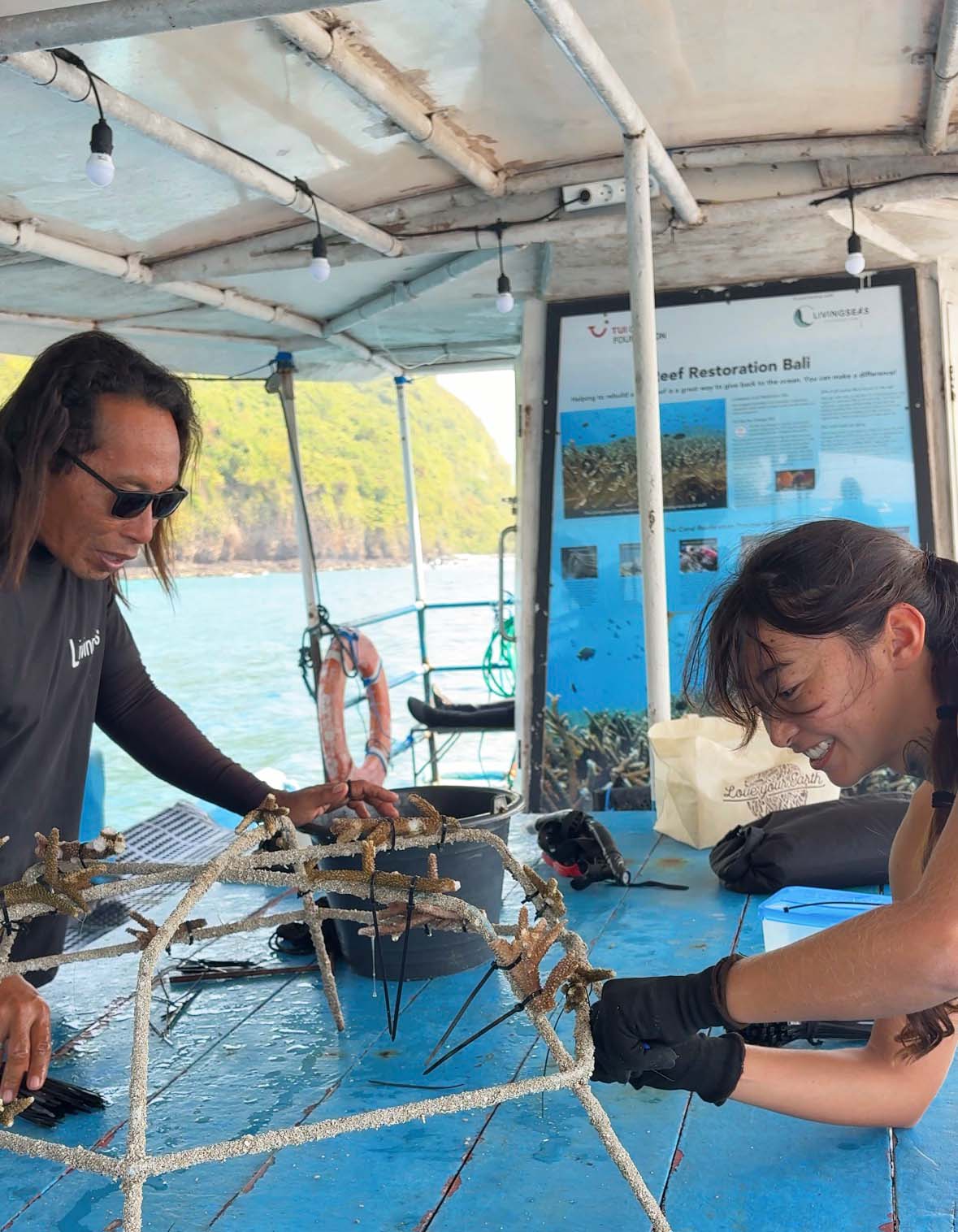
Imagine trying to move your arms through molasses, zip-tying a piece of coral no larger than your index finger onto a metal beam with bits of silt obscuring your view and clanking against the glass of your snorkel mask. Whether it’s the cost of equipment, the dive itself or the extra time everything takes underwater, the true price of restoration is staggering. As I research the process at scale, it leads me to visit LivingSeas, a coral restoration site in Padang Bai.
Photos: Zoe Lowe
The collapse and a harmonious balance
I am lucky enough to get a private tour at the restoration site. My guide for the open-water dive is Alex, a 23-year-old with a degree in biology and oceanic science. Although hesitant at first, he has a beautiful story to share about how locals have watched climate change affect their livelihood.
Alex tells me how he always lived by the coast in Lombok, a different island in Indonesia. He would spend hours fishing with his dad, throwing crab traps from the jukung (joo-kong) – a small wooden outrigger canoe. By the time his dad finished a cigarette, it would be time to pull the traps up again. Alex remembers how they were always teeming with crabs, each trap pulling up at least four or five large ones in a mere 30-minute span. He looks downward as he explains how those numbers have dwindled over time. His village, once a bustling hub with over 100 fishermen, now stands at around seven or eight due to the degradation of the reef. He explains how locals used to pick live coral to use as chalk for their schools’ chalkboards. “We had no idea back then what the coral was actually used for in the ocean,” he says with a solemn look in his eyes.
Alex’s story is not a unique case. Many of his colleagues are men and women his age from Lombok and other local islands who decided to move to Bali to help make an impact. Many locals have also adjusted their lifestyles to aid in reef restoration, while simultaneously still relying on fishing as a main source of income to feed their families. The community has banded together to find a balance between the hunter and the reef mender. Both perspectives are fully needed to encapsulate what the reef means to people. After all, both parties want the same thing: a thriving environment where sea life can expand.
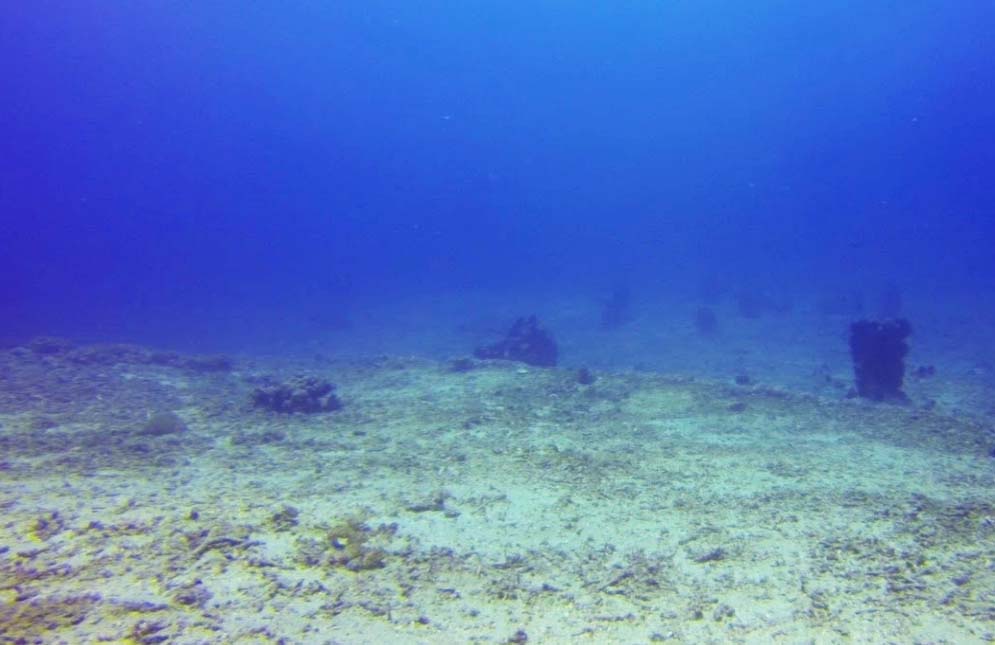
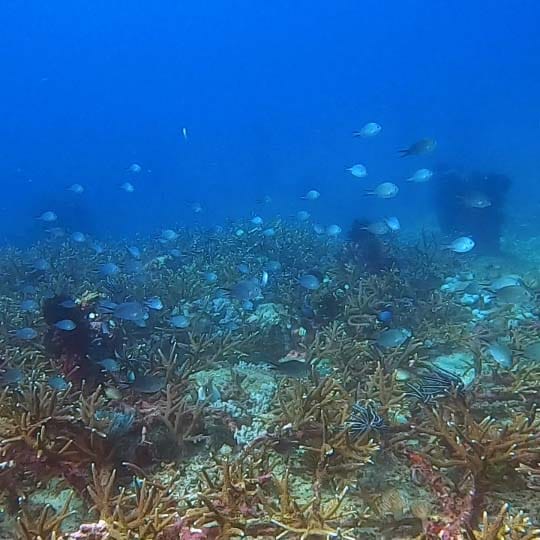
Before and during restoration work. Photos: LivingSeas.
Why won’t the reef fix itself?
Much like what sailors say once they’ve crossed too vast a span of ocean to turn back to shore safely, our planet has hit a point of no return. Climate change and rising ocean temperatures have made it impossible for the natural coral environment to bounce back to “normality.” In a tragic twist of irony, due to human interaction, parts of the ocean can no longer survive without our intervention. It depends on humans to act as its architects and create new ecosystems using artificial reefs, commonly known as ARs.
Unsurprisingly, despite our great strengths with technology, Mother Nature still holds first place by a landslide in terms of architecture, and the odds are often stacked against artificial reef builds. I bet you’ve never heard the term “pore water” before. It’s the ocean’s hidden fertilizer, water trapped between grains of sand on the sea floor. It can also act as an unintentional coral killer, especially when it comes to building these artificial structures.
If the ocean is a big underwater city, the coral reefs are the massive community garden co-op. ARs act as the trellises, structures that use zip ties to attach coral until it’s ready to grow on its own and rejoin the garden. Pore water phosphate is a type of nutrient that acts as plant fertilizer. But what happens when you dump too much fertilizer on a garden? Any gardener reading this is probably internally screaming, “Weeds! You get an insurmountable amount of weeds!” They’d be right, but instead of garden weeds, we’re talking about algae – and lots of it.
The ocean’s garbage trucks
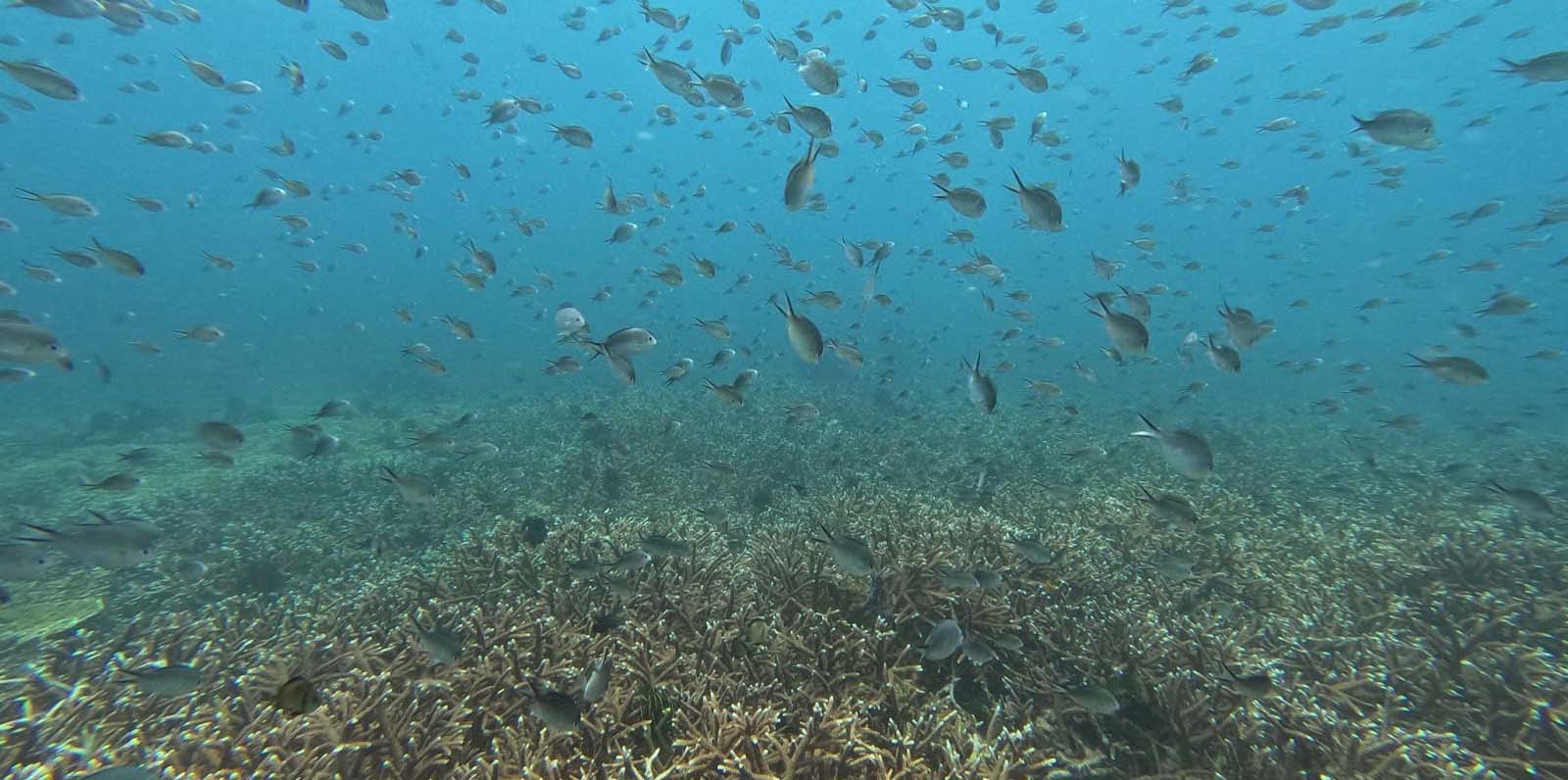
This wouldn’t be an issue if there were enough metaphorical weed-eaters (algae-eating fish like parrotfish and surgeonfish) and garbage trucks (benthic invertebrates like crabs and sea cucumbers). But as mentioned before, a few factors are stacking the odds against human-assisted coral restoration.
The first is the structural mismatch of an artificial reef versus a natural one, leading to reduced nutrient cycling. Have you ever seen those rocks that wash up on shore with random assortments of little holes in them? They’re part of natural reefs, built over hundreds of years, and are teeming with little nooks and crannies – hiding places that benthic invertebrates, sea bugs that live off oceanic waste, naturally gravitate toward.
Those same sea bugs often act as the first domino: once they’ve inhabited a space, the herbivorous fish will come, then the sea turtles and crabs, along with the rest of the ecosystem. Without this first domino, the artificial reef can accidentally skip a step, attracting more predatory fish instead of those needed to keep the coral clean.
Compounded with the fact that ARs are built with metal frames and concrete blocks, lacking the crevices bottom feeders need to thrive, unprocessed fish waste sits in the sand and rots – setting off the first event in an otherwise destructive chain reaction. The waste releases phosphate into the coral co-op garden, feeding algae that latches on to the coral and smothers it to death by blocking out sunlight and oxygen – unless a restoration team is on site, constantly scrubbing away.
Photos: Kaileigh Otsuka
Super-algae and extreme maintenance
The second issue lies within the location. Not only are artificial reefs placed closer to land for easier access, but when rain falls, agricultural fertilizers, dirt and bio-waste from the island wash into the bays via river mouths. This dumps even more phosphate into the sand, making it harder to keep up with algae growth. The tropical waters of Bali act as a catalyst, dissolving sand-trapped nutrients into the water much faster.
This leads to the gruelling reality of underwater maintenance.
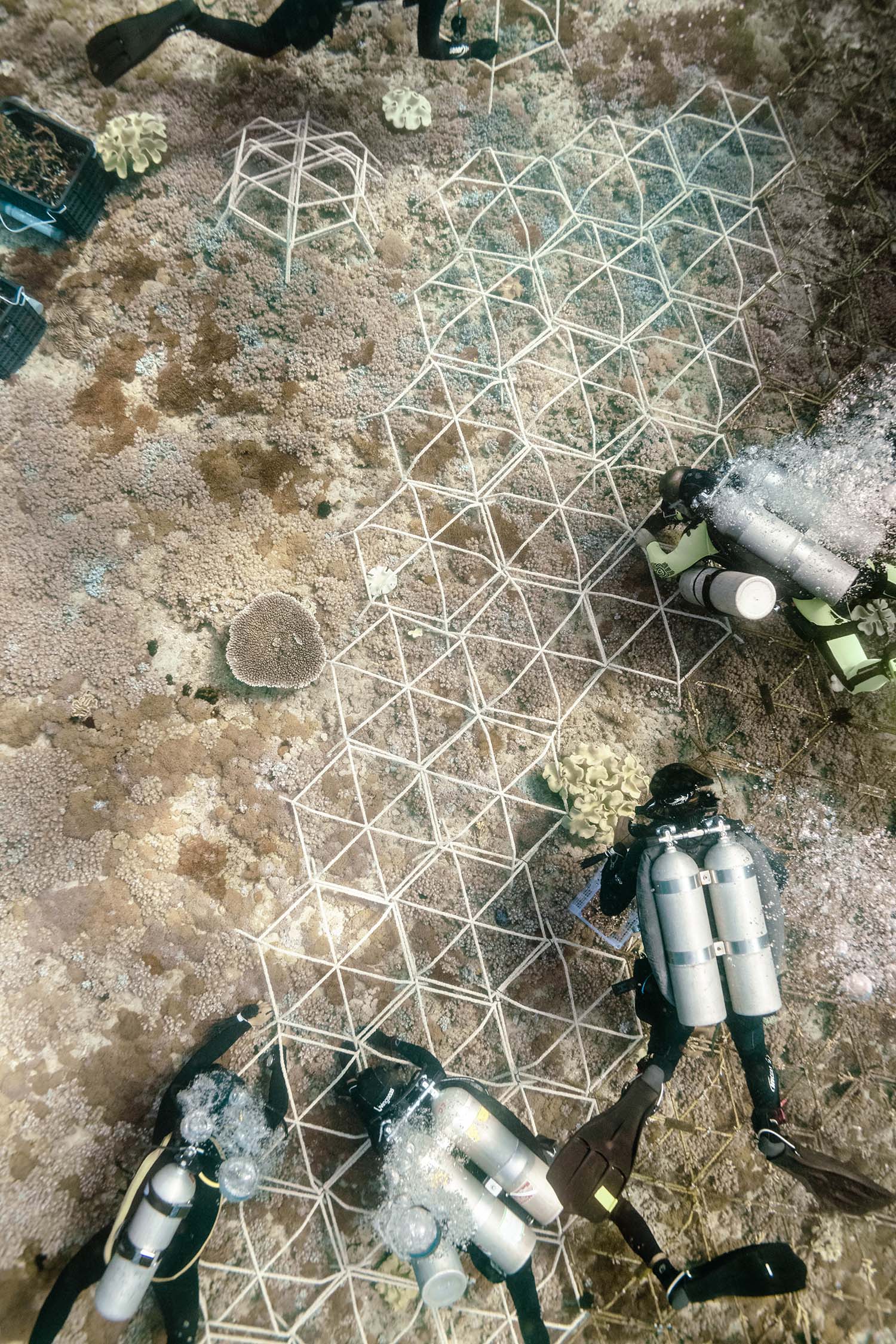
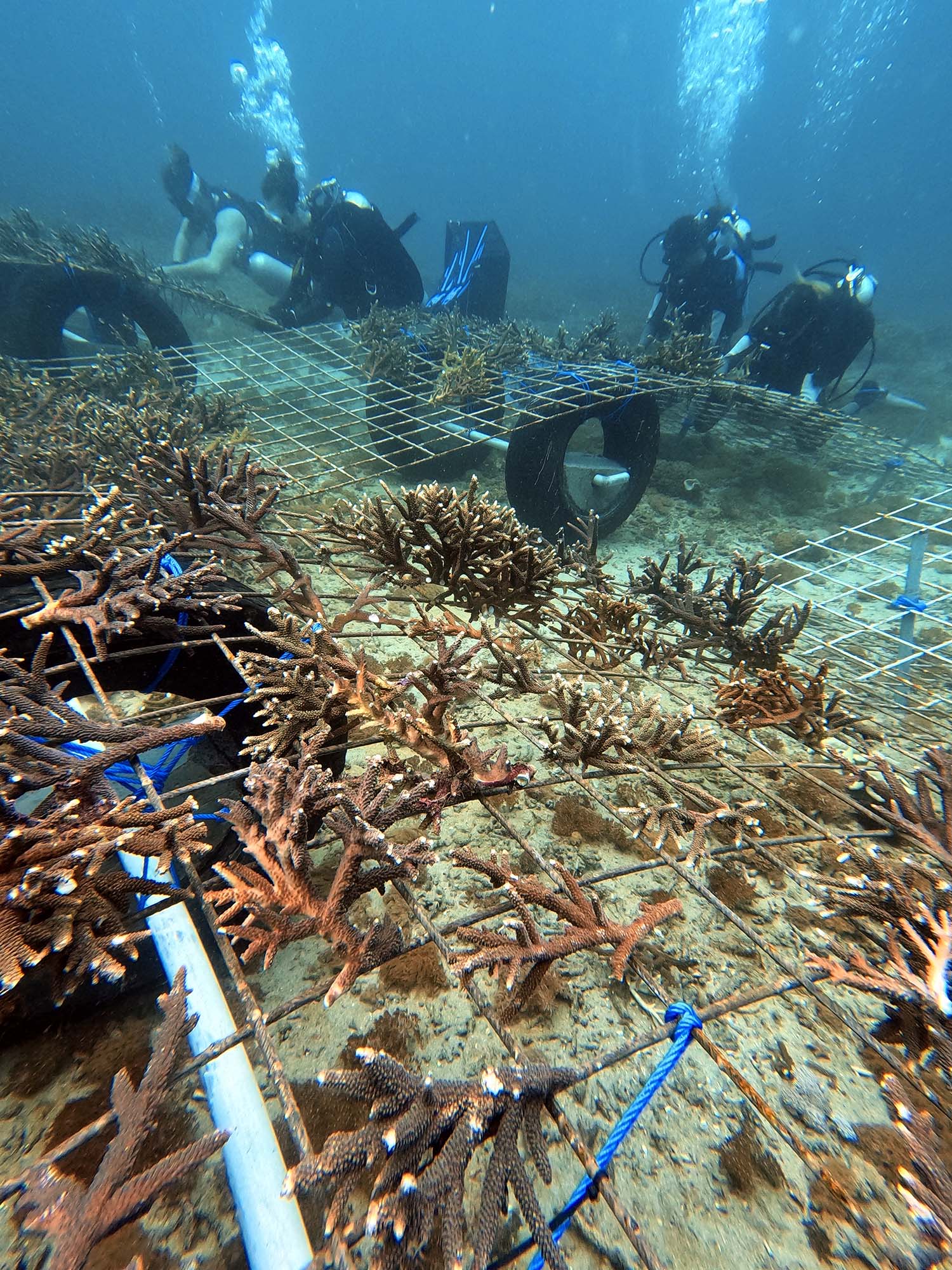
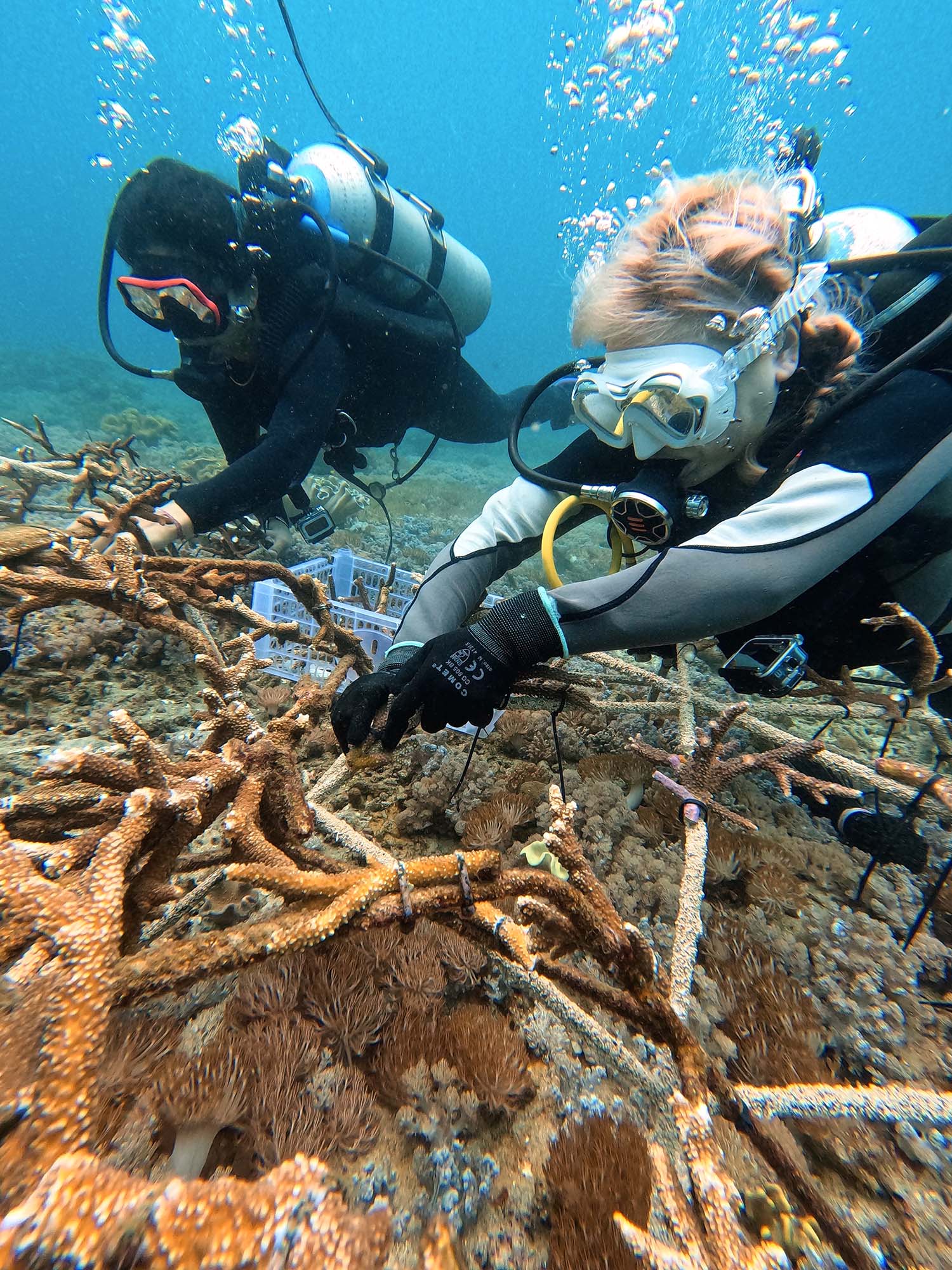
“A big wave from a storm damaged one of our large nurseries recently,” Jenkins recalls. “The structure had to be picked up and put back into place as best as possible. Then, all broken or loose coral had to be reattached or rehomed. You review the current state of a structure, clear any dead coral or coral-killing sponges, brush any algae or bacteria away, replant coral in spaces and cut excess cable ties. Once you go underwater, everything is more challenging.”
Photos: LivingSeas
The ultimate payoff
But the hard work is paying off. Even with the limited visibility due to a recent storm, the transformation remains undeniable. What was once a barren ocean floor seven years prior is now a vibrant myriad of colourful coral and sea life alike.
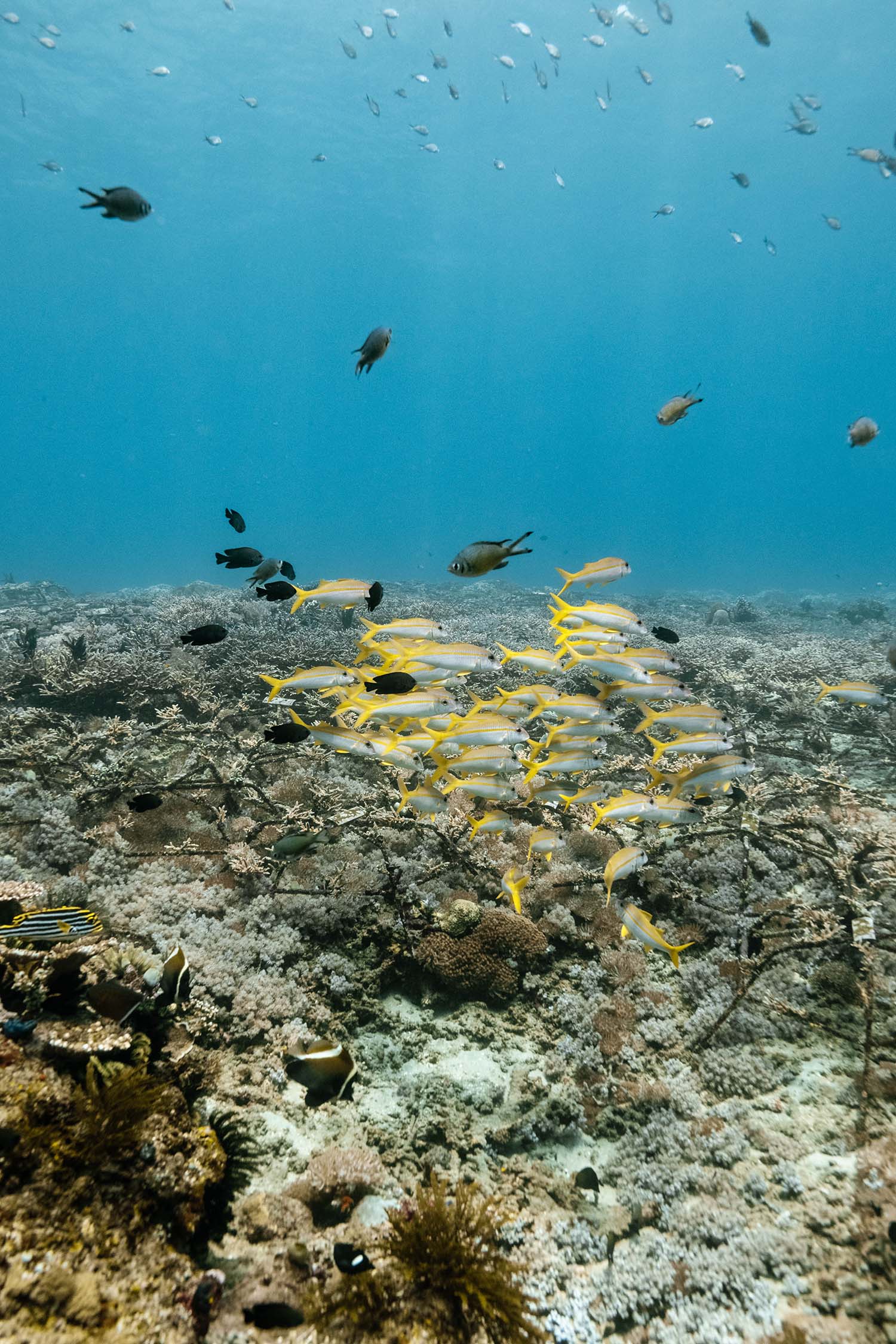
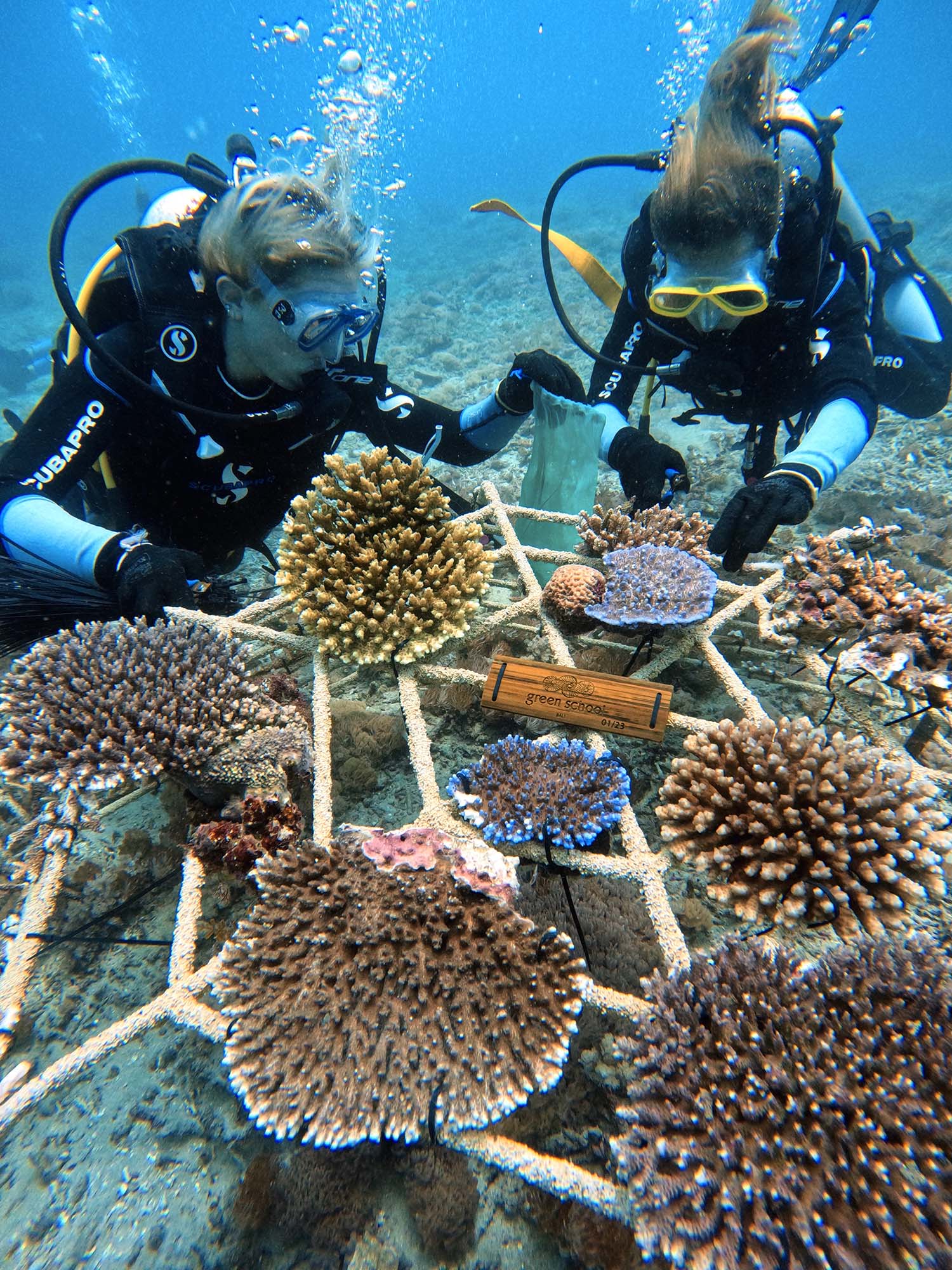
A recent study published by Dr. Zach Boakes on artificial reef nutrient dynamics and community composition in Bali highlights that it takes around five years to see true results from restoration projects. Seeing the before and after photos of that five-year mark, I can’t help but feel hopeful. Once the coral is strong enough, it completely envelops the steel structure, creating gorgeous natural tables and crevices where a multitude of different-coloured fish can congregate. On my visit I am able to see this first-hand: the once barren, white ocean floor is now teeming with rainbow-coloured parrotfish, small crabs and a few sea turtles floating peacefully under the coral’s umbrella.
I ask Jenkins what the most surprising type of sea life to return to the reef has been. He mentions the men in the grey suits: sharks.
“Juvenile white tips coming back was a great surprise,” Jenkins says. “Over time now, we see larger sharks swimming around day and night. A sighting can be rare, but it shows our reef is supporting a larger ecosystem, and we need to carry on.”
Help restore the reef
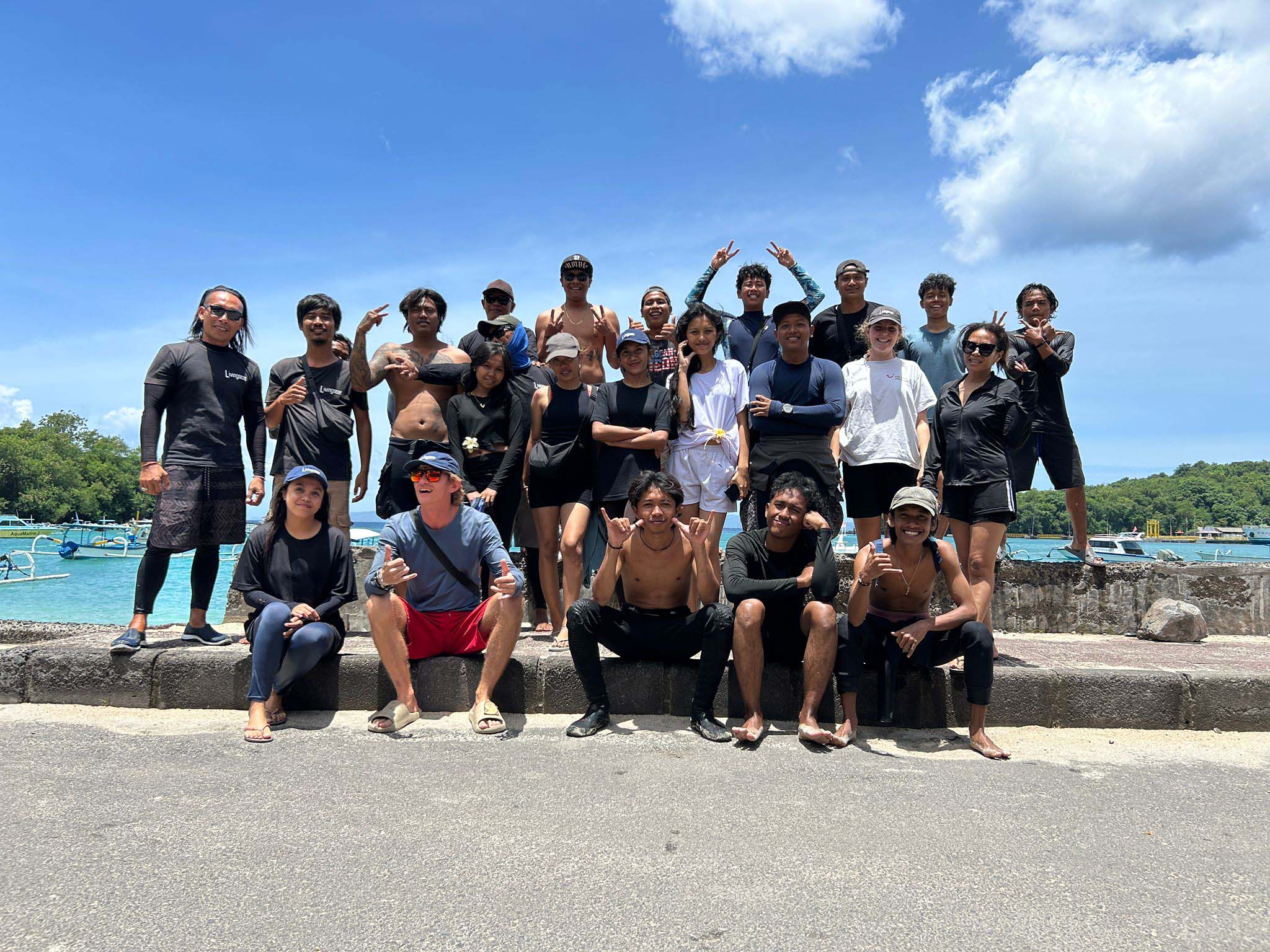
Speaking of carrying on, it’s impossible without a community of reef menders and equally impossible without adequate funding. Out of the eight-plus reef restoration organizations I reached out to, I got one reply – LivingSeas. Jenkins mentions they recently applied for a grant to employ more local fishermen but were not successful. Luckily, there are ample ways the average person can help.
Organizations like LivingSeas allow individuals to adopt a “reef star”: a steel frame with pieces of coral attached, vital for the reef to grow and propagate once put into the ocean. Jenkins also mentions they send out monthly photos of the reef stars to their adopters so they can see how their coral is growing. Their current goal is to plant 500,000 pieces of coral in 2026, and they just hit the 80 percent mark mid-August. In addition, if you find yourself in the Bali area, LivingSeas also offers daily scuba and snorkel tours.
For more information or if you’d like to adopt a coral reef star with LivingSeas, you can contact them via their website at Livingseasfoundation.org.

Comments ()