

5 ways Australian cities are making space for wildlife
How can we make urban and suburban spaces better habitat for native wildlife? With smart adaptations like these.
We tend to think of wildlife as living somewhere far away, out in the bush. But when researchers at the University of Melbourne went looking for Australia’s threatened species, they found them on roadsides, in schoolyards and carpark gardens, beside railway stations and up on rooftops. Nearly half of the country’s threatened wildlife lives in cities and towns, and for 39 species a city is the only home they have left.
If those species are going to survive, they’ll do it in the suburbs or not at all. So urban ecologists and Traditional Owners around the country have been working with councils to bring habitat back to our urban spaces.
These five projects show how Australian cities are making space for wildlife.
1. Compton Road, Brisbane
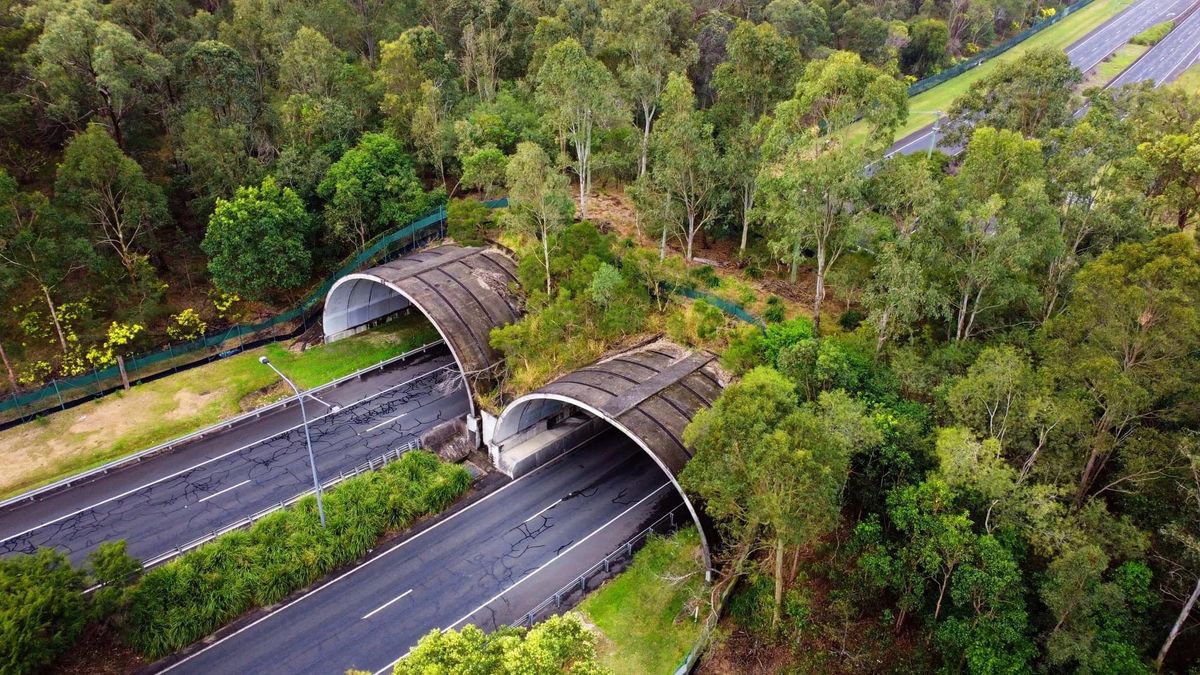
When Compton Road was widened from two lanes to four in 2004 and 2005, it threatened to cut Karawatha Forest off from Kuraby Bushlands on the other side, so ecologists and community groups negotiated a set of wildlife crossings into the design. The centrepiece is a land bridge 50 metres wide, planted so densely with native shrubs and trees that the bush appears to carry on across the traffic. Below it are two underpasses fitted with ledges and what engineers call fauna furniture, while rope ladders link the canopy on either side and a row of eight tall wooden poles gives gliders somewhere to launch from one to the next until they’re safely over the motorway.
 Olivia Rosane
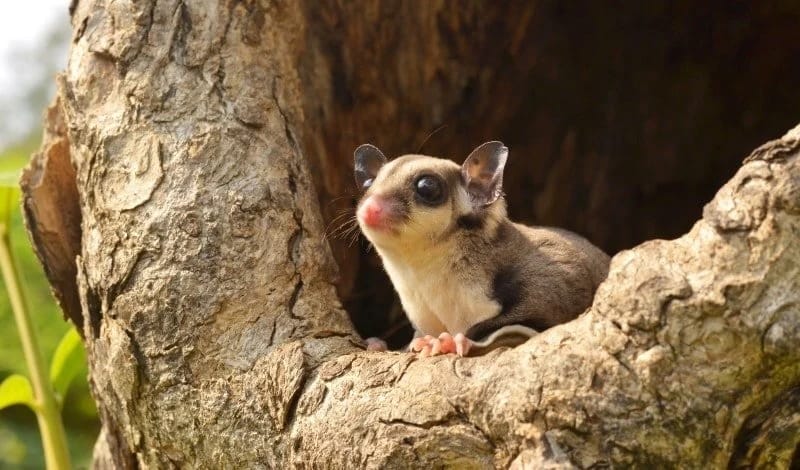
Cameras caught tiny squirrel gliders shimmying up the poles soon after they went in. Small birds like honeyeaters and finches cross inside the foliage, and koalas wander over regularly, which surprised the project’s ecologist, Darryl Jones, who never expected them to figure out a bridge. Researchers even found more kinds of frogs and reptiles living on the bridge than in the bushland on either side.
“Compton Road works better than anyone expected, including myself,” says Jones, who has studied the crossing since it opened. Twenty years on it’s the most closely watched wildlife bridge in the country, and Brisbane now has a second one at Hamilton Road.
2. Birrarung floating wetlands, Melbourne
In December 2022 the City of Melbourne towed five floating wetlands out onto the Birrarung and anchored them right in the middle of the city. Two sit beside Webb Bridge at Yarra’s Edge, others float off the promenade in front of the library at Victoria Harbour, and one is moored in the Turning Basin, the wide pool at the foot of the CBD. Before the city was built this stretch of river wound through thick riverbank vegetation and seasonal wetlands, and today it is lined with promenades and pontoons. The council couldn’t give the river its old banks back, so it built new ones that float.
The design, which University of Melbourne urban ecologist Kylie Soanes helped create, is a raft of interlocking modules anchored to the riverbed and planted with species from the council’s list of what grew along the river before colonization, with ramps for animals to climb aboard and posts where birds can perch and dry their wings.
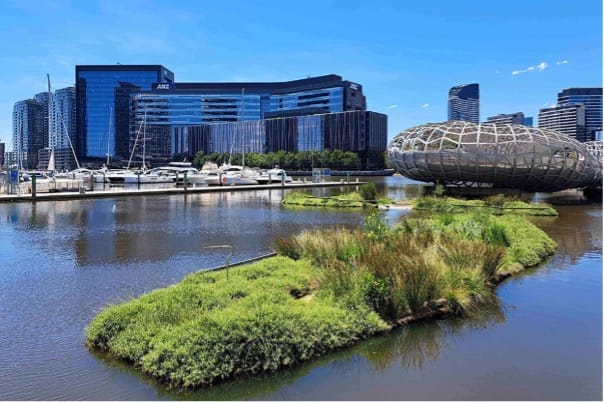
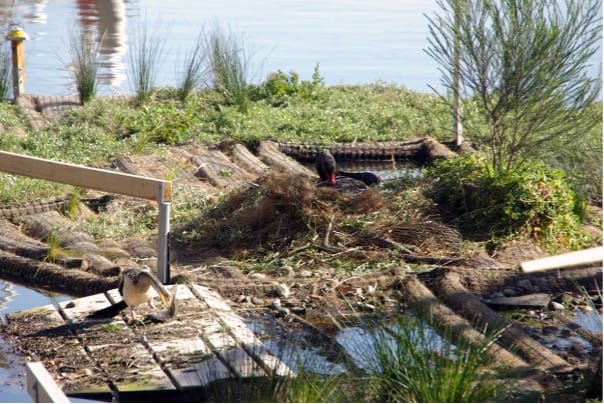
Melbourne’s floating wetlands. Photos: City of Melbourne.
Rakali, the impossibly adorable native water rats whose scientific name translates as golden-bellied water mouse, were eating shellfish on the wetlands the very first night. They leave their scraps behind, and urban ecologist Kylie Soanes, who helped design the wetlands, was delighted to find “bits of crab” among them. Cormorants and darters dry their wings on the log rails, and within a year native black swans were nesting on the river. Three pairs have since raised at least 10 cygnets, building their nests out of the wetland plants.
Soanes and her team at the University of Melbourne counted the wildlife on the wetlands every fortnight through the trial, and anyone walking past can add their own sightings on iNaturalist. The results will help decide how much floating habitat is built into Greenline, the council’s plan for four kilometres of the river’s north bank.
 Alexandra De Vylder
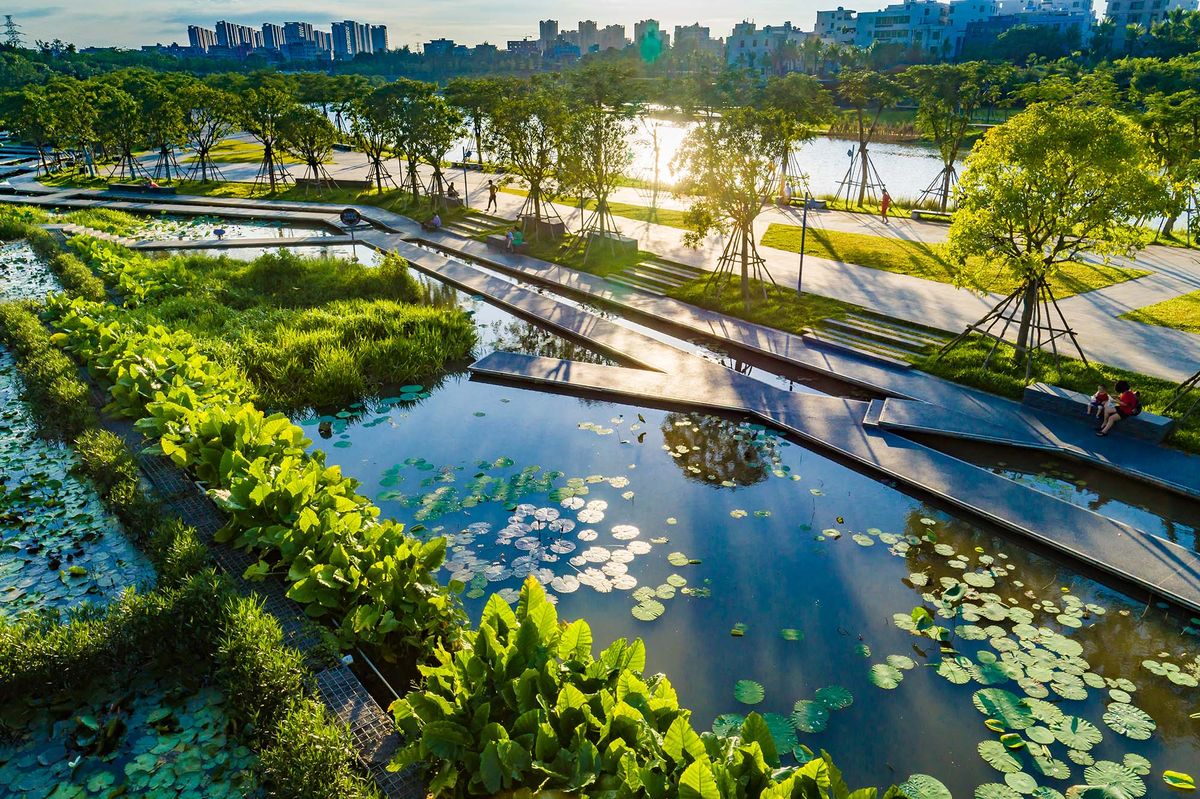
3. Carved tree hollows, Melbourne
In Melbourne’s parks, arborists are using chainsaws to carve nesting hollows into dead trees, and researchers are 3D-printing bigger ones for owls. The hollows that wildlife nest in form only in very old trees, and most of the city’s ancient gums were felled as it was built.
In Australia natural tree hollows form when fungi and termites get into the heartwood through an old wound. A hollow big enough for a pardalote or a small glider takes about a century to form, and one big enough for an owl or a large cockatoo takes at least 220 years. More than 300 native species shelter or raise their young in such hollows, including kookaburras, rosellas, possums, gliders and most of Australia’s microbats, and Melbourne’s park trees are too young to meet their needs.
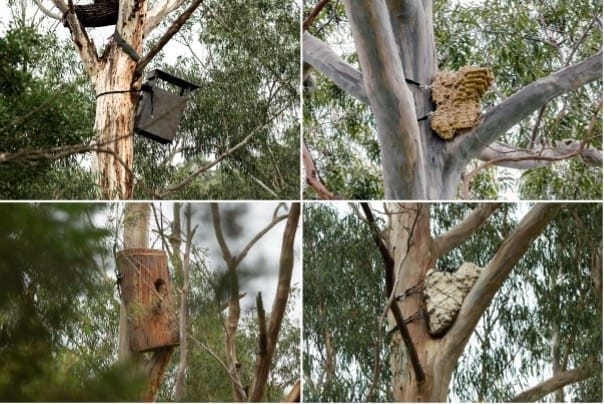
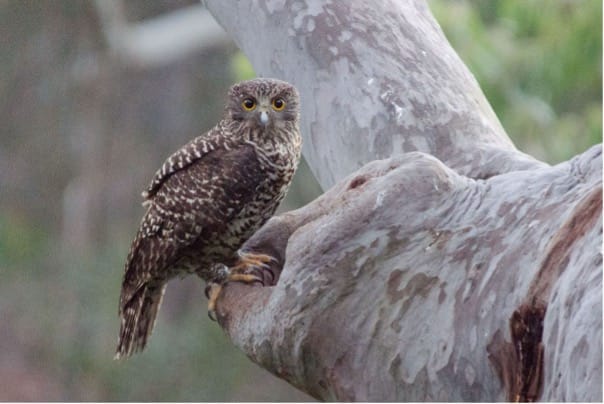
Photos: Melbourne University
So, when a park tree dies, the City of Melbourne now leaves it standing wherever it’s safe. Arborists prune it back and carve nesting chambers into the trunk, with doorways in different sizes for different species. More than 25 of these habitat trees now stand in Royal Park, Flagstaff Gardens and other city parks, with motion-sensing cameras watching to see who moves in. And Grant Harris, the arborist who carves them, has a favourite tenant in mind: “What we’re trying to do is provide hollows for kookaburras.”
The larger species like the powerful owl need a cavity at least half a metre deep, so researchers at the University of Melbourne have come up with a clever idea to build new hollows from scratch. They 3D-scan the tree cavities and termite nests where owls have raised chicks, then reproduce them in 3D-printed wood and in hempcrete shaped to wrap around a particular branch. Each one is modelled on real hollows and termite nests where owls have raised chicks.
 Alexandra De Vylder
4. Webb Beach wetland, Adelaide
Near the coast north of Adelaide, The Nature Conservancy and its partners have let the sea back onto 255 hectares of farmland at Webb Beach, so that a wetland cut off from the tide since the early 1950s can return to saltmarsh and mangrove beside one of Australia’s most important shorebird sanctuaries. The barriers built back then kept seawater out for so long that salt rose to the surface and left bare pans where nothing would grow. In early 2025 they were replaced with culverts under the road, and within days the sea was flowing back in at two of the four sites.
The land belongs to Bill Drew, whose father bought it more than 40 years ago to graze livestock and began working with The Nature Conservancy in 2019. He says it was never much good as farmland. Now fish and shorebirds are arriving on the flooded paddocks. Drew told Australian Geographic he has never seen it like this, and that he’s doing it for his four young kids. Saltmarsh and mangroves also store up to four times as much carbon as the same area of forest, so the wetland could one day earn the family an income in carbon credits.
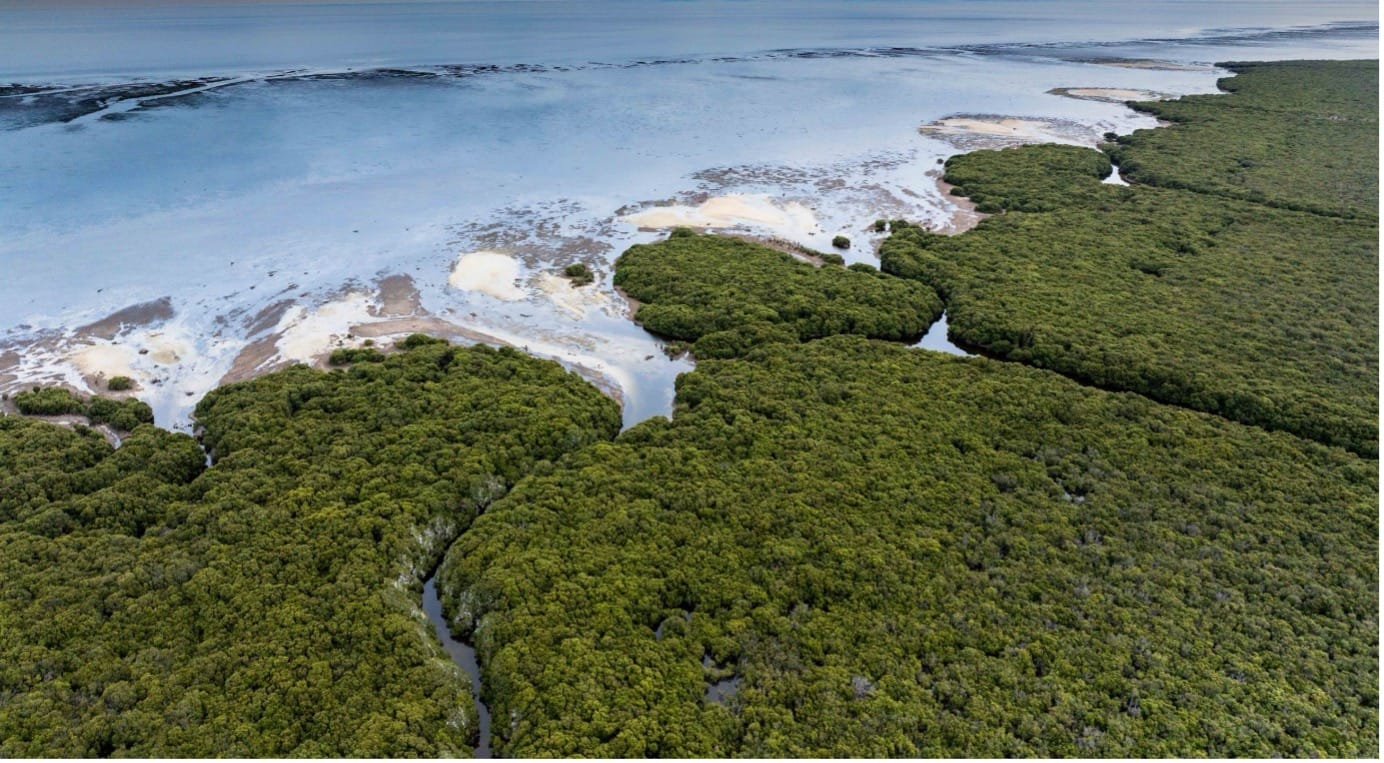
Next door is Winaityinaityi Pangkara, the Adelaide International Bird Sanctuary, whose Kaurna name means country belonging to all birds, and where more than 20,000 migratory shorebirds arrive each year after flying over 12,000 kilometres from breeding grounds in Alaska and the Russian tundra. The returning saltmarsh will give them more ground to feed and rest on.
Kaurna Elder Uncle Jeffrey Newchurch, who grew up nearby and learned from his father to read the birds as a calendar of the seasons, now walks the wetland with the project team to see how it is recovering. “When you walk Country in silence, Country opens up to you,” he says. The salt is already flushing out faster than the team expected, and The Nature Conservancy intends Webb Beach to show other coastal landholders what can happen when the tide is let back in.
 Alexandra De Vylder
5. Mulligans Flat, Canberra
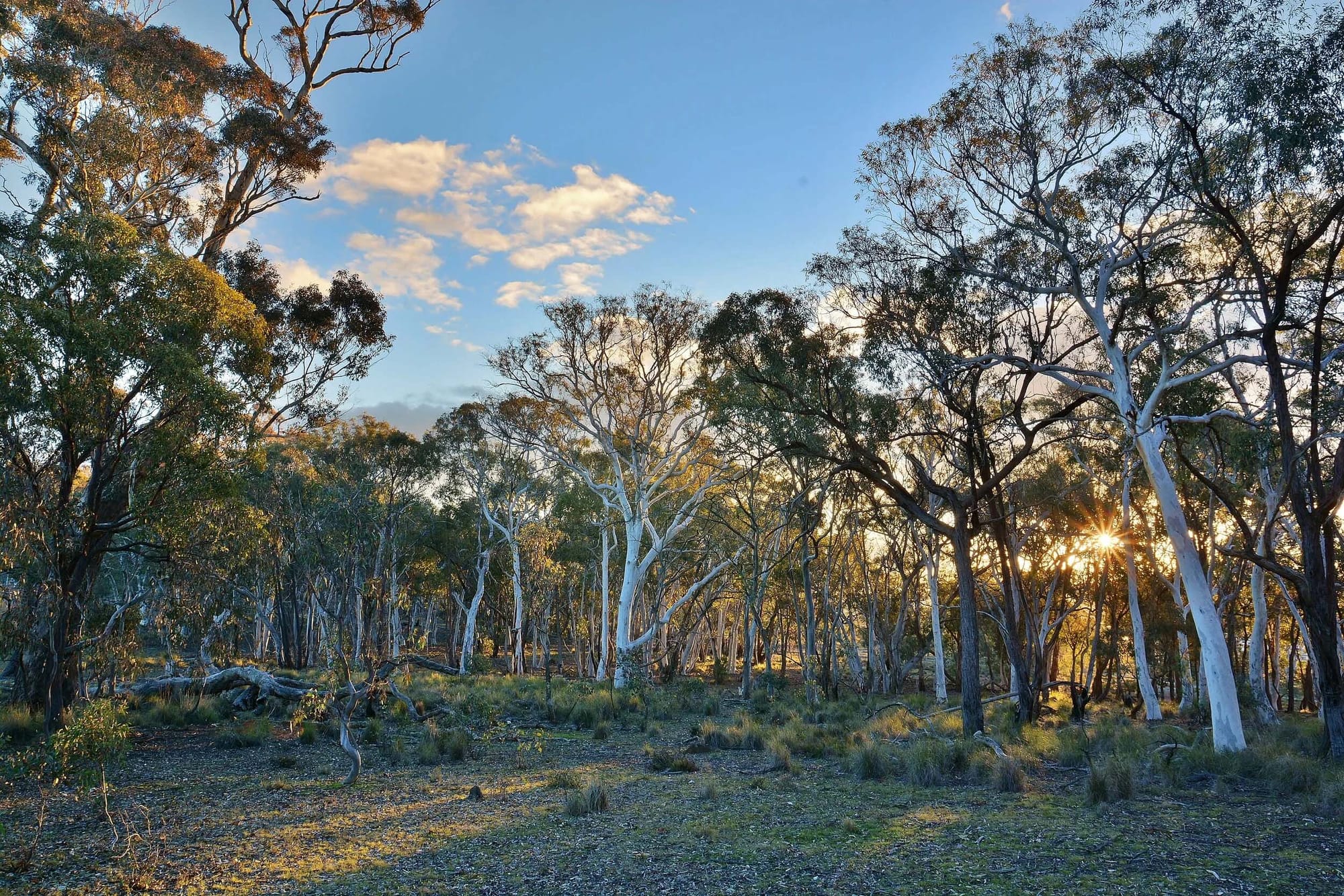
On Canberra’s northern edge, a predator-proof fence encloses Mulligans Flat Woodland Sanctuary, 1,286 hectares of critically endangered box-gum grassy woodland, so that native species wiped out of the region by foxes and feral cats can be reintroduced and studied. Run by the Woodlands and Wetlands Trust with the Australian National University and the ACT Government, the sanctuary has operated for two decades as a long-term experiment in restoring a fully functioning woodland, with the eventual aim of returning those animals to the bushland outside the fence. “We often forget our woodlands had all these species running through them,” says Adrian Manning, the ANU ecologist who has led the research from the start.
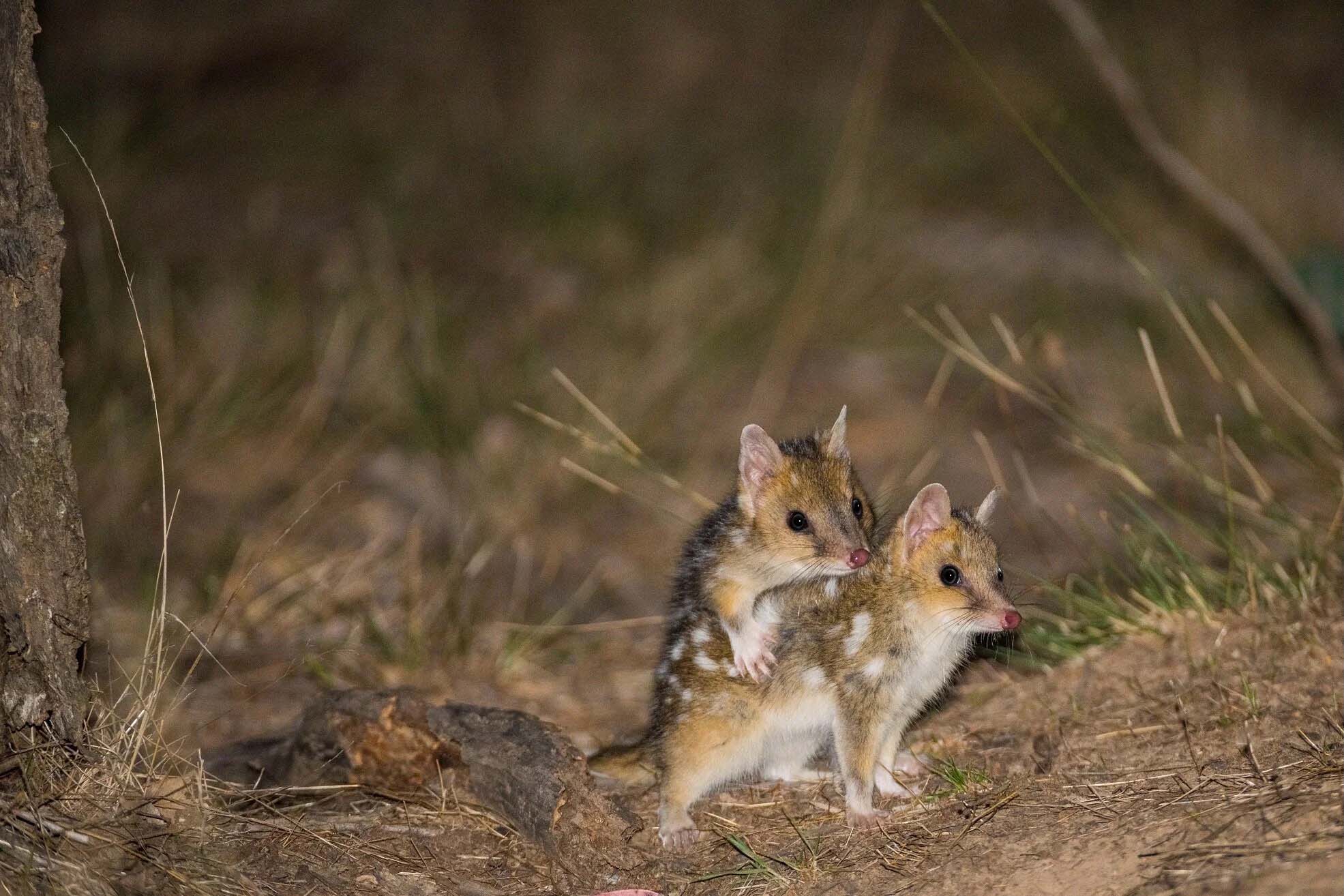
Eastern bettongs, small marsupials also known as rat-kangaroos, were the first to be introduced, brought from Tasmania in 2012 after about a century’s absence from the mainland, and they settled in and bred well. Eastern quolls, called murunguny in Ngunnawal language and once known to settlers as native cats, proved to be a challenge. Fewer than a third of the first group released in 2016 survived, and the males kept escaping. Ecologist Belinda Wilson tried releasing only mothers carrying pouch young instead, and survival jumped to 88 percent. The sanctuary is now full, and newcomers have been found sharing dens with the locals.
Bush stone-curlews, extinct around Canberra since the 1970s, are calling at night again, and one of them, Rowena, gave the project a preview of its own ambitions when she flew over the fence and was found standing in someone’s front yard. The rest of the wildlife can’t follow her until foxes are under control in the surrounding bushland, but the sanctuary’s 2050 strategy pictures bettongs and quolls in the woodlands of nearby Mount Majura and curlews once again heard across the suburbs in the years to come.
Comments ()