

The river otter’s remarkable comeback
In North America’s Great Lakes region, river otters are coming back from the brink thanks to decades of effort on both sides of the border.

The first sign isn’t the otter itself. It’s the ripple – small, nearly invisible – spreading across the marsh. Then a blur of brown breaks the morning water’s silver surface. A head lifts, whiskers dripping, eyes alert. For a second, it lingers. Then it’s gone again, leaving only widening rings.
Not long ago, this scene, in this place, would have been impossible. In the 1980s, the chances of spotting a river otter anywhere along much of the Great Lakes shoreline were close to zero. Pollution, trapping, habitat loss – together they’d driven otters out. What remained were faded accounts, the odd specimen in a museum, a memory. Their return isn’t just welcome. It’s a sign the lakes themselves are healing.
A freshwater giant
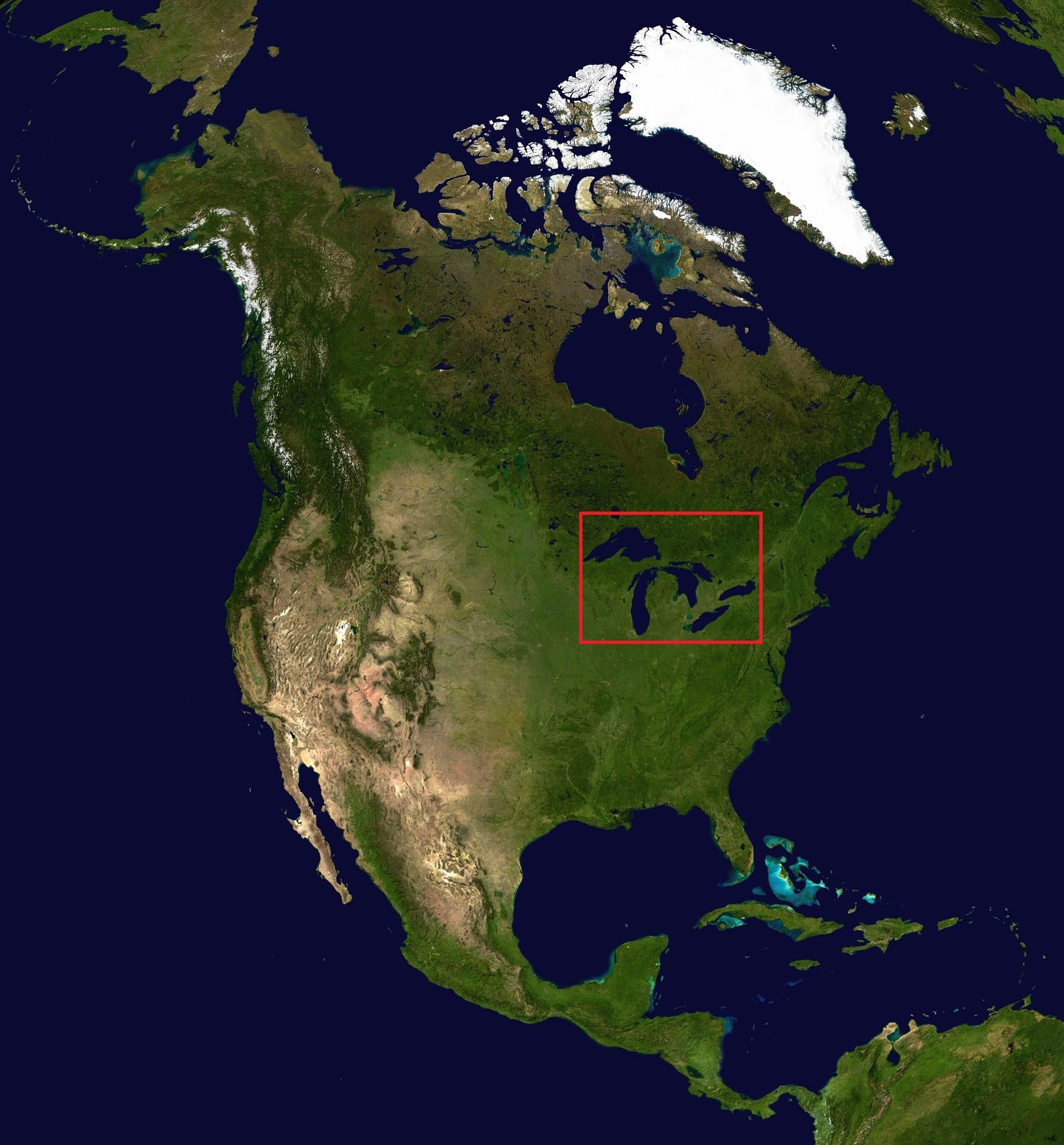
North America's Great Lakes – Superior, Michigan, Huron, Erie and Ontario – form the world’s largest group of freshwater lakes. Together, they hold about one-fifth of all surface fresh water on Earth. Their basin straddles the border of Canada and the United States, sheltering more than 3,500 species of plants and animals, and tens of millions of people.
These waters aren’t simply vast storage tanks. They are living systems. Marshes filter runoff. Rivers swell with migrating fish. Wetlands cradle frog eggs and sedge roots. For millennia, Indigenous nations and fishing communities have relied on these shorelines. But stressed systems can break – and for decades, this one did.
The disappearance
River otters (Lontra canadensis) once moved almost everywhere in this basin. They swam with ease, hunted with precision and thrived in backwaters and bays thick with vegetation. But by the mid-20th century, they had vanished from the state of Ohio and become scarce across most of the watershed.
The reasons stacked up quickly. Over-trapping for fur. Pollution that loaded fish with PCBs and other toxins. Wetlands drained for farms and cities. Rivers and streams straightened, dammed, stripped bare. By the 1970s, the silence spoke volumes: the otter was gone, and with it an apex predator vital to the food chain.
The comeback
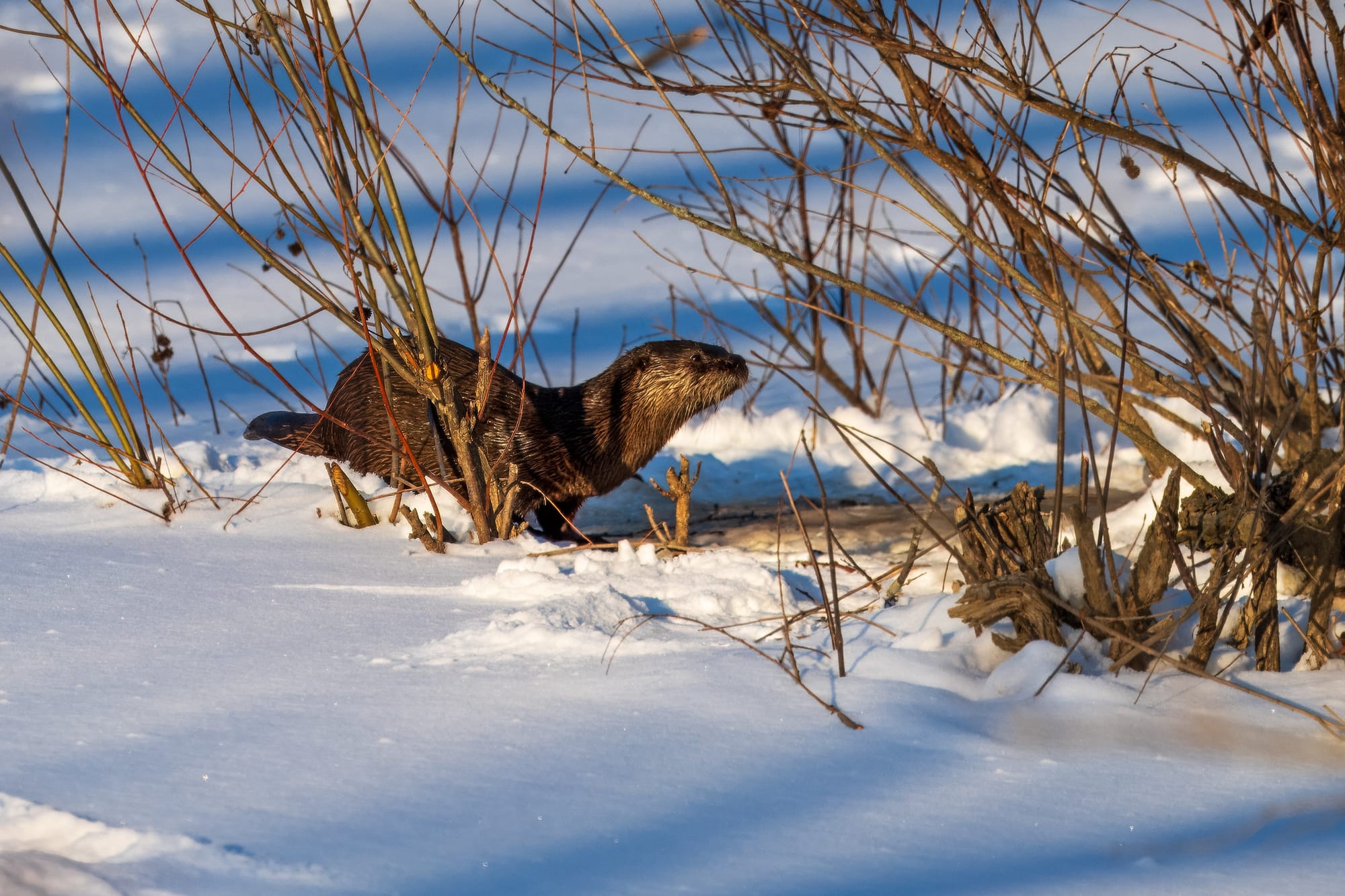
In 1986, Ohio’s Department of Natural Resources (ODNR) began reintroducing river otters to streams they had not seen in decades. Over the next seven years, 123 otters from Louisiana and Arkansas were released into rivers selected for their clean water, abundant food and protective cover.
They weren’t the only ones bringing otters back. In the late 1990s, New York’s River Otter Project relocated 279 otters – drawn from the Adirondacks, Catskills and Hudson Valley – to 16 sites across western and central New York state. Many of those waterways had been without otter populations longer than most residents could remember.
In Ontario, biologists have documented otters recolonizing areas such as Algonquin Provincial Park and the north shore of Lake Superior, where they had been scarce for much of the 20th century. Across western Canada, populations have rebounded more broadly. Aside from rare remnant areas on Prince Edward Island, river otters are now considered stable or expanding in nearly every province and territory.
Meanwhile, restoration of the habitat itself was gathering pace. Drained croplands were being reflooded as wetlands, riparian buffers were planted to shore up streambanks, and old dams were being removed to reconnect fragmented waterways. All of these efforts were bolstered by the 1972 Great Lakes Water Quality Agreement, a landmark U.S.–Canada treaty that pushed both countries toward reducing toxic discharges and restoring damaged habitats. By the 1990s, many of these rivers – once pollutants’ dumping grounds – were visibly cleaner and healthy enough once again to sustain apex predators.
Where the otters are now
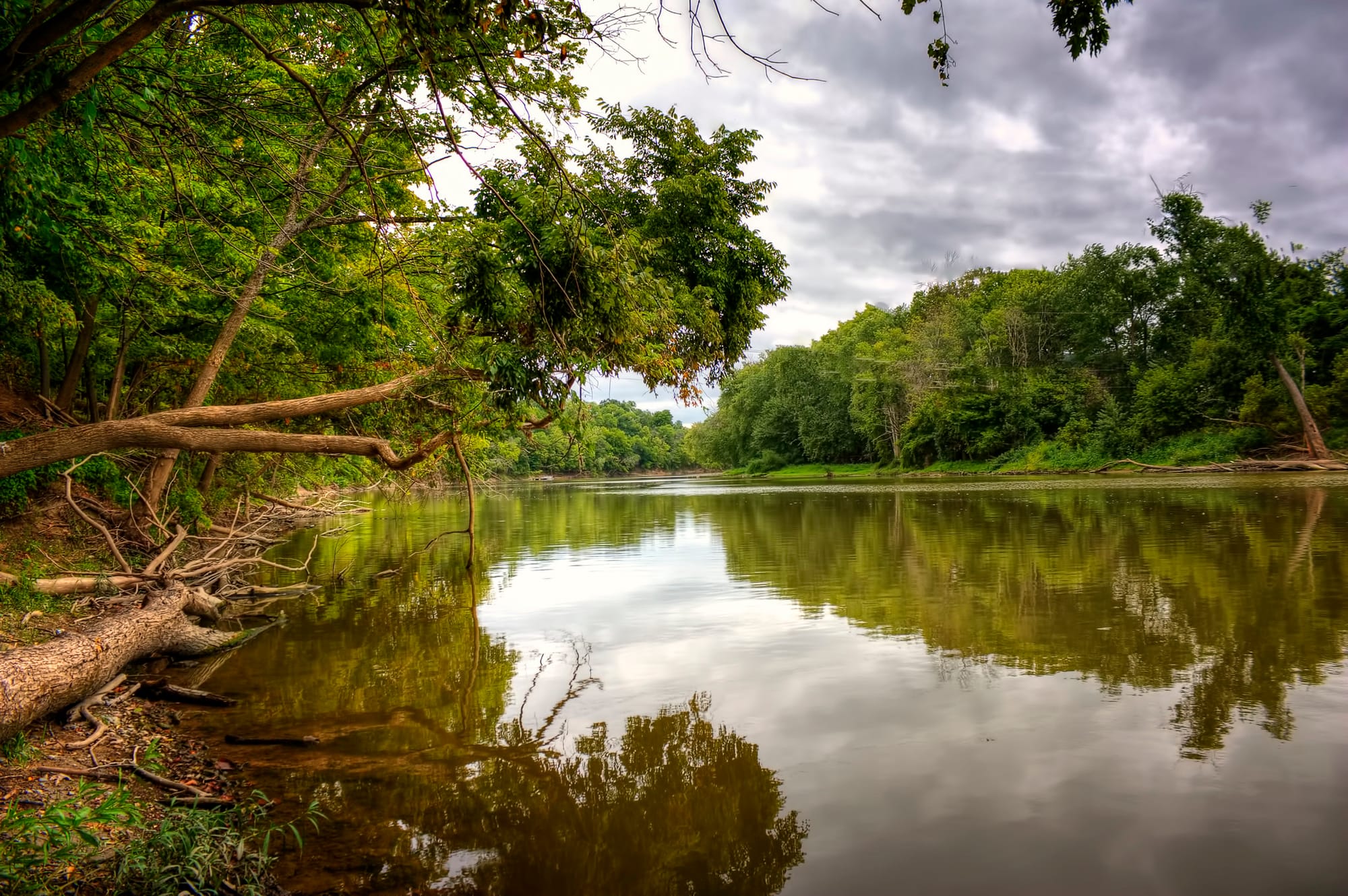
Today, river otters once more slip through marshes and estuaries across the Great Lakes basin. Breeding populations are thriving along the Sandusky, Maumee and Grand rivers in Ohio. Sightings are increasingly common in Georgian Bay (part of Lake Huron) and along Ontario’s north shore of Lake Erie. Otters have returned to Michigan’s Upper Peninsula too, where quiet backwaters and fish-filled streams are ideal habitat.
As predators at the top of the chain, otters help regulate fish and invertebrate numbers. Their presence signals something deeper, too: the water is clean, the system productive, the ecosystem whole enough to support them again.
Challenges ahead
Recovery, unfortunately, doesn’t mean safety. Roads remain a serious threat. Highways cut through wetland corridors, and otters are killed crossing them. Wildlife officials map these blackspots and add underpasses, fencing and warning systems – but progress is slow.
New contaminants are appearing as well. PFAS, the so-called “forever chemicals,” are showing up in Great Lakes fish, their long-term impacts still unknown. Shoreline development eats away at denning sites. Climate change threatens to shift prey distribution and alter seasonal ice cover. Any of these pressures could slow or even reverse otters’ recovery.

More than a species
To many Indigenous communities, the otter represents more than biology. In Anishinaabe culture, for example, it symbolises resilience, adaptability, play. Seeing otters return is a cultural renewal as much as a biological one – a sign that healthy ecosystems sustain people as well as wildlife.
For others, the meaning is simpler. Otters spark joy. A sudden flash through cattails. The clean dive of a plunge. A slide down mud or snow. In this way, they’ve become unofficial guardians of fresh water, their vitality pulling people into conversations about wetlands and rivers.
The folks in charge of the comeback
The otters’ recovery is the work of many. ODNR’s reintroduction laid the foundation, but protection and monitoring continue through agencies, non-profits and volunteers.
The Alliance for the Great Lakes fights pollution and protects shorelines. The River Otter Ecology Project spreads knowledge and research. The Wetlands Initiative rebuilds marshes and floodplains that support countless species, otters among them. Together, they form a safety net for the otters’ future.
Forward thinking
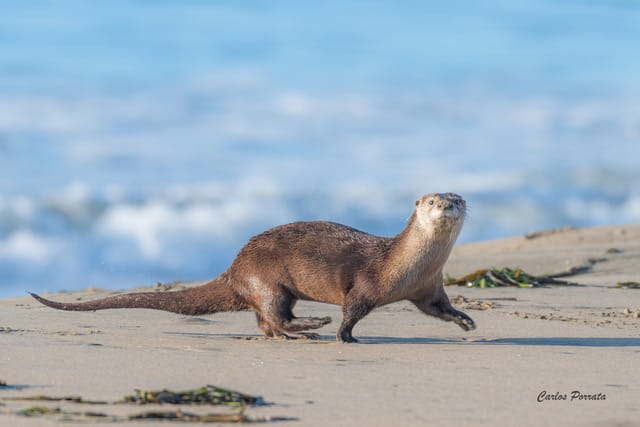
The next phase is keeping waterways open, clean and full of prey. As otters spread into smaller rivers and lakes, careful planning will matter – especially in regions under pressure from development.
Cross-border cooperation will be critical, since the lakes cross Canada and the U.S. – and otters do not care for borders. Public participation will matter too: reporting sightings, volunteering, supporting wetland projects. Each action helps.
The return of otters – and possibility
On a quiet morning, an otter surfaces with a fish flashing in its jaws. It climbs a half-sunken log, shakes itself in a spray, then slides back into the water with barely a ripple. The rings spread, then fade. The lake seems unchanged – yet it isn’t.
What matters is simple: otters are back. And their presence proves something worth remembering. Healing is possible. Ecosystems can recover. The story of the Great Lakes – its waters, its people, its wildlife – is still unfolding.



Comments ()