

The rewilding movement needs more art
For people to take action, they need to care first. That’s where creative works can help.

Which would you rather attend? A seminar on ecological restoration or a play with animals as the actors?
Even if you’re not a big theatre person, the second option likely piqued your interest. Imagine, pigs in costumes!
The play in question, When Pigs Fly by British Columbia–based playwright and director Kendra Fanconi, is still in the planning stages but promises to present educational information about restoration in a highly entertaining way. With more than 20 years of theatrical experience and a lifetime of activism under her belt, Fanconi has long used the arts to further the climate movement.
“Art not only changes minds and hearts, but it can also contribute to the materiality of our earth,” says Fanconi.
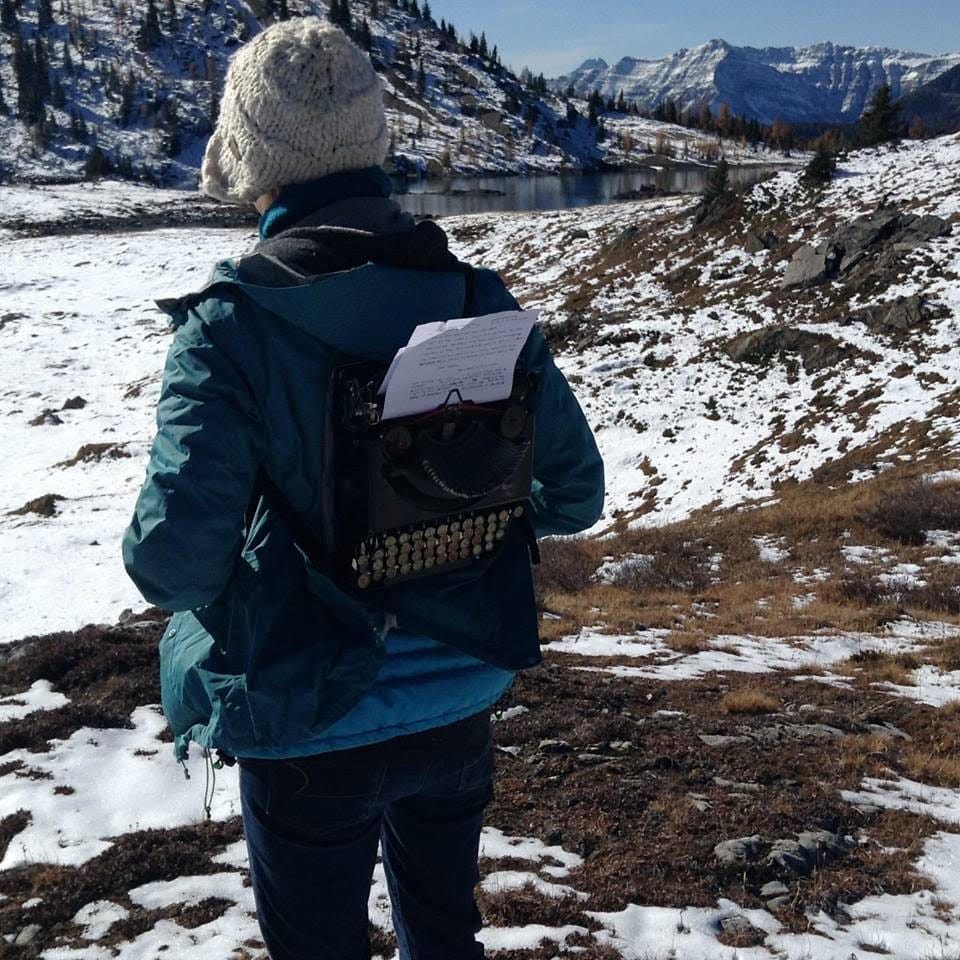
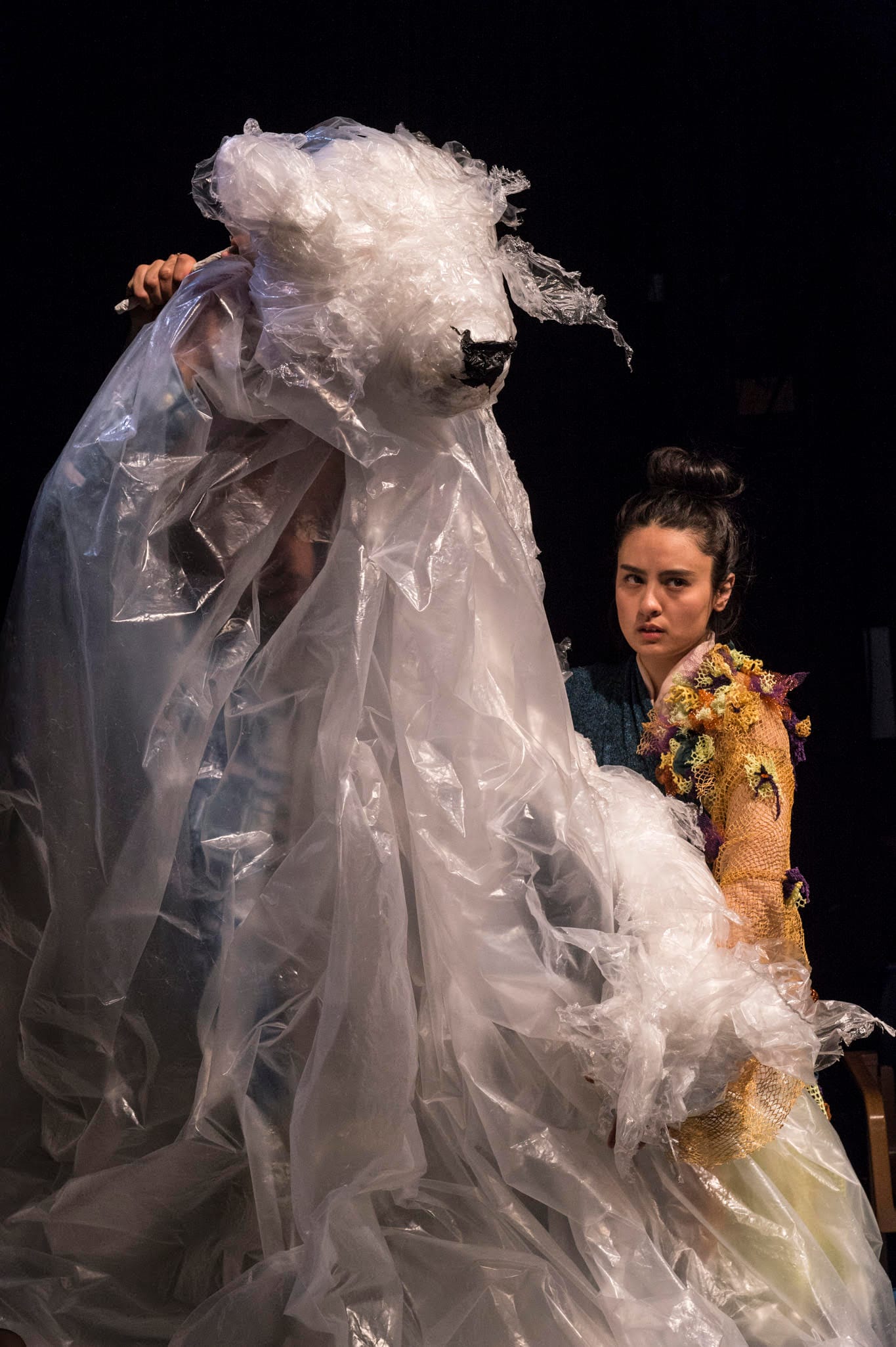
Left: Kendra Fanconi working on her piece Year of the Typewriter. “I had an old Remington Rand hooked up to backpack straps and then walked and listened, and tried to translate the voice of the natural world,” she says. “I’ve been working with this form for almost a decade so I may need to change the title.” Right: A plastic polar bear and Sophia Wolfe in Slime, by Bryony Lavery, produced at the Banff Centre in 2017. Photos courtesy Kendra Fanconi.
She’s still working out the production details of When Pigs Fly, but as her swine thespians “act,” they’ll simultaneously be restoring a half acre of badly compacted clearcut land on B.C.’s Sunshine Coast. The pigs’ daily behaviour – digging in the dirt and contributing their manure – will naturally aerate the earth and prime it for regrowth.
Audiences will come for the novelty and leave having learned something new about ecological restoration – achieving the same results as a seminar but in a much more enjoyable way. “You’re learning, but you don’t realize you’re learning,” says Fanconi. “You’re delighted, you’re engaged, you care, you see that something can be done, and maybe you take some steps to restore a little piece of land that you have access to.”
This is the power of the arts, whether of traditional mediums or less conventional forms. Creative expression of all types holds a unique ability to capture attention, keep people engaged and make them care. And it could be a key tool for motivating people outside of the rewilding movement to get involved.
 Corinna vanGerwen
You have to get their attention first
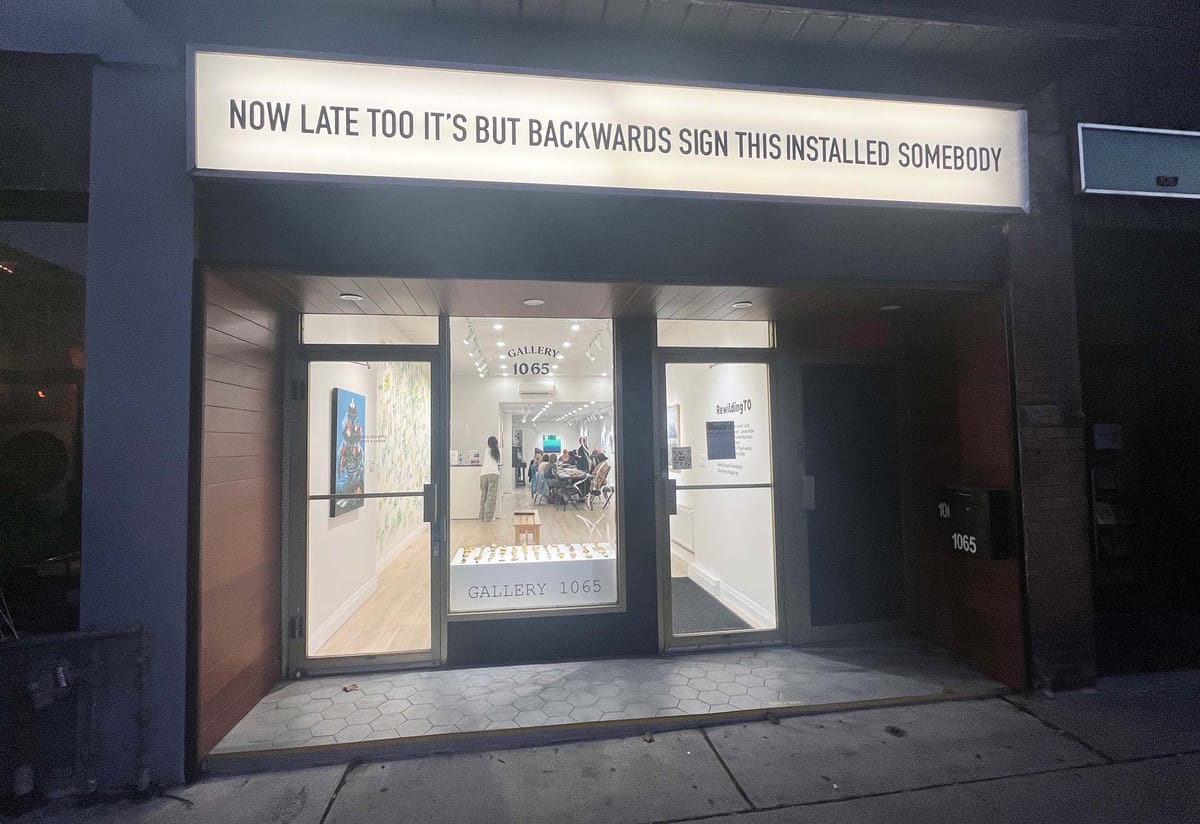
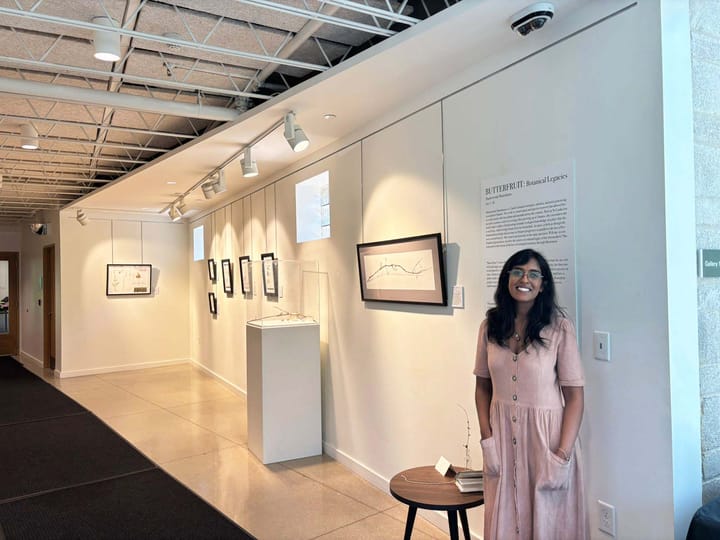
In September, Rewilding Magazine and the David Suzuki Foundation launched a group art exhibition, RewildingTO, in Toronto. Curated by Rewilding Arts Prize winners Hashveenah Manoharan, Amanda McCavour and Cole Swanson, along with Jode Roberts of the David Suzuki Foundation, the show celebrated the connections between art, community and nature.
The front window of Gallery 1065, where the show was held, displayed Melanie Billark’s artwork Gilded Remnants, a collection of plastic garbage that she’s covered in gold leaf.
“There were gold things in the front window – literal shiny things that drew attention,” says Roberts, the manager of the Rewilding Communities Program at the David Suzuki Foundation.
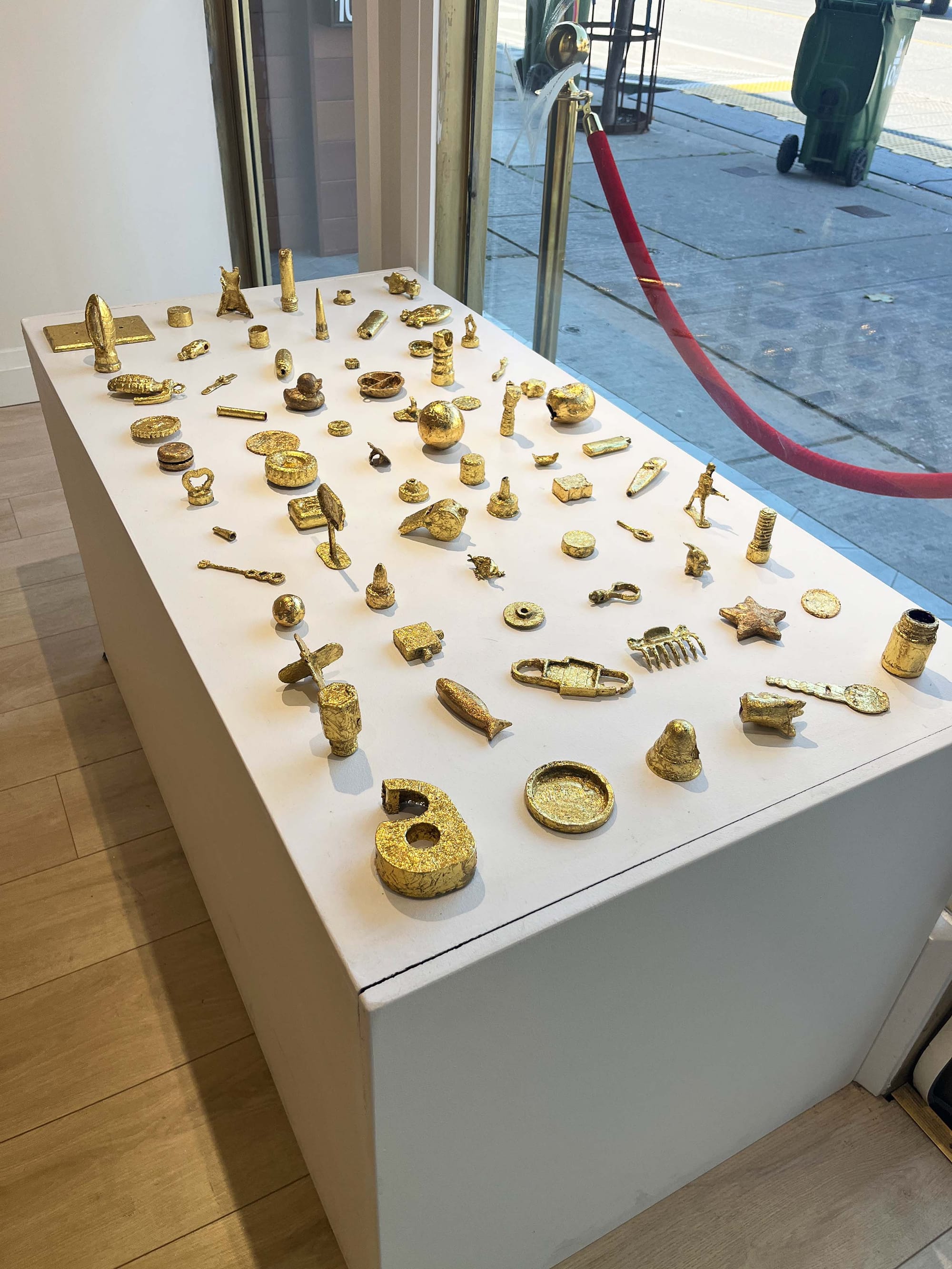
During the run of the show, Roberts says passersby would notice Billark’s piece and come into the gallery to talk to the artists, curators and staff. “The conversation was often about beauty and creativity – about the beauty of whatever it was they were staring at,” says Roberts. But because the artworks are about nature, that’s where the conversations turned to. “It’s a neat way to then unpack conversations about conservation.”
A sculpture, a play, a song – creative works of every kind can draw the average person into discussions about rewilding, opening the doors to getting them to care about the cause.
It takes more than facts to get people to care
“When we come out to a rally or a march for the environment or the climate, I don’t think we do it out of anger – I think we do it out of love,” says Fanconi. “It’s love for our kids and their future. It’s love for a place or a species you want to save. It’s love for the planet. We’re a movement of lovers.”
In other words, people need to move from awareness to concern to love before they’ll start taking action themselves. And facts and figures alone aren’t enough to do that.
“I could rattle off a bunch of statistics, and they may make you feel horrible and sick, but you might be more likely to close your computer than to actually move to action,” says Fanconi. “So what is it that moves us to action? I think it’s about connection.”
Building that connection requires tapping into people’s emotions, which is most effectively done through storytelling. Whether a narrative format like a novel or something less linear like an abstract painting, art evokes strong emotions. “Where art touches people is on a place of core values – their emotional life,” says Fanconi. “That is the seat of change.”
 Alison Tedford Seaweed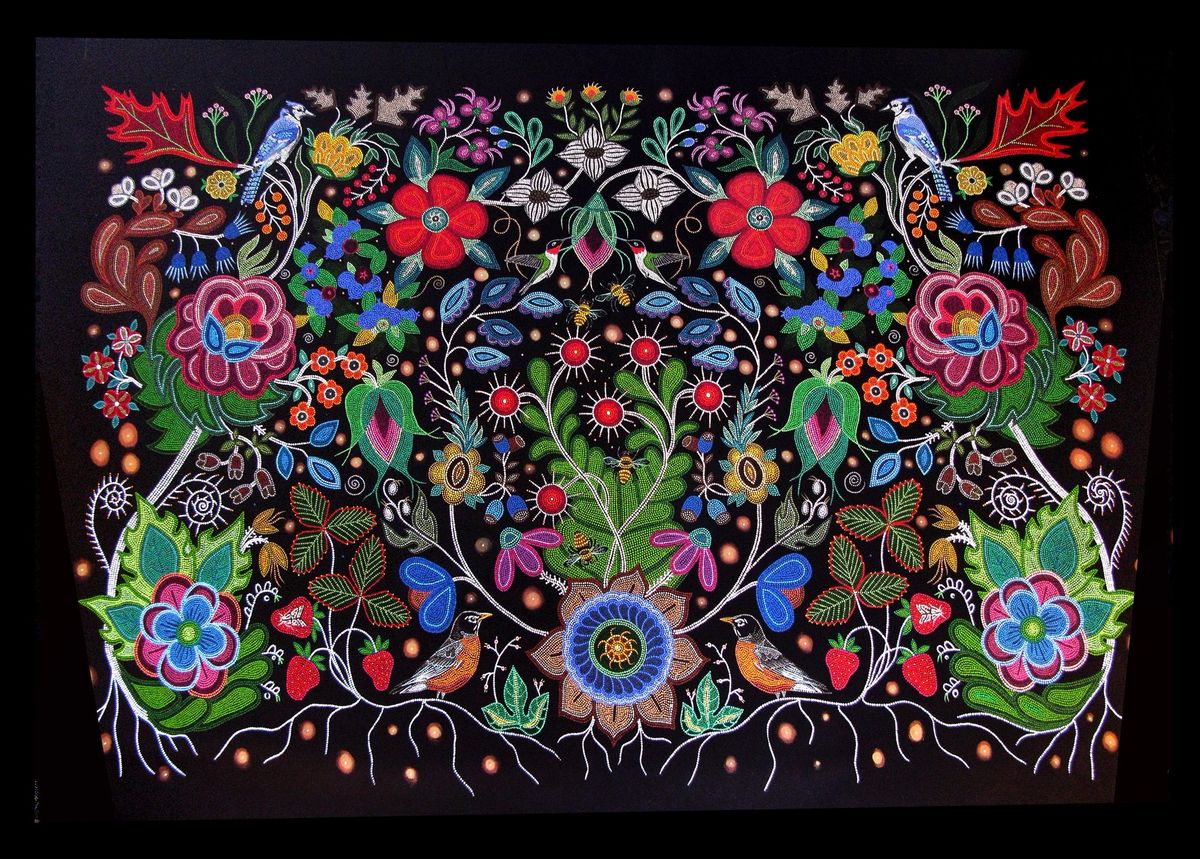
The arts provide inspiration and empowerment
And when people do get involved, the arts can keep them engaged and give them hope.
In October 2019, Fanconi created an artistic intervention for the climate rally in Vancouver. Among the crowd, she and her team distributed 1,000 heart signs – face-sized “analog” emojis for people to raise up to “like” the parts of the speeches they were moved by.
In addition to Greta Thunberg, the speaker lineup included a group of 15 youth activists who were taking the Canadian government to court “to protect their charter and public trust rights from climate change harms.” Fanconi’s signs were intended to give the young speakers, ages seven to 19, courage as they announced their action.
“When the kids came out, and they started the speeches, these hearts went up,” says Fanconi. “The kids exploded into smiles. It was a really beautiful event.”
Fanconi believes the hearts also inspired the speakers to take a hopeful tone. “A number of speakers began to speak extemporaneously, it seemed to me, about the place of love in our movement, in the environmental movement,” she says.
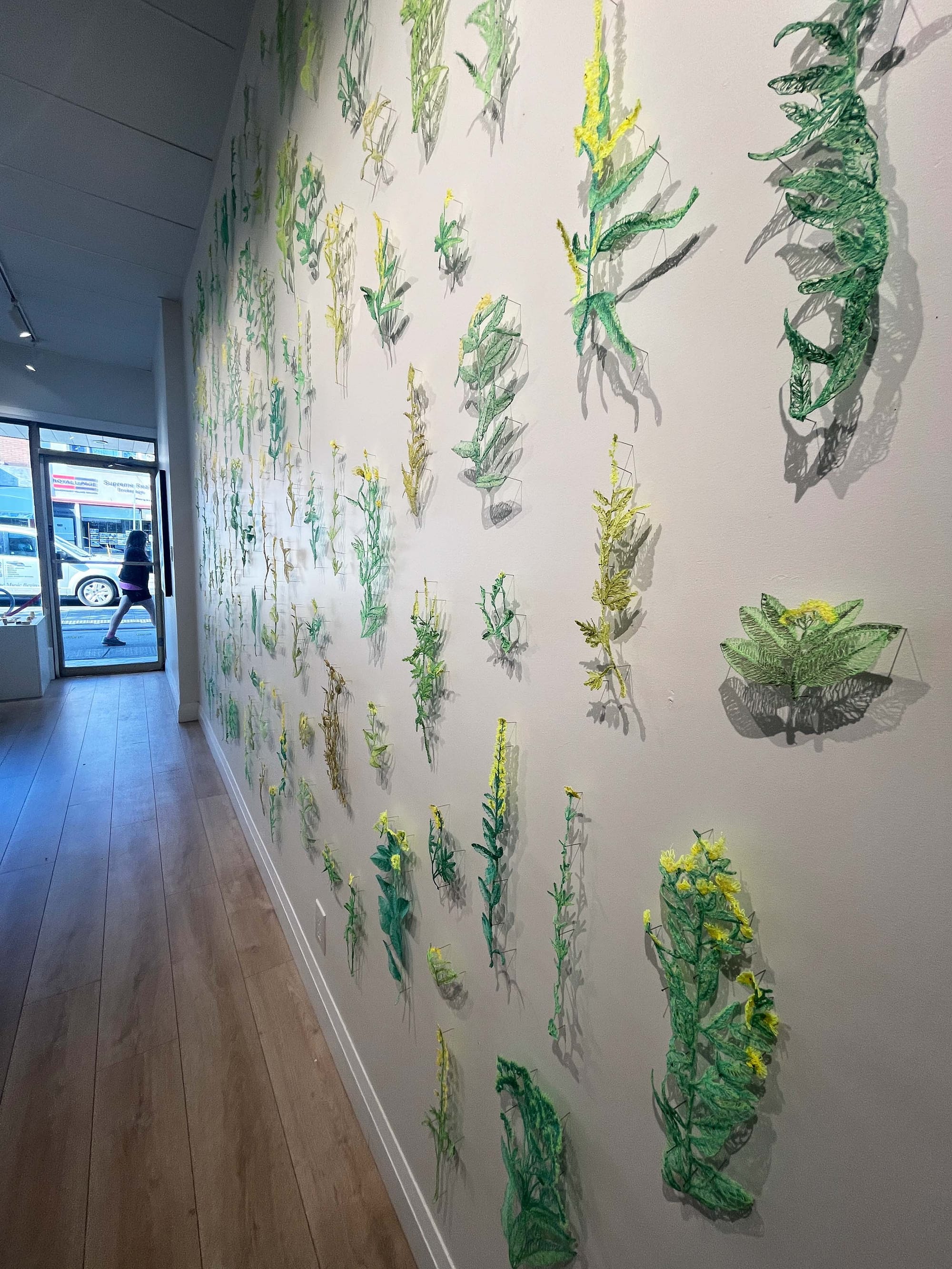
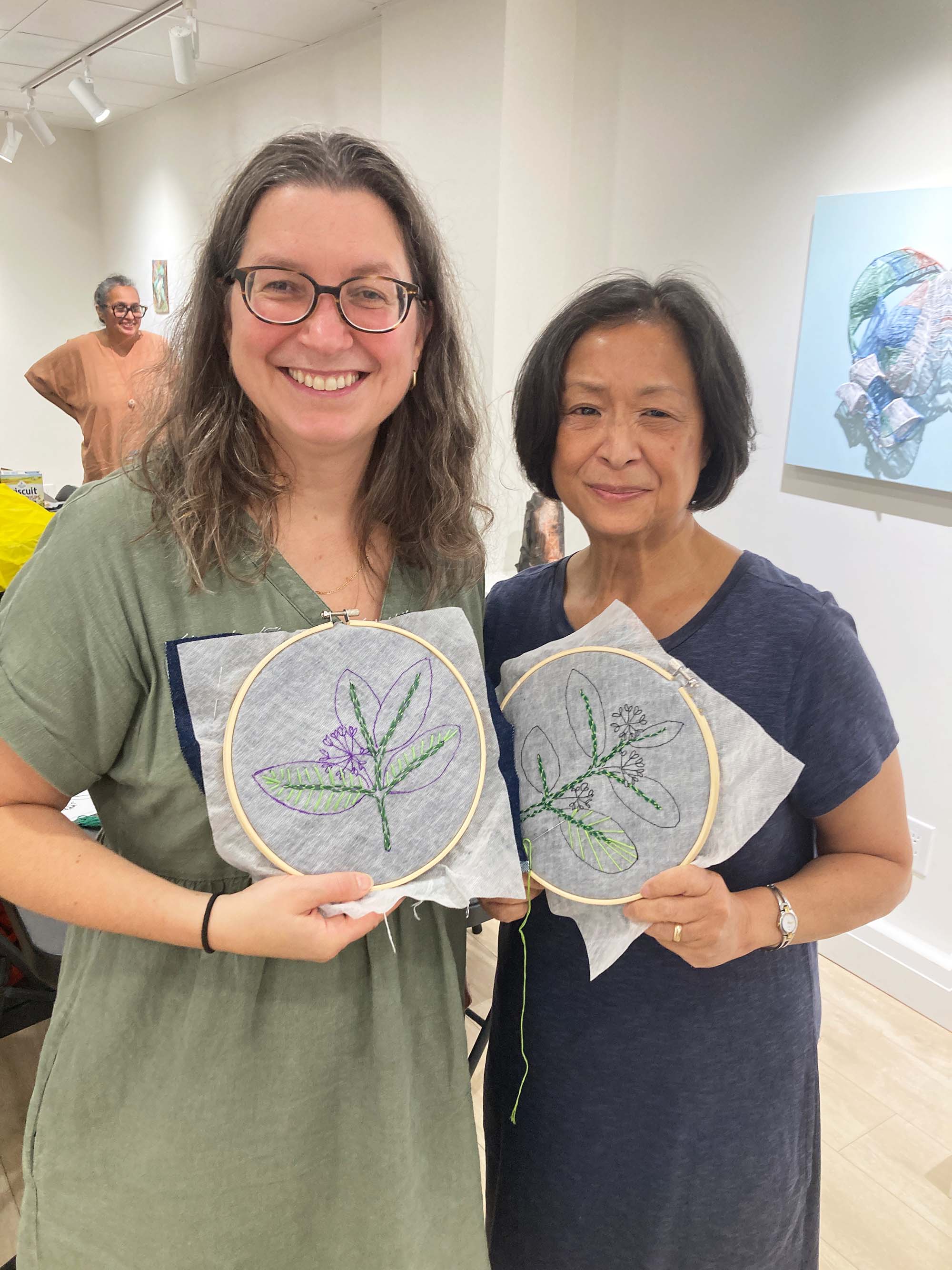
Left: Embroidery by Amanda McCavour displayed at Toronto's Gallery 1065 as part of the fall 2025 RewildingTO exhibit. Right: Participants in an embroidery workshop offered as part of the exhibit. Photos: Jode Roberts.
More art, more connections, more love, more rewilding
“I have faith in community, and I have faith in the brilliance and creativity of all these amazing people that I work with, and that I’m connected to,” says Roberts of the artists he’s met through the Rewilding Arts Prize and Rewilding Arts Collective. “It’s a joy to thread art into conservation work.”
To bring more delight into the rewilding movement, consider this your call to action. Whether you’re a professional artist or performer, an amateur creative, or simply appreciate artistry and craft, it’s time to bring more art into our movement.
Put on a puppet show about bees, invite children to do native-flower crafts at an information booth, host a “crafternoon” to make protest signs. The arts provide an opportunity to engage the public and communicate your message in a way that will get at their hearts and build lifelong champions of rewilding.
Comments ()