

“The most powerful action is patient waiting”
On Sumatra Island in Indonesia, the practice of lubuk larangan balances immediate human needs with the long-term health of riverine ecosystems.
The tea-coloured Kampar River winds through West Sumatra and Riau provinces on Sumatra Island, Indonesia, stretching for about 400 kilometres from the Bukit Barisan mountains to the Malacca Strait. Along its tributaries, residents maintain a traditional ecological practice known as lubuk larangan, literally “forbidden pool.” Here, lubuk refers to deep stretches of the river, often calm pools or bends where fish gather. These sites are collectively protected to safeguard aquatic habitats and ensure the sustainable use of river resources.
“The lubuk are sacred spaces where we must step back and let the river breathe,” says Amri, a ninik mamak (village elder) from Tanjung Belit Village along the Subayang River, one of the Kampar River tributaries. “Our ancestors understood that sometimes the most powerful action is patient waiting.” In the Malay and Minangkabau languages, larangan means prohibition, but the word carries a deeper significance. It speaks of sacred boundaries, of places where human desire yields to natural rhythms.
Village councils, guided by ninik mamak, choose these protected areas through a blend of inherited ecological knowledge and ritual practice. Pools are often designated as lubuk larangan because they serve as critical spawning grounds for fish, or because elders recognize signs of abundance that must be safeguarded. The decision is then affirmed through community ceremonies, linking ecological stewardship with cultural obligation.
Sacred boundaries in modern times
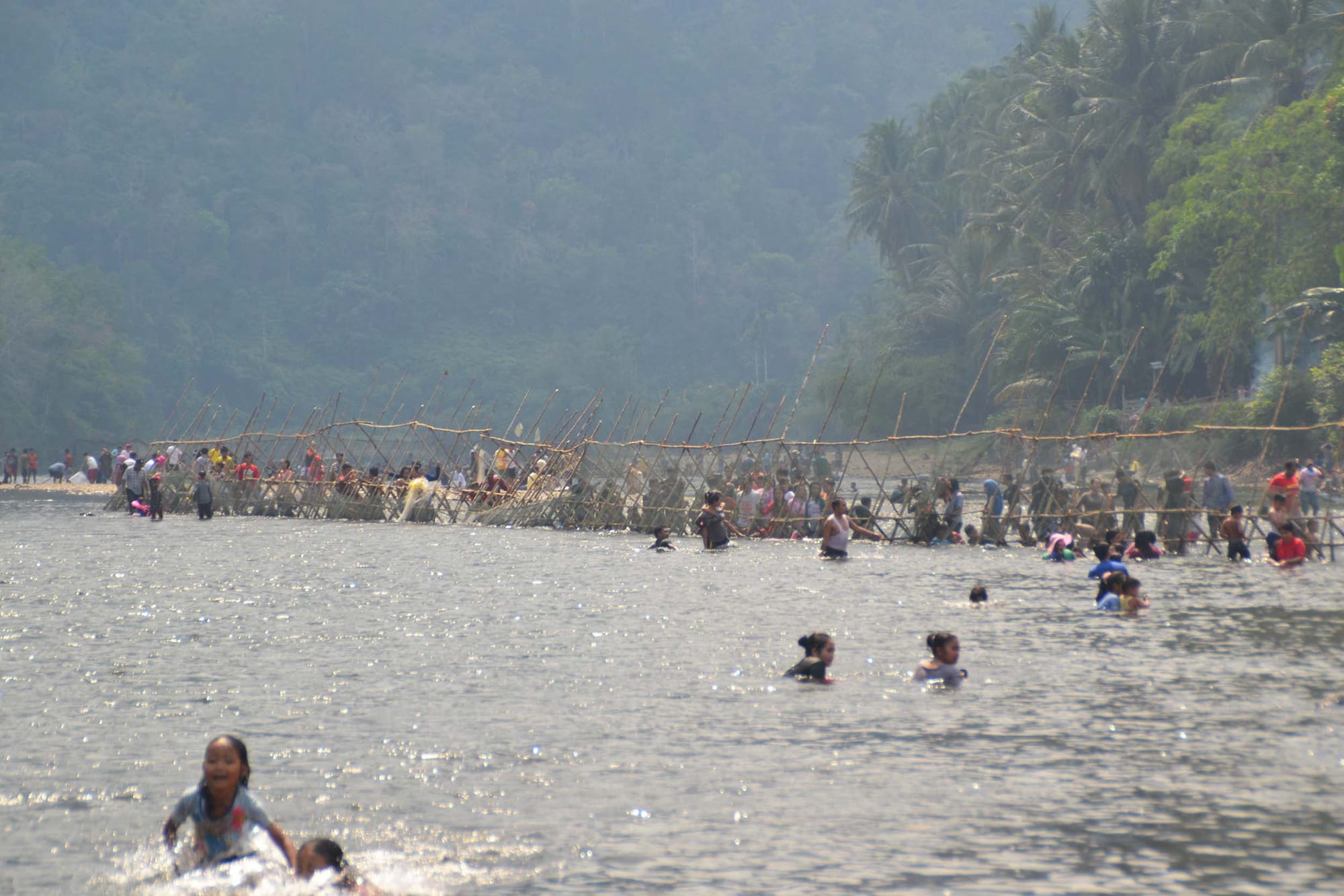
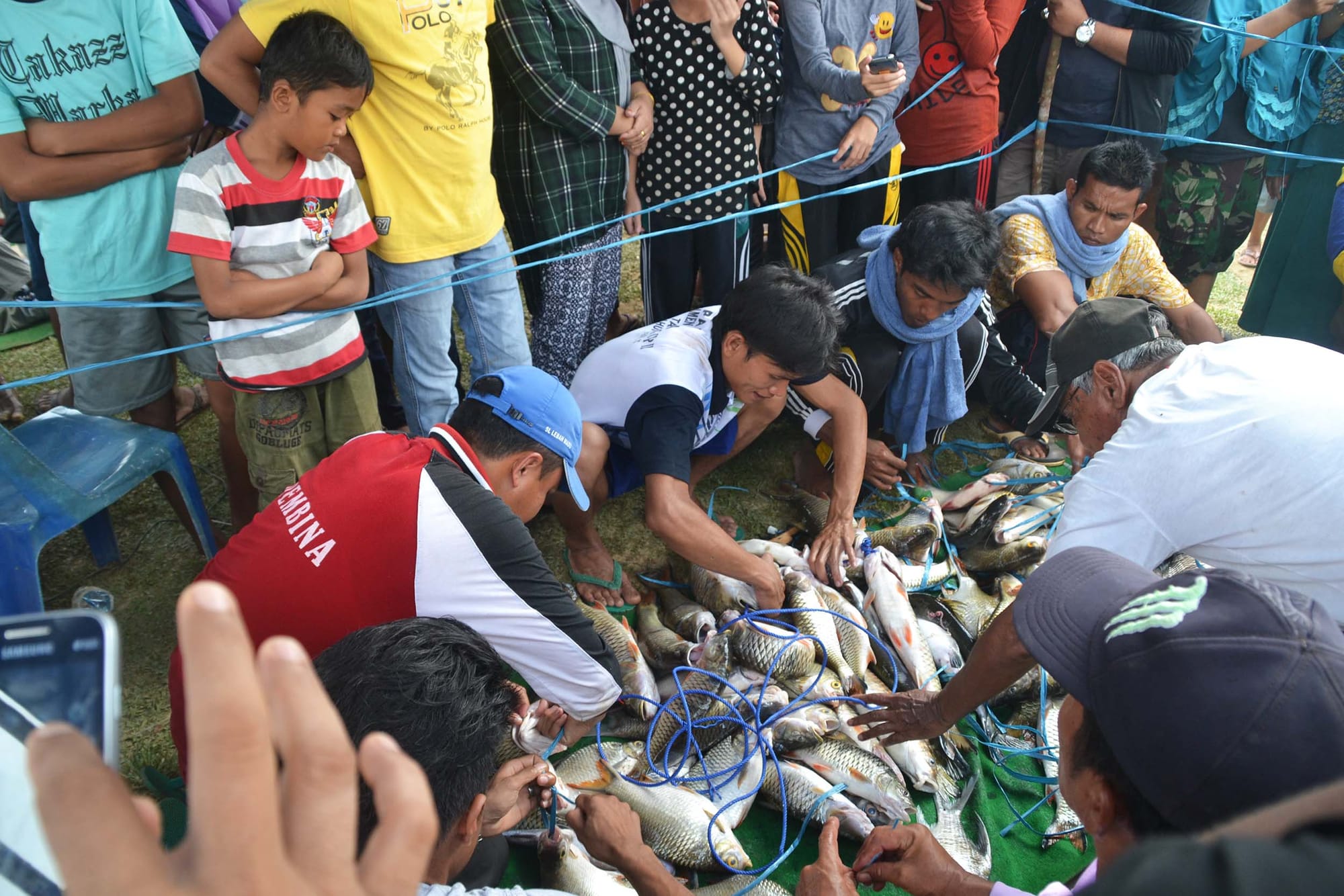
“They know which river bends shelter spawning fish, which confluences provide the safest nurseries,” explains Darmadi, an ecologist from Universitas Riau who has studied these practices for years. “The boundaries exist in memory and custom, enforced through community commitment and, in some places, reinforced by local government regulations, though they are more often recognized as customary practice than codified into formal law.” Each lubuk larangan itself is clearly marked, often with ropes stretched across the river.
Every villager becomes a guardian, watching the pools throughout the year, ensuring the prohibition holds. The system works because it transforms individual restraint into collective identity, reinforced by both adat law and communal belief. In the Subayang River, those who violate the lubuk larangan by fishing outside the agreed harvest season face sanctions decided by the ninik mamak and the community. A common penalty is a fine, such as providing a sack of cement for communal use, alongside other forms of customary restitution.
Beyond material penalties, violators also endure social consequences, namely loss of trust and exclusion from community life. Tradition further strengthens these boundaries through belief in tulah, or curses: that those who eat fish taken illegally may suffer swollen stomachs, illness or even death. To safeguard the sanctity of the pools, elders and villagers hold rituals, such as the communal recitation of Surah Yasin (a key chapter of the Quran) in the mosque, reaffirming both the sacred and social dimensions of the prohibition.
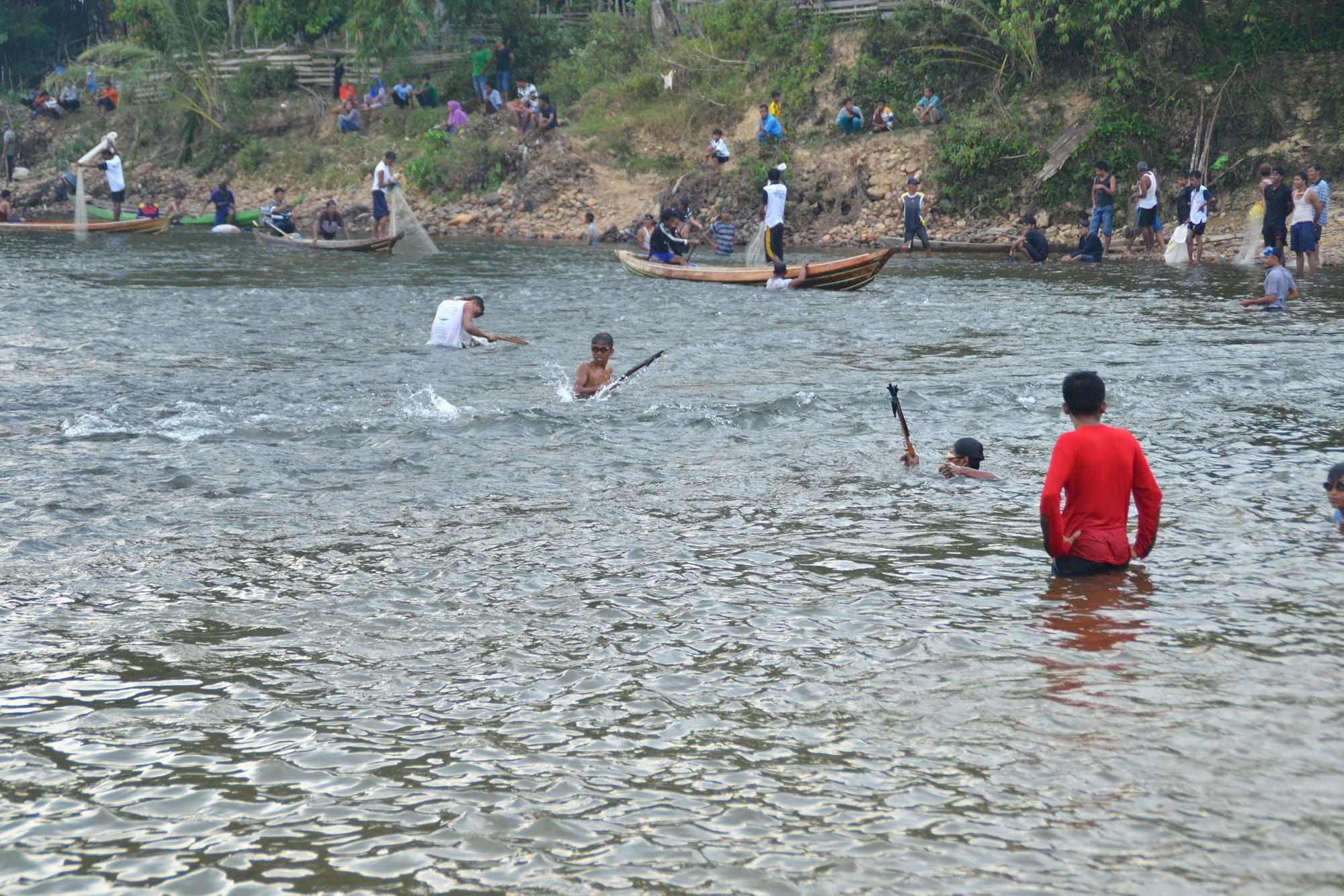
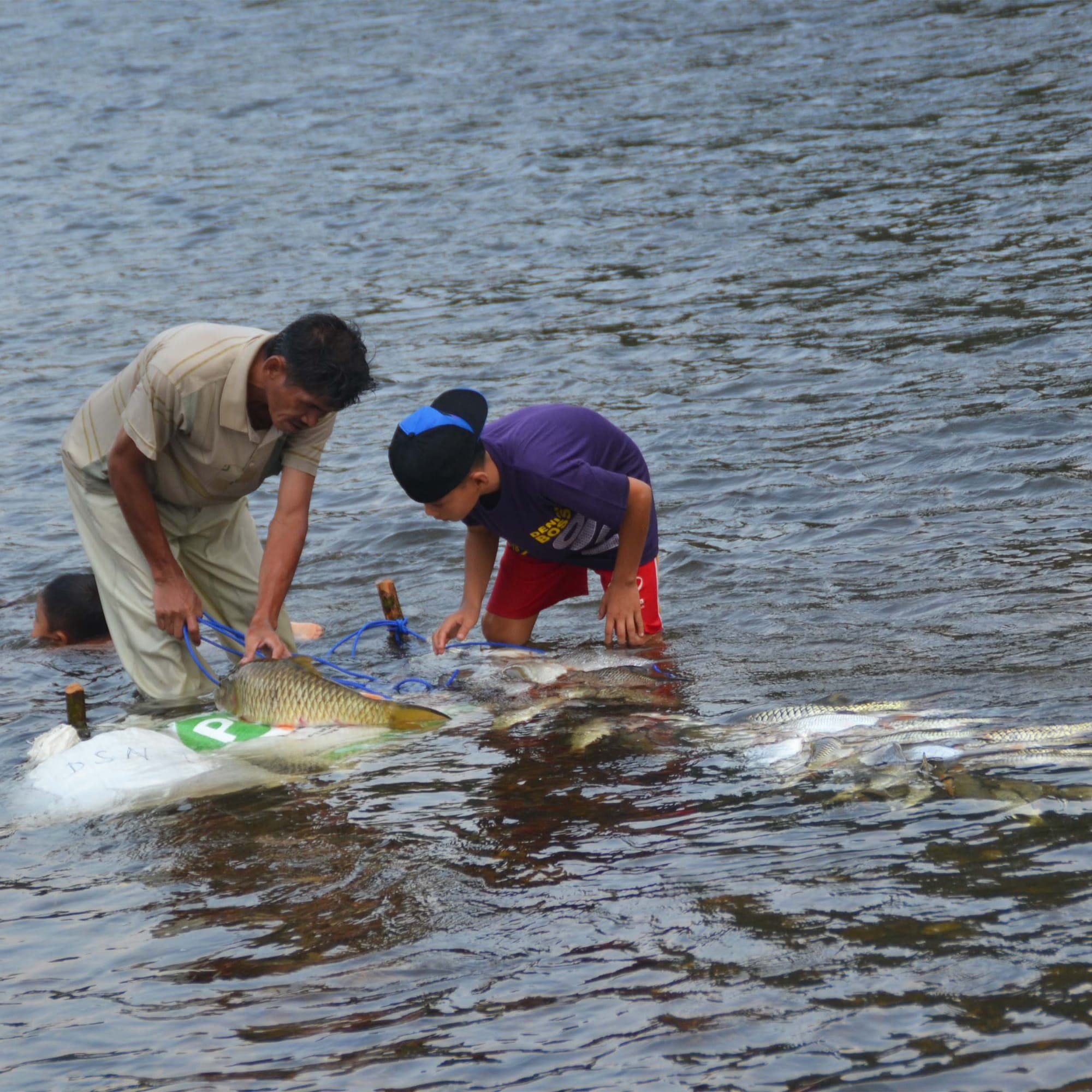
Left: Traditional river fishing methods. Right: Father and son netting fish. Photos: Mohd. Yunus.
Celebration through conservation
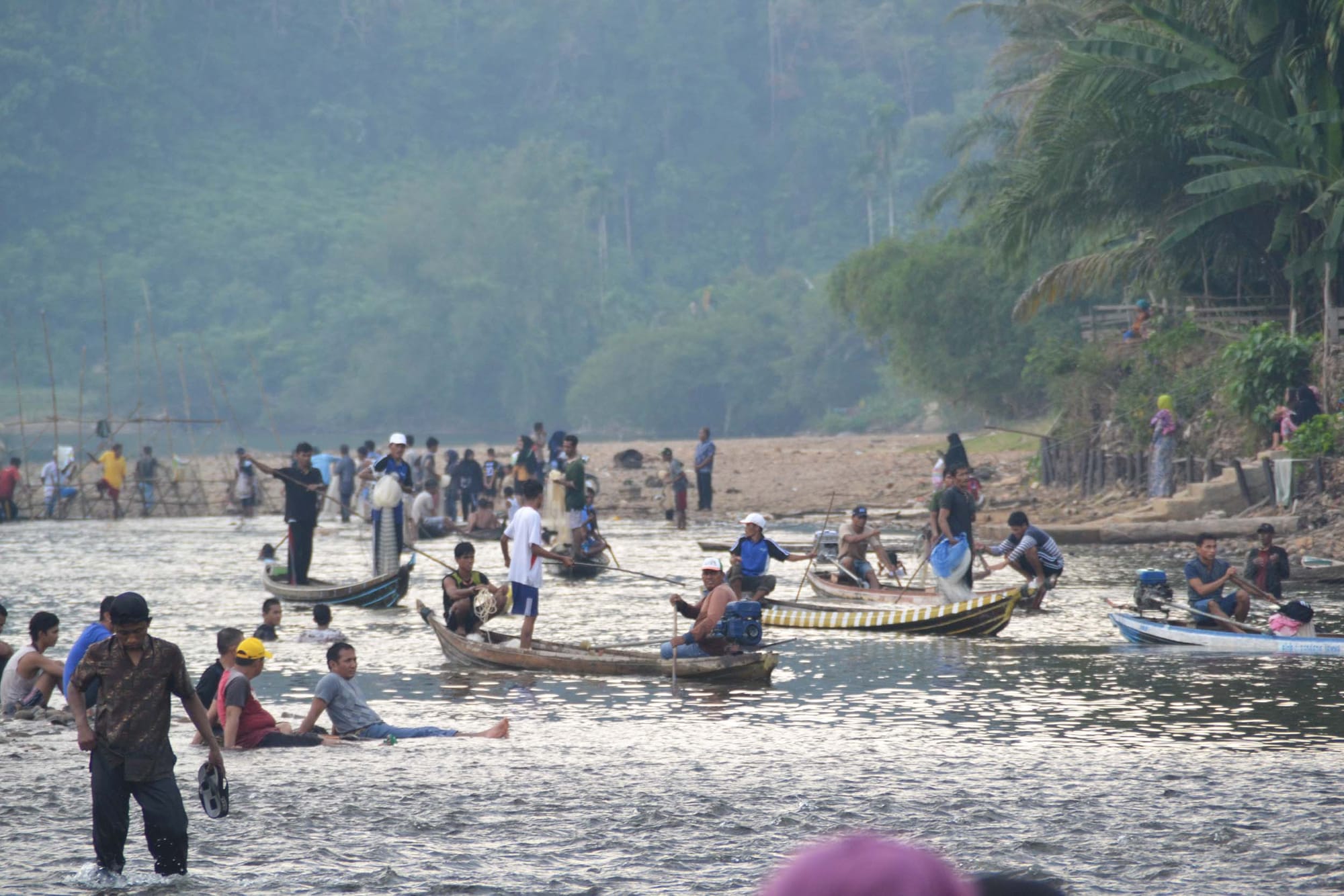
For most of the year, the lubuk larangan remain untouched. No nets disturb the water, no hooks pierce the surface. Then, between July and September, the prohibition lifts. Communities gather for mancokau, the harvest season, transforming restraint into celebration.
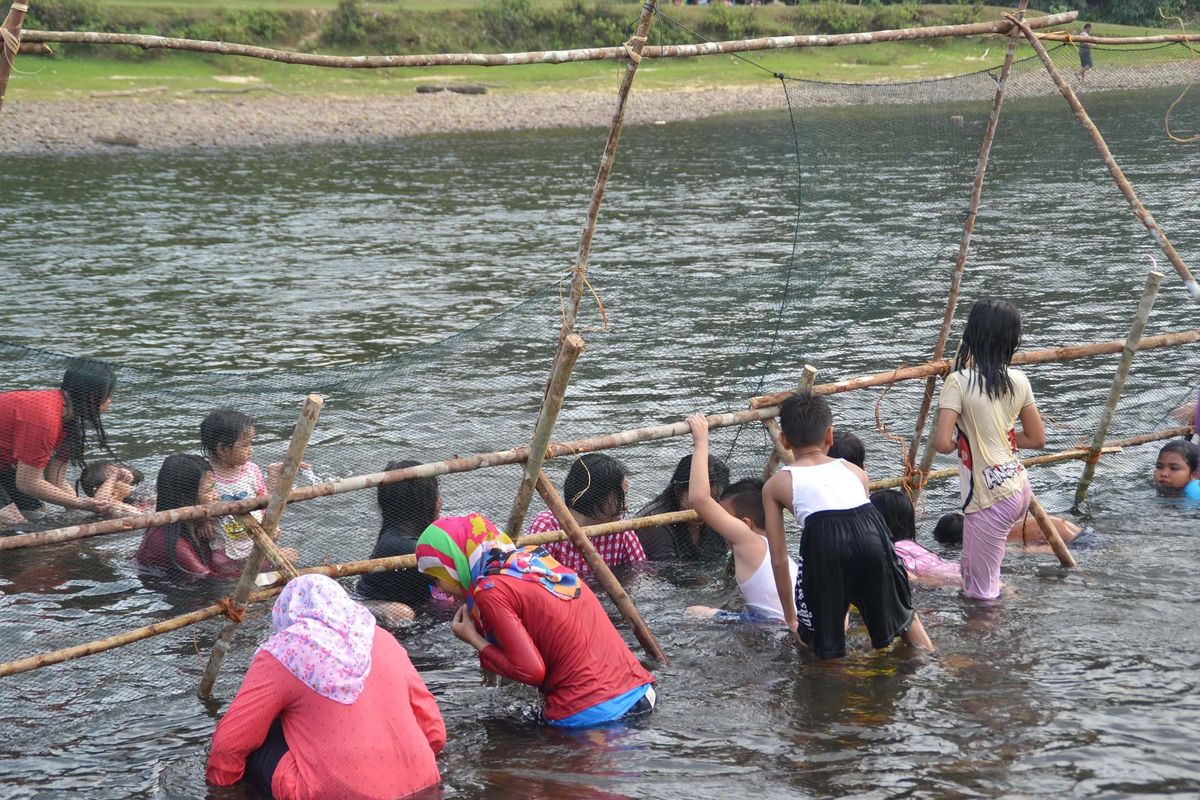
Mancokau is more than just fish harvesting: it is a communal festival that blends tradition, ecology and livelihood. Villagers wade into the river together, often using nets, baskets or their bare hands to catch fish. The event is accompanied by traditional music, shared meals and rituals that honour the river as a life-giving force. Beyond providing food and income, it reaffirms bonds within the community and reminds people of their responsibility as guardians of the river.
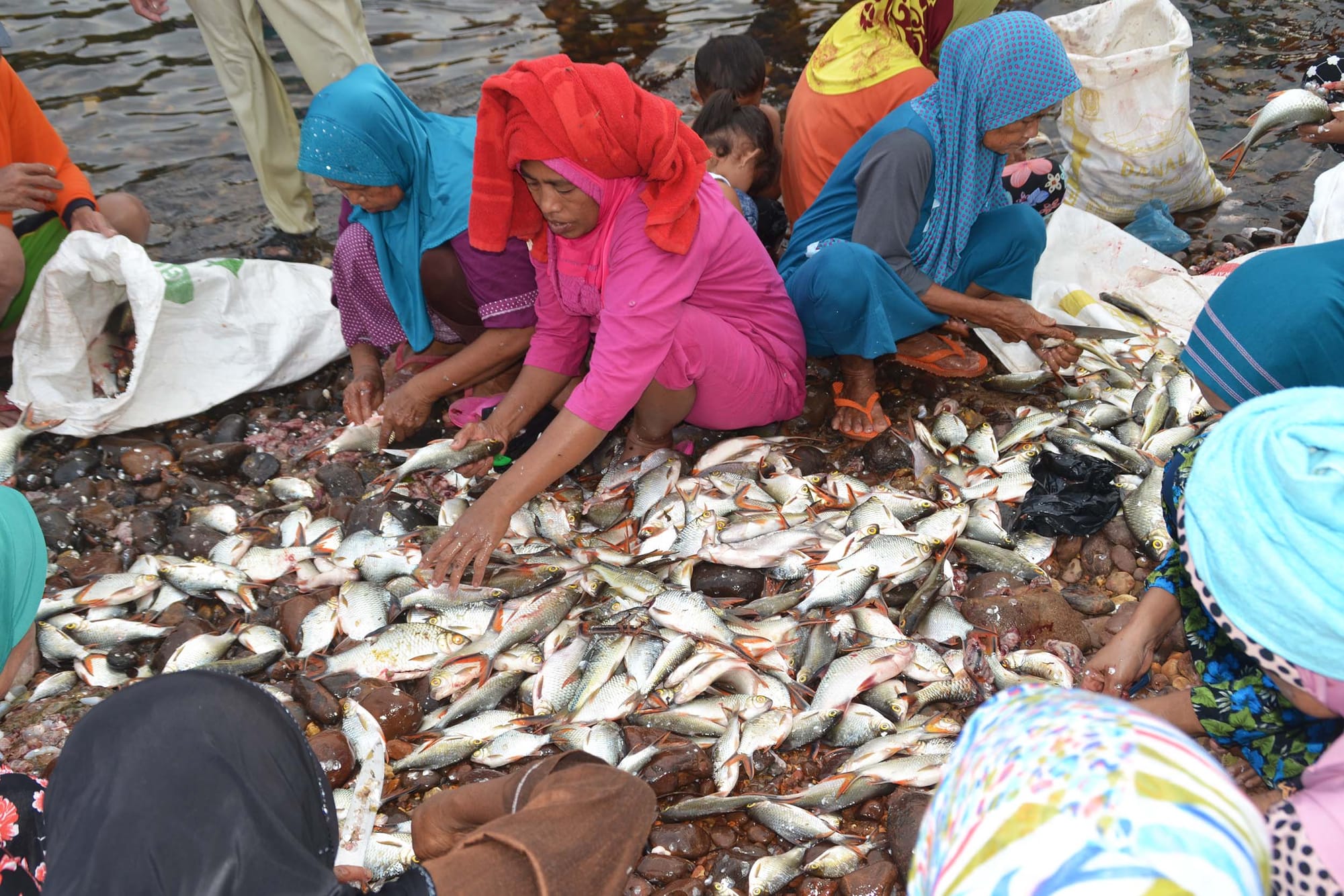
Importantly, not every fish is taken. Rare or small species must be returned to the water, and in some villages, rules specifically protect endangered or culturally significant fish. Larger, common species are typically kept for food or sale, while others are released. This careful balance allows abundance to be celebrated without undermining the long-term health of the ecosystem.
The mancokau event is also crucial for the younger generation, as it passes down ancestral ecological knowledge in a living, practical way. “The children learn by watching,” Amri explains. “They see that when the river is left alone, it restores itself and provides abundance. This simple act becomes their deepest lesson about how humans and nature can thrive together.”
 Adam Robertson Charlton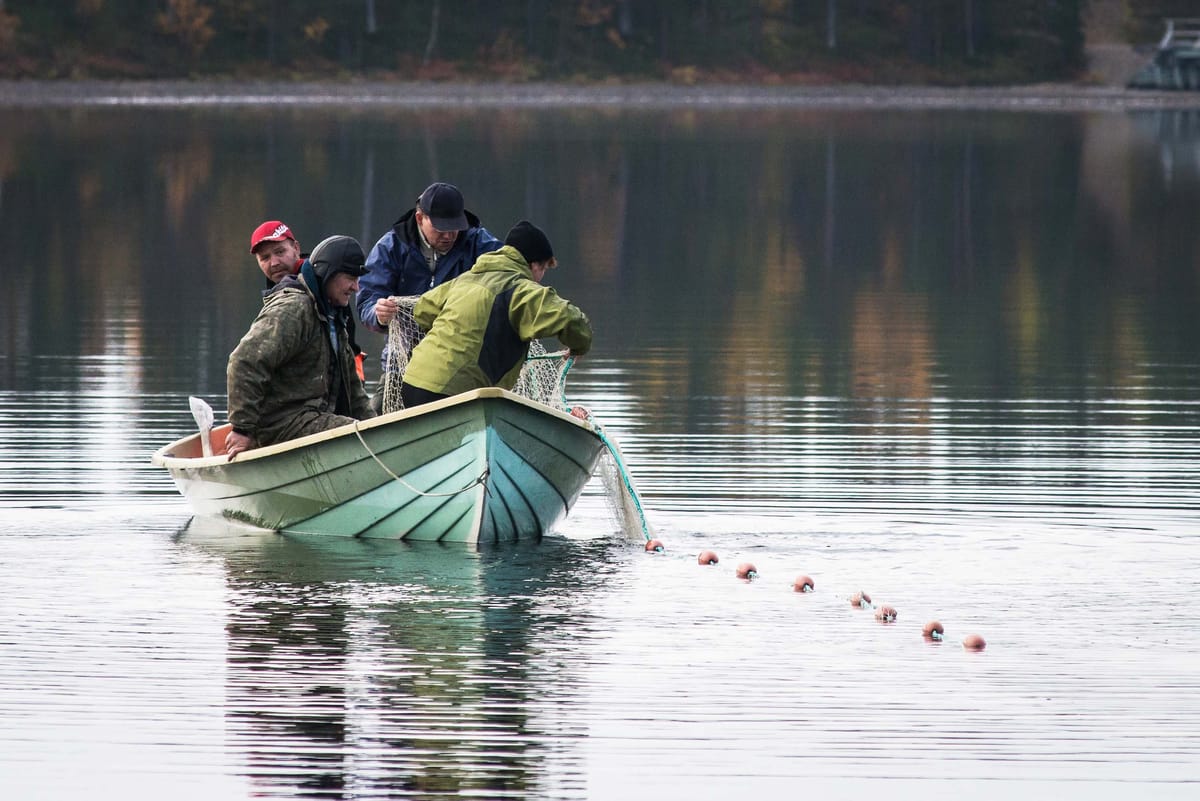
A freshwater crisis
The importance of ancient practices such as these becomes stark against global environmental collapse. Freshwater ecosystems face massive threats worldwide. According to the World Wildlife Fund, freshwater fish populations have declined by 84 percent since 1970. Rivers and lakes contain less than 3 percent of the planet’s water while supporting nearly half of all fish species.
The situation in Indonesia mirrors this global crisis. The archipelago’s thousands of waterways once teemed with diverse freshwater species, but decades of industrial development have left many rivers barren. Dam construction fragments watersheds, commercial land expansion destroys riparian forests, mining operations poison sediments, and urban pollution creates dead zones where nothing survives.
The Kampar River itself bears these scars. Peatland fires have darkened its waters with ash and carbon, while agricultural runoff creates algal blooms that suffocate aquatic life. In such degraded landscapes, lubuk larangan represents something precious and rare, proof that rivers can heal when given the chance.
Beyond simple regulation
Lubuk larangan demonstrates how people and ecosystems can thrive together. This tradition shows that effective protection requires belief, ritual and shared identity. Technical regulations alone cannot create the deep commitment that conservation demands.
Unlike modern hatchery programs, lubuk larangan relies primarily on natural recovery, but this does not mean villagers are passive. Many communities actively strengthen the pools’ resilience by restoring riparian vegetation, patrolling against destructive fishing or collaborating with NGOs to restock depleted species. In this way, restraint is complemented by stewardship, blending ancestral wisdom with contemporary conservation techniques.
The protected pools also generate village income that makes conservation financially viable. In the case of the lubuk larangan in Subayang River, the harvest is managed collectively and directed toward shared community needs. After each harvest, the fish catch is typically distributed evenly among local households, while a portion is sold or auctioned to raise funds. The proceeds are then allocated to support public infrastructure such as building or maintaining mosques, repairing roads and constructing bridges. Here, the sacred and the practical go hand in hand. Rituals safeguard the pools, while shared benefits ensure commitment to their survival.
Rewilding through restraint
Lubuk larangan tells a quieter story of rewilding. Here, rewilding happens not through large-scale intervention but through communities agreeing to limit their activities so natural processes can resume. The pools become refuges where fish populations can recover their abundance and diversity, while selective harvest and active care keep the system resilient.
This approach requires no satellites, quotas or sophisticated monitoring systems. It depends instead on social trust, cultural transmission and the willingness of communities to delay gratification for long-term benefits. The restraint becomes meaningful because it connects to identity, ritual and shared values that extend far beyond environmental protection.
The designated areas function as core protected zones within river systems. Fish populations that recover in these sanctuaries then spread throughout connected waterways, benefiting entire watersheds. The practice creates natural seed banks that can repopulate degraded areas when conditions improve.
Unlike top-down conservation imposed by external authorities, lubuk larangan emerges from traditional knowledge systems that have evolved over centuries alongside local ecosystems. Communities establish rules, timing and penalties through customary law, creating ownership and commitment that external regulations rarely achieve. Partnerships with NGOs or local governments may provide additional support, but the heart of the practice remains local.
 Kat Tancock
Challenging development assumptions
The success of lubuk larangan also challenges common assumptions about economic development. Policymakers often present environmental protection as incompatible with growth, arguing that conservation restricts economic opportunities for poor communities.
Yet lubuk larangan proves that restraint can create abundance. Patient stewardship often produces better outcomes than aggressive extraction. By combining ecological wisdom, cultural obligation and collective benefit, communities show that protection and prosperity can reinforce each other.
International development organizations increasingly recognize community-based conservation as essential for protecting global biodiversity, but adapting such practices across different regions remains challenging. What works along Sumatran rivers may not translate directly to African lakes or European streams, where ecology, culture and economics follow different patterns. For example, Indonesia’s lubuk larangan depends not only on species that rebound quickly in tropical river systems, but also on local traditions of collective decision-making and taboos that give such rules social authority. In places without comparable ecological conditions or cultural institutions, replicating this model proves far more difficult.
However, the underlying principles remain relevant everywhere: sustainable conservation requires collective commitment, cultural systems that reward patience, and local ownership of environmental stewardship. These elements cannot be imposed from outside but must grow from within communities themselves.
The future of lubuk larangan
At the close of each harvest season, families return home with baskets heavy with fish, following paths their ancestors have walked for generations. The pools stand empty again, preparing for another cycle of protection and renewal. Children who participated in the festival carry forward lessons about patience, community and the rewards of collective restraint.
The rivers themselves hold memory of these practices, their ecosystems shaped by centuries of human wisdom that recognizes natural limits and works within them. Yet as development pressures intensify across Indonesia, these traditional conservation systems face growing threats from those who see rivers as resources to exploit rather than communities to nurture. With industrial expansion accelerating, the survival of lubuk larangan is increasingly uncertain, raising urgent questions about whether these cultural traditions can withstand the pressures of modern economies.
Yet the fundamental insight of lubuk larangan endures: sometimes, the most powerful way to help nature heal involves stepping back and waiting, while also knowing when careful human guidance can strengthen resilience. The most effective conservation technology may require no machinery at all, only communities wise enough to know when restraint serves abundance better than extraction.
In a world facing environmental collapse, the lubuk larangan offer hope through humility, showing that recovery remains possible when communities commit to patience, place their trust in natural processes and find ways to make waiting meaningful. The ancient practice suggests that rewilding might begin with human communities learning once again to live as part of the ecosystems that sustain them.
“The rivers remember how to live,” Amri reflects, watching late-afternoon light shift across the Kampar’s surface. “The question becomes whether we remember how to let them.”






Comments ()