

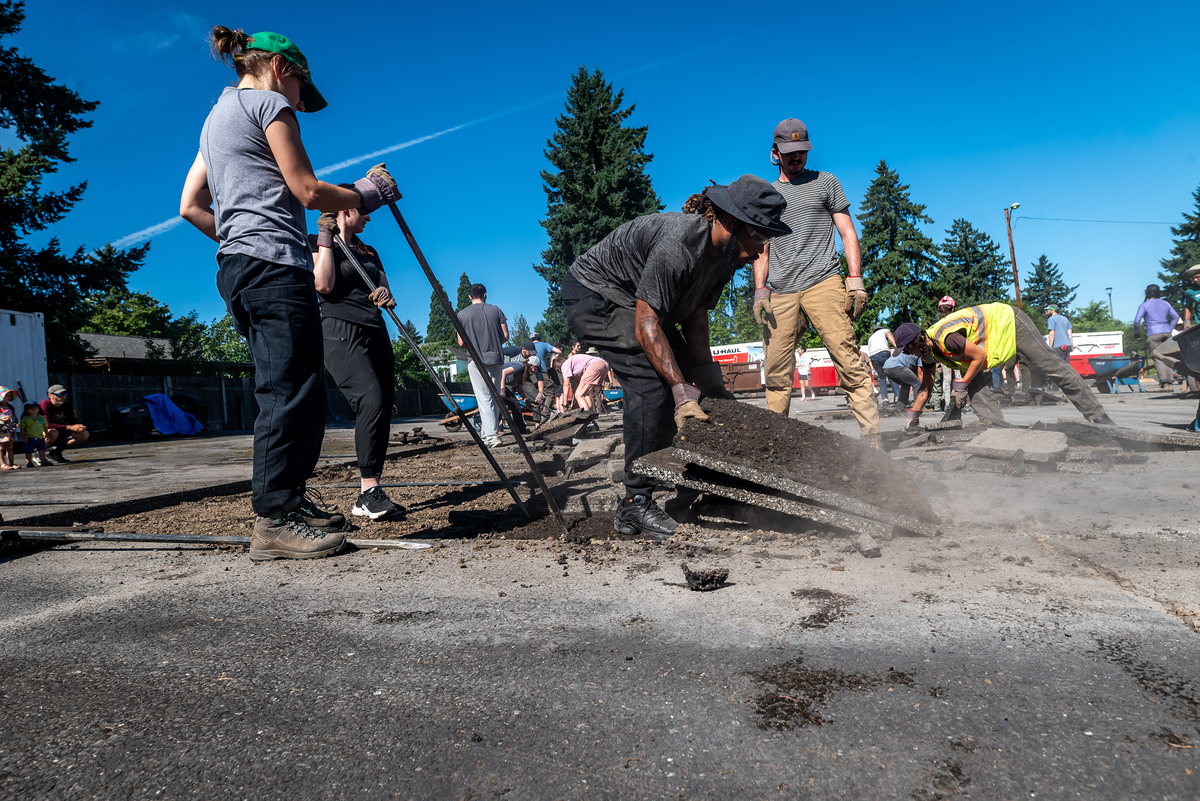
These forward-thinking organizations have depaved parking lots – and turned them into paradise.
It took two years, but finally, in 2025, Jean Norwood’s dream of turning the parking lot at Morningstar Missionary Baptist Church in Portland, Oregon, into a play area for children and a food garden with fruit trees came true. Working with Norwood to bring her vision to reality was DePave Portland. Since 2008, the Portland-based nonprofit has been digging up paved surfaces, freeing the trapped soil underneath and regreening the newly reclaimed space.
There are an estimated 2 billion parking places in the United States, an area comparable in size to the entire state of Vermont. That figure does not include sidewalks, schoolyards or other paved surfaces, which, along with car parks, trap heat, intensifying the urban heat island effect in some cases by up to 10 degrees Fahrenheit compared with surrounding areas. “Asphalt makes your space hotter in the summertime, and colder in the wintertime,” Norwood says.
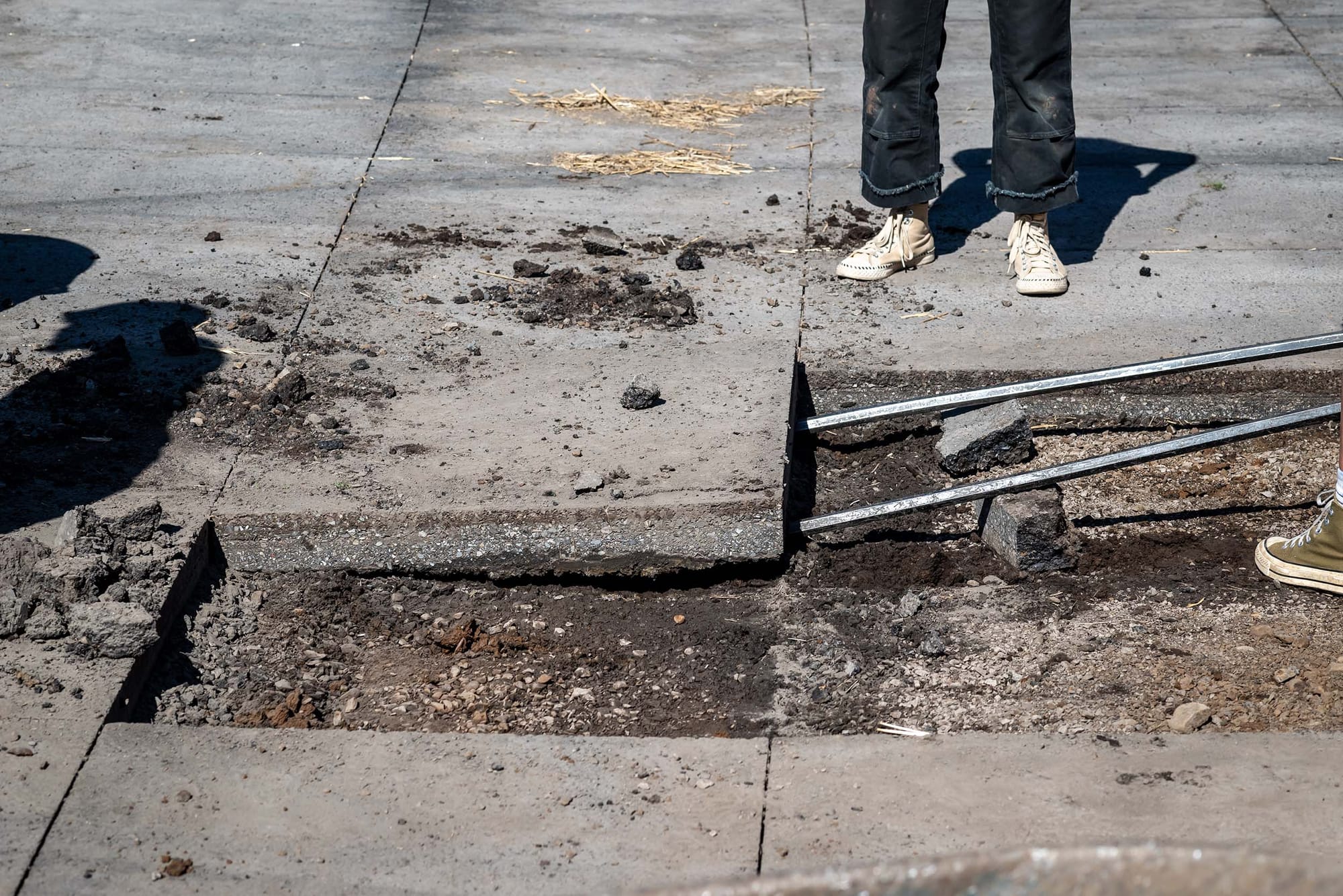
When asphalt is removed and the soil beneath is exposed, those dynamics begin to reverse. The ground can absorb and store carbon, and rainwater is able to filter into the soil rather than running off into sewers. Trees and gardens can be planted that provide shade and a habitat is created for birds, insects and other wildlife.
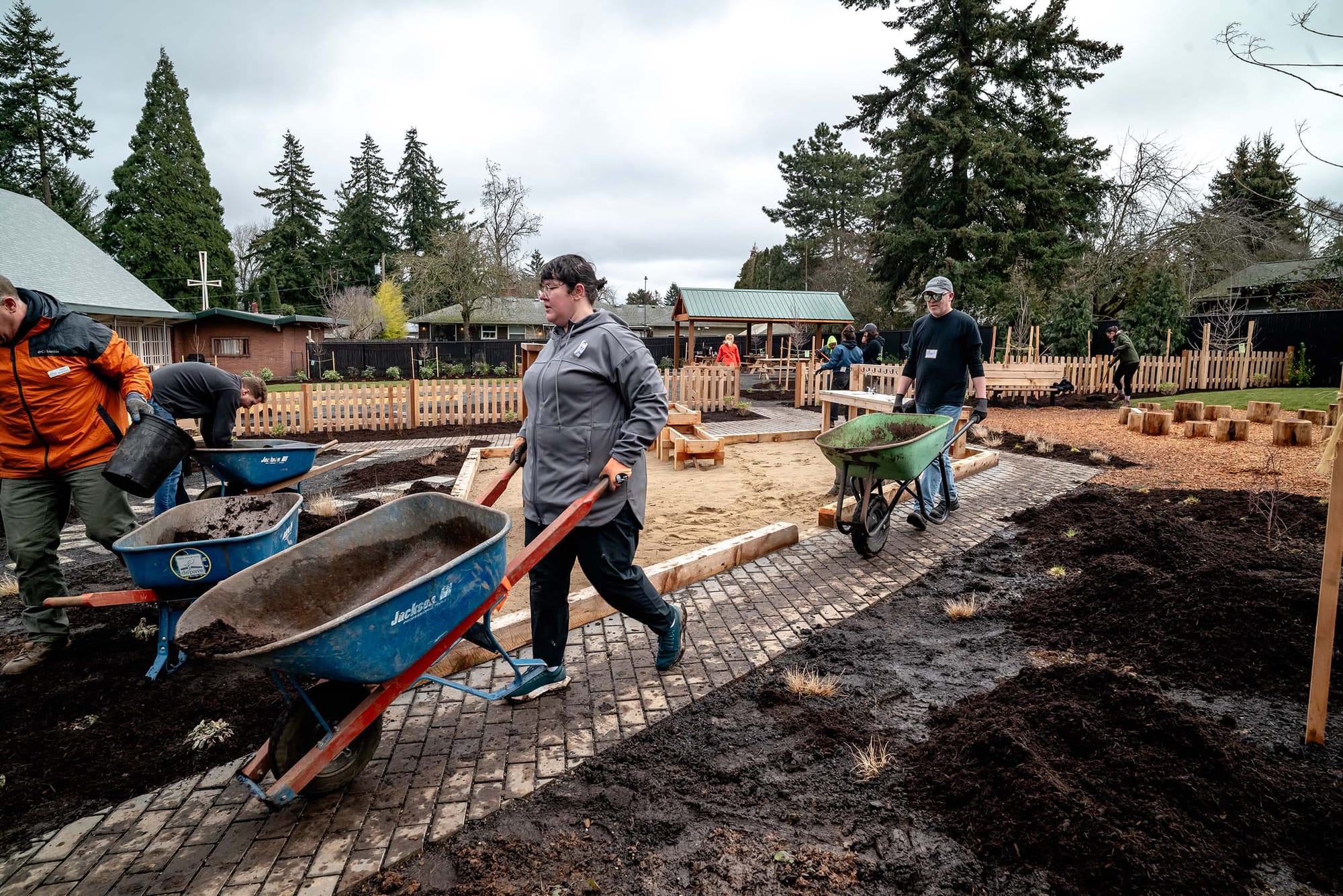
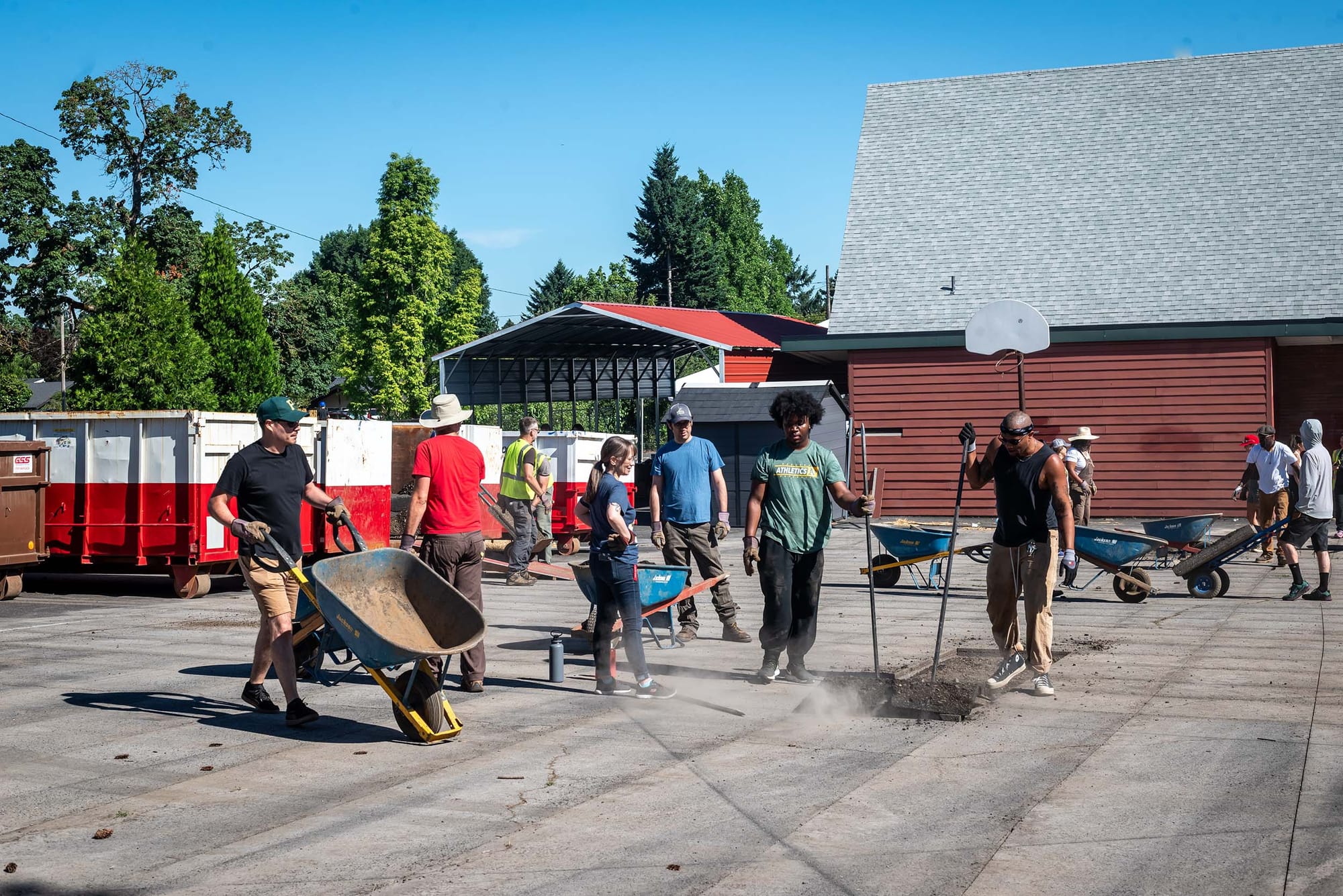
This was Norwood’s dream for the parking lot at Morningstar. Going from concrete to fruit trees, though, takes patience. “First,” she says, “there was about six months of planning and submitting requests for permitting.” DePave guided Norwood and the church through all of it, even seeking out grants to help cover costs. When it came time to depave the parking lot, volunteers recruited by DePave used crowbars, shovels, bare hands and wheelbarrows to lift out the pavement and daylight the soil beneath. DePave also worked with Morningstar on finding contractors to build the play area and raised garden beds, and on choosing the plants for each newly regreened space. It’s a process DePave has perfected at more than 82 sites across Portland.
DePave Portland’s beginnings
It all started, according to Malena Marvin, DePave Portland’s executive director, when two friends living with paved yards decided to help each other remove the asphalt and transform their spaces into gardens. Encouraged by their success, they began thinking about the benefits of depaving other areas. DePave Portland was founded to offer hands-on volunteer support and practical guidance to anyone interested in reclaiming paved spaces throughout the city. “Word travels fast when you create a green space,” says Marvin. It’s this word-of-mouth approach that led the Rosewood Initiative in East Portland to discover DePave.
Founded to bring equity to East Portland, an area that has traditionally faced systemic disadvantages in community green space and access to healthy food, Rosewood is currently converting a three-quarter-acre plot connected to their community centre into a public-access food forest.
 Ray Mwareya
“The issue with the food forest,” says Corey Pierson, community garden project manager, “is that it is really shaded in there.” Hoping to grow vegetables such as tomatoes, which need a lot of sun, the group turned their focus toward their sunny parking lot area. They, as Norwood did, dreamt of getting rid of the impervious surface. “I kind of asked around and found that there’s an organization that does that,” Pierson says. “I probably would have doubled the steps without them, because this is just what they do.”
In the fall of 2025, over 2,000 square feet of the parking lot was removed. For Pierson, the most direct benefit to the ecosystem has been the reduction of stormwater runoff.
Hard surfaces such as driveways and car parks block water from filtering into the soil. By removing the pavement, soils can soak up rainwater, which in turn aids in recharging groundwater supplies. It’s this kind of immediate, measurable change, along with the inspiration of watching a paved space come back to life, that has propelled DePave onto the global stage.
A network of depavers
“The city of Portland and the communities around Portland have grown the movement and made it very vibrant,” says Marvin, “and it has become an epicentre that has caught attention from people who are like-minded doing similar types of projects around North America, but also, frankly, the world.” As the heart of the growing network, DePave Portland connects groups and helps them grow and learn from one another.
Among the groups inspired by DePave’s model is Green Communities Canada, a community-based climate action movement. They joined the DePave network in 2012 as DePave Paradise after seeing the program’s success in Oregon. Over the past decade, more than 80 depave projects in 32 Canadian cities have transformed over 17,000 square feet of underused pavement into community green spaces.
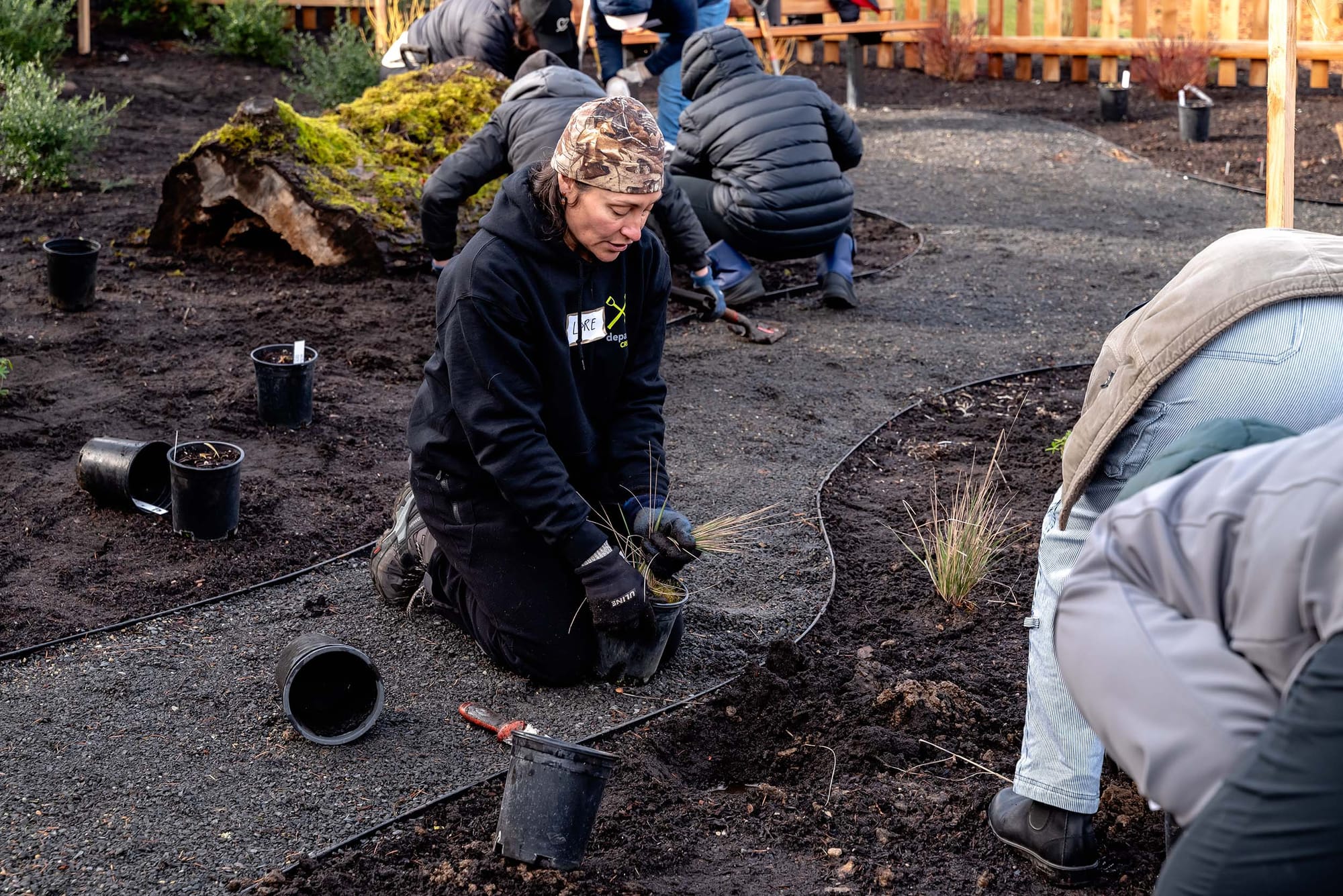
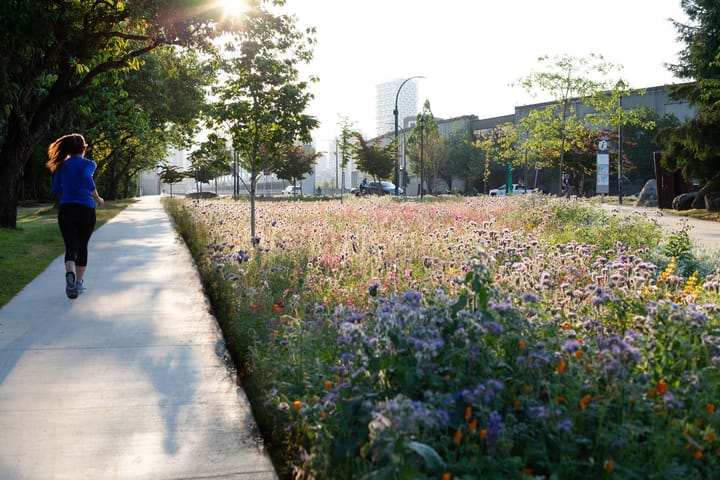
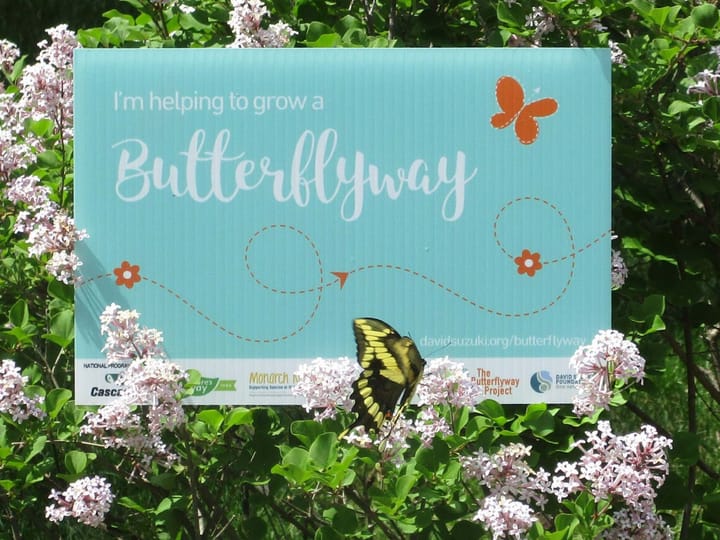
One of those projects took place in 2021 and 2022 at Seaside Park in Saint John, New Brunswick. A deteriorating asphalt walkway was removed and replaced with more than 200 native wildflowers, including asters, milkweed, bee balm and irises. The transformation was so successful that the David Suzuki Foundation recognized the site as part of its Butterflyway Project, a volunteer-led initiative creating habitat for bees and butterflies across Canada.
In the UK, Stropshire Wildlife Trust has also been inspired by DePave Portland’s approach. Framing depaving as something that should be cheap, easy, accessible and adaptable to almost any setting, the group encourages people to look close to home for opportunities to remove sealed surfaces. Patio pavers, for example, can be lifted and replaced with a tree, shrub or small pollinator garden. As part of this approach, the trust has compiled a list of questions to ask yourself before starting a depave project:
- What will the space be used for?
Will it be a food garden, food forest, children’s space, a small pocket forest or a small backyard garden? How people will be using the space will shape the design. - Who owns the space?
Public spaces usually require city or municipal permits. Private property may not. Know who controls the land before digging. - Who will manage the space?
Norwood admits to having had a difficult time finding volunteers to come water the gardens at Morningstar when it’s hot. Have a maintenance plan in place before starting the project. - What will you plant once the asphalt is removed?
Choose plants native to your area that match the size, sunlight, and water conditions of the space. If the space does not have immediate access to water, consider drought-tolerant plants.
 Lorraine Johnson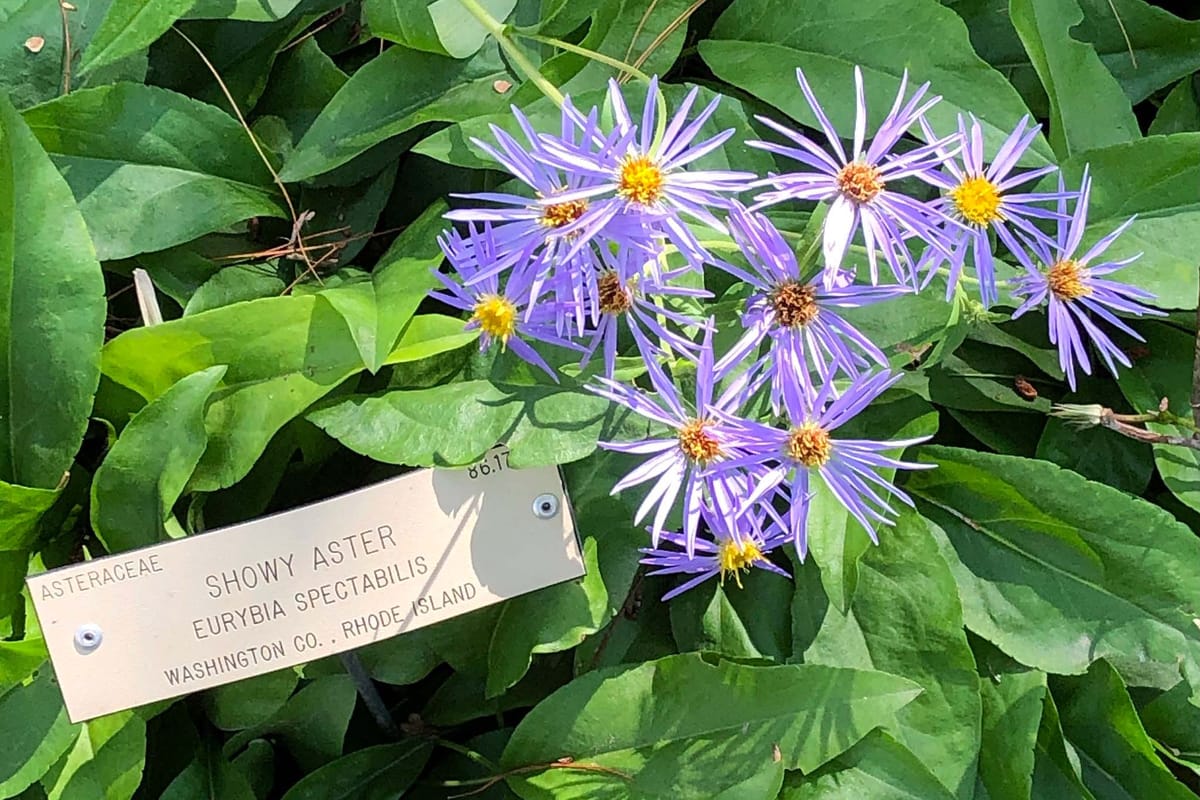
Once you and your group have an idea of the scope of your project, Marvin recommends registering on DePave Portland’s website for their quarterly how-to webinars. They will guide prospective depavers through the process, which Marvin believes is much more than just restoring green space and cooling urban areas.
“When we get people together with prybars and wheelbarrows and they show up on a Saturday and transform a parking lot into a space that will become a flourishing garden or green space, I think we give people the opportunity to feel like they can literally change the world.”
Main image: A depaving party at Morningstar Missionary Baptist Church in Portland, Oregon. Photo: DePave Portland.


Comments ()