

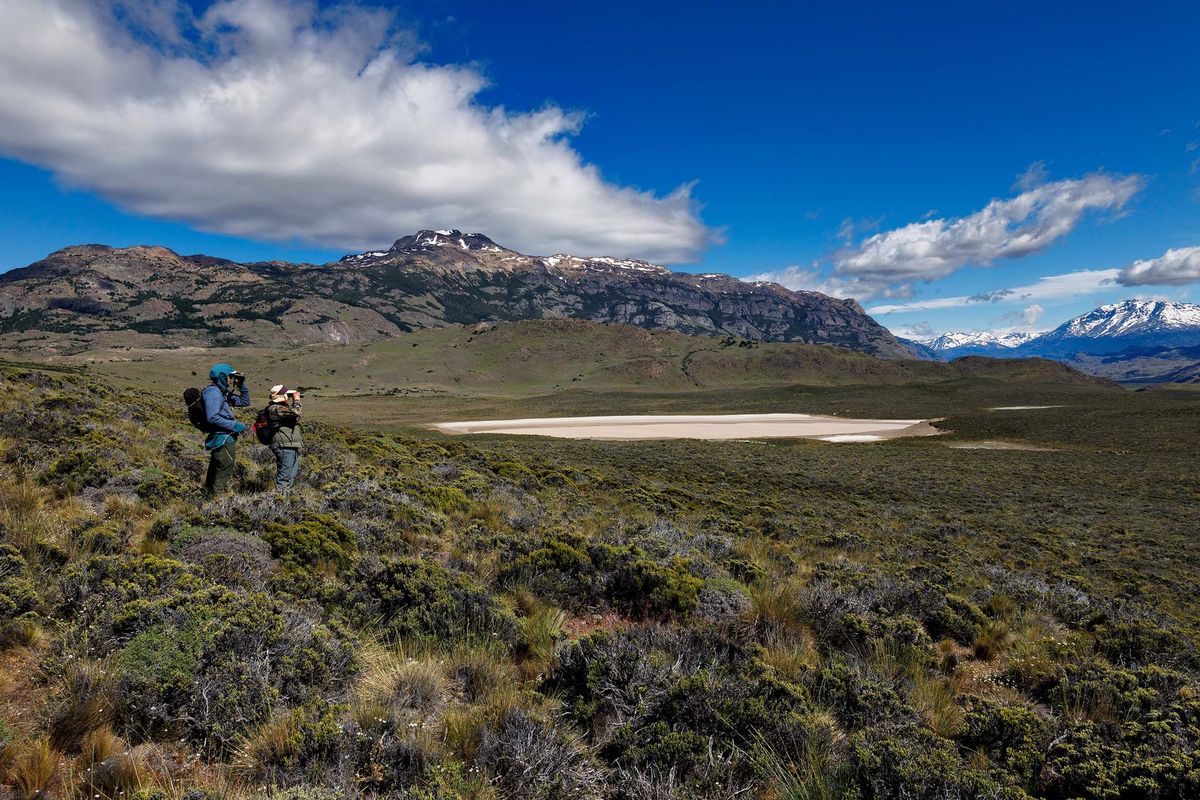
In Patagonia National Park, efforts to make Rhea pennata populations self-sustaining are part of overall rewilding goals.
I was in the middle of a group of conservationists in Chile’s Patagonia National Park, walking behind Eduardo, an ornithologist and veterinarian visiting from Santiago. The terrain was rolling hills valleyed by mountains; a short way across the undulating steppe of grass and low shrubs rose a hill broken to reveal its red cliff face. As we walked forward, over a hundred guanacos, a type of wild llama, took off up the sloping hillside to stand above the cliffs. Their cries, achingly similar to the whinny of horses, carried over the space between us. “Beautiful,” Eduardo said softly in English, describing the scene.
As we reached the cliff, I turned away to look back at the spreading plain and saw a large bird sprinting away – the bird we were here to find. “Ñandú!” I cried, pointing him out to the others. Brian, the photographer I was travelling with, and I had come a long way to see these birds, also known as Darwin’s rheas (Rhea pennata pennata), in the wild. We were also there to learn how they fit into the rewilding of the park.
It’s easy to see parks as holdovers from a bygone era, “living museums” that halt extinctions and destruction within their borders. However, Patagonia National Park in Chile was only officially designated in 2018. Chacabuco Valley, the heart of the current 752,504-acre park, was a sheep and cattle ranch as recently as 2004, when Patagonia Conservation purchased the land.
The building of Patagonia National Park
Given its history, it’s clear that the park isn’t a relict – a place that time and so-called progress have passed by. Getting Patagonia National Park to its current state required decades of work seeding native plants, removing fences, building trails and joining the Chacabuco Valley to other conservation land. Yet walking across the wind-tossed steppe full of low shrubs and wildflowers in the shadow of towering mountains can feel like stepping back 3 million years into the Pleistocene.
Massive Andean condors, which evolved to scavenge now-extinct megafauna, are commonly spotted soaring overhead here. Herds of woolly guanacos remind the ancient land of lineages of camelids now long extinct. Then there are the ñandúes, the Spanish word derived from the Guarani for “big spider,” apparently referring to the appearance of the birds’ fluffy body. The first description of Darwin’s rhea by Western science was by the famed naturalist himself, based on the remains of a bird fed to him for dinner while he was in Patagonia.
 Tristan Derham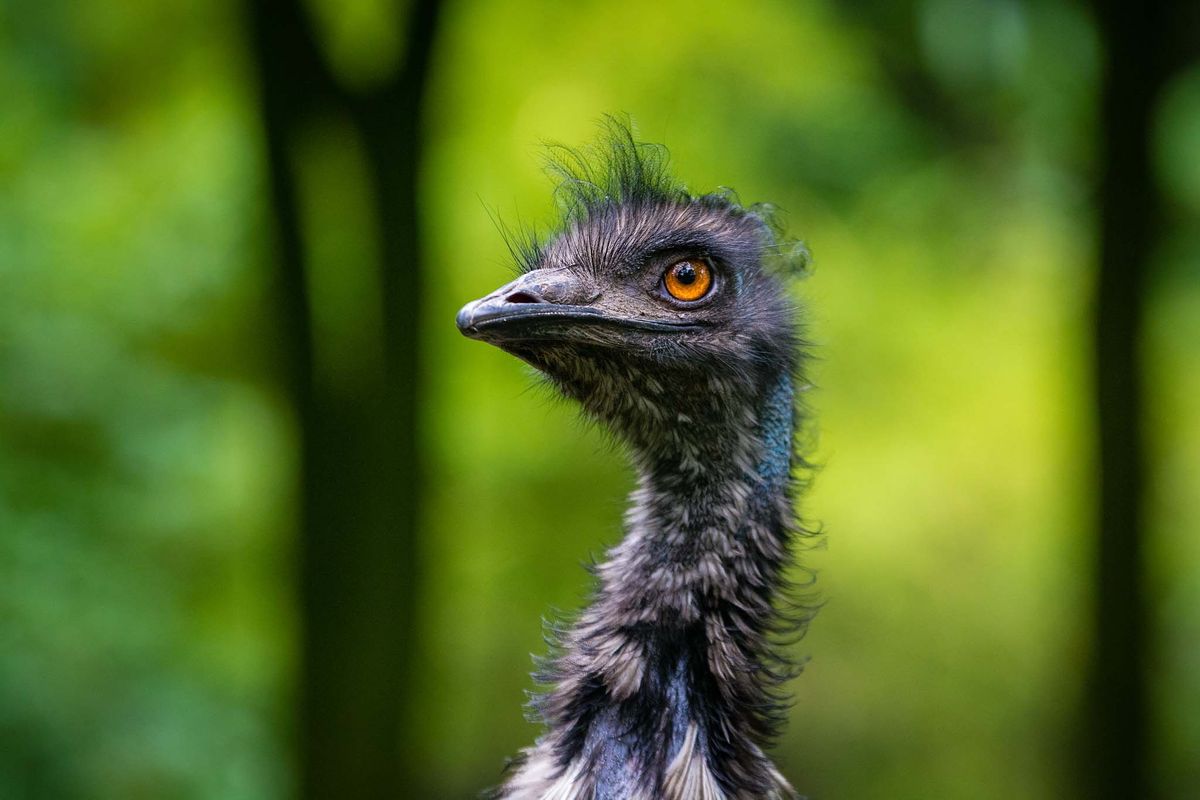
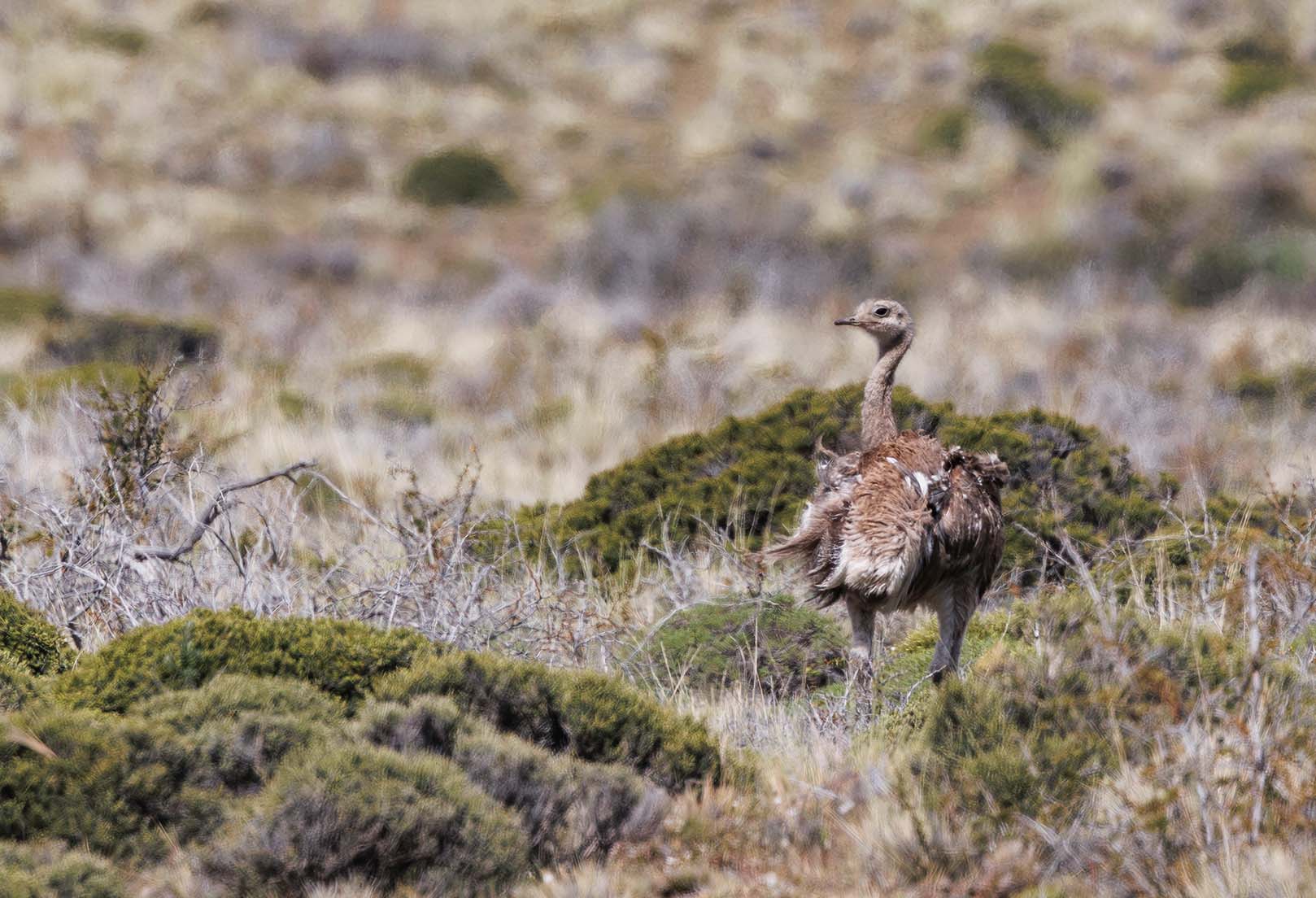
The two living rhea species (R. pennata pennata and R.americana) are related to ostriches, emus and kiwis; all are members of the paleognaths, a group of mostly flightless birds. Standing up to a metre tall, these ñandúes aren’t the most intimidating of birds – but they do look like dinosaurs. I showed a photo of a footprint to a paleontologist friend. “It’s amazing how much it looks like a Eubrontes track!” he said, referring to 200-million-year-old dinosaur footprints. Ñandúes look a lot like emus. Elegantly sharp-beaked, big soulful-eyed heads top long, snaking necks on squat feathered bodies with a pair of scaly, powerful legs. The bird’s neck and head are covered with a short, fine fluff of feathers while the wings are adorned by large, showy plumes.
These flightless birds live in flocks of between five and 30 individuals that often move with guanacos, which will sometimes alert them to predators in the area. Watching a startled ñandú run is like watching a scene from Jurassic Park; Rewilding Chile claims they can reach speeds of up to 70 kilometres an hour. Interestingly, males will attract and mate with several females; they in turn all lay eggs into the same nest, which is incubated by the same single male. These nests can hold as many as 50 eggs. The chicks hatch after six weeks and are cared for by the dad, who faces off against predators, sometimes fiercely stomping smaller threats such as rodents to death.
Ñandúes were historically hunted and their eggs eaten; they were killed by roaming dogs and fenced in by ranching. As recently as 2008, fences from a sheep farm isolated one tiny population of 20 ñandúes from their neighbours. The species was doing better in Argentina but came to the brink of extirpation in the park. Removing fences was the first step to growing the population and restoring these living dinosaurs to their proper place in Chilean Patagonia as prey for predators like pumas and dispersers of seed.
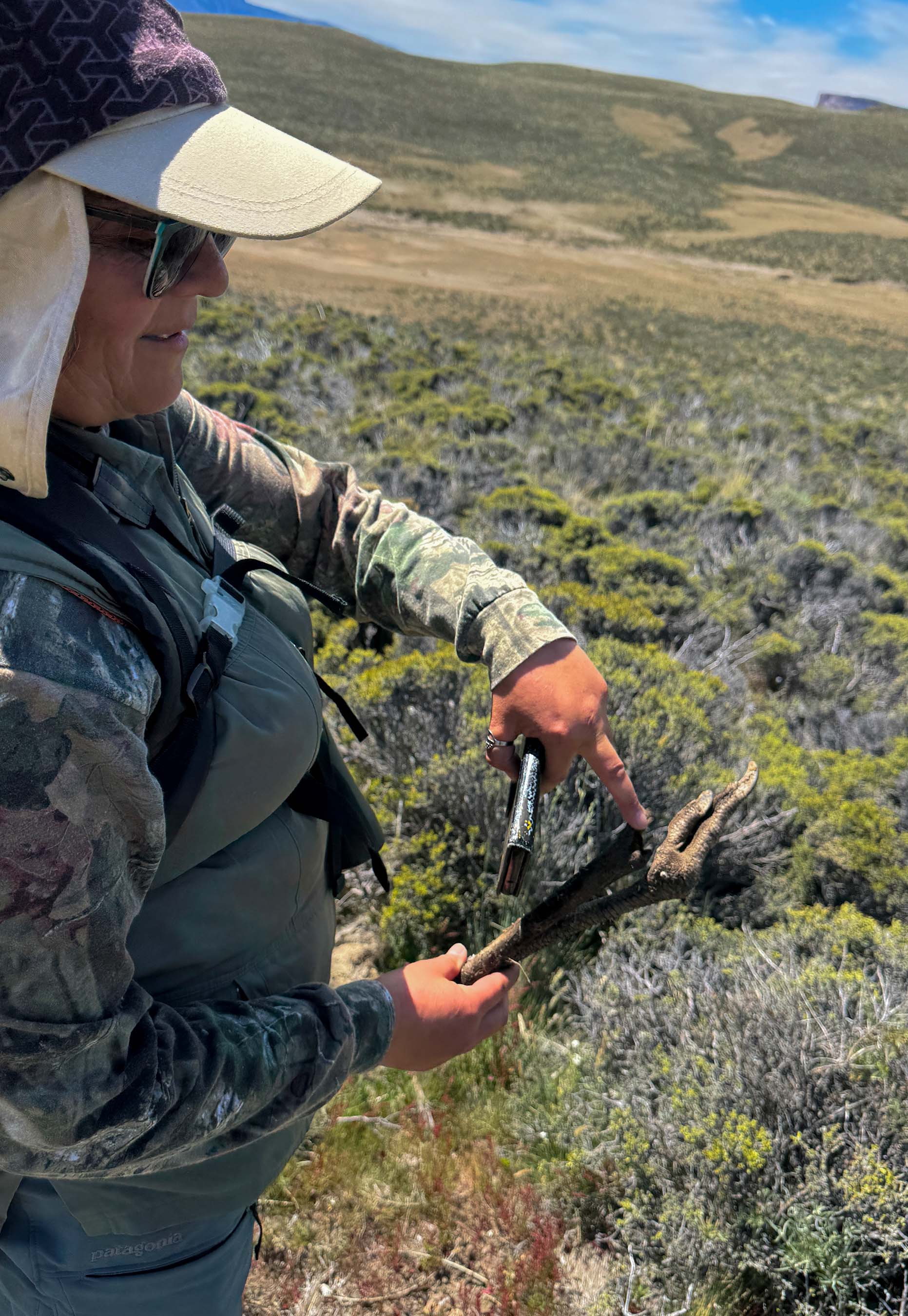
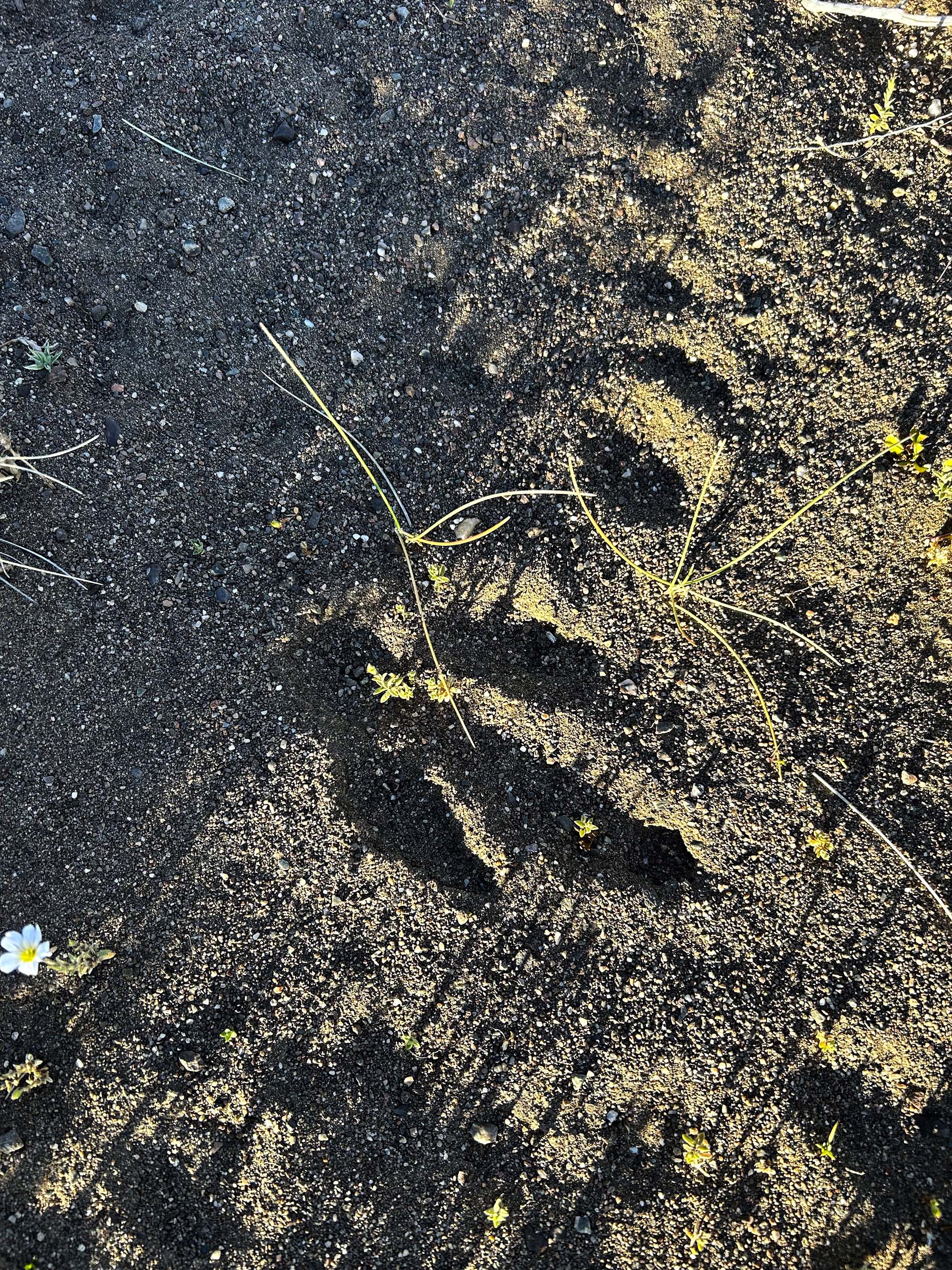
Left: Alejandra Peñaloza, coordinator of the Ñandú Reproduction Center at Patagonia National Park, points to the leg of a dead ñandú found while out checking camera traps. Photo: Brian Baiamonte. Right: A ñandú footprint found in Patagonia National Park that bears a striking resemblance to Eubrontes footprints from the Jurassic. Photo: Zach Fitzner.
Building a self-sustaining population
More birds were introduced from Argentina. Other birds came from Baño Nuevo, a ranch to the north whose manager keeps ñandú conservation on their mind. Another person donated ñandúes to the cause without revealing their origins. These are all helping the small original population toward the goal of a self-sustaining population of 100 rheas. When I visited, there were 60 or 70 birds in the park. Dr. Cristián Saucedo, head of Rewilding Chile’s wildlife program, told me: “You don’t need to do genetic analysis to know they’re all related.” Keeping an eye on the birds is also important.
The location of ñandúes is noted by the biologists as they travel into the field to check camera traps. Alejandra Saavedra Peñaloza is the coordinator of the Ñandú Reproduction Center at Patagonia National Park and one of two employees regularly monitoring ñandúes. Alejandra told Brian and me that she spends more time in the park than in her own home. She guided us on the first days of our visit.
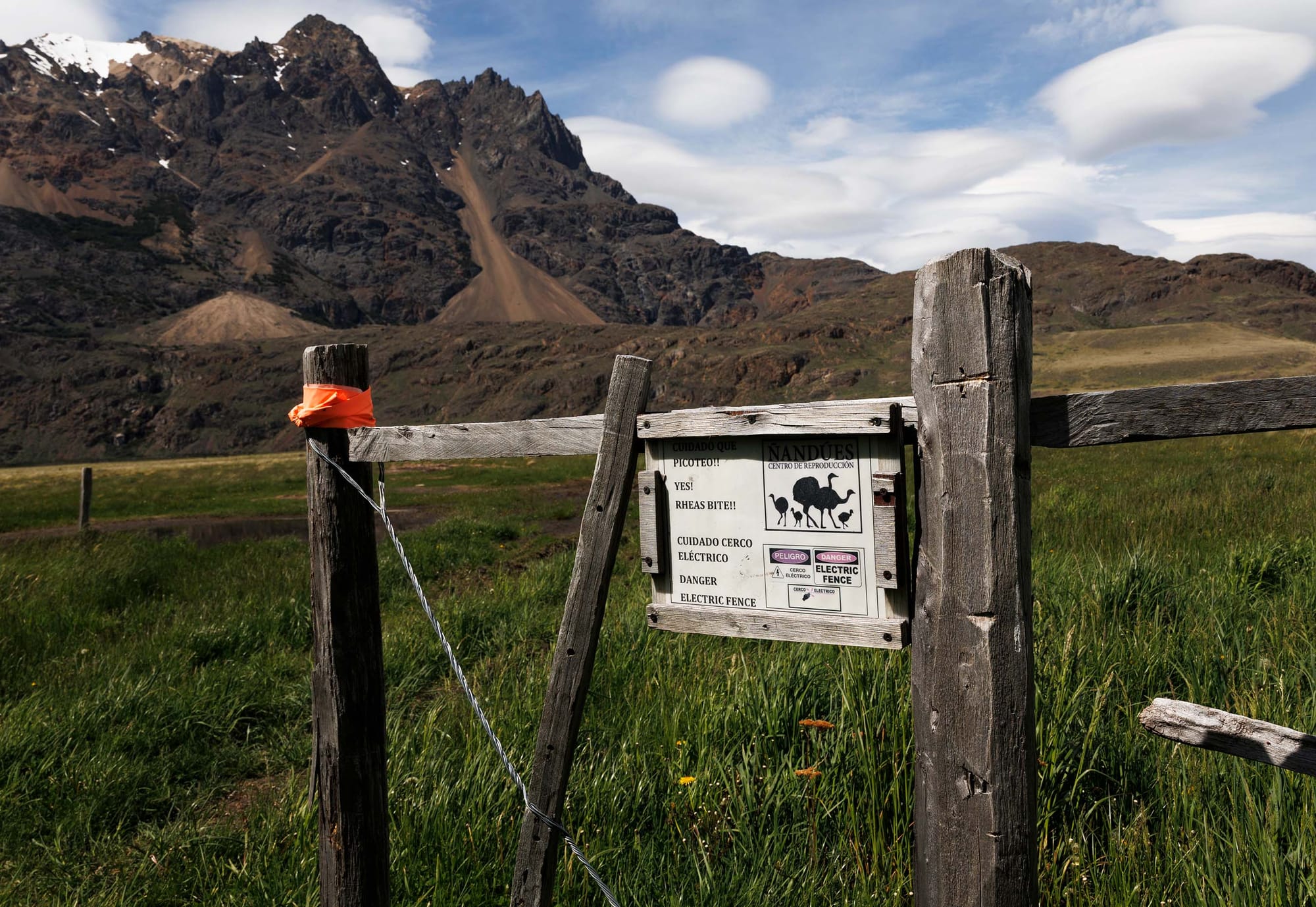
Near the cabin where the person monitoring the ñandúes lives, we walked through the large pens where ñandúes are kept during their first days in the park. Double lines of electric fences stand in squares twice my height beneath looming mountains. We spent the night in the cabin beside these pens.
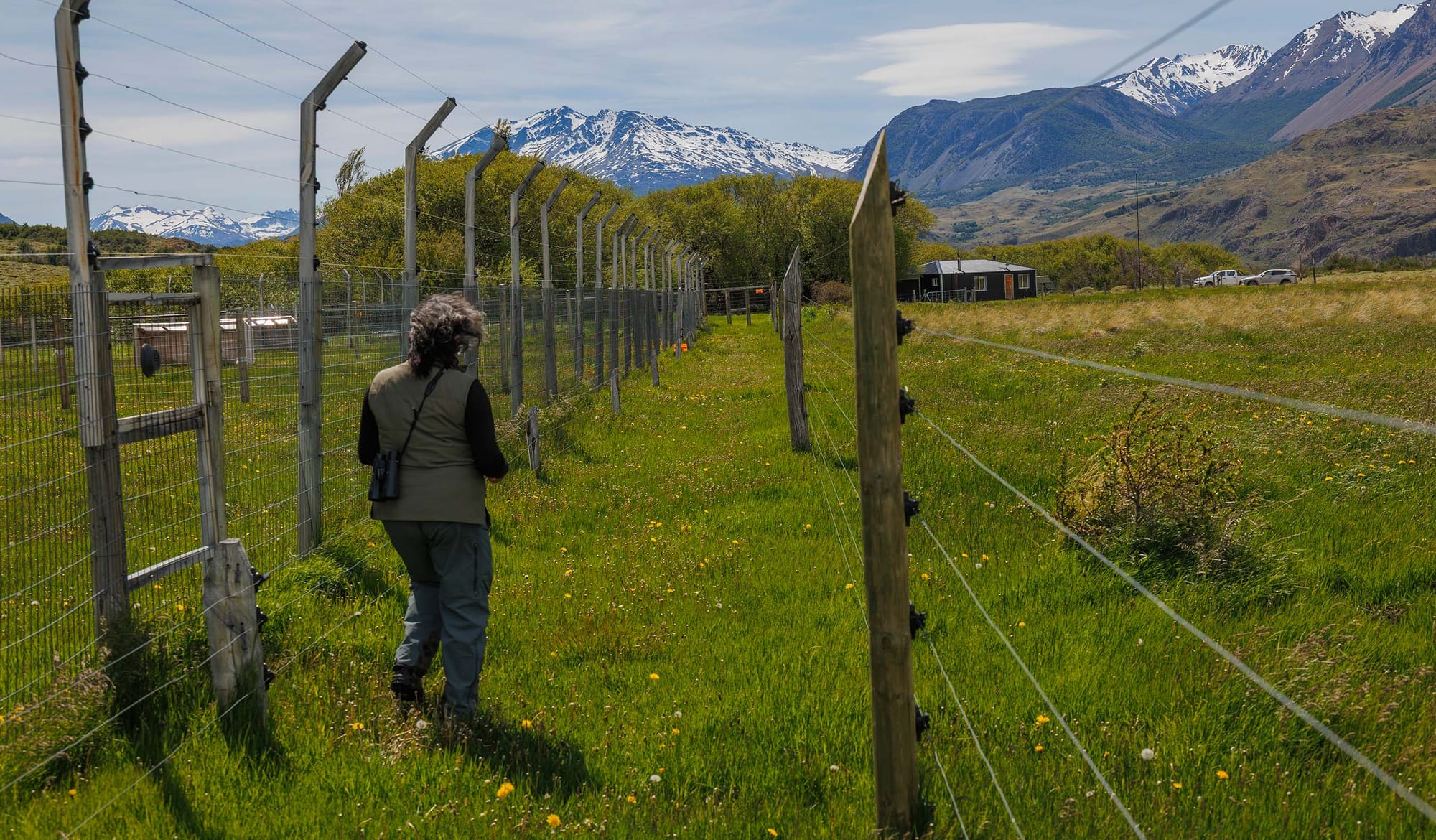
The next day we began our ñandú search in earnest, leaving in the morning to drive slowly along the park road, eyes watchful and binoculars out, camera ready. We got many sightings from a distance, watching the strange bipedal movement of the birds as they ran over low hills far off across the steppe. We then set out on foot to check motion-activated cameras.
Camera traps are set up in the areas away from roads; checking these required short day hikes across steppe and up to rocky hills where elusive pampas cats leave messages in excrement. We walked to other cameras aimed at trails that thirsty wildlife take to ponds nestled amidst low hills. We passed footprints, feathers, even broken eggshells. More ñandúes were seen at a long distance.
Interestingly, the ñandúes in Patagonia National Park live very close to the border with Argentina. Living on the other side of the border fence is another population of Argentine ñandúes. Sadly, wildlife-friendly fences and conservation efforts by the border guards aren’t forthcoming. We saw a guanaco rotting away on the fence, where they are sometimes snagged. These obstacles make border crossings for ñandúes a hassle, but not an impossibility. It’s not clear how they cross the fences, just that fences limit the numbers moving through. As populations grow, possibly ñandúes will intermingle across borders, making a stronger, unified population. This in turn is one step closer to a rewilded South America.
Toward a wilder destiny
Much of South America is thought of as untouched wilderness; like the Amazon farther north, Patagonia is often framed this way. Patagonia is a place where massive flightless terror birds once ran down their mammalian prey. It’s easy to still see this world when you look at guanacos grazing in mixed groups with ñandúes, both constantly alert for pumas.
This unpeopled vision is an illusion. Much as new archaeology has shown that Indigenous peoples lived in higher densities and had more impact on the Amazon than we’d imagined, Chacabuco Valley has a long history of human occupation, from early Indigenous groups to massive livestock operations. More recently, Patagonia National Park itself has been cultivated by humans. This does not detract from the beauty of the place – nor its value as a home and sanctuary for wildlife. By joining human efforts to rewild Patagonia we can see a future, like the past, of our destinies intermingled with the wild.
In the visitor’s centre of Patagonia National Park, a video shows the brief history of humans on earth. It frames much of human history as part of a wrong turn taken to a place where we’ve forgotten our neighbours and started calling them “natural resources.” In a clip, Doug Tompkins, an important figure in the park’s founding asks, “You make a 180-degree turn and then take one step forward? Which way are you going? Which way is progress?” This is the question at the heart of Patagonia National Park and rewilding.
Main image: Alejandra Peñaloza and Zach Fitzner scan the landscape of Patagonia National Park for ñandúes. Photo: Brian Baiamonte.


Comments ()