

The living world is not just an escape from humanity’s problems – it is the answer to them.
This text is excerpted with permission from Concrete Botany: The Ecology of Plants in the Age of Human Disturbance by Joey Santore (Cool Springs Press, 2026).
I now refrain from using the word “nature” when referring to the nonhuman-built world because it implies that “nature” is a separate entity from humanity. I started using phrases like “the real world” or “the living world.” (The phrase “real world” is fun because it feels like a jab at modern civilization: the world that we’ve created isn’t real – it’s make believe. It’s a fake reality that’s disconnected from the rest of life on Earth.) Most of us do live in an artificial world, with nearly every tangible object around us fabricated by humans. We refer to the world as it existed before complete human domination of Earth as “nature,” not realizing how unusual it is to view the world as it existed for the majority of Earth’s 4-billion-year history as something so separate and apart from our own affairs that it requires a separate name. If Earth’s entire history were compressed into a single year with the planet forming on January 1 at midnight, humans wouldn’t appear until the final two seconds on December 31 – 364 days, 23 hours, 59 minutes and 58 seconds later. Yet in our culture, we centre ourselves and place the rest of Earth’s life on the periphery, largely ignoring it.
We take ourselves so seriously, yet here we are, still starting wars, chasing shiny things, trying so hard to impress each other with expensive material goods and using psychotropic drugs or alcohol to numb us from the anxiety and depression caused by the lifestyle we’ve created. In a hundred years we have doubled our lifespan, but our lives may feel more empty, disconnected and meaningless. We have become like the lion in the zoo, anxiously pacing back and forth in a bland artificial hell of our own making, most of us never even knowing what we’re missing.
Nature is the real world. It is the world as it has existed nearly forever, for exponentially long amounts of time before humans even existed. We are like ants crawling through cracks on a timeline that’s as long as the landing strip of an airport, convinced of our own self-importance and convinced that the world only started as soon as we got here. Most of us lack any awareness of something larger than ourselves – that lack of awareness is slowly killing us.
Where does this disconnection come from? It’s an absence of reverence, respect or awareness for the life around us – the “natural world” – that we are all a part of. It is enabled by both technology and lack of exposure to the living world. Lack of exposure becomes more of a reality as we continue to destroy more habitat. In this way we continue to alienate ourselves from that which our existence depends on: functioning ecosystems. It becomes normalized for people to grow up biologically and ecologically ignorant, without any exposure to “nature,” with no connection to the land around them and with no perception of how the “real world” works.
In spite of the human-built world we’ve crafted, “nature” is still all around us. It is the living world that birthed us and to which we are inextricably tied. There is no true severance from it, though we have certainly tried. If we fail to acknowledge this world and to care for it, we will create an increasingly unpleasant and hostile situation for ourselves moving forward.
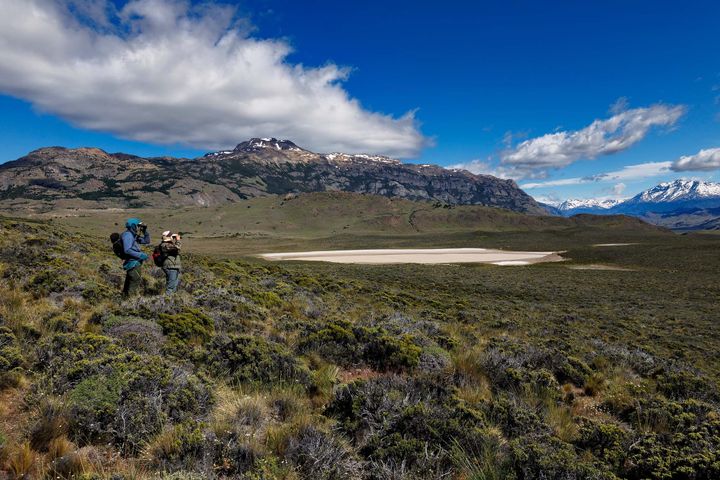
The living world even feels real. As anxiety-inducing and stressful as it can feel to be surrounded by huge crowds and oceans of asphalt, the living world can make a person feel the exact opposite. Standing on a cliff overlooking a desert valley or watching a sunset across an open prairie feels like your life has value: You are squeezing every last drop out of it and nothing is being wasted. You are connected to every other living thing around you, immersed in it – smelling the terpenes and volatiles leaking out of the stomata of the leaves, listening to the insects, hearing the birds, feeling the wind on your face, living as part of it all.
The plants and animals that evolved on the land are the land. They are what make the place itself a living, breathing organism. The arriving cultures in North and South America – the Europeans – were foolish to destroy it. It was like taking apart a finely tuned machine. This grandiose mistake occurred because the newly arrived settler culture didn’t know any better – the connection to the native living ecology had been lost centuries earlier in European culture, especially after a few centuries of authoritarian feudalism and lordship. Religious indoctrination as a tool to convince people the living world around them didn’t matter only exacerbated the disconnection. Religion itself does not exclude an appreciation for the living world, but it has historically been misused by those in power to reinforce the myth that humans are separate from – and superior to – the life that surrounds them. Humans are herd animals, and our behaviour as animals is essentially conformist; this is how culture spreads. In the United States, the continent was settled 500 years ago by Europeans who then began to wipe it clean, destroying and reducing the diversity. It would be centuries before ecology was even a field of science, and most of the arriving cultures saw nature as something to be feared and conquered, rather than studied, understood or respected.
 Rebecca Nesbit
In my day-to-day life I feel a reverence and appreciation for the plants that surround me. It’s not a corny feel-good sentiment emulated by some genteel honky in a teal velour vest – it’s a medicine I need to consume daily or I turn into an asshole. I know the plants around me like friends and acquaintances, and they fulfill the same role. If I don’t have them surrounding me in the places where I spend my time, I get bored and lonely. I grow restless and irritated. I start focusing on all the things that get under my skin. I’ve come to recognize how plants are the antidote to the often boring, monotonous, and suffocating make-believe world we’ve created. No matter where I go, I think about the plants that compose the foundation of the life that occurs there. I seek out what’s native and what bears the evidence of place and time.
I also acknowledge that I’m a minority in this regard, and that the society I exist in – at present – doesn’t feel the least bit the same as I do. I look at cultures that don’t make space for the living world like they’re lost and clueless. I have empathy for those who grew up in these societies, because I know what such an upbringing was like. I experienced it myself.
The geologic time scale, evolution, the phylogeny of life on Earth and an understanding of ecosystems have now become the basis for an understanding of my own existence. This realization filled the hole within myself that the culture I was raised in had been miserably failing at. Now, I had a timeline to place myself on. I had something of an understanding of how I came into existence, and the new perception I had of my own insignificance was anything but depressing. I now know I am a piece of a larger fabric of life, of no lesser or greater importance than anything else.
These sentiments are not “environmentalism.” Instead, this is the very crux of modern humanity’s disconnection from the living world. It is exactly why we are suffering. Placing our species and our species alone at the center of our world view as a society, rather than the entire living machine we are but a small part of, is why the world is in the rough shape it’s in. The living world is not just an escape from humanity’s problems, it is the answer to them.
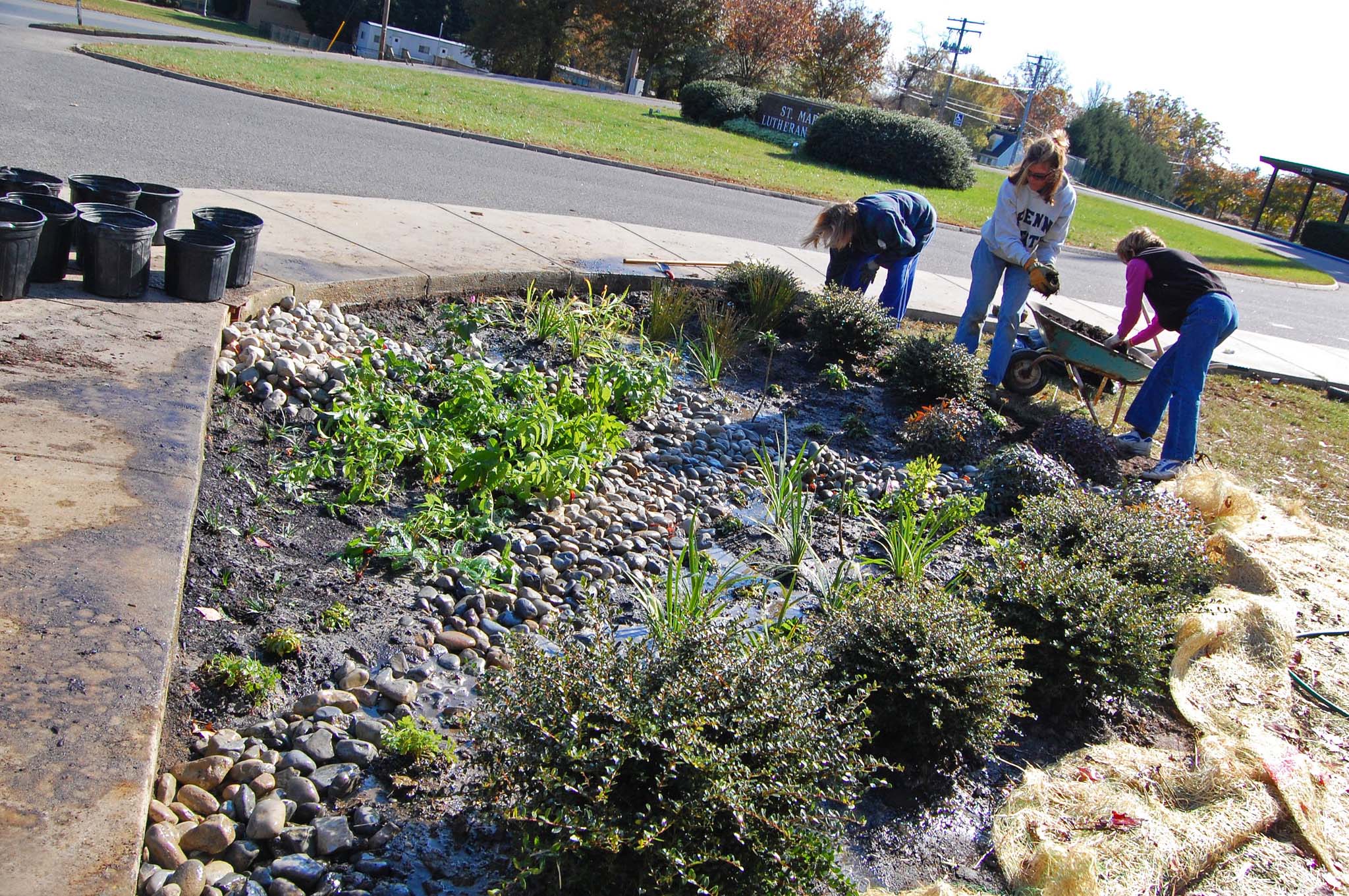
For many societies that are isolated from the ecological and biological reality of planet Earth, the cultural identity is based mostly on consumerism, because this taps into some of our baseline stimuli as a primate species. We like to collect and hoard things. It’s an evolutionary impulse that served us a purpose at one point. But it is also part of our evolutionary impulse as a species to interact with the plant life around us. That, in the end, is how we made it this far. Our reliance on plants for food, clothing and shelter, the domestication of crops, our observation and study of what makes them thrive or fail, our understanding of agriculture, our use of fire to rejuvenate grasslands and forests that had become too dense, our intentional transport and dispersal of seeds or clonal offsets – our history bears evidence of a close relationship with the plant life around us. It is part of who we are, but in recent times, we have lost this or been made isolated from it. But those impulses to steward and nurture plant life are still there within us. We have the ability, if we choose, to restore this living machine that, up until now, we have been slowly dismantling.
As a species, we belong in the living world; we evolved there after all. The living world is a part of us; it is ingrained in our DNA. We know that green places feel good. Plants make people happy. There is a reason why we associate them with decor and aesthetic. The human urge to nurture plants is an old one.
Comments ()